Are you human? Take our easy test today

In which a proof that I am not human is found to be erroneous.

Are you human? Take our easy test today

On Climate Grief..

A short post today sparked by this comment piece in Nature on climate grief.

I’ve been asked before, often frequently in fact*, about how depressing it must be to be a climate scientist. And I usually waffle something about how, my job is very interesting and that there’s always hope out there somewhere. Like many people working in the climate space, I’m aware of the multiplicity of research out there suggesting that hope is essential for action, and so that’s what I try to emphasise.

And it is not inaccurate in fact, my job really is fascinating! And very often I get buried in learning something new and often surprising that is incredibly rewarding. I’m also surrounded by thoughtful, creative and incredibly smart and supportive colleagues. It’s a stimulating environment (both metaphorically and literally) and I’m learning new stuff all the time. It can sometimes be surprisingly fun. Occasionally, I’m even fortunate enough to go to Greenland.

Flying a UAV to measure icebergs in Greenland this year: Fieldwork is often uncomfortable, tedious and boring, but sometimes it can be surprisingly fun. Especially when learning new stuff. And the results of this research are consequential when it comes to sea level rise adaptation.

I’m sure that working in an emergency department or as a war photographer or social worker in a deprived community is considerably tougher mentally than how I have it..

On the other hand, Kimberley Miner’s piece resonated. Especially this year, where there have just been *so many* extreme events – including some that have a direct bearing on my own work. It has been exhausting keeping on top of what’s going on – and trying to communicate the impacts of that often feels like a moral duty as much as a part of my job. But it’s not always easy to cross that boundary. I rarely talk about my work in a social context (certainly if not with other scientists), it’s not exactly conducive to a party atmosphere. But I know police officers, social workers, soldiers and medics who are the same, I do not think climate scientists are alone in this respect.

I think she is also correct to point out that long working hours, stress, competition for resources and simple exhaustion don’t help. Given the academic environment, many of us work too much and don’t take the time to rest and recuperate. (Yes, I’m also writing this on a Sunday morning, where I’m also going through emails, editing comments on a paper and preparing for a new student to start next week…). It’s hard to keep perspective and emotions under control under those circumstances.

So what about the solutions?

Well, again I’d echo the original piece. Find the time and places that give you rest .

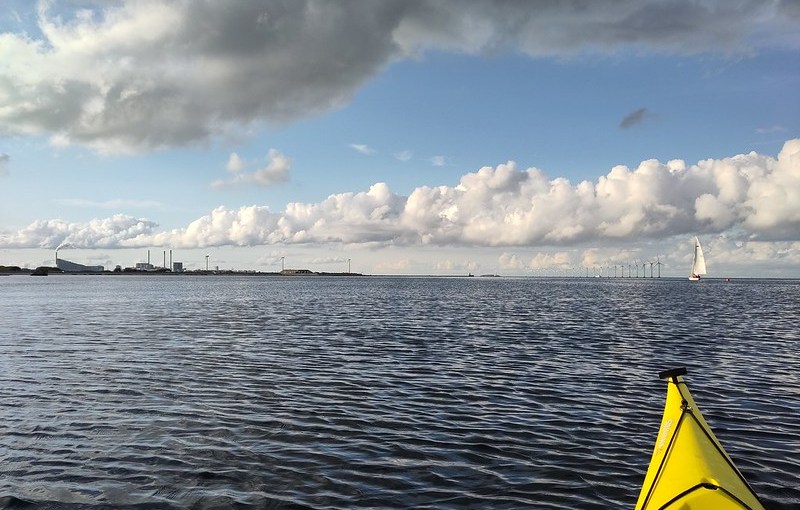
I jealously guard the time each week when I go out in my kayak on the Øresund, a sport I’ve enjoyed since my teens acquired a new urgency in preventing burn-out (particularly during the COVID times). It’s also often the time I get my best ideas and can work through issues that are bothering me to find the right way forward.

Paddlingon the Øresund, the wind turbines and the Copenhill facility are a reminder that we have solutions for the climate crisis. Even if it is not going as fast as it should…

And then, to continue a theme of posts this summer, it’s also about focusing on what can I do to feel empowered again. And I think this is also correct:

“After decades of working to convince the public that climate change is real, … we need to work on solutions…. The current generation of climate scientists needs to move on from education and advocacy to providing solutions for mitigation, adaptation and resilience. The best treatment for climate grief, .. is knowing you’ve made a contribution to reducing emissions or building resilience.”

Dave Schimel to Kimberly Miner

At work, the development of climate services and better focusing how we deal with climate impacts has become a constant and important theme and I agree with that completely.

But it’s important to remember too that many of us became climate scientists because we found it deeply interesting to work to understand the earth’s processes. Even if science has an even better understanding now, there is still much motivation in taking that deep dive.

At home, our own family lifestyle is in constant improvement to reduce our impact. The usual stuff: car free, vegetarian towards vegan lifestyle, train rather than plane as much as possible. This autumn, I’m adding a new wildflower patch to my garden to encourage the insects and pollinators even more. Individual actions won’t save the world or prevent the climate crisis alone, but they can help us to feel more in control and motivated.

Il faut cultiver notre jardin.

Voltaire

And a new update pointing at an interesting piece about how to incorporate this into an educational context with “critical hope”, which is sort of what I’m talking about here too.

This is where the notion of “critical hope” emerges as a compelling concept to explore.

Critical hope embodies an educational paradigm rooted in the art of envisioning and living an alternative narrative to the status quo.

This paradigm is fortified by a comprehensive scrutiny of our current predicament – urging learners and educators to not only understand the challenges we face but also to actively participate in reshaping our collective future.

Sean Porter, wonkhe.com

I like this framing, but I do think we also have to remember that personal accountability and individual change is not going to solve the climate crisis. For that we need governaments and municipalities as well as business on board and, crucially, leading.

*There’s a whole other conversation we could have about how it’s very often women researchers who are asked about their feelings. Though I would also point out that for example, my colleague at GEUS Jason Box has also been open about this in this piece.

No, Petermann Glacier is not growing..

This is a lightly edited and expanded post in response to a Reuters fact checking query. I gather one of the usual suspects (in the place formerly known as the birdsite) has been spreading misinformation and confusion about the magestic Petermann Glacier in Northern Greenland. So here’s a few thoughts. The TL;DR is in the title, but if you want to know why it’s not growing, how we know it’s not growing and what it means, read on…

Petermann Glacier is a truly awesome outlet glacier of the Greenland ice sheet. It drains about 4% of the ice sheet and sadly I’ve only seen it in satellite photos as it’s rarely visited, for all the good reasons you can imagine (expense, remoteness, sea ice, terrible weather…). But the photos show a floating ice shelf, sometimes called an ice tongue, enclosed in a narrow fjord with steep cliffs. Underneath Petermann glacier a canyon, similar to but much bigger than the Grand Canyon, carved by ancient rivers pre-glaciation snakes all the way to the centre of the Greenland ice sheet.

But, that’s not why it is a glacier of choice for a section of the climate (denier) community. It behaves very much like any ice shelf; that is, it calves a large iceberg, but as the glacier is still flowing from areas of accumulation to areas where melt and calving balance it, so the front continues moving forward to roughly it’s previous position, before calving another large iceberg. This is a well understood cylce but it also means that if you cherry pick your starting and ending dates you can indeed show that the front is “advancing”. However, this is not the same as the glacier “growing”. Let’s take a look.

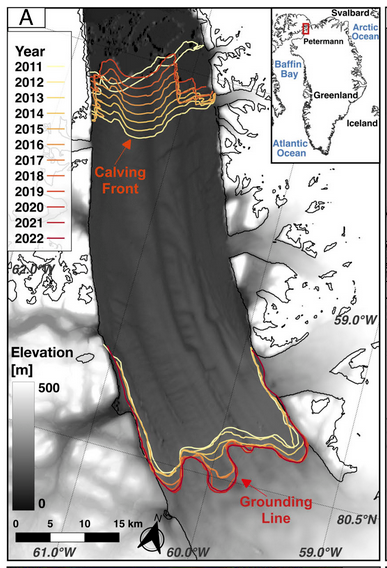
It is one of the only remaining ice shelves in Greenland – all of the others have collapsed and not regrown and there is good reason to suspect Petermann is also on the same trajectory. I had a student a few years ago who showed the ice shelf itself is thinning, and that it was unlikely to remain stable for long. We never managed to publish it, though a publication from Eric Rignot’s group that came out earlier this year largely shows the same things we found. The cycle of calving and advance is quite clear in their Figure 1a, as is the retreat of the grounding line – the point at which the glacier starts to float. This is significant because as the glacier gets thinner, the grounding line will likely retreat inland.

Figure from Caraci et al., 2023 showing the slow advance of the calving front in recent years and the retreat of the ground ing line at the same time.

So does NASA Worldview imagery show that Petermann glacier has been growing at roughly 3 metres per day for the past 11 years? (As intimated by a number of accounts on the internet.)

No it does not.

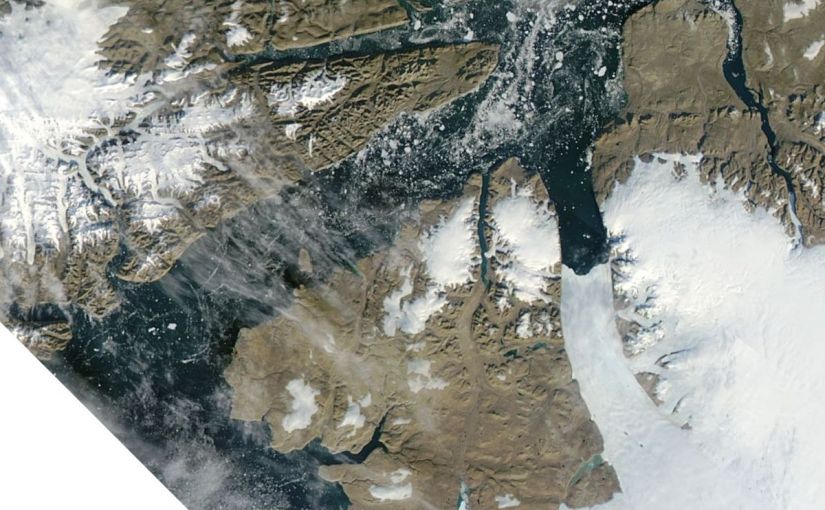
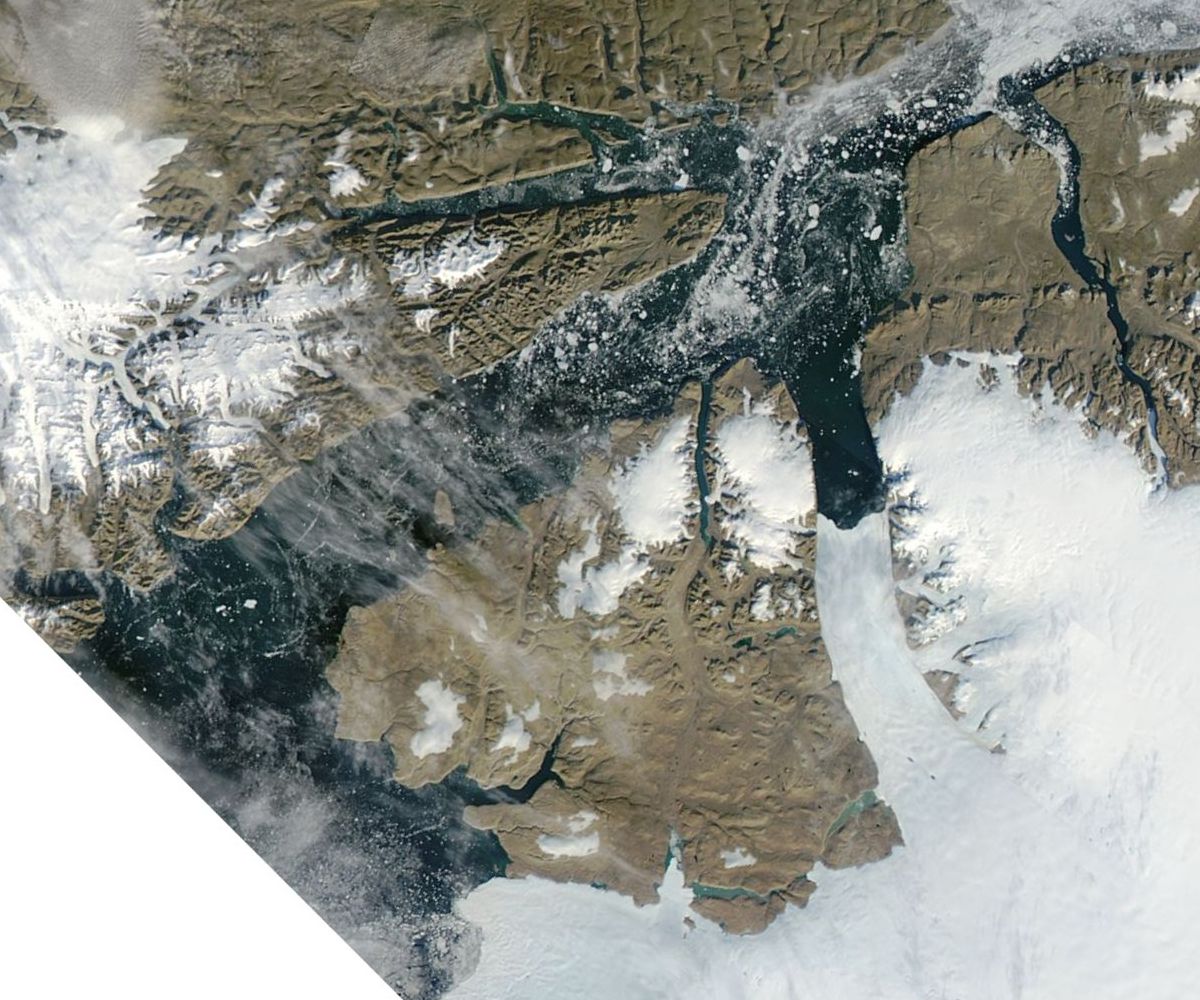
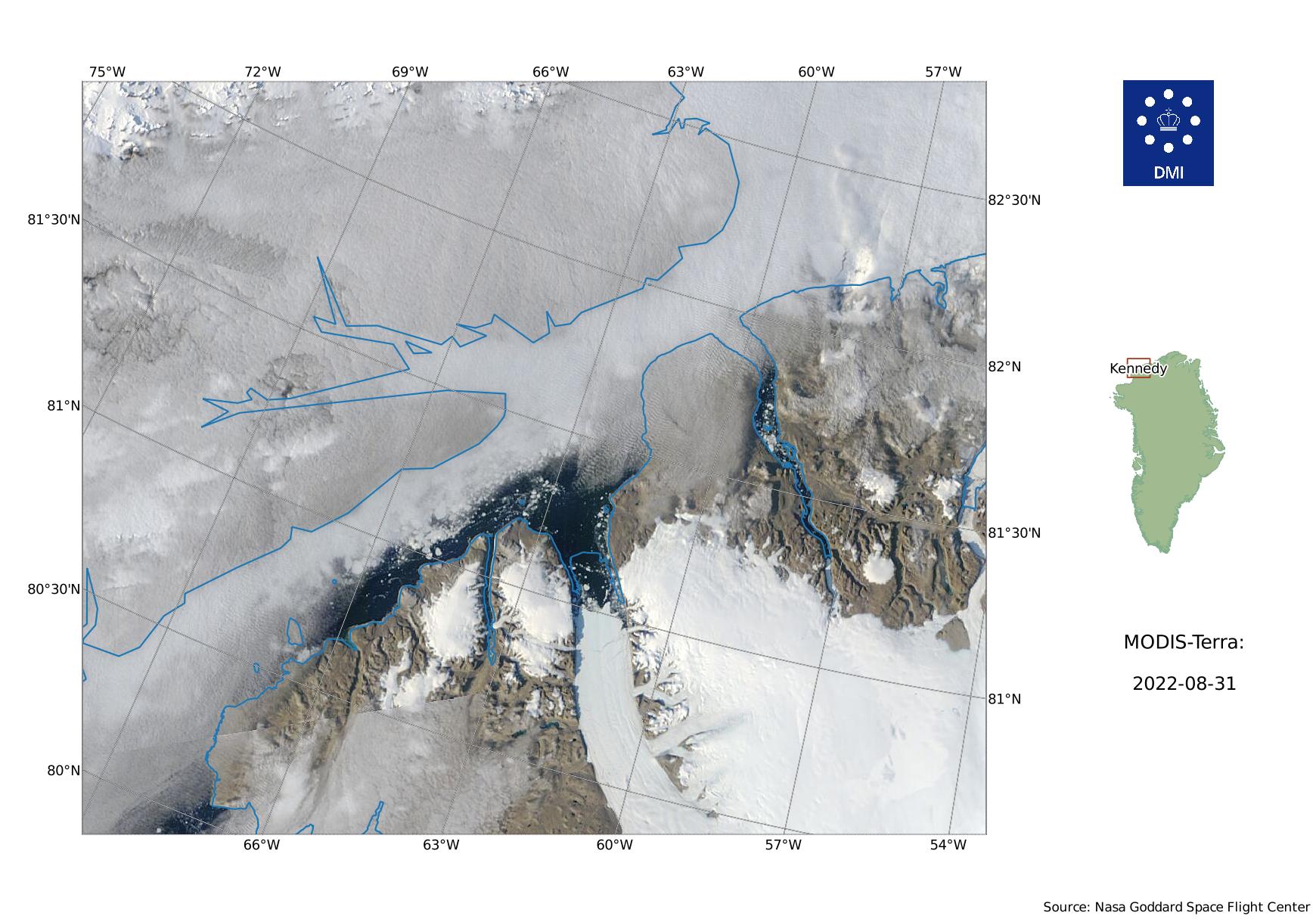
You can play a semantic trick here though. Satellite imagery shows that the front of the glacier has been moving forward for the past 11 years (note that it doesn’t move much in winter, it’s mostly a summer feature after the sea ice has broken up). Compare these two images which I grabbed from DMI’s satellite picture archive around the coast of Greenland, in it the glacier terminus does appear to be ahead in 2022 compared to 2012.

Two MODIS satellite images, TERRA taken 31st August 2012 top and AQUA taken 31st August 2022 bottom. The end of the glacier is closer to the end of the fjord in 2022 than in 2012, but that is due to a large calving event that occurred just prior to these images.

But the choice of 2012 is a trick as a large calving event occurred on the 16th July 2012, after a previous large one in 2010, so the glacier was more or less at it’s minimum in recent years if you choose 2012 as a starting position.

Here is that large iceberg, so big it’s called an ice island, detaching from the front of Petermann glacier on the 18th July 2012 as captured by NASA’s TERRA MODIS satellite.

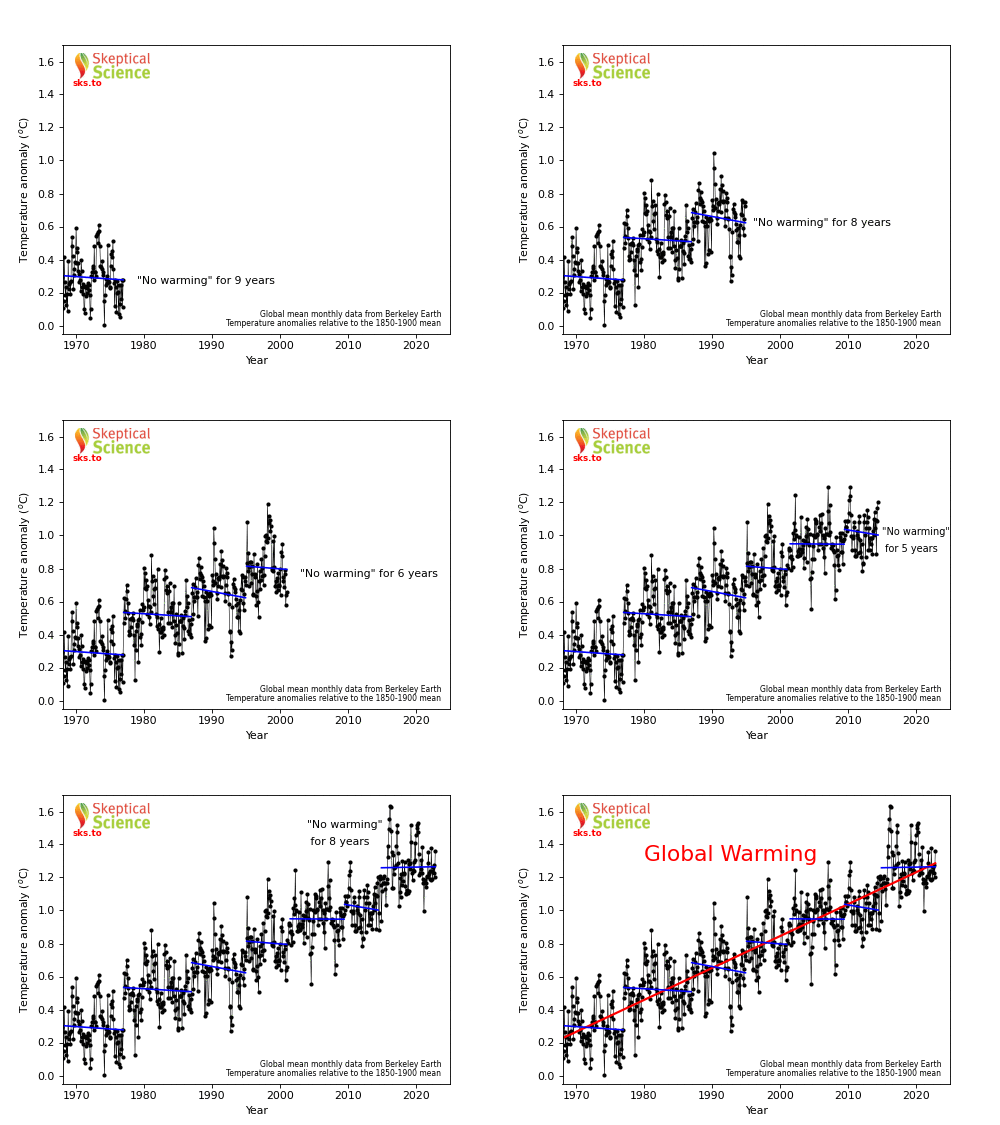
This is of course the difference between noise and signal and a similar trick to choosing to start your temperature curve in 2016 for example, right after a big El Nino event.

The skeptical Science global warming escalator – a neat graphic that you can read more about here

After the glacier calves a large iceberg the glacier behind continues to push ice out through the channel. The ice still flows and the front eventually moves back to roughly the same position it was in before the calving. However that does not mean the glacier is “growing”.

A glacier only grows if it gains more glacier ice each year than it loses.

Glaciers lose ice in 3 ways: they melt at the surface and this runs off the glacier; they can calve icebergs off – at a glacier like Petermann, this may only happen every few years; or, they can be melted from underneath by warm ocean water.

If these three mass budget terms added together are bigger than the amount of snow falling each year then the glacier will shrink. If more snow falls than is lost by these three processes, then the glacier is growing.

At Petermann glacier all three ways to lose ice are happening. We have seen the calving, the surface melt and runoff is clearly visible in the satellite image below and the thinning of the glacier (ocean melt as well as stretching as the ice flows) has been measured by satellites and radar measurements.

Petermann Glacier this summer, the blue shows surface melt ponds with surface streams forming distinctive meanders over the surface. These drain through surface cracks, that have progressively formed over several years as the ice shelf has thinned.

Adding up all the ways glaciers lose ice, together with the amount of snow that falls each day or each year gives a new mass budget. We do this for the whole of the Greenland ice sheet on the polar portal in near real-time.

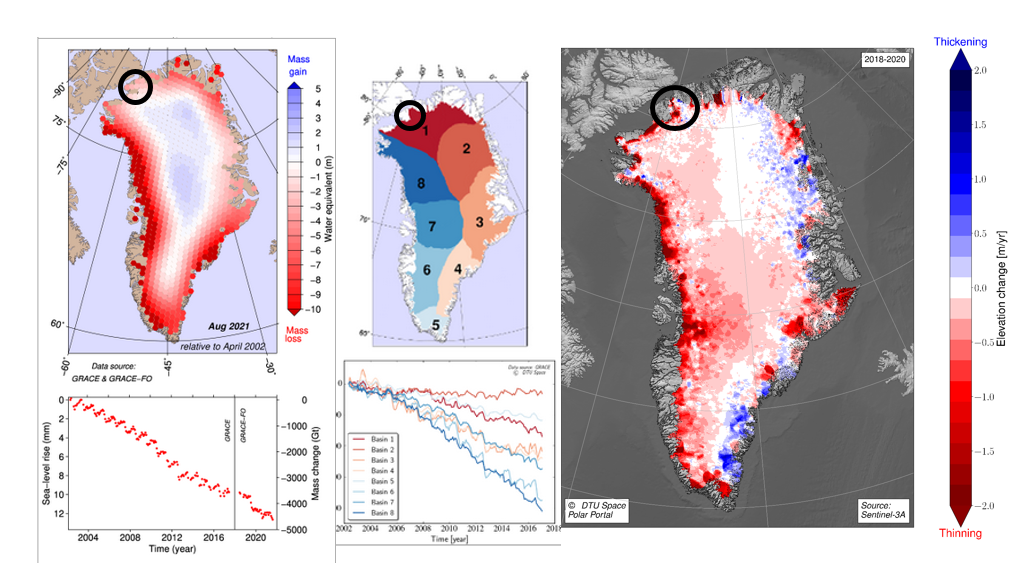
We can therefore check how much this net ice change budget is by using GRACE satellite data. GRACE measures change in mass by gravimetry and the data, processed by DTU Space colleagues, is displayed on our polar portal website here: http://polarportal.dk/en/greenland/mass-and-height-change/

And it shows that this region of Greenland has lost ice every single year since 2002 when the satellite was launched.

This is not a surprise, a paper by Jeremie Mouginet et al. all the way back in 2019 estimated that Petermann glacier alone had lost 56 Gt of ice for the period 1972 to 2017. Most of this ice has been lost since the late 1990s. Their estimate agrees well with results presented in Mankoff et al., 2021, who update their dataset each week and show that there is pretty steady net ice loss from Petermann from both calving and surface melt that continues to the present day.

Three screenshots from the polar portal showing full mass change from all processes: I have circled the location of Petermann Glacier, note the red colour indicates net ice loss from all processes. Left is from the GRACE gravity satellite, the centre and right show surface elevation change, measured by radar satellites. Note that virtually the entire ice sheet is getting thinner, except in some areas with higher snowfall. The Petermann glacier is close to the maximum rate measured of 2m of surface lowering (mostly surface melt) between 2018 and 2020 alone.

So the Petermann Glacier is not growing, even if the front is advancing. But the satellite pictures of the glacier do tell us something about the local conditions of the glacier. Petermann glacier is in a long narrow fjord in a region where there is a lot of sea ice. This is probably why the ice shelf has survived so long when many other similar ice shelves have collapsed and disappeared over the last 30 years or so. 50 years ago there were a lot more ice shelves in Greenland and across the whole of the Arctic. Most of them have now gone.

The figure below (from Hill et al., 2018 https://tc.copernicus.org/articles/12/3243/2018/ ) shows all the places where there used to be floating ice tongues, only Petermann, Ryder glacier (which is significantly shorter now than it was in the 1990s) and 79 North remain in Northern Greenland with some floating bits of Storstrømmen also technically still counting as shelves in the east.

From Hill et al., 2018 Study region of northern Greenland. Green circles show the location of each of 18 northern Greenland study outlet glaciers. Average glacier velocities (m a−1) are shown between 1993 and 2015 derived from the multi-year mosaic dataset (Joughin et al., 2010). Black outlines show glacier drainage catchments. Symbols represents the state of the glacier terminus. Stars show glaciers which currently have floating ice tongues, circles represent glaciers which lost their ice tongues *[see footnote] (during 1995 to 2015), squares denote glaciers which have some previous literature record of a floating ice tongue, and triangles are glaciers which are grounded at their termini and have been throughout the study record.

Given the thinning that has been recorded at the Petermann Shelf, it’s probably only a matter of time before this magestic glacier also loses its shelf. And there are two ways that might go. It might follow the path of Sermeq Kujalleq, previously known as Jakobshavn Isbræ. The fairly dramatic collapse of which over a few months in 2002 was a massive wake-up call to the glaciology community that things can change very fast indeed and they may not be reversible.

Series of Landsat images from June 2001 to June 2003 showing the large retreat of Sermeq Kujalleq (Jakobshavn Isbræ)

Or it may retreat in a more low-key way, like the relatively nearby glacier C.H. Ostenfeld where the ice shelf indeed was more ice tongue like* and slowly fragmented and washed out the fjord over several years.

Series of Landsat pictures from 1999 (top), 2002 (middle) and 2005 (bottom) showing remaining icebergs floating away. The stripes are unfortunately due to a well-known sensor problem in Landsat7
C. H. Ostenfeld glacier this year from Sentinel 2 imagery. The ice shelf/tongue has not reformed.

It’s not very easy to say which path Petermann will take, it may even take a hybrid between the two, with first slow disintegration like Ostenfeld, with a more rapid collapse like Sermeq Kujalleq as the grounding line approaches.

Time will, unfortunately, almost certainly tell.

And now back to the day job..

*An ice shelf and an ice tongue are similar but not quite the same, I would call Petermann an ice shelf whereas C H Ostenfeld was rather tongue like by the time it collapsed, though the others in nrthern Greenland are and were definitely more shelf like. See for example this spectacular image of the Erebus ice tongue in Antarctica. Glacier tongues still exist in Antarctica but with the loss of Ostenfeld, they are now non-existent in Greenland.

By Jesse Allen, NASA Earth Observatory, using data provided courstesy of NASA/GSFC/METI/ERSDAC/JAROS, and the U.S./Japan ASTER Science Team. – [1], Public Domain, https://commons.wikimedia.org/w/index.php?curid=795403

We’re hiring…

In case this weekend’s posts on the lessons to take away from this summer, and the future direction of climate science and climate services have caught your interest, you might also be interested in one of our new open positions. All jobs are advertised on DMI’s webpage here. But let me draw your attention to a few in the group I work in – part of the National centre for climate research (National Center for Klimaforskning).

We are expanding quite rapidly at DMI currently – part of a strategic plan to ensure that we are primed for a generational shift at DMI, but also reflecting some of the themes I touched on yesterday – an expansion into climate services and the development of new machine learning based models and advanced statistical techniques for weather and climaet applications. Note also that the remote sensing part of NCKF

UPDATE: A new position advert has been added:

0) Climate Scientist with Focus on Decadal Climate Prediction

https://candidate.hr-manager.net/ApplicationInit.aspx?cid=5001&ProjectId=171179&MediaId=5

1) Researcher to work with climate services and projections of future African climate (3-year, funded by the development programme with Ghana Met)

https://candidate.hr-manager.net/ApplicationInit.aspx?cid=5001u0026amp;ProjectId=170815u0026amp;MediaId=5

2) Experienced Climate Advisor to the danish government (a generalist position, should be fluent in danish)

https://candidate.hr-manager.net/ApplicationInit.aspx?cid=5001u0026amp;ProjectId=170817u0026amp;MediaId=5

3) Administrative climate advisor and coordinator with public authorities in Ghana

https://candidate.hr-manager.net/ApplicationInit.aspx?cid=5001u0026amp;ProjectId=171032u0026amp;MediaId=5

Our sister units also have some interesting postings out that would also crossover with the work we do in our section on the climate of Denmark and Greenland.

4) Remote sensing and/or machine learning specialist for automated sea ice classification from satellite data – building on the very successful project ASIP

https://candidate.hr-manager.net/ApplicationInit.aspx?cid=5001u0026amp;ProjectId=171066u0026amp;MediaId=5

5) Climate scientist with focus on developing radio occultation data for climate monitoring (part of EUMETSAT ROMSAF project)

https://candidate.hr-manager.net/ApplicationInit.aspx?cid=5001u0026amp;ProjectId=171011u0026amp;MediaId=5

Come and join the team!

We’re hiring…

In case this weekend’s posts on the lessons to take away from this summer, and the future direction of climate science and climate services have caught your interest, you might also be interested in one of our new open positions. All jobs are advertised on DMI’s webpage here. But let me draw your attention to a few in the group I work in – part of the National centre for climate research (National Center for Klimaforskning).

We are expanding quite rapidly at DMI currently – part of a strategic plan to ensure that we are primed for a generational shift at DMI, but also reflecting some of the themes I touched on yesterday – an expansion into climate services and the development of new machine learning based models and advanced statistical techniques for weather and climaet applications. Note also that the remote sensing part of NCKF

UPDATE: A new position advert has been added:

0) Climate Scientist with Focus on Decadal Climate Prediction

https://candidate.hr-manager.net/ApplicationInit.aspx?cid=5001&ProjectId=171179&MediaId=5

1) Researcher to work with climate services and projections of future African climate (3-year, funded by the development programme with Ghana Met)

2) Experienced Climate Advisor to the danish government (a generalist position, should be fluent in danish)

3) Administrative climate advisor and coordinator with public authorities in Ghana

Our sister units also have some interesting postings out that would also crossover with the work we do in our section on the climate of Denmark and Greenland.

4) Remote sensing and/or machine learning specialist for automated sea ice classification from satellite data – building on the very successful project ASIP

5) Climate scientist with focus on developing radio occultation data for climate monitoring (part of EUMETSAT ROMSAF project)

Come and join the team!

Climate justice and communication..

In yesterday’s post I rather skated over the justice and equity point that although “We” can adapt to climate change impacts, it’s going to be expensive and perhaps difficult in terms of planning.

Climate adaptation will also most likely (going by previous history), be unevenly spread and probably not focussed on those feeling the biggest impacts, but those most able to pay for it.

This is something I’ve been pondering for a while, and I’m not really sure how to grasp it, but perhaps more and better work with the social scientists is necessary?
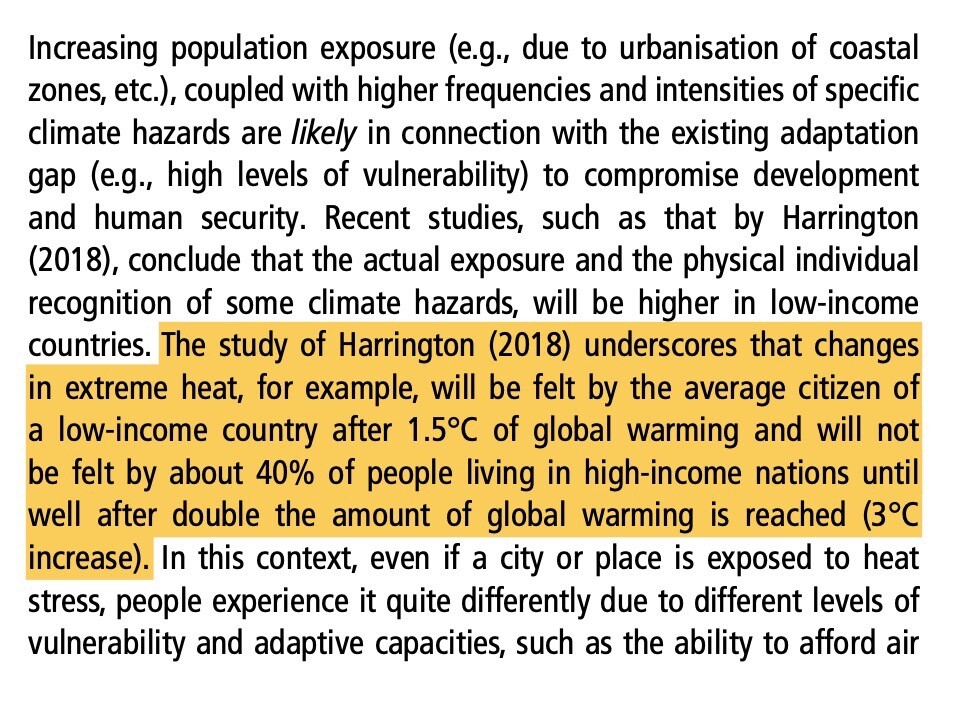
I was struck yesterday by this related snippet from the IPCC AR6 WGII report, posted by David Ho (and I gather courtesy Eric Rostrom), pointing out that heatwave impacts will be unevenly distributed between high and low income people.

At the same time, I also read an interesting piece in the Danish newspaper this weekend suggesting that heatwave exposure is a new marker of class, even in Europe. With the working class toiling in fields, roads, kitchens and on building sites, while the higher educated white collar professionals both able to take advantage of air conditioning and to afford time off in cooler places. This is not a new argument. But it is yet another argument for unions and robust government regulation to try to limit heatwave morbidity and mortality where this is possible. Trades unions may not be able to solve all problems, but they can definitely help when it comes to working conditions!

On a similar note, but outside Europe, the Economist has an unexpectedly excellent piece on how meteorology can help to mitigate weather and climate driven disasters . The whole piece is worth a read as it very much aligns with developments I can see at DMI. They point out for example the great possibilities offered by AI methods in weather forecasting, and how they can be applied to climate models (something I hope to start working on this year), as well as the dangers that AI could be used to undermine the robust national infrastructure that machine learning models are in fact built on.

However, the most important point is that so often, the main challenge is getting extreme weather warnings and other important information out to people affected.

“24 hours’ notice of a destructive weather event could cut damage by 30%, and that a $800m investment in early-warning systems for developing countries could prevent annual losses of $3bn-16bn.”

The world’s poor need to know about weather disasters ahead of time from TheEconomist https://www.economist.com/leaders/2023/07/27/the-worlds-poor-need-to-know-about-weather-disasters-ahead-of-time

If 3 out of 4 of the world’s population owns a mobile phone, then this is an obvious place to start to leverage. (We are already working on this, DMI have new projects with Ghana and Tanzania to develop a climate atlas for this kind of risk mitigation.) So with the WMO focusing on better warnings and communication channels by 2027, perhaps some of the worst impacts of climate change supercharged weather events like heatwaves and floods can be mitigated.

The piece concludes:

No breakthroughs are required to put this right, just some modest investment, detailed planning, focused discussion and enough political determination to overcome the inevitable institutional barriers. It is not an effort in the Promethean tradition of MANIAC’s [sic – an early pioneering weather supercomputer] begetters; it will neither set the world on fire nor model the ways in which it is already smouldering. But it should save thousands of lives and millions of livelihoods.

And this is probably generally true of the way we should think about climate change adaptation in the near and short term: how to leverage the best possible information to help make decisions and nudge behaviour to remove people from harm.

And now back to my last day of holiday…

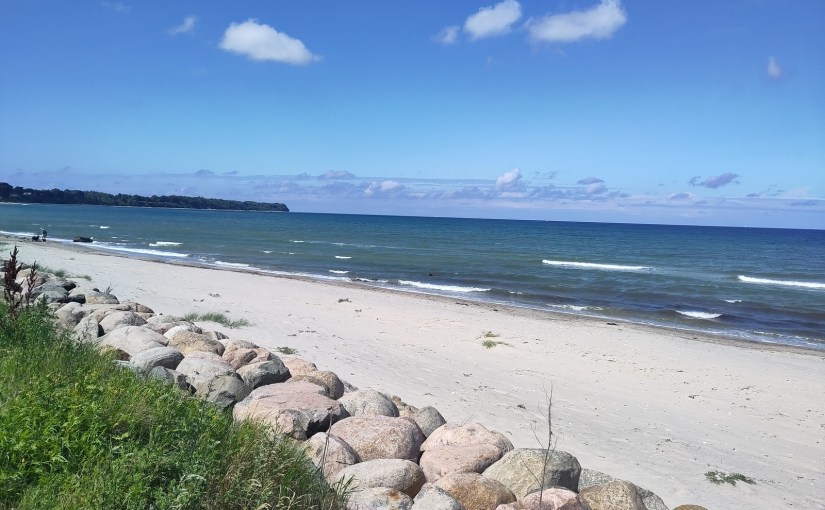
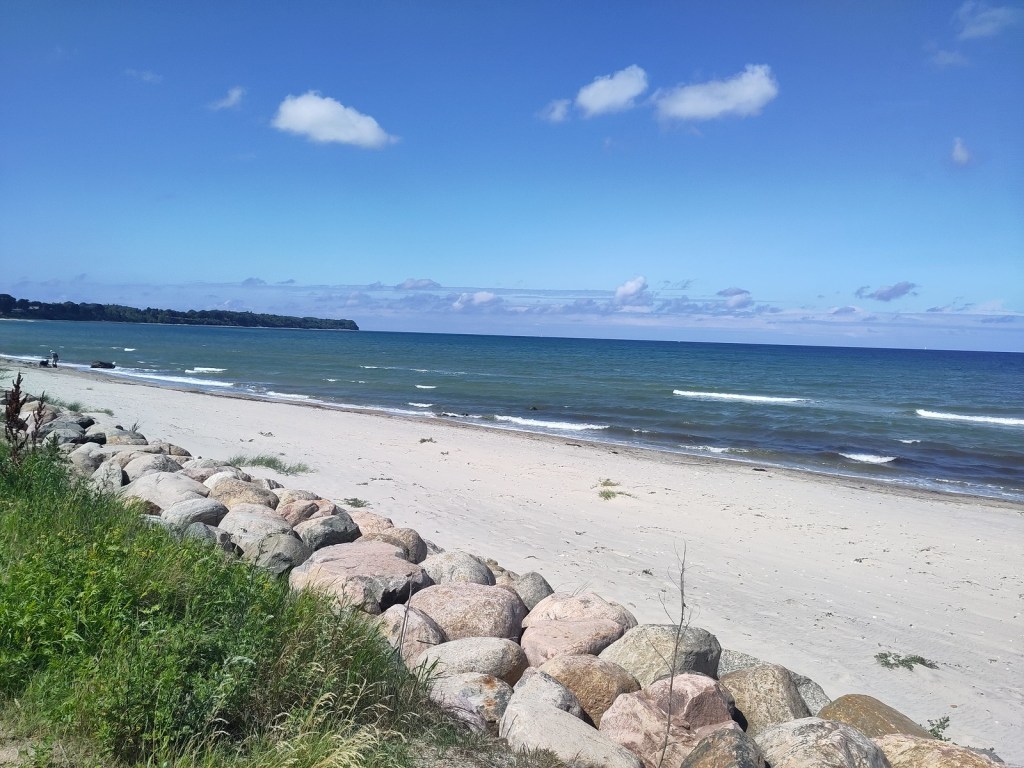
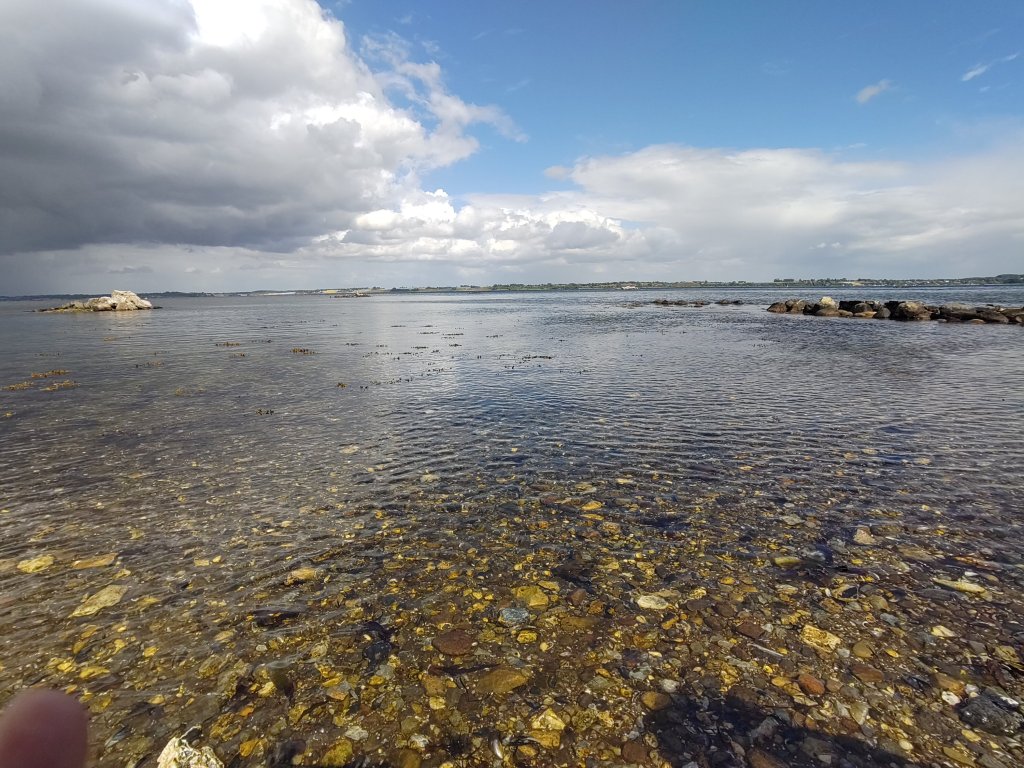
Beaches of northern Sjælland, Denmark

Musings in summer 2023: impacts + adaptation

I was talking to some friends today about climate change – in the light of the latest #AMOC paper, suggesting a tipping point. I’m far from an expert on AMOC so if you’re here for that I suggest this comprehensive piece on real climate from Stefan Rahmstorf.

Or the TL;Dr version in thread form compiled by Eleanor Frajka-Williams, PI of OCEAN:ICE sister project EPOC.

Anyway, the conversation turned to what’s going on this summer.

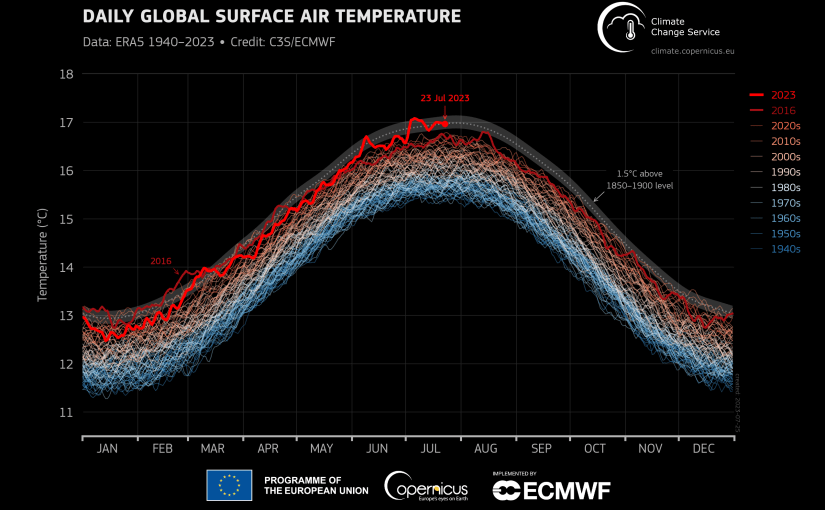
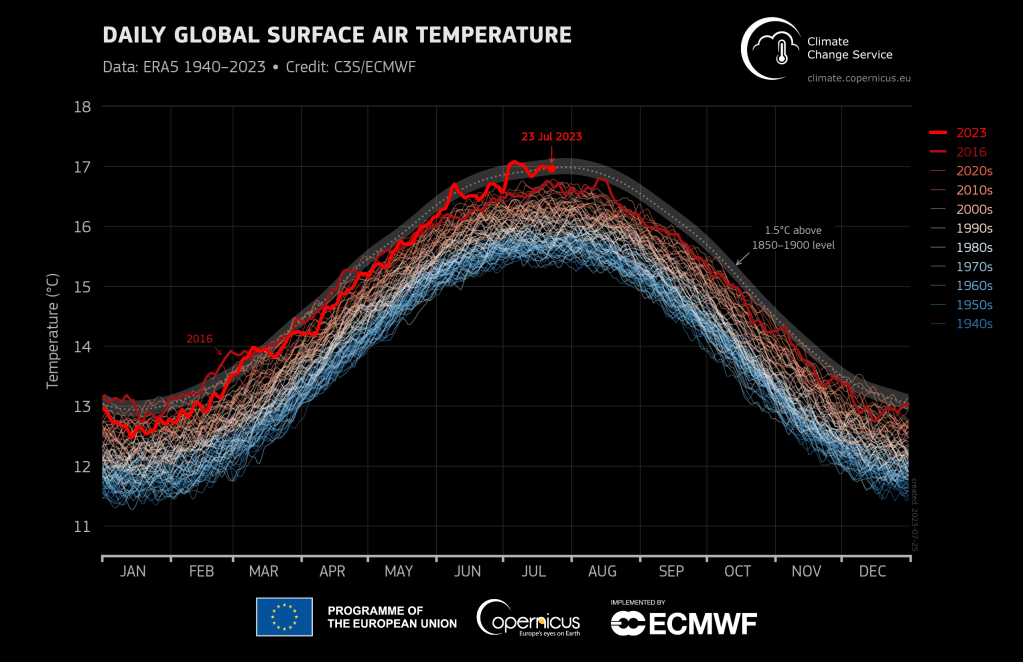
It’s hot, but don’t just take my word for it. Here is the authoritative Copernicus Climate Change Service stating it..

It’s been hot, in short and even if July has been cooler and rainy in Denmark, May and June were hot and record dry..

And it’s fair to say that, as when I’m asked why, or similar questions by journalists, there is an almost overwhelming temptation to say “we told you so”. I think that’s what Antonio Guttieres is getting at here too.

There’s of global boiling is upon us. Apparently. It certainly felt like it on my summer holiday this year…

However, that’s not what I was mostly musing on. Given the apocalyptic heatwaves, strange patterns of warming in the ocean and the Antarctic sea ice loss, it feels a little like end of days.

But pretty much all of these were projected pretty accurately by scientists, even if the timing was a bit off and we’re not entirely sure what is driving that extraordinary downturn in Antarctic sea ice (but do read Zack’s piece linked here, it’s very good).

In many ways, we’re fortunate in Denmark and the rest of rich northern Europe. The worst direct impacts, at least in the near and short term, we can probably adapt to, though it will be expensive. They are mostly engineering challenges with a dollop of social science mixed in. And, we should remember that even in wealthy and well-educated Europe, how heavily climate change impacts us is very much determined by our social class.

However, in the long-term (and I do mean really long-term – on the century to millennia scale), we’re facing something more existential. We’re going to lose a lot of Danish land to sea level rise. Exactly how much will largely be determined over the next 20 to 50 years as there’s a pretty clear relationship between greenhouse gases and melting ice.

But we do have time to prepare for it- and most importantly to have some grown up conversations about our priorities as a society. This is going to require a good bit more social and behavioural science. In the medium term, we will need to prepare for ever more storm surges, but adaptation to coastal flooding also falls into the engineering category.

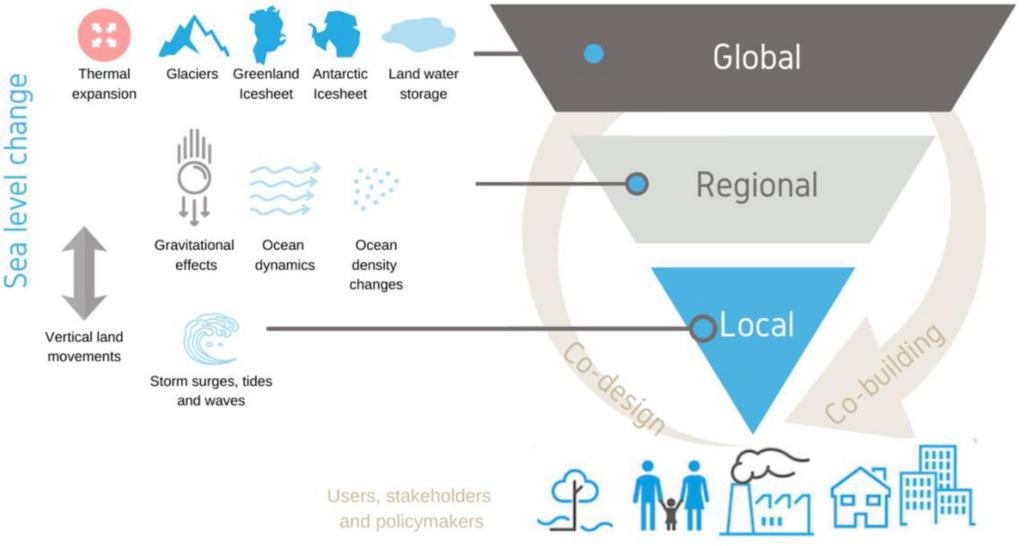
Of course, these local to regional risks still need dealing with and that is largely why my employer has created the awesome Danish climate atlas – to give accurate but also useful climate information to those who need to plan for the future. I suspect an ever greater part of my job will be focused on producing usable projections and climate service information. This is certainly also something we will focus on in the PRECISE project. Being able to make useful sea level rise projections is about more than identifying if an ice sheet is stable* or not, it’s also about how quickly, how likely and how much it is likely to retreat. As we have also focused on at a regional level in the PROTECT project

Figure from our paper in Frontiers describing co-production of useful climate information

So that’s ice sheets and sea level. The tl;dr is, we know they’re melting, we still don’t know by how much and how fast they’ll ultimately melt but we still have time to deal with it, at least in wealthy well educated societies like Denmark,.

There is a whole nother discussion to be had about the global south and less equal societies which I don’t feel confident enough to discuss here.

Where I do think we’re more vulnerable in the shorter and medium term is perhaps surprisingly, food production – and that goes for much of Europe too. It turns out that concentrating large amounts of food production in a few key places might be a big mistake. Especially where those places are vulnerable to drought, heatwaves, over extraction of water, not to mention appalling labour conditions, an over-reliance on groundwater, artificial fertilisers and pesticides.

And then there is some evidence that multiple heatwaves could occur concurrently, threatening food production in compound events across several key regions. Perhaps working out how to make the global food chain less vulnerable to disruption at key points should be more of a focus than it is?

And that’s after the latest banditry from Russia, destroying perfectly good foodstocks and the means to distribute them, has given us a clear wake-up call on the interdependence of human society.

(Anders Puck Nielsen a military commentator has an interesting take on that from a strategic point of view here: https://youtu.be/fvPcPZP-6os which is very interesting for Ukraine watchers)

If I were a wise and concerned government I think I’d be thinking about how exactly we’re going to be feeding our population over the next 5-20 years. Where will be able to produce like Spain and Italy today? Or will diets have to change? How do we persuade people to eat more healthily and ensure that food is equitably spread through society?

This is of course also a part of the job of the other working groups, 2 and 3 of the IPCC – and it’s possibly not just an accident or indeed good lobbying that the new IPCC chair, Jim Skea, is a former WG3 coordinator. Perhaps the IPCC also sees that we have now moved into a new world.

So, these are just some of the things I’m thinking about as I prepare to go back to the office after the summer break next week.

As I observed on Mastodon after the IUGG meeting, and online with this excellent heatmap article. Climate science is entering a new phase. It’s the end of the beginning and it’s time to prepare.

*On the subject of ice sheet stability, Jeremy Bassis has an excellent thread on what this does and does not mean over on Mastodon. Worth checking out

Off to summer camp

Or rather bootcamp. Or, if you (understandably) dislike the slight military overtones of the metaphor, call it a summer school or a hackathon instead….

This coming week I will be at the PolarRES Early Career Researcher (ECR) bootcamp for a few days. It’s being held at Søminestation, now a marine biology research station but also rented out for other academic activities, by Roskilde University Centre.

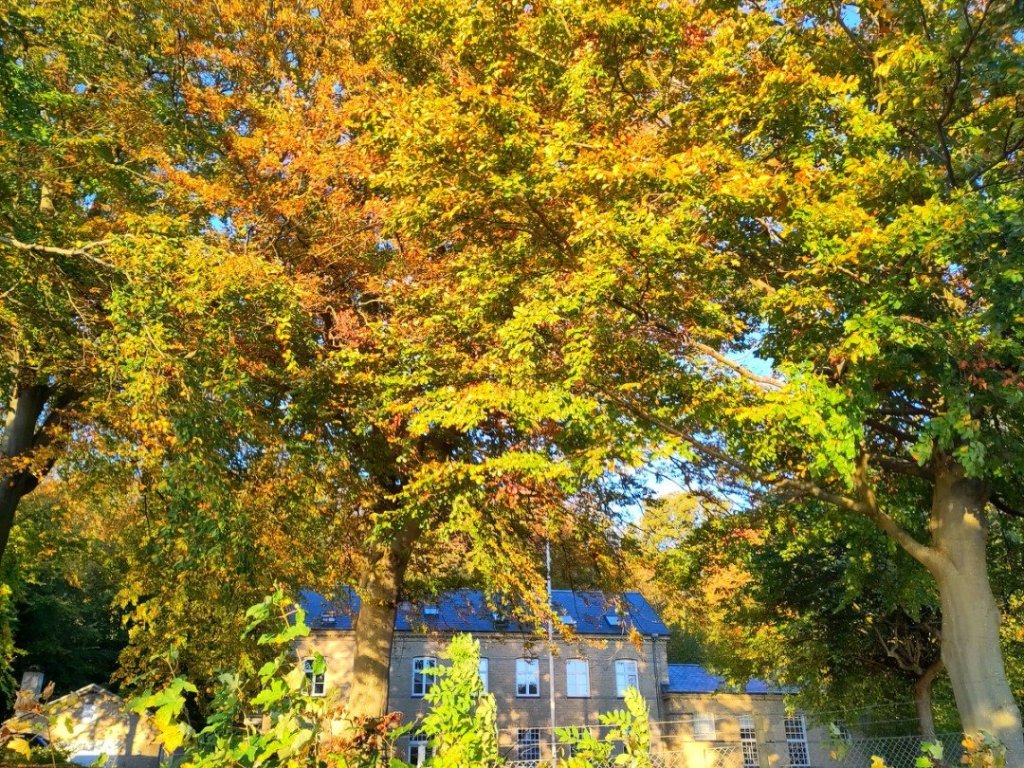
Behind the gorgeous beech trees on the edge of the fjord lies the Søminestation – now administered by Roskilde University Centre (RUC), mostly for marine biology applications I gather…

In a brilliant swords to ploughshares kind of theme, the station was originally owned by the Danish Ministry of Defence for developing and testing torpedoes. Happily, it’s now a place of sanctuary for busy scientists. It’s ridiculously idyllic, right on the edge of the fjord with a tiny beach which makes swimming easy and safe, lots of wildlife to enjoy and a recently renovated interior in impeccable Danish minimalist style.

The buildings are nestled in the forest with trails all around and it’s reached on quiet roads perfect for cycling. Food is delivered daily by a catering company and the bootcamp participants sort their own breakfast and lunches from a large assortment put out in turn by small groups. It’s a really perfect location for team building and reading weeks.

This is actually the 2nd bootcamp I’ve attended there. I organised the last one at the same place last October, in collaboration with many colleagues and fellow members on the NORP panel.

Then, the bootcamp subject was the Arctic and how well the CMIP6 global climate models (as used by the IPCC in their Sixth assessment report) represented the important processes. We had 23 students and 10 mentors, working on various aspects of this big problem for 10 days. We covered everything from sea ice to ocean circulation to atmospheric teleconnections to the Greenland ice sheet (natch). 

This artificial jetty was built to help launch torpedoes on a firing range in the 1930s to 1960s, now it’s a nice spot for a group of young scientists to take a walk and talk

They’re also exhausting. And I don’t think I was the only one who went home after 10 days last year and basically crashed for a week.

On the other hand, there will almost certainly come at least 3 publications from last year’s bootcamp. I wouldn’t be surprised if this year had a similar count. It’s a really brilliant way to get a lot of high quality work done in a short space of time.

It was overall a fantastic experience – albeit rather hectic, not least because we had to delay twice due to Corona, as did many other people so it was back to back with far too many other meetings. However I’d love to do another one, I find them incredibly stimulating and exciting from a scientific viewpoint. So I leaped at the opportunity to come back for a few days for the new PolarRES organised effort.

Dawn swimming in the Holbæk fjord by Søminestation
Don’t get the wrong impression, the work sessions at this bootcamp started at 8.30am and often went long into the evenings.
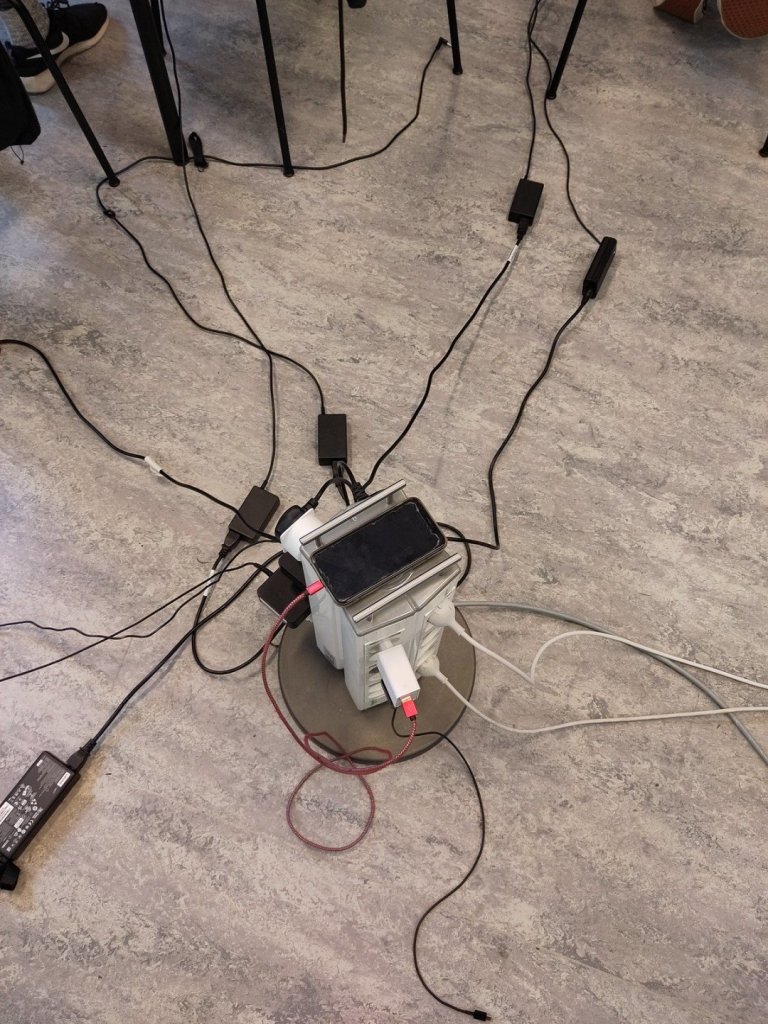
It’s not just the people but the IT equipment that’s working hard… Thanks to strong winds during the bootcamp most of the energy used in Denmark was renewable, but we also relied quite a lot on cloud infrastructure to power data analysis. That’s going to be the next target to decarbonise.

I will sadly not be attending the full week – I have family commitments- but I will lecture the first day (on “Hot topics in polar climate”: would love to hear your ideas on that in the comments…) And I’ll be around a few days to help support the group work as far as I can.

I’m mainly planning on using the time to prepare a talk for the IUGG meeting, and to write a draft paper. Both of these tasks already involve many of the early careerers at the bootcamp so it’s also a great opportunity for me to get a few things done.

It probably points to some of the problems in the working world, that I actually need to leave the office in order to get some work done…

Time to get back to the beach.


The beach at Søminestation:
“I do not know what I may appear to the world, but to myself I seem to have been only like a boy playing on the seashore, and diverting myself in now and then finding a smoother pebble or a prettier shell than ordinary, whilst the great ocean of truth lay all undiscovered before me.” Attributed to Isaac Newton (allegedly)

Bringing back the wild to Europe

Today the European Council is debating (behind closed doors), the proposed Nature Restoration Law – there has been heavy lobbying by several EU countries to water down the provisions. I believe this is a mistake and last week I and almost three and a half thousand other scientists signed a petition saying so.

It has now been reopened for signatures. Please do sign if you feel strongly about it. It’s worth a read anyway as the organisers (probably being scientists!) have written out what the agreement means in admirable clarity:

https://umfrage.uni-leipzig.de/index.php/837218?lang=en

Europe is a nature depleted continent already – restoring, or at least preserving what we can is going to be crucial in coming decades. And where Europe leads and sets strict environmental standards, other countries follow.

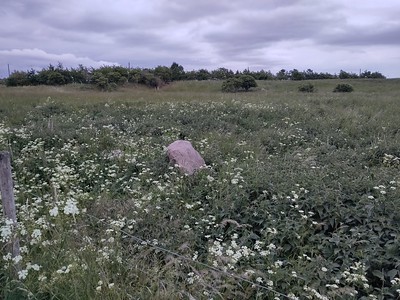
Rough land which has been allowed to turn into a wildflower haven in Copenhagen

I am a climate scientist who has become increasingly interested in and concerned about biodiversity. I have had a deep love and sense of wonder about nature since I was a kid – and probably my interest in glaciers and weather and climate have in in part grown out of that. I’m not a biodiversity expert, but I am acutely aware of the impact climate change is already having on the biosphere. It is at a fundamental level very hard to separate climate from biodiversity and probably unwise to try.

In the past I’ve considered it was a scientist’s duty to advise impartially and therefore to be politically completely inactive, I have regretfully come to the conclusion that actually, maybe we as a community do need to push a little more firmly in the direction our science is actually pointing us. Perhaps it is in fact irresponsible not to be involved?

As the great atmospheric chemist and Nobel Laureate Sherwood Rowland once said (in 1986!):

“After all, what’s the use of having developed a science well enough to make predictions, if in the end all we’re willing to do is stand around and wait for them to come true?”

Brodeur, 1986

This quote is something I have thought long and hard about myself. And I’m not the only one in the climate field for sure. If our biodiversity colleagues are also wrestling with this, then I also recommend this brilliant piece by NASA GISS scientist Gavin Schmidt in the Bulletin of Atomic scientists.

The petition I linked to above has been organised by german scientists, experts in ecology and biodiversity. They emphasise:

“Being proactive is thus important. We would therefore appreciate if you found your way of communicating this letter in your surroundings, and help delivering the science to whoever may be interested in it. The purpose is not to lobby but rather to support, to offer help, maybe even mediate where possible.”

We’re scientists and we’re also public servants.

Use us to help guide policy. If scientists are ringing alarm bells, then somewhere there is a fire…

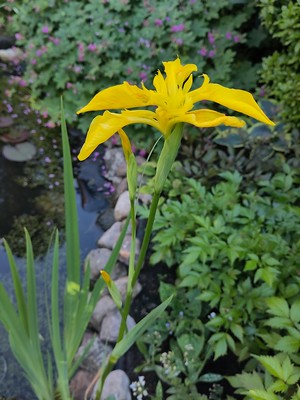
Yellow flag iris around a wildlife rich garden pond.

Celebration time: PRECISE

Quick update: our project website is now live where updates will be posted as we go…

The news is now officially out: I’m really delighted to announce the funding of our large project, PRECISE, by the Novo Nordisk Foundation.

The project is led by Professor Christine Hvidberg at the Niels Bohr Institute and there is a really nice interview with her on their website about our plans that’s worth a read. I’m co-PI and lead on surface mass balance processes and coupled climate models within the project so I thought it might be worth giving a quick overview of what we hope to achieve.

TL;DR? We will be improving estimates of and assessing the uncertainties in sea level rise projections from the two big ice sheets in Greenland and Antarctica.

Every science proposal has a graphic like this somewhere showing how the whole project hangs together.
This is ours…

Slightly longer version: we’re using new approaches from materials science to incorporate “new” physics in ice sheet models. We’re also integrating in-situ observations and satellite data into our model frameworks and using these to train machine-learning tools. My work package will emulate our physics based numerical climate models to expand the ensemble and generate a statistical approach for assessing ice sheet stability as well as investigating important feedbacks between different elements of the earth system. Finally, we (or rather my colleague Christian Rodehacke and his postdoc) will run our coupled climate – ice sheet model (EC-EARTH-PISM), including these advances, to generate new sea level rise projections.

The outputs from all these experiments will be communicated and developed in collaboration with the Danish Klima Atlas (Climate Atlas) to ensure we are focused on the right kind of data and time periods for use by stakeholders and local populations when it comes to adaptation planning.

Current projections of change in average sea level around Denmark from the klima atlas

So why this project?

One of the most iconic images to come out of the last IPCC 6th asessment report (at least in my little corner of the climate science universe) is this one on sea level rise projections out to 2100.

Much of climate science has, at least to some extent been “solved”. At least in the sense that we understand the mechanisms and processes quite well and the remaining uncertainty is to some extent tinkering around the edges, often bound up with uncertainty on scenario, or related to impacts – there’s still quite large uncertainty on what will happen to the Amazon rainforest at different levels of emissions for example. However, sea level rise is really an exception to this. It’s very difficult to be sure that some very unpleasant surprises are really implausible.

We’re reasonably certain that global mean sea level will rise by at least 2 metres and around a metre by the end of this century with further sea level rise likely to continue perhaps for centuries.

The IPCC for example, concluded that sea level rise of 15 metres or more by 2300 can’t be ruled out, even if it seems rather unlikely. And this poses a pretty large problem to planners, politicians, stakeholders and providers of coastal services. Working out how far and how fast we expect the sea to rise is really our challenge.

But there is also a risk of abrupt and extreme sea level rise that could come round the corner to surprise us. However, it’s hard to know how likely this is or even how to evaluate that risk.

This has become something of a theme for me in the last few years. I have been working on the Horizon 2020 project PROTECT which very much focuses on the cryosphere and sea level rise, and I’m coordinating Horizon Europe’s OCEAN:ICE which focuses much more on the influence and feedbacks between Antarctic ice sheet and ocean.

Where PRECISE differs is that we have the flexibility within this project to develop new and innovative techniques that we’re not quite sure will work: especially the development of machine learning tools.

The EU science budget is a brilliant thing, but risky research is difficult to get through, the Move Nordisk challenge centres allow us to try really new and, yes, risky techniques. Though climate is a new topic for them, so we’re very much test bunnies in this new phase of funding science for them.

So what are we going to be doing practically?

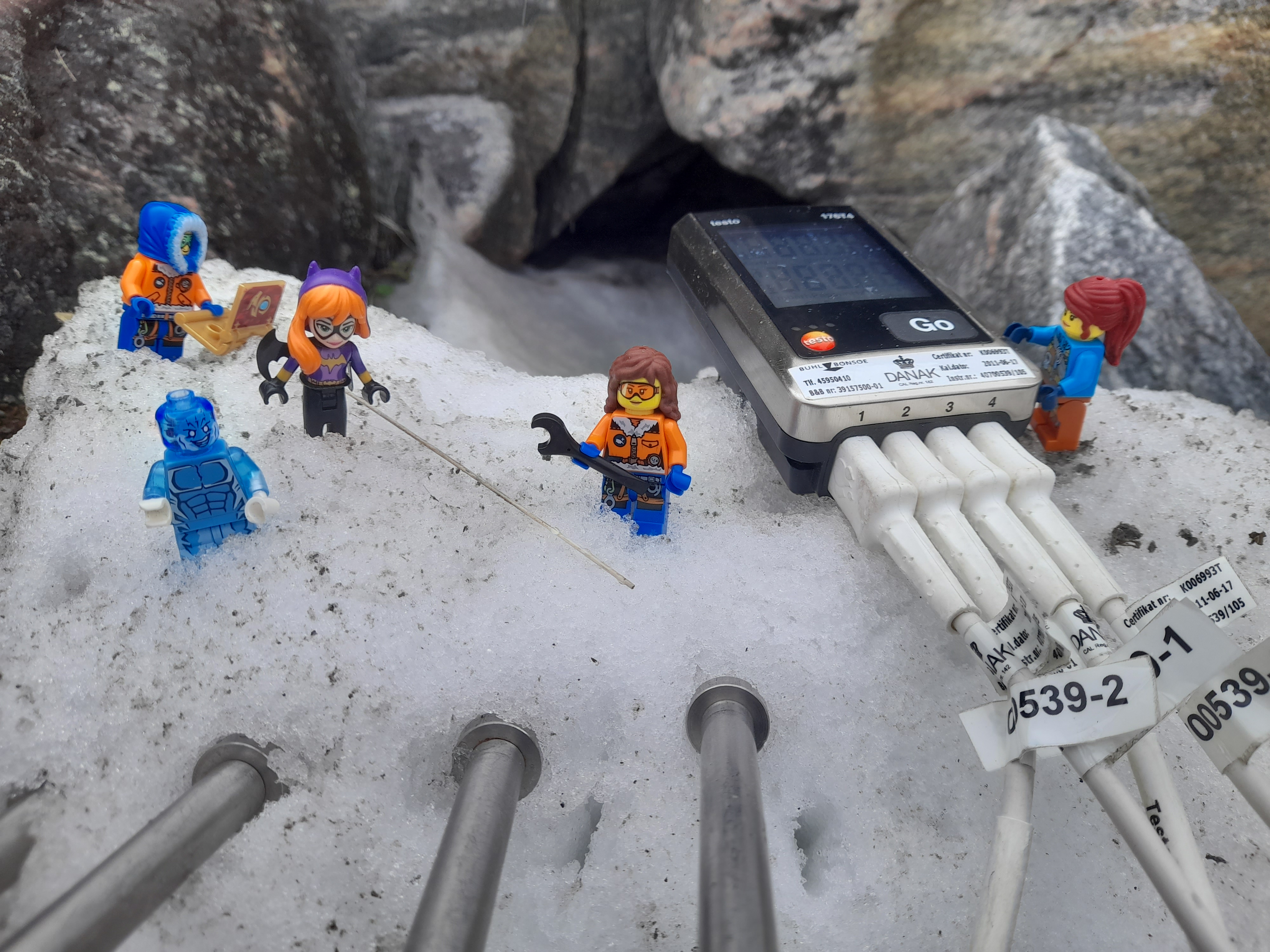
Measuring snow pack properties in Greenland, with the help of the Lego scientists..

Our partners at NBI include Joachim Mathiesen, Helle Astrid Kjær, Aslak Grinsted and Nicholas Rathmann. They will be focusing on assembling field data from both ice sheets, and developing new physical solutions for ice sheet models based on solutions from materials science. They will be looking at phase field approaches for ice flow, at new solutions for calving and ice fracture and integrating these into ice dynamical models. NBI will also be doing fieldwork to collect new surface mass budget (SMB) data from the ice sheets.

A new ice fracture appears, how to understand and model these is a key part of the NBI contribution in PRECISE project.

The SMB part of the work is part that I’m especially involved in. Not just in modelling SMB with our climate and weather models as we do on the polar portal but also in getting a much better understanding on the uncertainty in these models associated with precipitation (which is much higher than that associated with e.g. temperature, especially when it is snowfall). So new observations with a high time resolution will be key for improving our current snowpack models.

A shallow ice core, in this case sea ice, but part of the fieldwork will focus on taking more of these samples and doing isotope analysis on situ to get high quality data on snowfall accumulation

We will also be working on bringing regional climate emulators into use over both ice sheets to see how varying starting conditions will vary the outcomes. We know that on a chaotic system like weather starting conditions are key and emulators allow us to do many many more experiments than with our physics based numerical codes alone. It’s pretty cutting edge stuff right now but I know several groups are working on this – including this fantastic paper that recently came out of the Delft/Leuven group, which really shows what is possible

Our other collaborator, Hilmar Gudmundsson at University Northumbria Newcastle will be working on implementing these processes in ice sheet models and examining how plausible instability in ice sheet simulations is using ensembles of multiple model simulations. They will also be using and developing their ice shelf emulator to look at basal melting and investigating the potential instabilities in Antarctic ice shelves that could lead to abrupt sea level rise.

Finally, bringing it all together, our EC-Earth-PISM model will be deployed to do coupled climate and ice sheet simulations to see how the two ice sheets influence each other. This work will mostly be supervised by my DMI colleague Christian Rodehacke.

The project will receive 42 million Danish kroner in total (about 5 million euros) of which 8 million dkk will fund work at DMI, work to be carried out by 2 postdocs and a PhD student (so if this sounds like something you’d be interested in working on do get in touch) over the next 6 years from September. In fact most of the funding we have received will go directly to early career scientists, there is nothing in the budget for us seniors! Naturally this has some disadvantages, but given the rapidly aging population within Europe and European science, I see it as a positive and we have lots of cool summer schools, bootcamps and other networking activities planned that will hopefully reach out beyond PRECISE to the rest of the ice sheet – climate community.

So watch this space…