Most people outside of Denmark know about hygge these days, but the term janteloven is less familiar. For British readers the most appropriate translation would be tall poppy syndrome.
Anyway, I’ve hesitated a bit to write this post a bit, but at the same time I am delighted and proud and actually a bit surprised to have been awarded an honorary Professorship at Aarhus University.
My very kind and extremely smart former boss at DMI, Professor Peter Langen, now leads the Environmental Science Department at Aarhus University (actually based at Risø near Roskilde and not in Aarhus). He put me and my amazing and very talented colleague Shuting Yang forward to the University for this honour earlier this year and we heard just before the summer break it had been accepted.
It’s a purely honorary position, so I don’t get paid by the University, on the other hand it doesn’t come with any obligations either and it lasts for 5 years. I’m hopeful though that it will lead to new and exciting collaborations and maybe even new studentships and other programmes. I’ve always enjoyed working with students, so if you’re at Aarhus University and looking for a thesis supervisor working on polar climaet and ice sheets, give me a shout.
I already co-supervise one PhD with the Environmental Science department and I’m extremely impressed with the calibre of research there. The universe moving, as it does, in mysterious ways, a few days ago we also got good news about Horizon Europe funding that will also facilitate closer working with AU so watch this space for more on that front.
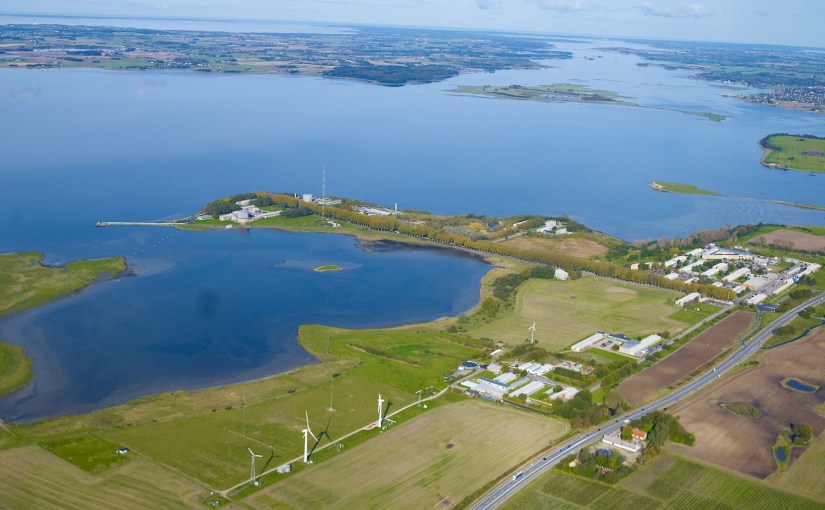
Now I guess it’s time to start thinking about an inaugural lecture or something and I’m looking forward to exploring the rather beautiful fjordside campus of Risø when I get chance.
Over on Blue sky I found a link to this piece by Daniel Nettle – a reflection on life as a researcher, the race for the glittering prizes of high profile publications and how to “succeed” in academia, where succeed has the simple metric of ‘in ten years.. to have remained alive, and ideally continued doing some research.’
Ten years ago in Greenland, I did not imagine I’d still be doing this job-
I found myself very much nodding along with the sentiments of the piece, the conceit that
“Our seduction was by the primary research process: the idea that you could find a question; hit on your own approach; perform and manufacture the work; and finally, see it there in print, with your name attached, a thread woven in to the tapestry of human knowledge. A thread of memory.”
that also motivates me and apparently others in the research world. I still think that idea of building something bigger, no matter how tiny the contribution, the sum total of knowledge is a motivating factor. As Daniel writes, it’s a seduction, but it is also one that resonates and lasts, even through those years when the grind gets you down…
This part also made me laugh in recognition about what makes people persevere in research:
“If she [a student interviewing professors about success in academia] knew how narrowly I have hung on, I thought, she might have chosen someone else for her assignment.”
It’s not always easy keeping going, much of our work requires intrinsic motivation and it too often dissolves into something self-destructive. Famously, science and research in general is prone to mental health problems and I rather liked the characterisation here:
“Periodic demoralization and depression are not rare amongst researchers. It’s not not caring any more, or not being able to be bothered, as depression is often and erroneously characterized. It is caring so much, being so bothered, that one cannot advance on any front. One drowns in one’s own disorganized and gradually souring passion. This feeling is probably near-ubiquitous too.”
But persevere we do and persevere we must and where I thought this piece gets really interesting is where he points to the techniques and lessons that lead us to surviving the academic environment. As the essay is rather long, and a pdf, I thought I would summarise his main lessons here. The first one is I think the most important and while he calls it every day has to count for something (where every day means every *working* day, time off is still essential). I prefer to summarise it as just one thing.
Lesson 1. Every day has to count for something
“I try to start each working day with a period of uninterrupted work. Work, for me, is: collecting data, analysing data, writing code, drafting a paper, writing ideas in a notebook, or just thinking. Things that do not qualify as work are: background reading, literature searches, answering correspondence, marking students’ assignments, peer-reviewing a paper, sorting out my website, correcting proofs, filling in forms, tidying datasheets, having meetings, and so on.”
This goes back to paying yourself first. I’m not always very good at doing it, but I also try to do something meaningful and deep work like each day. Part of the reason I have found the last few months quite hard at work is a surfeit of meetings, workshops and travels, which have been in general quite destructive and distracting from the main work of the day, which could probably be summed up as, learn how the icy bits of the world work. My #AcWriMo efforts as well as #30dayMapChallenge in November were in effect just the kick start I needed to get back into the real scientific work of research, because as Daniel Nettle so eloquently put it:
Daily deep work keeps the black dog away, for there is nothing worse for mood than the sense that one is not progressing. And it can spiral in a bad way: the more you feel you are not progressing, the worse you feel; the worse you feel the more your hours become non-deep junk; and the more exhausted you are by non-deep junk hours, the less you progress.
Not all black dogs are bad.
Lesson 2. Cultivate modest expectations
This was a curiously freeing part to read and I absolutely agree with it. Too often what John Kennedy calls Natureorscience papers are seen as the gold standard. And yet as Daniel Nettle eloquently points out:
the glittering prizes we academics strive for are positional goods kept deliberately scarce by bureaucratic or commercial interests, and allocated in ways whose relationship to long-term value is probably quite weak. For example, Nature is a for-profit enterprise that rejects nearly everything in order to defend its exclusive market position. If we all send everything there, the rejection rate goes up. If we all increase the quality of our science, it still nearly all gets rejected, by the very design of the institution. The idea that all good papers can be in Nature or Science is as ludicrous as the idea that all Olympic athletes can get gold medals, but without the strong link between actual ability and finishing position that obtains in the Olympics.
It’s absolutely true that a natureorscience paper on the CV is seen as a big thing, the ultimate to strive far. And it is. Getting through the review process is in itself an achievement. But it’s also worth bearing in mind that many natureorscience landmark studies don’t stand the test of time. They rarely shift paradigms, though they can focus attention on new subjects, and sometimes that’s a new and important field. And sometimes it’s a distraction. I can think of several notable examples published since I started working in glaciology (but no, I’m not going to call them out here). The text in these journals is often far too compressed to get important details in, I recall an old mentor suggesting that the natureorscience paper is the advert, the starter that reels you in. The good stuff, the actual filler that makes you look at the world anew with its insights, new methodologies and the rest, is very often in a very different journal. So go for natureorscience if you get the opportunity, and if you have the results, but aiming for there from the start is not necessarily the right way to position your research career. Though as this post is now veering dangerously towards giving advice rather than simply expressing my usual slightly scrambled thoughts, take this one with a dollop of Atlantic brine..
For what it’s worth though, I do believe this:
Great art often begins on the fringe. Similarly, valuable future paradigms and innovative ideas start life in obscure places. Journal editors cannot yet see their potential, and the authors themselves are tentatively feeling their way into something new. So by focussing on capturing the established indicators of prestige, you distort the process away from answering the question that interests you in an authentic way, and into a kind of grubby strategizing. Or so I tell myself, admittedly through clenched teeth at times.
Lesson 3. Publish steadily
Is back to just one thing in a way.
the mistake a lot of people make is focussing too much on getting the big shot, the single career-establishing paper in a top journal, and therefore not quietly building up a solid, progressive portfolio of sound work.
Doing the work is the best advice I can give and the advice I would give myself back in the early days of what has become (almost by accident) a research career. Now, I would hesitate to say publish something every year. I know scientists who insist on one first author paper a year, and some who strive for 3. Both seem arbitrary and potentially dangerous in terms of motivation, particularly for a young ECR just making their first steps and unsure of how to do it. Nevertheless it’s certainly true that, regardless of publish or perish, just the feeling of making forward progress, however incremental, is so important. Keep the momentum going. It’s part of what makes the traditional british PhD ending with a big book so hard, there’s no feedback on the way. Just an hour a day (or even an hour a week in busy times) is enough to keep me moving forward, and it’s often enough to produce a decent paper, eventually. And don’t worry, science is highly collaborative, I wouldn’t be able to do it without all my colleagues to remind me on, nudge me to get on with something and keep the wheels turning. I love you all for it too…
So if you are worrying about staying the game, rather than planning your next Science publication, I would ask yourself where your 1-2 solid papers each year are going to come from. Just as you should not go a single day without proper work, you should not go a single year without publishing anything, as one year rapidly becomes three.
Lesson 4: Get your hands dirty
This is why I do field work. But it’s also why I’ve embraced the opportunity to learn more about deep learning and AI/ML methods. Learning new stuff is exciting, it keeps you fresh and helps make new connections. It’s when disciplines cross-connect that the exciting stuff happens and the sparks fly in the brain.
“Keeping your hands dirty also means learning how to do new things. And this is a good thing: the skills I picked up in graduate school could not possibly have sustained me this long. Learning new skills has always paid dividends of one kind or another; and stepping back from doing primary research myself has always been the point at which things have started to go less well.”
I have written one too many white paper style articles recently, it’s time to go back to the field, and back to the code to see if we can make things better by integrating the data and the models.
Learning to fly a drone and to process the data is something I’ve been working on the last few years. I have a really exciting dataset now but little time to work on it. Ifyou’re looking for an interesting MSC thesis project get in touch!
A note of caution though, it’s always easier to start something new than finish an old project. The best colleagues will help you stay on track and make sure you finish what you started!
I’m going to add one more point, which isn’t expressly mentioned in the original piece that started this ramble:
Lesson 5: Cultivate outside interests.
Far too many of us put families, friends, sports, hobbies and anything else that doesn’t taste of work to one side, in pursuit of the all-consuming. It’s not only not healthy, it’s also limiting. The brain needs time off to churn away by itself. You can’t force that unconscious process. Better to take a long walk to admire the flowers than try to twist your brain in knots when you hit a wall. A good night’s sleep is an amazingly effective part of the research process too.
So there we have it, some thoughts on being a (mid-career) scientist and how I have managed to stay in the game. YMMV as the Americans say.
Finally, all that I have said relies on having a supportive employer and good colleagues. The sometimes horrifying stories (take for example this one) of people being pushed out by bullying colleagues, or structural discrimination is a whole other story. And not one I’m going to take on here, but I would point out that without organisation, labour inevitably gets crushed by capital, so organise, join a union, find out what your rights are and make sure that you have a supportive hinterland to help you get through the bad times.
And everyday, do just one thing to help you advance.
This is the first in a two-parter. At this time of year, posts making bold statements about what happened last year and what we plan to do this year start to become prominent. The last few years I have spent a few hours in the first week of January reviewing what worked, what was fun and what was cool, what was awful and what definitely was a waste of time. I’m not honestly sure that any of this is of interest to anyone except me, so read on, but you have been warned..
2024: Themes of this year: Greenland, Machine Learning, people, and big data…
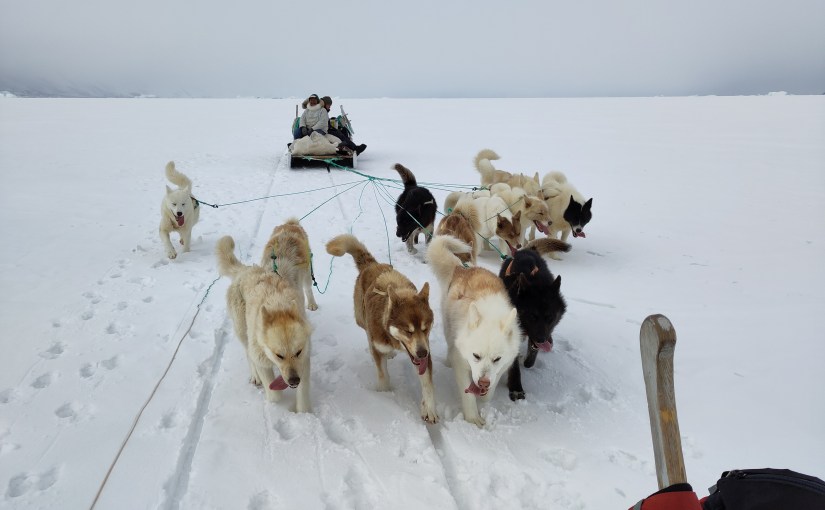
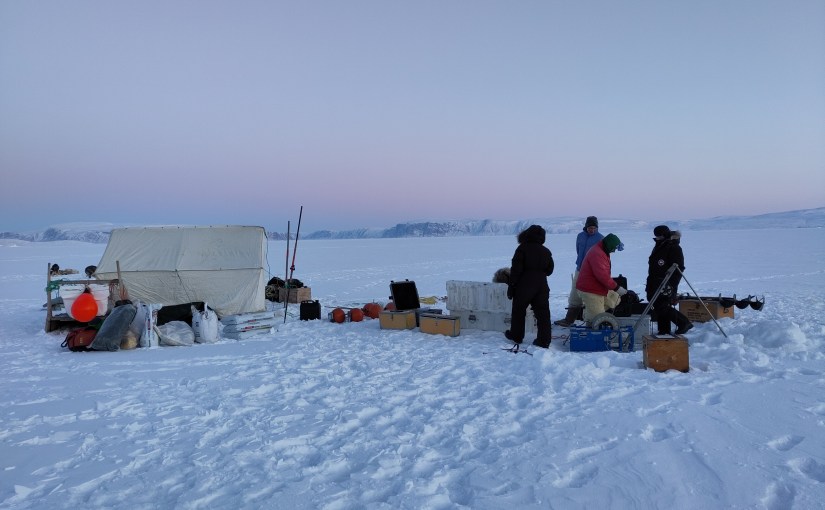
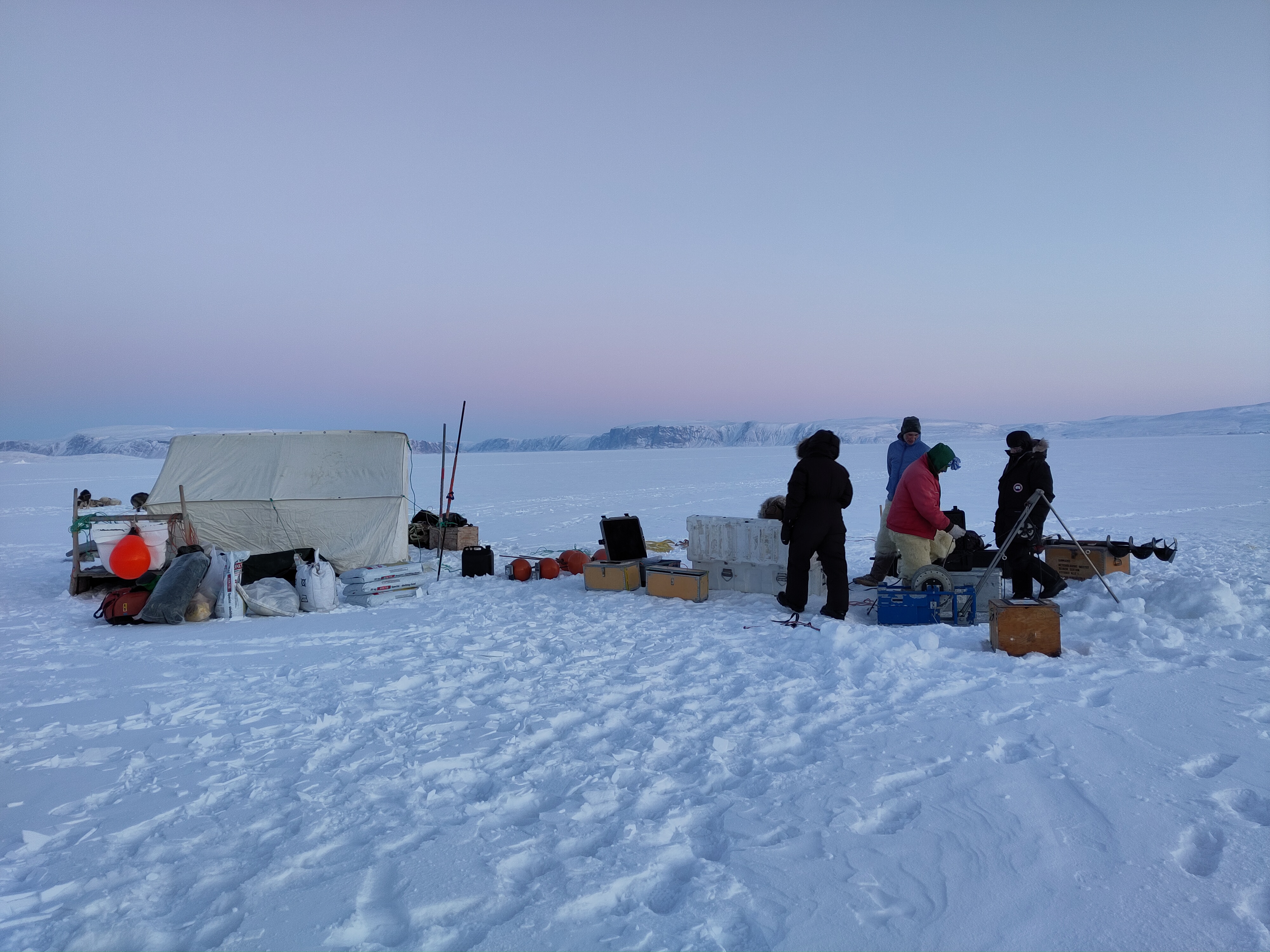
Working with scientists from the Greenland natural resources institute and local hunters on the sea ice.
The final trip was in October for a workshop with scientists in Greenland about climate change impacts in Greenland, the subpolar gyre and AMOC for the UN Ocean decade. It was a memorable meeting for the sheer range and quality of science presented as well as for being stranded in Nuuk by a broken aeroplane in quite ridiculously beautiful weather (I mostly stayed in my hotel room to write the aforementioned paper, sadly. In 2025 I will work on my priorities) .
Apart from fieldwork I have really tried hard on publications this year. I have (like many scientists I suspect), far more data sitting around on hard drives than I have published. It’s a waste and it’s also fun to work on actual data instead of endless emails. This is something I intend to continue focusing on the next few years as well. There is gold in them thar computers…
We had a couple of writing retreats were very successful. These I plan to continue also and the PRECISE project grant is happily flexible enough to do this. I probably achieve as much in terms of data processing and paper writing in 3 focused days as I would in 3 months in the office. It paid off too. I managed to co-author 8 papers published this year (including my first 1st-author paper in ages – a workshop report, but nevertheless it counts.). Some of these are still preprints, so will change, and there are a couple more that have been submitted but are not yet available as preprints. I will submit two more papers in the next 3 weeks as well (1 first author), so January 2025 is going to be the 13th month of 2024 in my mind.
Bootcamps have been a theme the last 3 years, I organised the first in 2022 and so far there have been 4 publications from that first effort. There was another this year in June, ( I have attended them in 2023 and 2024 but was not organising) where we really got going on a project for ESA that I have had my eye on for a while – I hope the publication from that will be ready in the Spring this coming year.
Machine Learning: This was the year I really got machine learning. I’ve been following a graduate course online, and learning from my colleagues and students about implementations. I understand a lot more about the architecture and how to in practice apply neural networks and other techniques like random forests now. This is not before time, as we intend to implement these to contribute to CMIP7 and the next IPCC report. We still have a lot of work to do, but the foundation is laid. And it’s been fun to learn something that, if not exactly new, is a new application of something. In fact the biggest barrier has really been learning new terminology. We have also been fortunate that Eumetsat and the ECMWF have been very helpful in providing us with ML-optimised computer resources to test much of these new models out on. We’re actually running out of resources a bit though, so it’s time to start investigating Lumi, Leonardo and the new Danish centre Gefion to see what we can get out of these.
People: This year our research group has grown with another 2 PhD students, and at the end of the year we also employed a new post-doc. I think it’s large enough now. I’m very aware that if I don’t do my job properly, then not only the research but the people will suffer, so developing people management skills is really important. In any case it’s extremely stimulating to work with such talented young people and I’m really excited to see where the science will take us, given the skills in the team. I hope I have been good enough at managing such a large and young team, but I have my doubts. A focus for 2025 for sure.
Data: This has been the year of big data, not necessarily just for ML purposes but also in the PolarRES project the production and management of an enormous set of future climate projections at very high resolution. More on this anon. Suffice to say, it has taken a lot of my time and mental energy and it’s probably not the most exciting thing to talk about, but we now have 800 Tb of climate simulation data to dig into. I suspect that rewards of this will be coming for years. There has also been a lot of digging into satellite datasets and the bringing together of the two has been very rewarding already. It’s a rich seam, to continue the metaphor, that will be producing scientific gold for many years.
Projects: we have gone in the final year of two projects, PROTECT and PolarRES, both of which will finally end in 2025. We also arrived at the half way point of OCEAN:ICE. So rather than being a year of starts, it has been a year where we have started to prepare for endings – actually this is a fun part of many projects where a lot of the grunt work is out the way and we can start to see what we have actually found out. It can also be a slog of confusing data, writing and editing papers and dealing with h co-author comments. I’ve definitely been in that process this year, hopefully with some of the outputs to come next year…
Proposals: I started 2024 writing a proposal. Colleagues were in 3 different consortia for the same call, alas ours didn’t get funded, but 2 of the others did and will start this year. That is a good result for DMI and our group. I wrote another proposal in the Autumn and contributed to a 4th and finally at the end of the year I heard that both will *likely* be funded (but are currently embargoed and in negotiation, so no more will be said now). It sometimes feels that spending so much time and energy on proposal writing is putting the cart before the horse, but in fact I find proposal writing something akin to brainstorming. It’s essential of course to ensure we can continue to do the science we want, but it can also help us to clarify our ideas and make sure we’re not on the wrong track. It’s also a good way to keep track of what the funders are actually wanting to know and to help us focus on policy relevance.
There was also an incredible number of meetings, reports, milestones and deliverables, but you probably don’t want to hear about that…
Also missing from this summary is personal life, and, well that is not for sharing publically, but suffice to say, I learnt about raising teenagers, I also had some very good times with friends and family, to all of whom I immensely grateful for being a part of my voyages around the sun.
Anyway, reading all that back, I’m not surprised I ended the year exhausted! I am not planning on quite such a slog in future. I should probably pace myself a bit more this year, the plans for which will be the subject of next week’s post.
Hands-up who is looking for a new and very cool job in ice sheet and climate modelling and developing new machine learning tools?
REMINDER: 4 days left to apply for this PhD position with me at DMI looking at Antarctic Ice Sheet mass budget processes and developing new Machine Learning models and processes.
UPDATE 2: The PhD position on Antarctica is now live here. Deadline for Applications 18th February!
UPDATE: It’s not technically a PRECISE job, but if you’re a student in Copenhagen and are looking for a part-time study job (Note that this is a specific limited hours job-type for students in higher education in Dnmark) , DMI have got 2 positions open right now, at least one of which will be dedicated to very related work – namely working out how well climate and ice sheet models work when compared with satellite data. It’s part of a European Space Agency funded project that I and my ace colleague Shuting Yang, PI on the new TipESM project, are running. Apply. Apply. Apply…
This is a quick post to announce that our recruitment drive is now open. We’re split across three institutes. We are two in Copenhagen, ourselves at DMI and the Niels Bohr Institute at the University of Copenhagen, and then the University of Northumbria in Newcastle, UK.
The PI at the Niels Bohr Institute is the supremely talented Professor Christine Hvidberg, aided by material scientist and head of the institute, Joachim Mathiesen. I am leading for DMI, and the Northumbria work is led by Professor Hilmar Gudmundsson. We are also very fortunate to have the talents of Aslak Grindsted, Helle Schmidt, Nicolas Rathmann and Nicolaj Hansen already on board.
The project is already very cohesive between institutes, we’ve been working together for some time already and know each other well.
We have a good budget for travel and exchanges between groups, workshops, symposia, summer schools and the like, but perhaps more importantly, all the positions are focused at the very cutting edge (apologies for the cliche) of climate and ice sheet modelling. We are developing not just existing models and new ways to parameterise physical processes, but we also want to focus on machine learning to incorporate new processes, speed-up the production of projections for sea level rise, not forgetting an active interface with the primary stakeholders who will need to use the outcomes of the project to prepare society for the coming changes.
There’s also a healthy fieldwork component (particularly in Greenland, I don’t rule out Antarctica either), and if you’re that way inclined, some ice core isotope work too. So, if you’re looking for a new direction, feel free to give me a shout. I’m happy to talk further.
Links to all the openings, will be updated as they come out, these are currently open and have deadlines at the end of January:
We are expanding quite rapidly at DMI currently – part of a strategic plan to ensure that we are primed for a generational shift at DMI, but also reflecting some of the themes I touched on yesterday – an expansion into climate services and the development of new machine learning based models and advanced statistical techniques for weather and climaet applications. Note also that the remote sensing part of NCKF
UPDATE: A new position advert has been added:
0) Climate Scientist with Focus on Decadal Climate Prediction
Our sister units also have some interesting postings out that would also crossover with the work we do in our section on the climate of Denmark and Greenland.
4) Remote sensing and/or machine learning specialist for automated sea ice classification from satellite data – building on the very successful project ASIP
We are expanding quite rapidly at DMI currently – part of a strategic plan to ensure that we are primed for a generational shift at DMI, but also reflecting some of the themes I touched on yesterday – an expansion into climate services and the development of new machine learning based models and advanced statistical techniques for weather and climaet applications. Note also that the remote sensing part of NCKF
UPDATE: A new position advert has been added:
0) Climate Scientist with Focus on Decadal Climate Prediction
Our sister units also have some interesting postings out that would also crossover with the work we do in our section on the climate of Denmark and Greenland.
4) Remote sensing and/or machine learning specialist for automated sea ice classification from satellite data – building on the very successful project ASIP






 Sterna Paradisaea