PROTECT: The Sea Level Rise Question

There is currently some discussion in the Danish media about sea level rise hazards and the risk of rapid changes that may or may not be on the horizon. Some of the discussion is about IPCC estimates. That’s a little unfortunate and in fact a bit unfair as the IPCC report has not been updated since 2021, nor was it intended to have been. In the mean time there has been a lot of additional science to clear up some of the ambiguities and questions left from the last report.

I’ve been working quite a bit on the cryosphere part of the sea level question of late, so thought I’d share some insights from the latest research into the debate at this point. And I have a pretty specific viewpoint here, because I’ve been working with the datasets, models, climate outputs etc that will likely go into the next IPCC report as part of a couple of EU funded projects. As part of that, we have prepared a policy briefing that will be presented to the European Parliament in June this year, but it’s already online now and will no doubt cross your socials later this week. I’m going to put in some highlights into this post too.

Now, I want to be really clear that everything I say in this post can be backed up with peer reviewed science, most of which has been published in the last 2 to 3 years. Let’s start with the summary:.:

  • The sea is rising. And the rate of rise is currently accelerating.
  • The sea will continue to rise long into the future. The rate of that sea level rise is largely in our society’s hands, given that it is strongly related to greenhouse gas emissions.
  • We have already committed to at least 2m of sea level rise by 2300.
  • By the end of 2100 most small glaciers and ice caps will be gone, mountain glaciers will contribute 20-24% of total sea-level rise under varying emission scenarios.
  • Antarctic and Greenland ice sheet mass loss will contribute significantly to sea-level rise for centuries, even under low emissions scenarios
  • Abrupt sea level rise on the order of metres in a few decades is not credible given new understanding of key ice fracture and iceberg calving processes.
  • By the end of this century we expect on the order of a half to one metre of sea level rise around Denmark, depending on emissions pathway. (If you want to get really specific: the low-likelihood high impact sea level rise scenario corresponds to about 0.9 m (on average), or at the 83rd percentile, about 1.6 m of sea level rise).
  • Your local sea level rise is not the same as the global average and some areas, primarily those at lower latitudes will experience higher total sea level rise and earlier than in regions at higher latitudes.
  • We have created a local sea level rise tool. You should still check your local coastal services provider, they will certainly have something tailor made for your local coastline (or they *should*!), but for something more updated than the IPCC, with latest SLR data, this is the one to check.

Sea level rise now is ~5mm per year averaged over the last 5 years, 10 years ago it was about 3 mm per year). Much of that sea level rise comes from melting ice, particularly the small glaciers and ice caps that are melting very fast indeed right now. Even under lower levels of emissions, those losses will increase. There won’t be many left by the end of this century.

Greenland is the largest single contributor and adds just less than a millimetre of sea level rise per year, with Antarctica contributing around a third of Greenland, primarily from the Amundsen Sea sector. The remaining sea level rise comes from thermal expansion of the oceans. Our work shows very clearly that the emissions pathway we follow as a human society will determine the ultimate sea level rise, but also how fast that will be achieved. The less we burn, the lower and slower the rise. But even under a low-end Paris scenario, we expect around 1 metre of sea level by 2300.

The long tail of sea level rise will come from Antarctica, where the ocean is accelerating melt of, in particular, West Antarctica. However, our recent work and that of other ice sheet groups shows that the risk of multi-metre sea level rise within a few decades is unrealistic. Again, to be very clear: We can’t rule out multiple metres of sea level rise, but it will happen on a timescale of centuries rather than years. High emissions pathways make multiple metres of sea level rise more likely. In fact, our results show that even under low emissions pathways, we may still be committed to losing some parts of especially West Antarctica, but it will still take a long-time for the Antarctic ice sheet to disintegrate. We have time to prepare our coastlines.

Greenland is losing ice much faster than Antarctica, and here atmospheric processes and firn and snow are more important than the ocean and these are also where the læarge uncertainties are. As I’ve written about before, that protective layer of compressed snow and ice will determine how quickly Greenland melts, as it is lost, the ice sheet will accelerate it’s contribution to sea level. This is a process that is included in our estimates.

There’s so much more I could write, but that’s supposed to be the high level summary. Feel free to shoot me questions in the comment feeds. I’ll do my best to answer them.

Five years ago, a small group of European scientists got together to do something really ambitious: work out how quickly and how far the sea will rise, both locally and on average worldwide, from the melting of glaciers and ice sheets. The PROTECT project was the first EU funded project in 10 years to really grapple with the state-of-the-art in ice sheet and glacier melt and the implications for sea level rise and to really seek to understand what is the problem, what are the uncertainties, what can we do about it.

We were and are a group of climate scientists, glaciologists, remote sensors, ice sheet modellers, atmospheric and ocean physicists, professors, statisticians, students, coastal adaptation specialists, social scientists and geodesists, stakeholders and policymakers. We’ve produced more than 155 scientific papers in the last 5 years (with more on the way) and now our findings are summarised in our new policy briefing for the European Parliament.

It’s been a formative, exhilarating and occasionally tough experience doing big science in the Horizon 2020 framework, but we’ve genuinely made some big steps forward, including new estimates of rates of ice sheet and glacier loss, a better understanding of some key processes, particularly calving and the influence of the ocean on the loss of ice shelves. More importantly for human societies, by integrating the social scientists into the project, we have had a very clear focus on how to consider sea level rise, not just as a scientific ice sheet process problem, but also how to integrate the findings into usable and workable information. In Denmark, we will start to use these inputs already in updating the Danish Climate Atlas. If you are elsewhere in the world, you may want to check out our sea level rise tool, that shows how the emissions pathway we follow, will affect your local sea level rise.

Our final recommendations?

  1. Accelerate emission reductions to follow the lower emission scenario to limit
    cryosphere loss and associated sea-level rise
  2. Enhance monitoring of glaciers and ice sheets to refine models and predictions
  3. Support the long-term development of ice sheet models, their integration into
    climate models, and the coupling of glacier models with hydrological models, while
    promoting education and training to build expertise in these areas
  4. Invest in flexible and localized coastal management that incorporates
    uncertainty and long-term projections
  5. Foster international collaboration to share knowledge, resources, and strategies
    for mitigating and adapting to global impacts

Breaking up is hard to do…

Way back in the mists of time, that is, early April, I and colleagues deployed some instruments on the sea ice in front of a number of glaciers in Northern Greenland, which I wrote a little bit about here.

Trusted global GPS tracker buoy
Open met buoy

Since then I’ve mostly been letting them get on with reporting their data back and occasionally checking on the satellite imagery to see how it’s looking in their surroundings.

It was about -30C and very cold when I left them out, so it’s sometimes quite hard to visualise just how much things will change over only a few months and to remember that at some point, they’ll need collecting

After a fairly melty start (yes, that is actually a technical term) to July, particularly in the northern part of the ice sheet (which you can see on the polarportal, see also below right) it’s time to start anticipating their collection.

We have a lot of advantages when it comes to coordinating this kind of project now, compared to the bad old days when imagery and communication were both scarce and expensive

For starters, there is Sentinel Hub’s EO browser, a course in which should be a requirement for every earth science adjacent subject in my opinion. EO Browser produces superb pre-processed imagery for free, such as this one, from the European Space Agency’s Sentinel-2 satellite yesterday

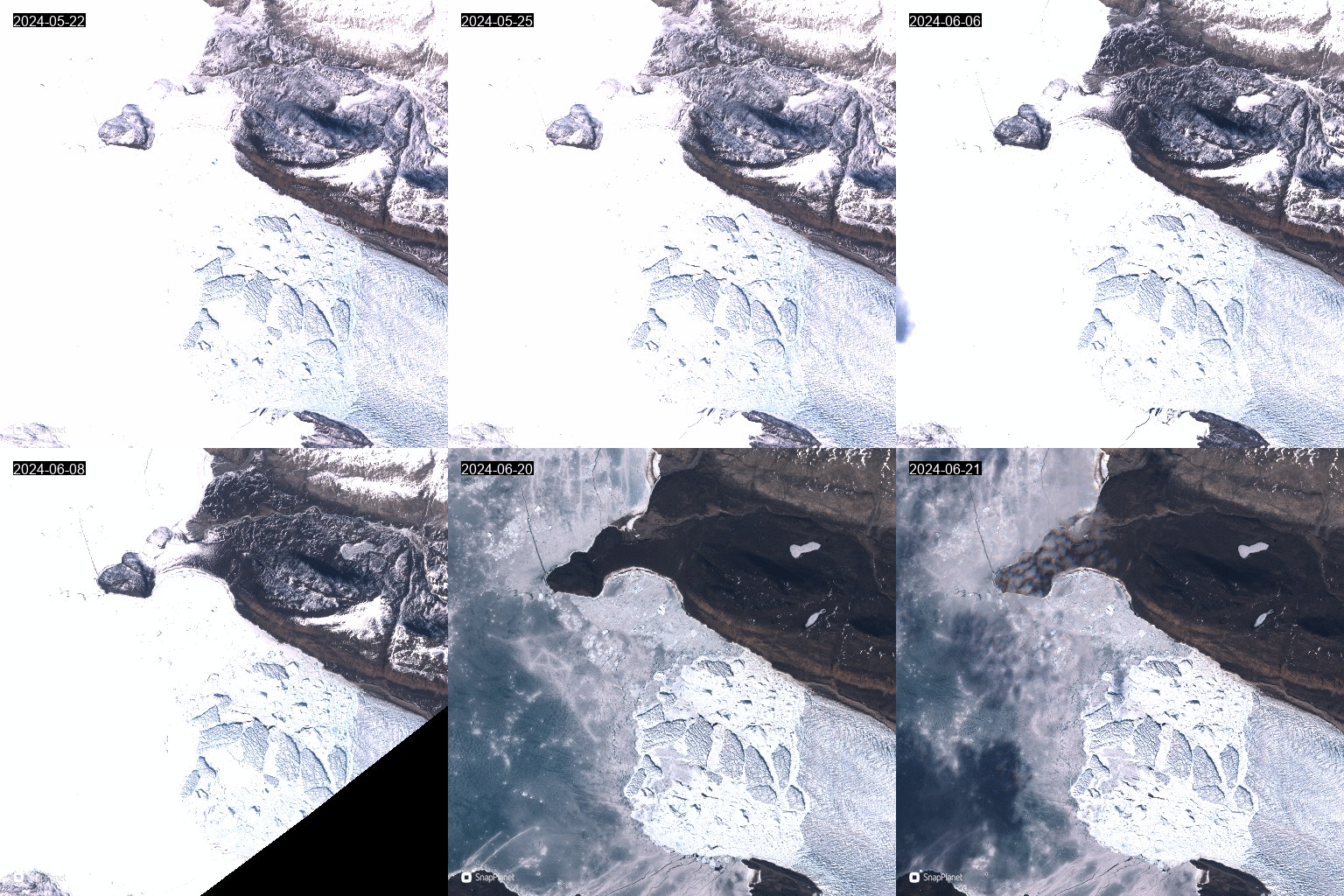
As you can see, the sea ice is still there but fracturing and patches of open water (in blue green) are now becoming visible.

Sentinel 2 satellite image processed on EO browser showing sea ice and ice bergs in front of Tracy and Farquhar glaciers.

If you’re out and about and only have your phone, there is also the excellent snapplanet.io app on your smartphone, with which you can create instagram ready snapshots of the planet or even animated gifs, with high resolution imagery a link away…

Now that’s what I call a fun social media* application…

Animated gif of satellite images showing the front of Heilprin glacier with icebergs and landfast sea ice.

Anyway, back to the break up. Every year, the sea ice forms in the fjord from October/November onwards, by December it’s often thick enough to travel on and then from April it starts to thin and melt and by late June large cracks are starting to form, allowing the surface meltwater to drain through. For a look at what happens if you get a large amount of melt from, say, a foehn wind, before the cracks start to open up, see this iconic photo taken by my colleague Steffen Olsen in 2019.

An extremely rare event, that nevertheless went viral

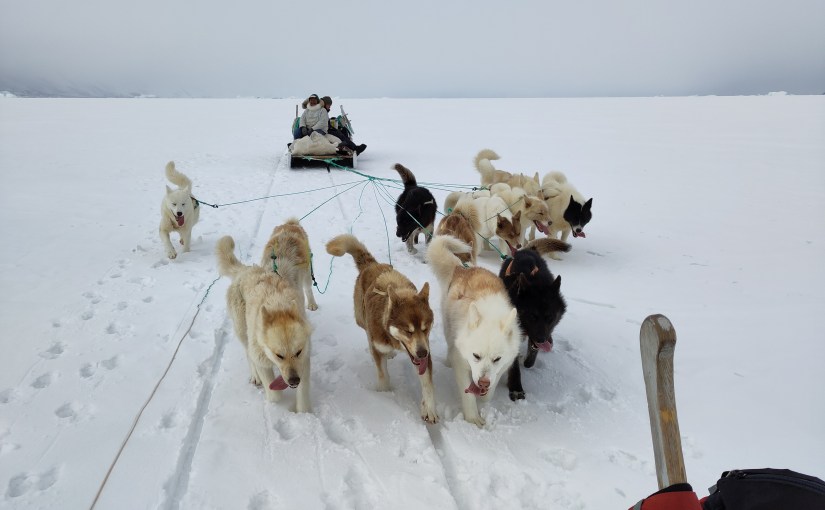
The other advantage we have working in this fjord is our collaboration with the local hunters and fishers. In winter they use dog sleds for hunting and accessing fishing sites, and to take us and our equipment out on to the ice. In summer, they are primarily using boats for fishing, hunting narwhal and, hopefully, collecting our equipment! Our brilliant DMI colleague Aksel who lives and works in the local settlement is also a huge help in assisting with communication and generally being able to get hold of things and people when asked.

Winter travel

We offer a reward for each buoy that is found and brought back to our base in Qaanaaq, so many of them in fact make their own way home. But we also work with our friends on a kind of remote treasure hunt, challenge Anneka style, with someone at home watching their positions come in via the satellite transmissions and sending updated information via sms to an iridium phone to the hunters on the boat…

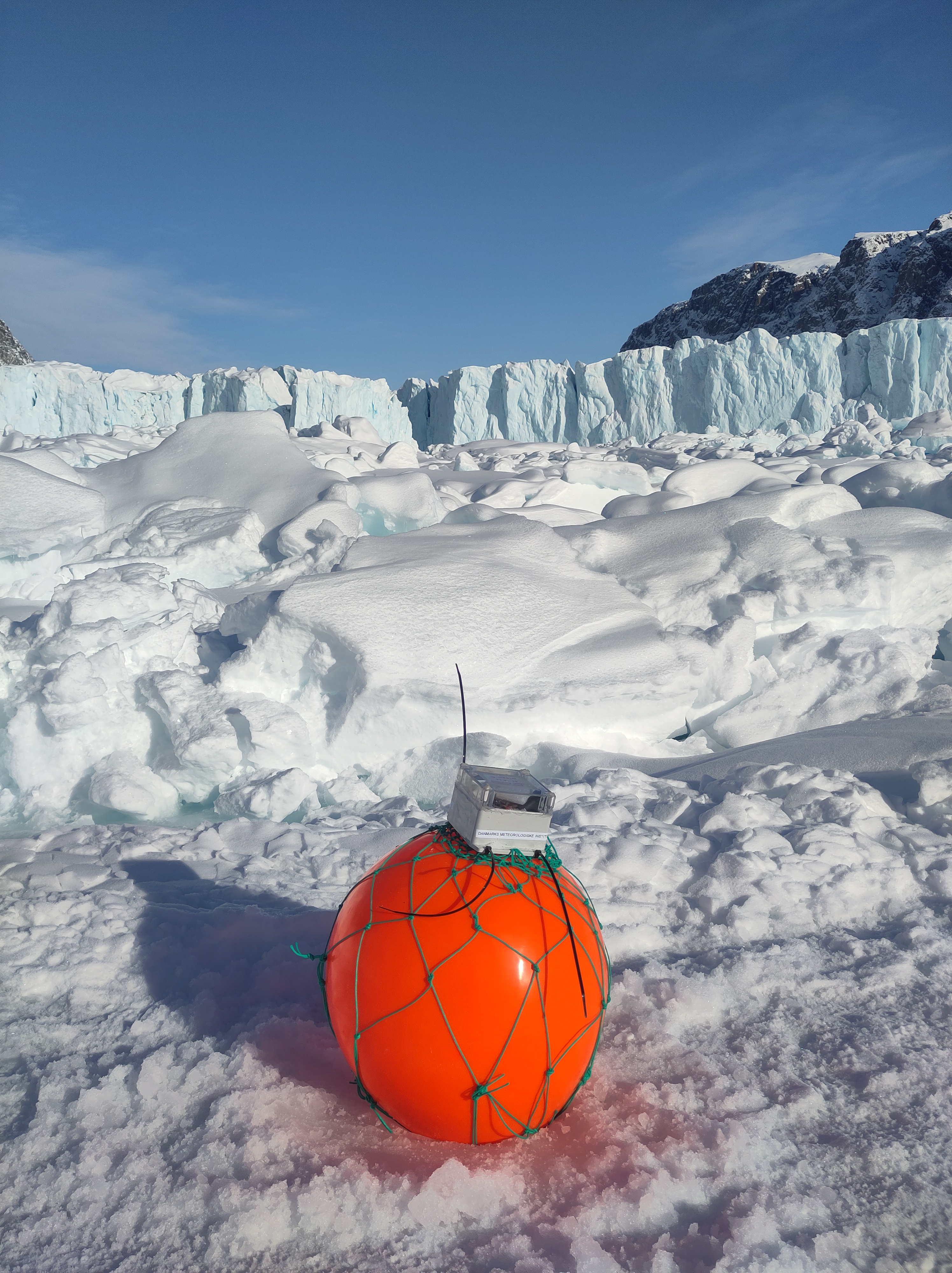
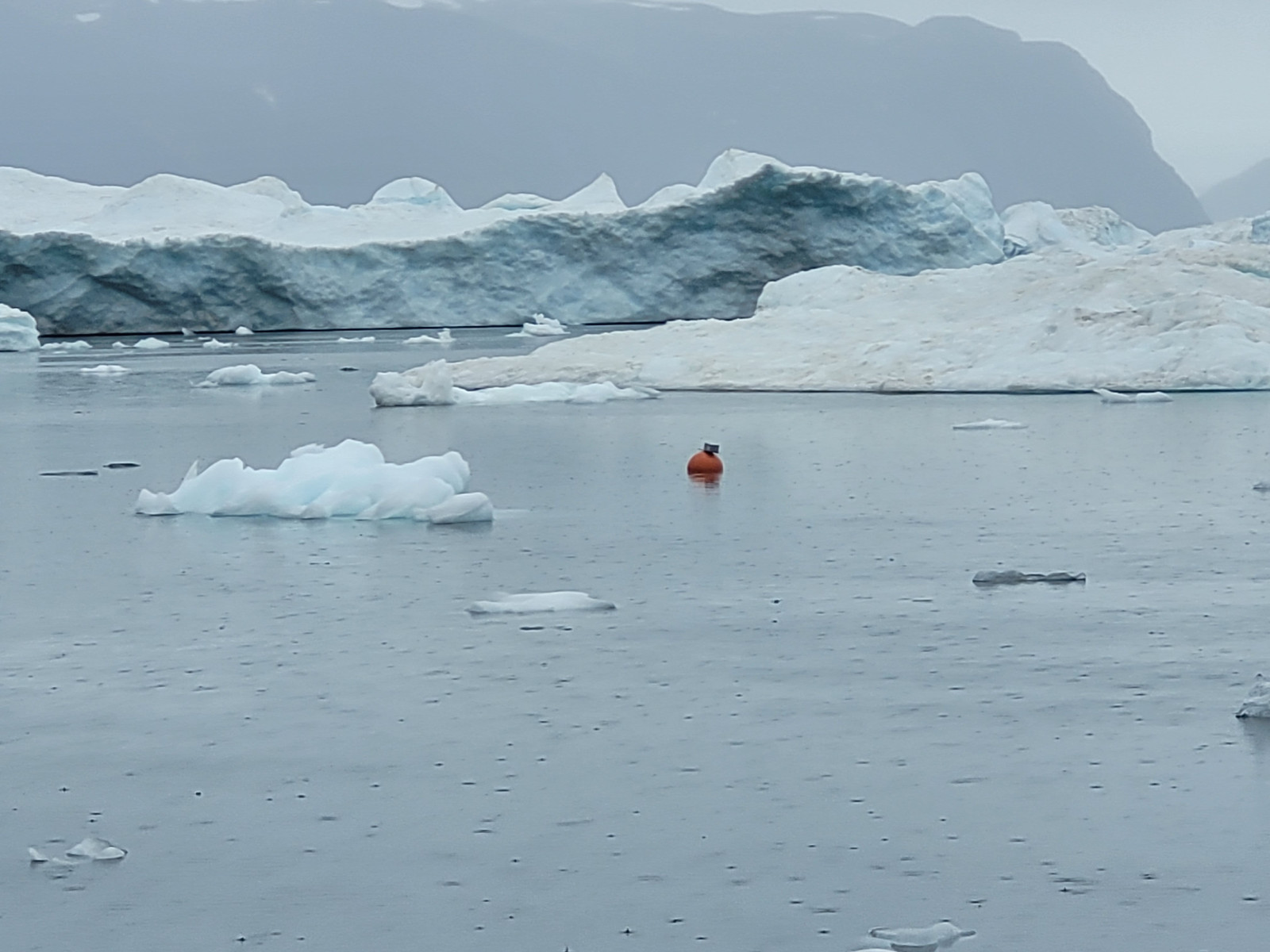
I’m told it’s tremendous fun, with sharp eyes required, as even a bright orange plastic globe can be challenging to spot.

A floating trusted buoy in 2022.

I’ve never participated in this treasure hunt myself sadly, on land we generally see something like a spaghetti of arrows and spots via the Trusted global web api:

GPS positions from a trusted buoy.

We then have to try and superimpose these movements on the latest satellite images to work out if the buoy is floating or not, and then check to see if there is sufficient open water for a collection. Naturally working with local knowledge for this part is also absolutely vital.

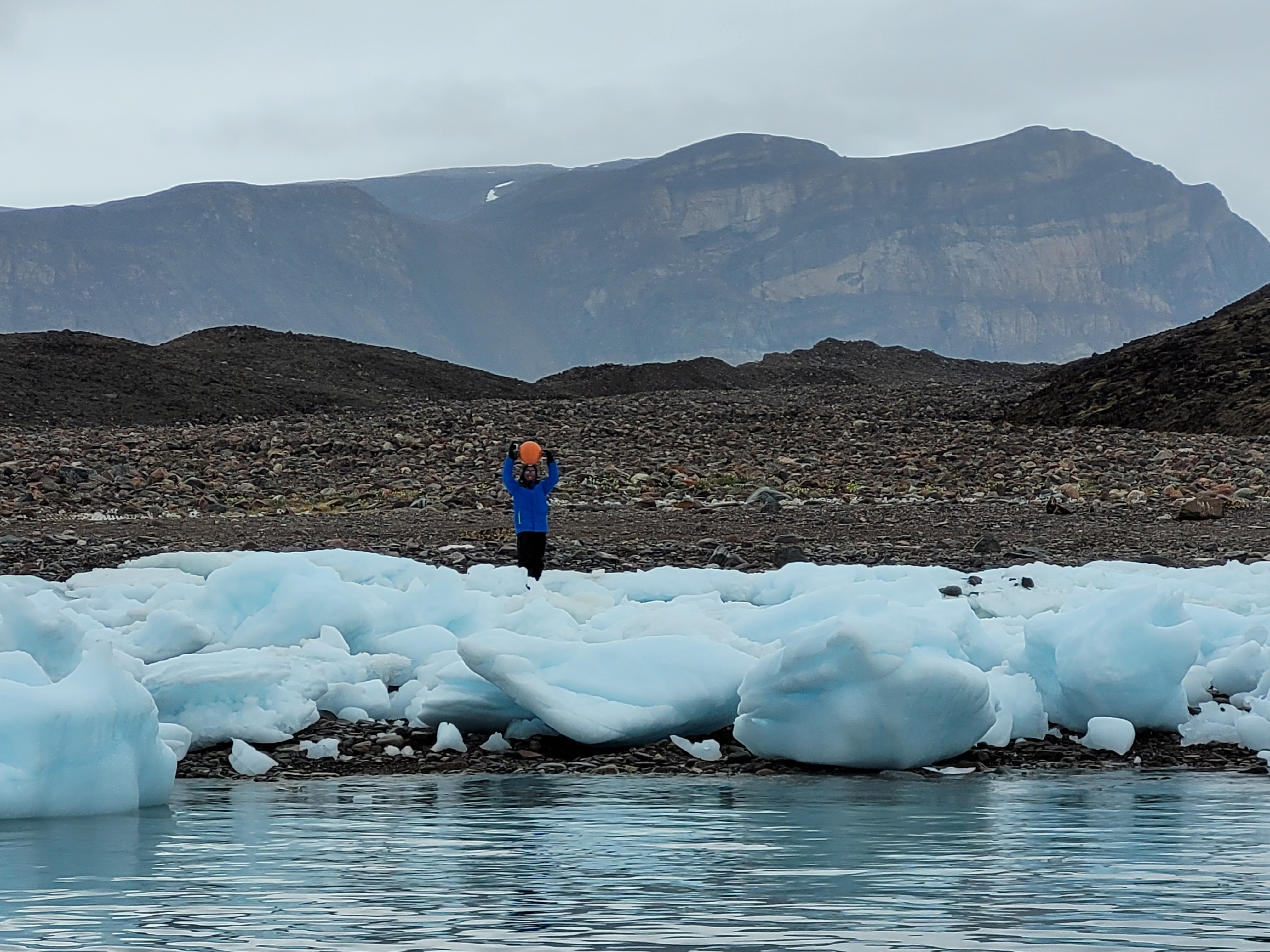
One of our buoys is found…

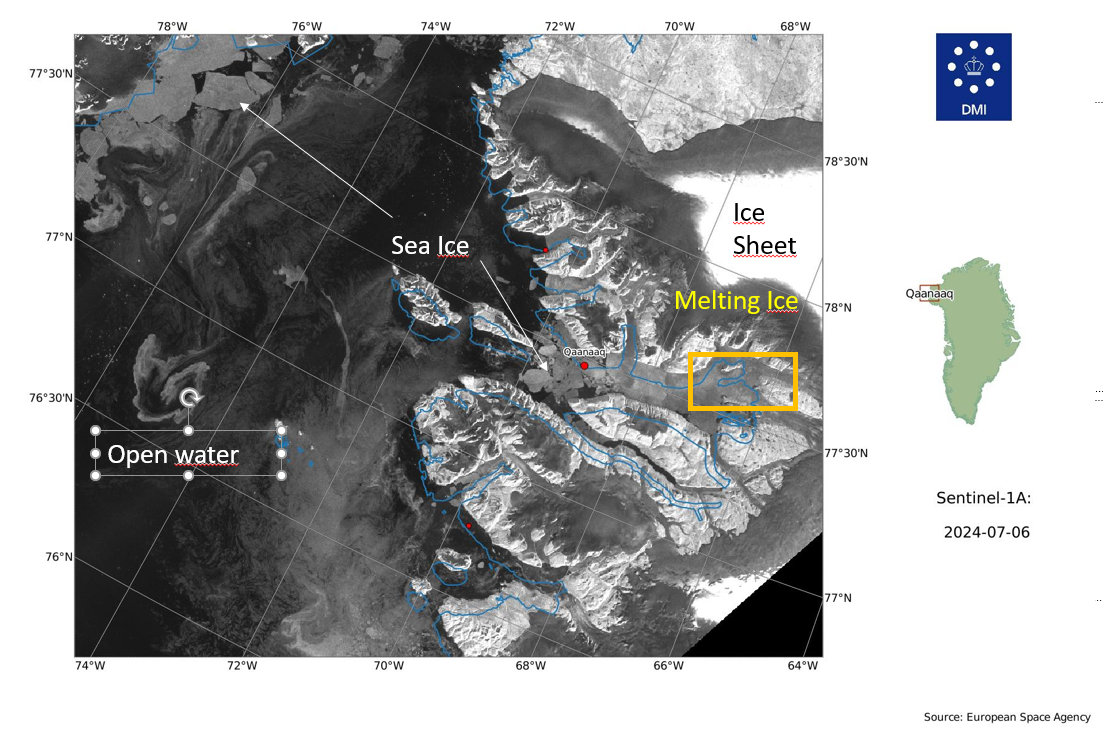
The latest satellite images look like the ice has already broken up into large flakes close to Qaanaaq. I’ve annotated the Sentinel-1 image below as it is from a radar satellite that can see through clouds and the images can be a bit confusing if you’re not used to looking at them.

The scale of the massive melt on the ice sheet from the last few days is clearly visible in the dark grey rim on the glaciers. The open sea water is black and the sea ice shows up as geometric greys. This one is downloaded from the automatic archive my colleagues at DMI maintain around the whole coast of Greenland. It can be a handy quick check too.

Annotated satellite image of Kangerlussuaq/Inglefield Bredning (Gulf of Inglefield) fjord. The orange box shows where our study glaciers are located.

So, although the ice is starting to break up it’s at the tricky stage where it’s far from navigable by dog sled and certainly too difficult for boats, so it’s not quite the time to send out hunting parties for GNSS buoys.

It also means that when I go on holiday next week, I will not be quite leaving all this behind. I and my colleague in this project will be monitoring the movements of the buoys and the satellite pictures, as well as relying on our friends in the local community to let us know how the ice is looking and if they can get out to rescue our brave little sensors.

In the mean time I have plenty of data to start analysing and writing up. As ever massive thanks to the people of Qaanaaq and my cool colleagues for putting up with me and our GPS buoys. We hope to submit our first paper pretty soon..

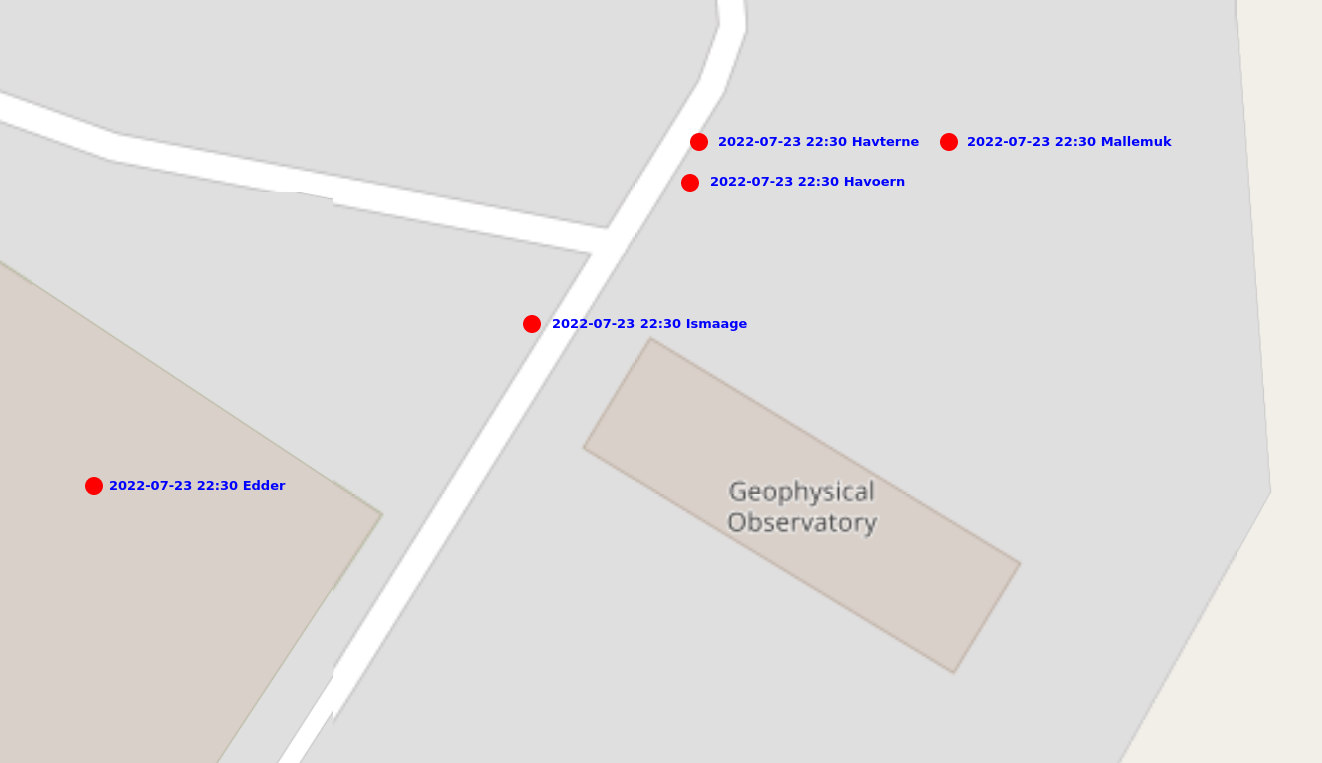
Hopefully I’ll soon be able to look at a map like this one to see where they are (note that the precision on these buoy positions isn’t great, probabaly because they were thenbeing stored in a metal container).

*Yes, I’m probably a nerd. I’m a lot of fun** at parties too though.

**For a given value of “fun”.

Local sea level rise: A question of gravity

I’ve explained several times in the course of media comments that, when it comes to the sea level rise that you experience, it really matters where the water comes from. This point still seems to cause confusion so I’ve written a super fast post on it.

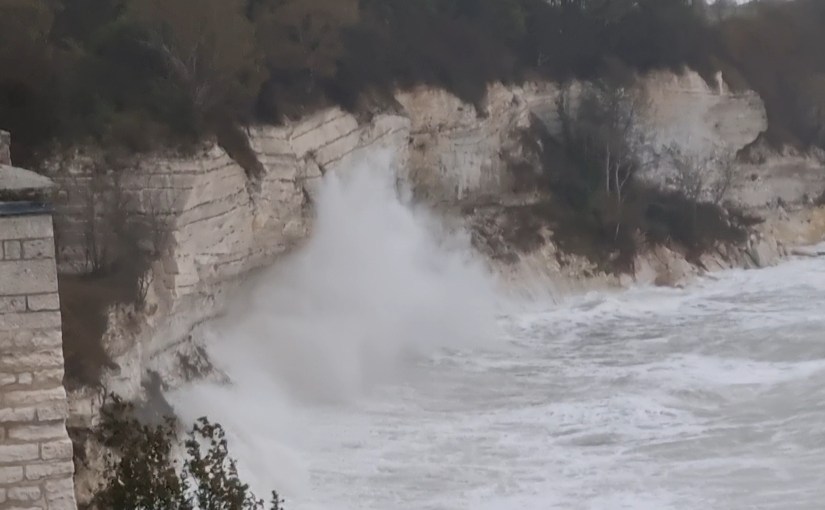
Waves from the Storm Surge that hit Denmark in October 2023 credit: Sebastian Pelt

We very often talk about a metre or two of sea level rise by the end of the century, but in general that refers to global average sea level. And much like a global mean temperature rise doesn’t tell you very much about the kind of temperature changes you will experience in your location due to weather or climate, global mean sea level is also not very informative when talking about preparing your local community for sea level rise. There are other local factors that are important, (see below), but here I’m going to mostly focus on gravity.

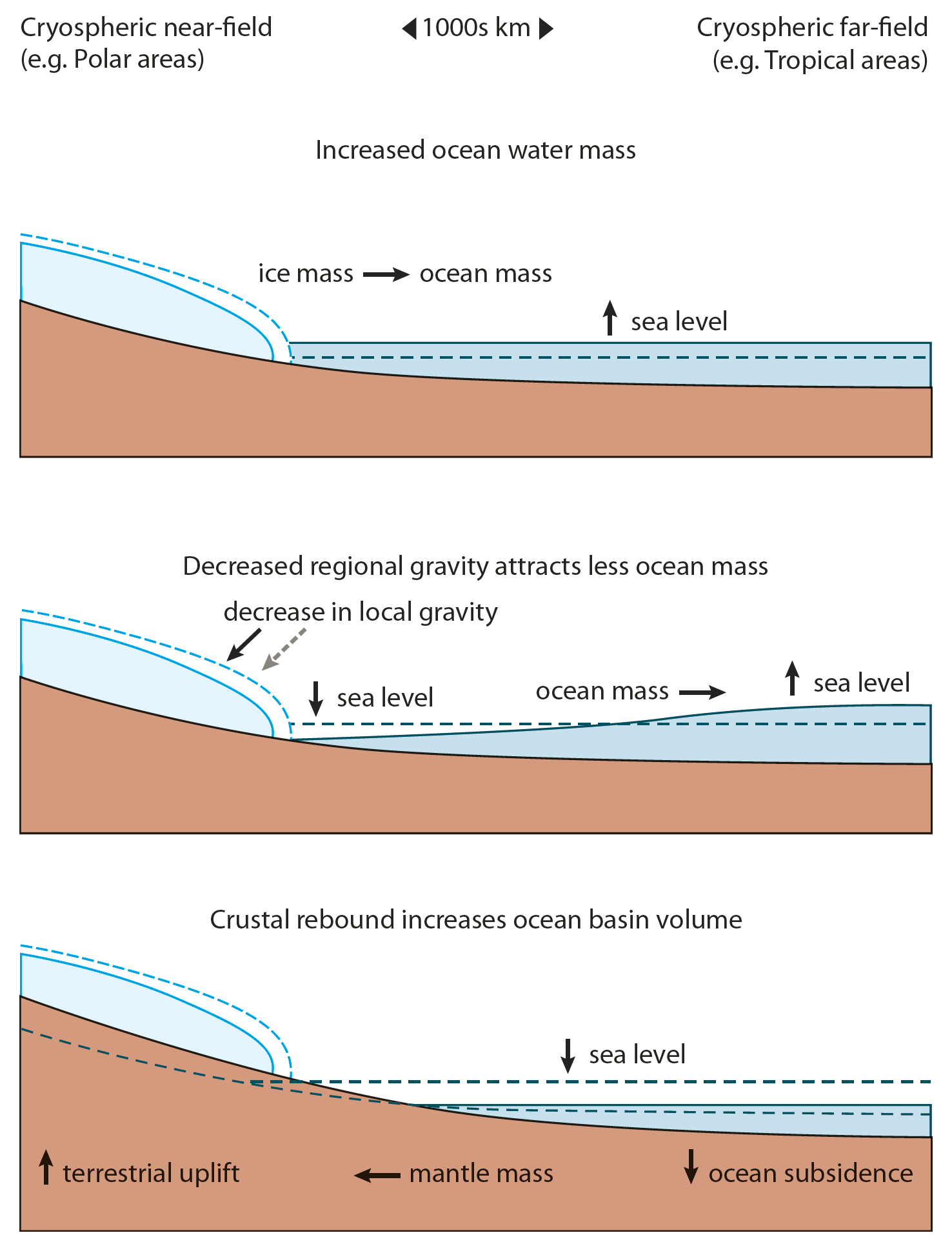
Imagine that sea level is more or less stable around the earth (which it was, more or less, before the start of the twentieth century). Just like the moon causes tides because its gravity exerts a pull on the oceans, the ice sheets are large masses and their gravity also attracts ocean water, so the average sea level is higher closer to Greenland and to Antarctica. But there is only a finite volume of water in the oceans, so a higher sea level close to the ice sheets means lower sea levels further away in the tropics for example.

As the ice sheet melts and gets smaller, its gravitational pull becomes smaller so the average height of the sea around Greenland and Antarctica is lower than it was before, but the water gets redistributed around the earth until it is in equilibrium with the gravitational pull of the ice sheets again. The sea level in other places is therefore much higher than it would have been without that gravitational effect.

And in general, the further away from an ice mass you are, the more these gravitational processes affect your local sea level change. In Northern Europe, it often surprises people (also here in Denmark) to learn that while Greenland has a small influence on our local sea level, it’s not very much because we live relatively close to it, however the loss of ice from Antarctica is much more important in affecting our local sea level rise.

Currently, most of the ice contributing to sea level is from the small glaciers around the world, and here too there is an effect. The melt of Alaska and the Andes are more important to our sea level than the Alps or Norwegian glaciers because we are far from the American glaciers but close to the European ones.

This figure below illustrates the processes:

Processes important for local sea level include changes in land height as ice melts but also the redistribution of water as the gravitational attraction of the ice sheets is reduced. The schematic representation is from the Arctic assessment SWIPA report Figure 9.1 from SWIPA 2017

This is partly why the EU funded PROTECT project on cryosphere contributions to sea level rise, which I am currently working on, has an emphasis on the science to policymakers pipeline. We describe the whole project in this Frontiers paper, which includes a graphic explaining what affects your local sea level.

As you can see, it very much depends on what time and spatial scale you’re looking at, with the two ice sheets affecting sea level on the longest time scales.

Figure 1 from Durand et al., 2021 Illustration of the processes that contribute to sea level change with respect to their temporal and spatial scales. These cover local and short term effects like storm surges, waves and tides to global and long-term changes due to the melting of ice sheets.

In the course of the project some of the partners have produced this excellent policy briefing, which should really be compulsory for anyone interested in coastal developments over the next decades to centuries. The most important points are worth highlighting here:

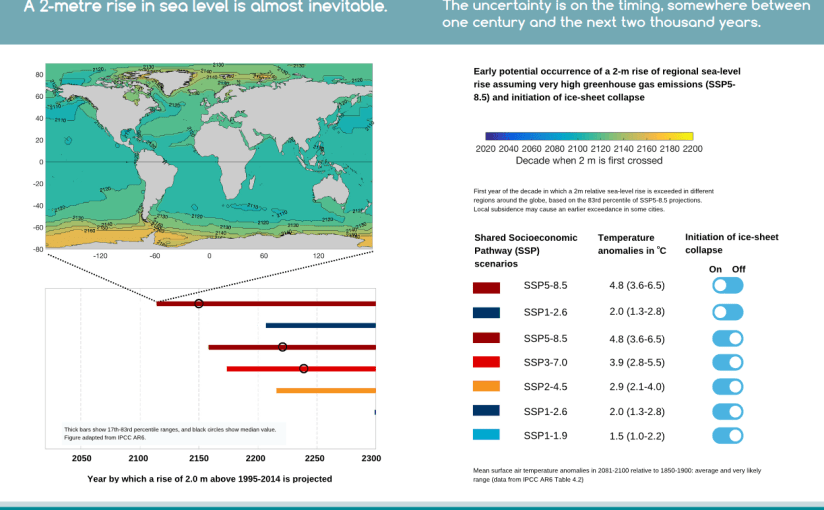
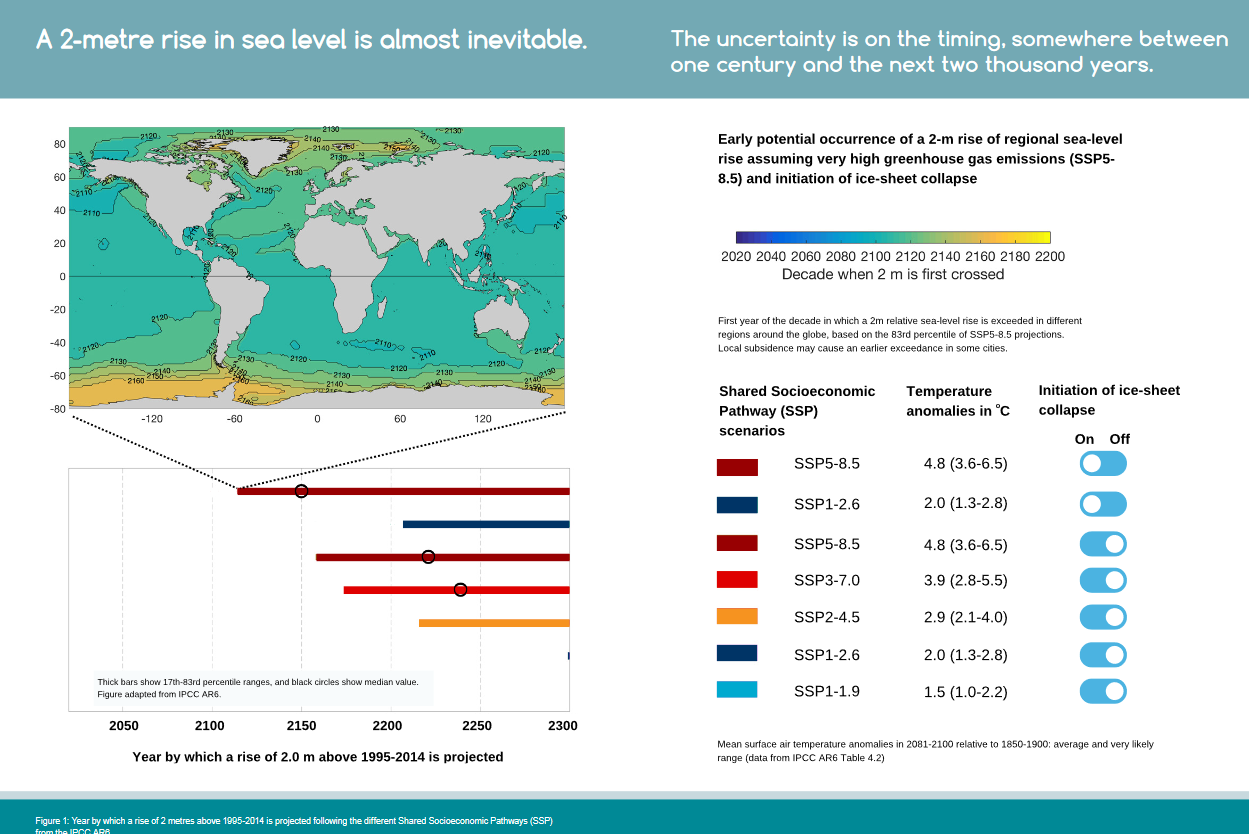
We expect that 2m of global mean sea level rise is more or less baked in, it will be very difficult to avoid this, even with dramatic reductions in greenhouse gas emissions. But the timescale, as in when that figure will be reached, could be anything from the next hundred years to the next thousand.

Figure from PROTECT policy briefing showing how the time when average global sea level reaches 2m is strongly dependend on emissions pathway – but also that different parts of the world will reach 2m of sea level rise at very different times, with the tropics and low latitudes in general getting there first.

What the map shows is that the timing at which any individual place on earth reaches 2 m is strongly dependent on where on earth it is. In general lower latitudes close to the equator will get to 2m before higher latitudes, and while there are ocean circulation and other processes that are important here – to a large extent your local sea level is controlled by how close to the ice sheets you are and how quickly those ice sheets will lose their ice.

There are other processes that are important – especially locally, including how much the land you are on is rising or sinking, as well as changes in ocean and atmosphere circulation. I may write about these a bit more later.

Feel free to comment or ask questions in the comments below or you can catch me on mastodon:

Building the Next Generation…

Hands-up who is looking for a new and very cool job in ice sheet and climate modelling and developing new machine learning tools?

REMINDER: 4 days left to apply for this PhD position with me at DMI looking at Antarctic Ice Sheet mass budget processes and developing new Machine Learning models and processes.

UPDATE 2: The PhD position on Antarctica is now live here. Deadline for Applications 18th February!

UPDATE: It’s not technically a PRECISE job, but if you’re a student in Copenhagen and are looking for a part-time study job (Note that this is a specific limited hours job-type for students in higher education in Dnmark) , DMI have got 2 positions open right now, at least one of which will be dedicated to very related work – namely working out how well climate and ice sheet models work when compared with satellite data. It’s part of a European Space Agency funded project that I and my ace colleague Shuting Yang, PI on the new TipESM project, are running. Apply. Apply. Apply…

I’ve written about the PRECISE project before, our new Novo Nordisk funded project looking at ice sheets and sea level rise.

This is a quick post to announce that our recruitment drive is now open. We’re split across three institutes. We are two in Copenhagen, ourselves at DMI and the Niels Bohr Institute at the University of Copenhagen, and then the University of Northumbria in Newcastle, UK.

The PI at the Niels Bohr Institute is the supremely talented Professor Christine Hvidberg, aided by material scientist and head of the institute, Joachim Mathiesen. I am leading for DMI, and the Northumbria work is led by Professor Hilmar Gudmundsson. We are also very fortunate to have the talents of Aslak Grindsted, Helle Schmidt, Nicolas Rathmann and Nicolaj Hansen already on board.

The project is already very cohesive between institutes, we’ve been working together for some time already and know each other well.

We have a good budget for travel and exchanges between groups, workshops, symposia, summer schools and the like, but perhaps more importantly, all the positions are focused at the very cutting edge (apologies for the cliche) of climate and ice sheet modelling. We are developing not just existing models and new ways to parameterise physical processes, but we also want to focus on machine learning to incorporate new processes, speed-up the production of projections for sea level rise, not forgetting an active interface with the primary stakeholders who will need to use the outcomes of the project to prepare society for the coming changes.

There’s also a healthy fieldwork component (particularly in Greenland, I don’t rule out Antarctica either), and if you’re that way inclined, some ice core isotope work too. So, if you’re looking for a new direction, feel free to give me a shout. I’m happy to talk further.

Links to all the openings, will be updated as they come out, these are currently open and have deadlines at the end of January:

Newcastle: A three-year postdoctoral research position in machine learning emulators of ice-ocean processes

Newcastle: A two-year postdoctoral researcher (PDRA) position in subglacial modeling of the Antarctic Ice Sheet

Copenhagen (NBI) PhD Project in Greenland ice sheet climate and precipitation variability

Copenhagen (DMI) PhD Project in Antarctic ice sheet surface mass budget (also keep an eye here, where there are also some other interesting jobs announced)

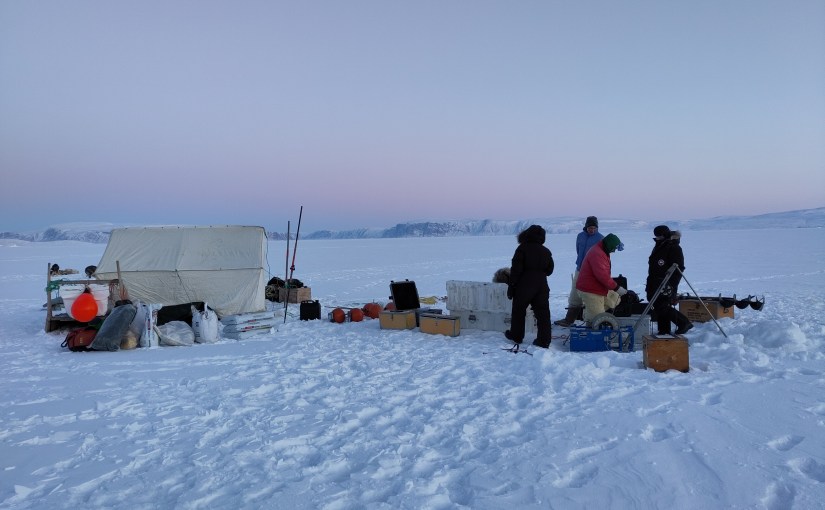
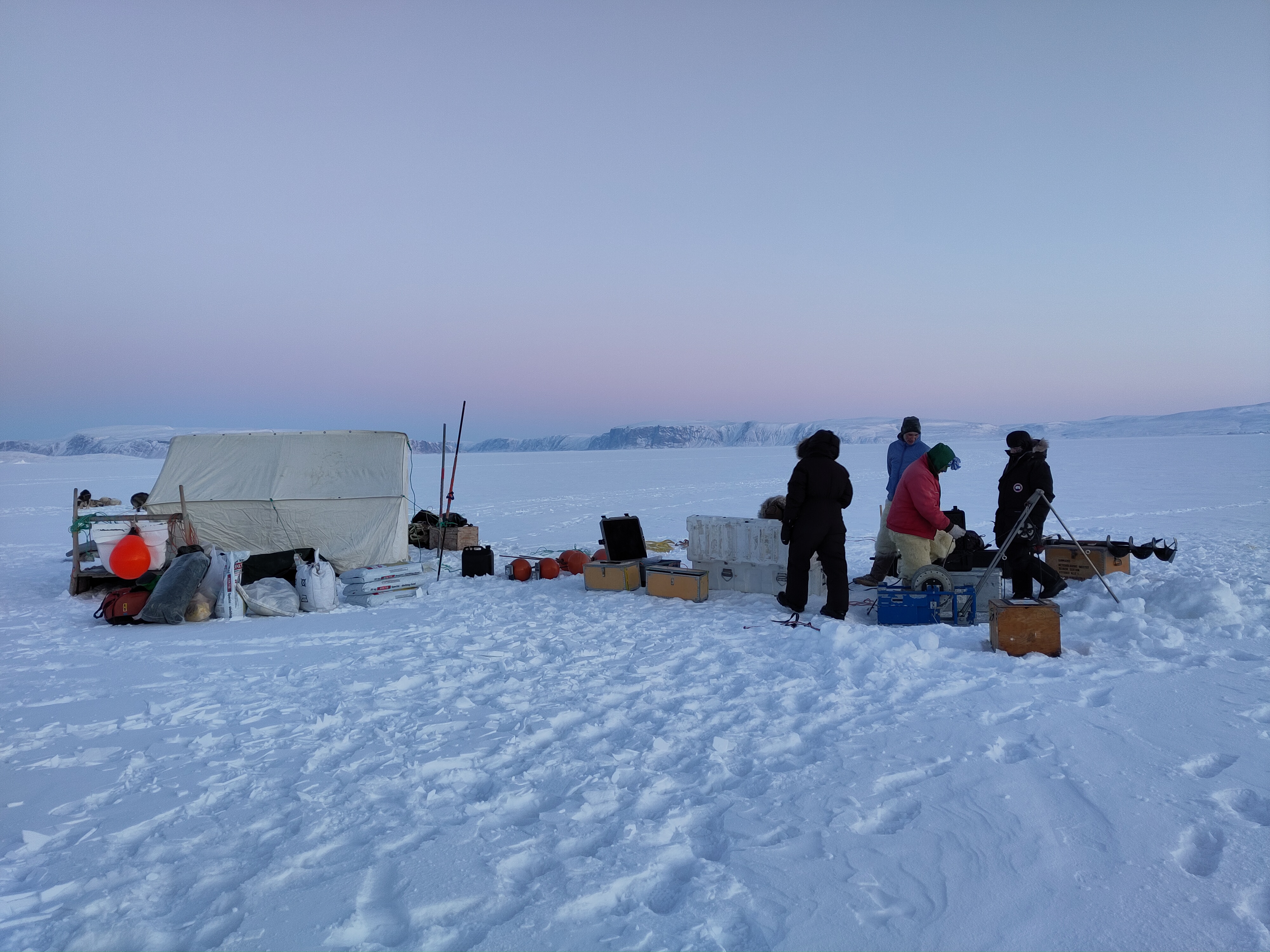
photo showing a small white tent on a snow covered sea ice surface with people dressed in thick warm clothes dropping instruments through a whole in the ice. The sky is a clear blue fading to vioet and pink at sunset
Field camp on sea ice, northern Greenland 2023, measure ocean influences on calving outlet glacier.
(Photo credit: Ruth Mottram, DMI)

A cryosphere call to action..

The International Cryosphere Climate Initiative has put together a new petition for scientists to sign. I’m a little sceptical that this kind of “clicktivism” makes much difference, but there are many many lobbyists from polluting industries at the COP28 and rather fewer scientists. And how else to draw attention to what is one of the most visible and urgent effects of climate change?

The petition is aimed at:

” all cryosphere scientists globally; as well as those working on emissions pathways: and those in the social sciences with research on adaptation, loss and damage and health impacts. This includes research and field associates, as well as doctoral students — because you are the future, and will be dealing with the impacts of climate change in the global cryosphere throughout your lives, as well as your professional careers.”

ICCI

The list of signatories so far already includes many rather senior scientists, so take this as a challenge to add your signature if you work in the cryosphere/climate space. It takes only a minute to sign and there are many familiar names on the list.

I’m not sure how else to emphasise the urgency of real action at COP 28.

Small bergy bits in the bay near Ilulissat, with Lego Ice Man for scale (and an important message)

As a coincidence though, and as I posted on mastodon the image below appears in Momentum, a plug-in on my web browser with a new photo every day. Today’s is this beautiful image of the Marmolada glacier in Italy by Vicentiu Solomon.

Marmolada Glacier by Vicentiu Solomon

It’s a gorgeous but very sad picture – this is one of the faster disappearing #glaciers in the world and to hear more about the consequences of cryosphere loss, take a look at the policy brief produced by the PROTECT project on the sea level rise contributions from glaciers and ice sheets. It also contains this eye opening graphic:

A 2 metre rise in sea level is almost inevitable. The uncertainty is on the timing which is somewhere between one century and the next 2 thousand years, depending on where you are in the world, but, more importantly given COP28, how fast fossil fuels are phased out. You can download the whole thing here.

So there you have it. Here’s a reminder of the petition from the International Cryosphere Climate Initiative.