Back at Basen*

LISA is alive! Kind of. We had a really good field test of the system in this, our first week in Antarctica (though thank goodness for satellite wifi connection** to the rest of the world so LISA’s genius creator Helle Kjær could assist in troubleshooting). It was a bit of a struggle and I would say we came out partial winners, with a much deeper understanding of how the box is actually put together and more importantly some really interesting data (yay!) that Clement is busy processing already – I’m very excited to see how it turns out as it will help to direct our following field sorties.

This is the first field deployment of LISA in Antarctica, and even if she didn’t give up all the secrets of the snow, it’s still an achievement worth celebrating that we got half of it, and an interesting half too.

We chose a coring site around 60km from Wasa, so it was a long slow snow-scooter tour up Plogbreen (the plough glacier – named after our neighbouring nunatak Plogen, the plough) and on to the flat plateau of Ritscher Flya at about 1000m elevation.
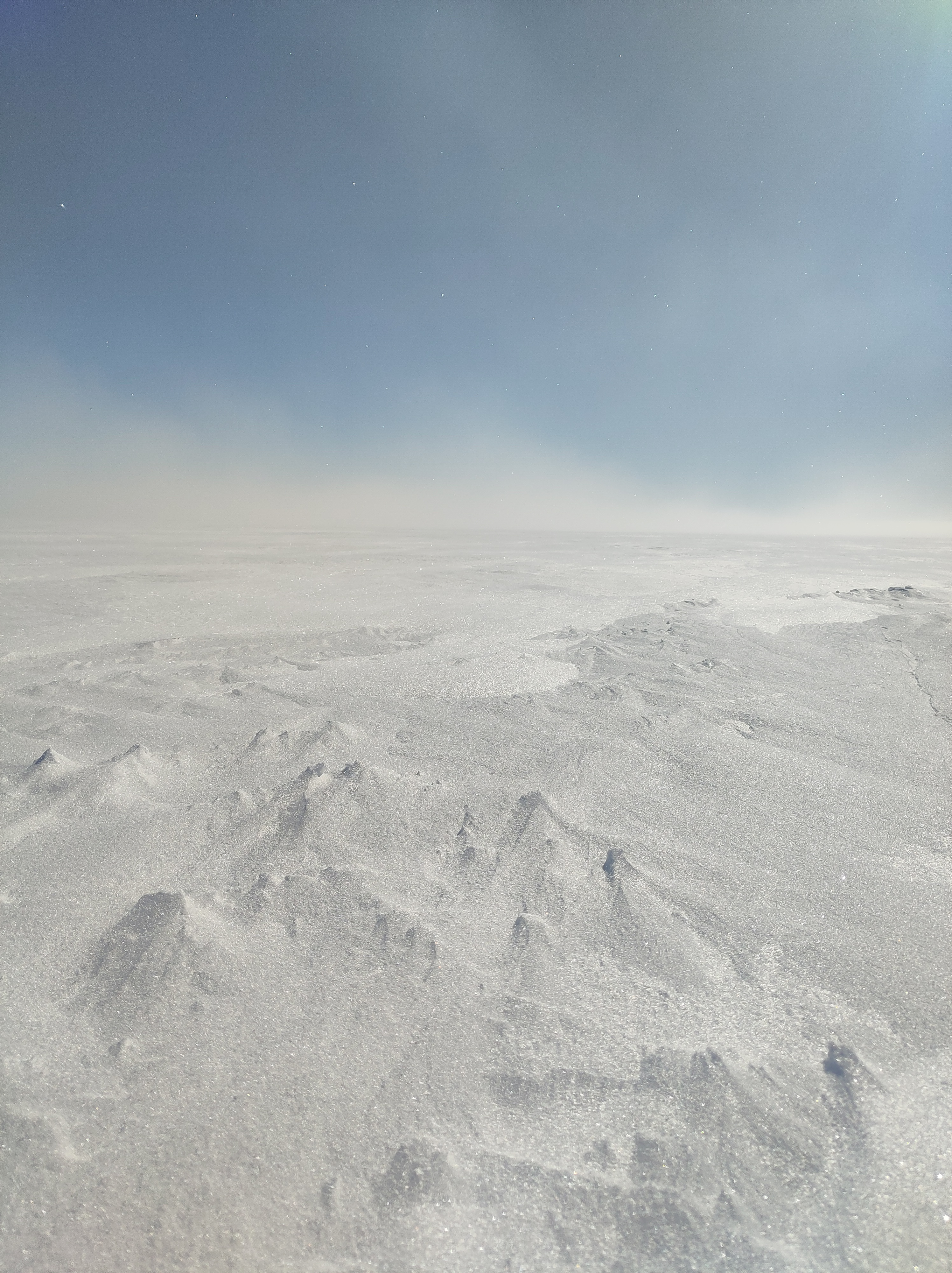
Wind sculpts snow into ridges called sastrugi. We had quite a bit of fresh snow at this site while we were there. Sometimes it’s hard to work out where the snow surface actually is.

It was a pretty wind and snowy site, in a katabatic wind zone (thankfully not too strong on this trip), which was intentional, as one of the aims of our study is the effects of strong winds on snow accumulation. As preparing to leave took most of the day (especially doing the chemistry mixes for LISA), we headed up in the afternoon and then stayed out overnight in these fantastic little cabins on skis.
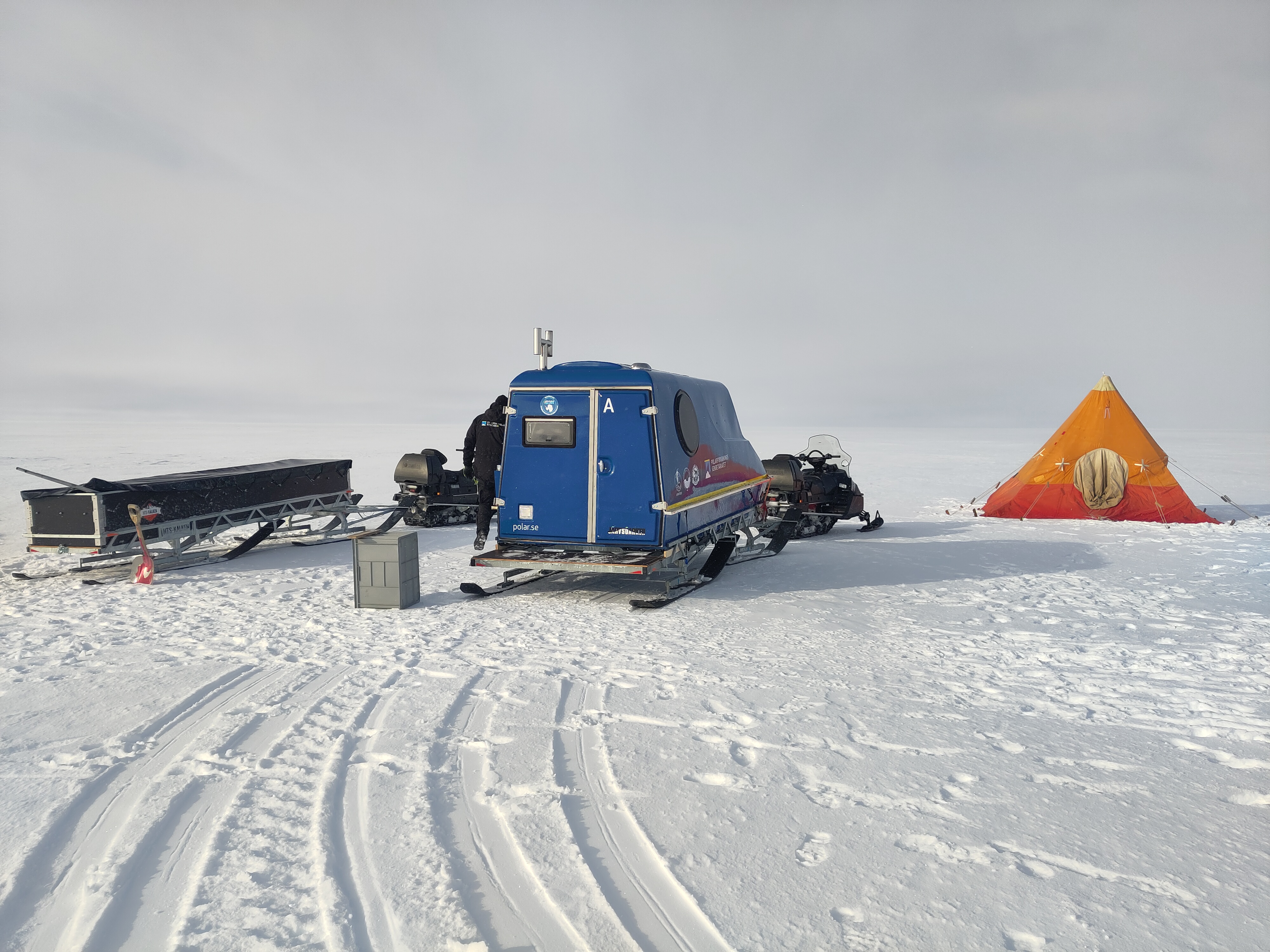
Our field camp: sledge full of equipment, the blue cabin on a sledge (an ark) is one of our living quarters and the pyramid shaped, orange Scott tent is our bathroom.

The Polar Research institute in Sweden calls them arks and they are really a very nice solution to the problem of cold and wind and trying to work in quite extreme conditions. Pulled by a snow-scooter and with a stove inside for melting snow and heating, they’re really very cosy to sleep in and it makes a big difference to be able to warm up when for example you’ve been sitting in a snow pit at -15C with a hefty wind chill on top and are covered in spin drift snow (as me how I know).

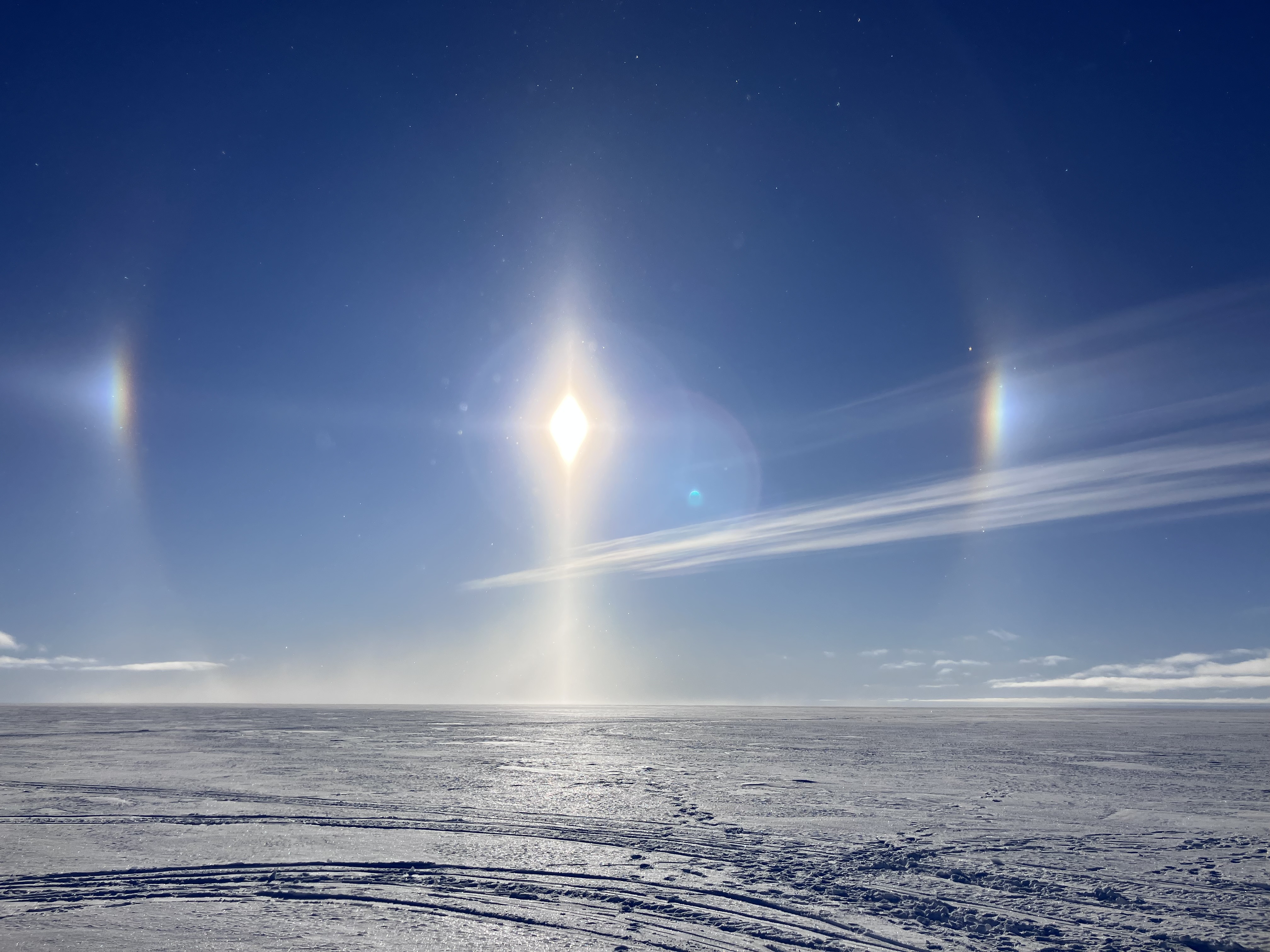
We were greeted by this beautiful halo around the sun upon waking, with sun dogs on either side, caused by the ice crystals in the sky. In fact we nick-named the site diamond dust because of the clear sky precipitation on the first morning.
We soon got into a good rhythm with Henrik driving the coring, Clement logging and Ninis and myself assisting with the cores.
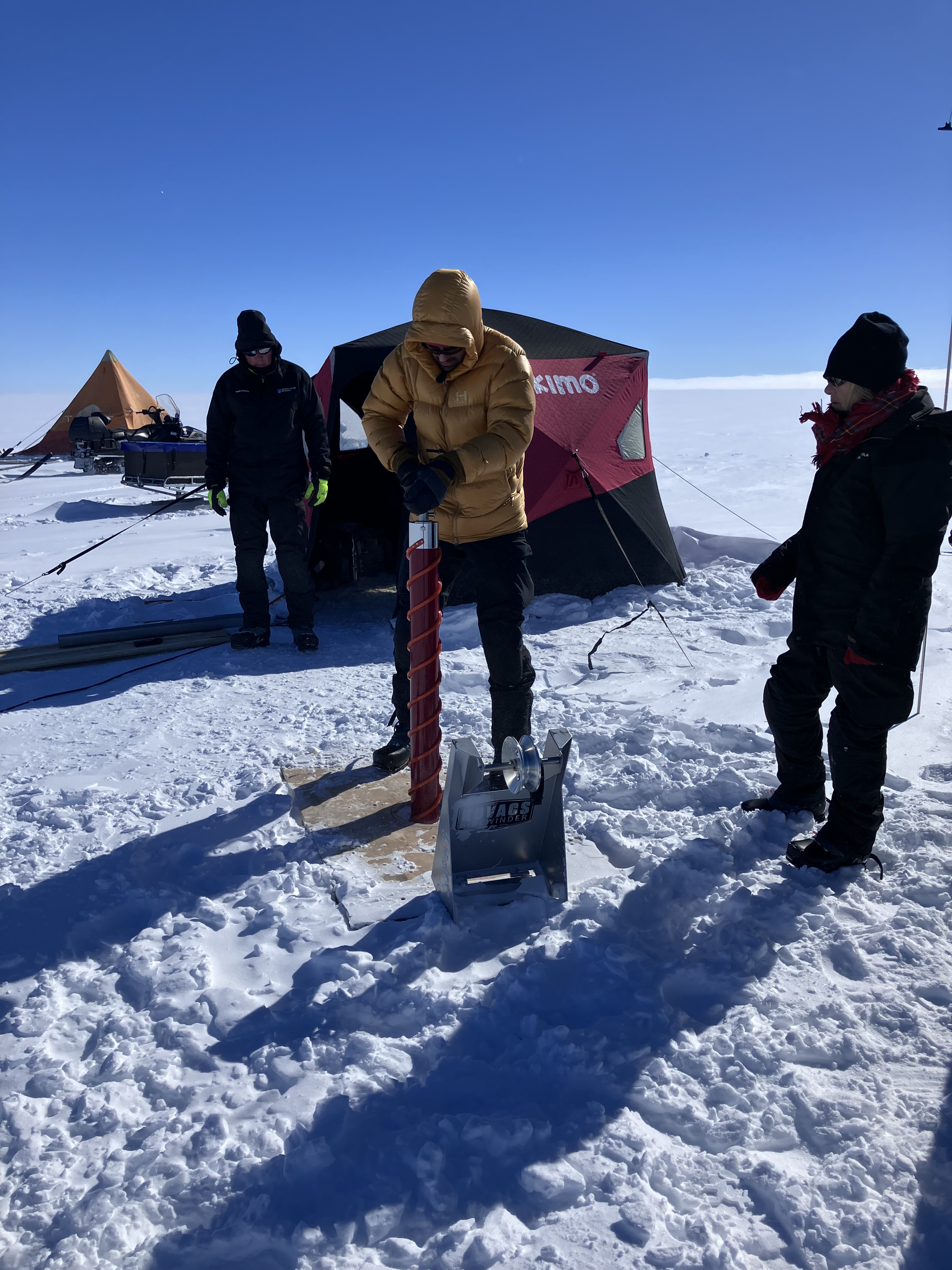
Starting the first core, (l to r the rest of the field team, Henrik, Clement and Ninis)

And then it was time to get LISA going and a very long and slightly frustrating day followed. Thankfully, by bedtime and having reconstructed quite a lot of the inner tubing of the box, we got LISA ready for work the next day.

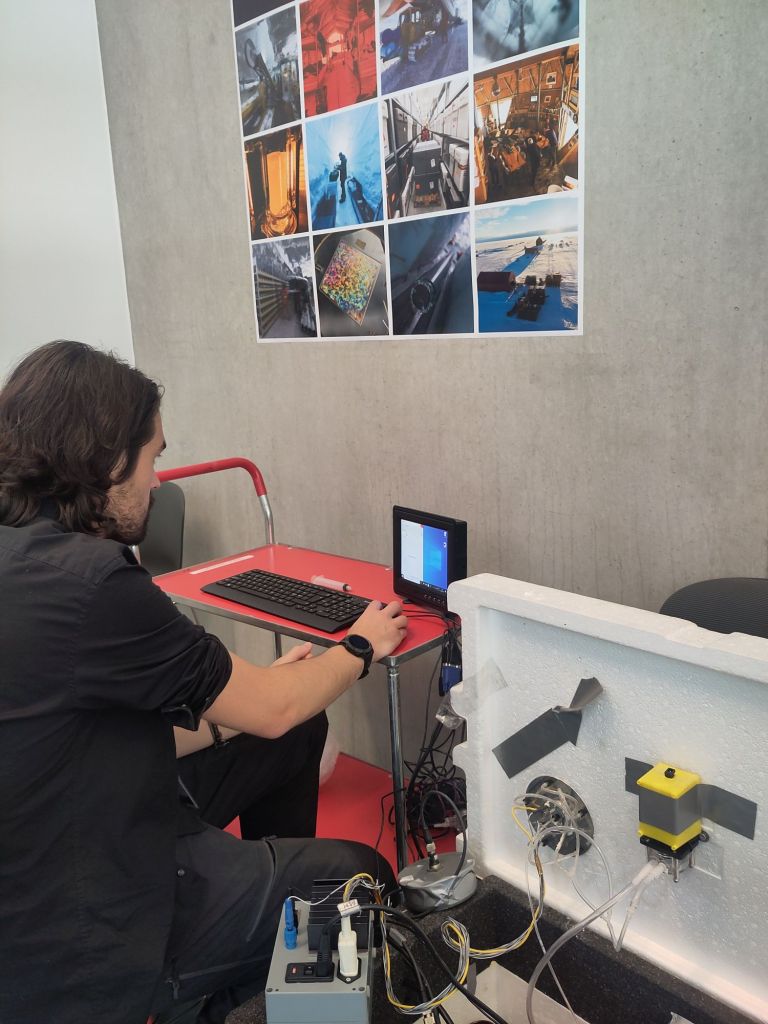
The LISA box with melting ice core on top and computer recording the data as it appears. The pop-up fishing tent was essential for working at this site in the cold winds. Without wind chill it was around -10C outside, preventing ice crystals from forming in the chemistry lines and reagents is also a concern, but the arks also simplify things.

I dug a snow pit – always one of my favourite activities, it’s good to get your hands in the snow and really feel what is going on, and we identified some really intriguing layers. Lots more work to be done there to work out what is going on.

As added entertainment, Ninis was interviewed live from the top of the ice sheet by Swedish TV live from the fieldcamp (check out God Morgon Sverige on TV4, 23rd December if you’re interested). However, after 2 nights out it was time to pack up and head back, 3 cores worth of data richer, for a shower, laundry and a Christmas Eve day off.

On Christmas eve daytime it was my turn with a brief 2 minutes to explain our project on Danish TV2 news (at 12.15 CET in case you have an account and would like to see me looking wind swept). Juleaften, Christmas Eve, is the big day of celebration in the Nordic countries, so we took an almost day off, doing some washing, cleaning the living modules and enjoying plenty of good food courtesy of the Swedish chef Raymond who prepared a Christmas dinner feast later, perfect after a long Christmas hike over the nunatak.

Field Photos

Given the current state of the US administration I think it’s worth thinking about what services we use, to become less dependent on US tech and social media companies. Therefore, I’m sharing photos over on pixelfed while we’re out here, in case you want to see more field photos, though sharing is a bit intermittent as it depends on the internet link and due to the expense of the data, we’re trying not to use too much.

I am also posting over on blue sky, though there is much that makes me uneasy about that platform, so I will keep posting on the fediscience server on mastodon too (and indeed the quality of interaction is often better there strangely, given I feel that the platform is smaller than blue sky).

*The Swedish research station Wasa is located on a nunatak in Antarctica called Basen (it’s pronounced Baasen, like the sound a sheep makes in english)

**Yes we are on starlink. It’s incredibly impressive performance wise, but I’d rather not be supporting the nazi man-child, the sooner Eutel Oneweb makes an alternative for users like us, the better, though preferably without this polluting a footprint in low earth orbit. In fact if any EUTEL folks are reading this, I’d be delighted to test out a lightweight system for polar field scientists for you 🙂
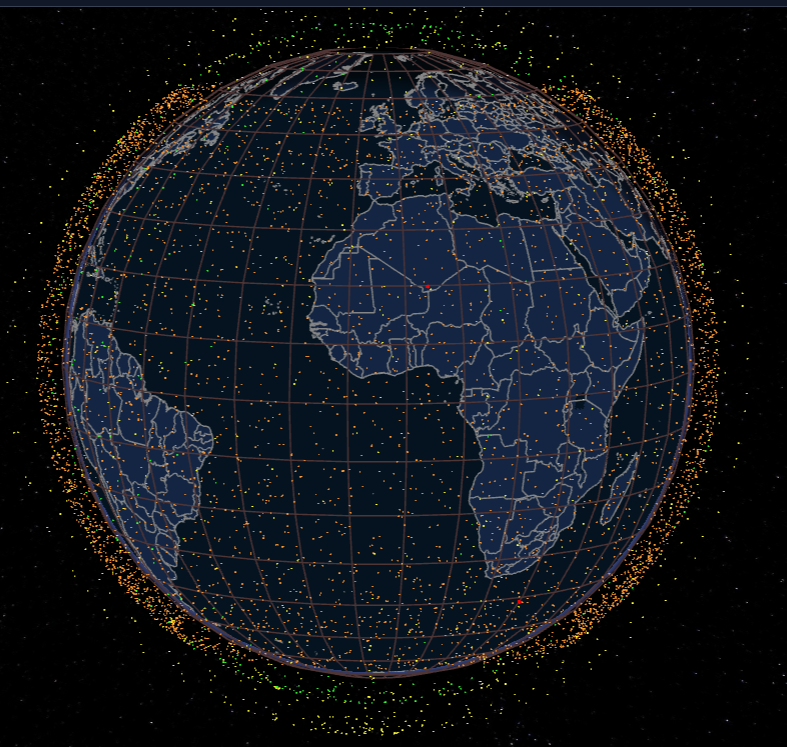
Screenshot from satellitemap.space showing the position of the tens of thousands of starlink satellites currently orbiting earth. Check out their visualiser to see other satellites!

Settling in..

It’s been a good start to the field season, incredible competent logistics, great field equipment, super helpful colleagues and incredible food by the station cook. For the first time ever I suspect I’ll be putting on weight in the field. But everything also takes a lot longer in Antarctica so little in the way of actual scientific results to report yet. Nevertheless we’ve some tantalising hints of some interesting processes and we’ve been settling in to the expedition frame of mind.

We had a very good flight from Oslo, a small delay in Prague notwithstanding, very friendly cabin crew and 3 seats each to lie across meant a relatively good sleep and a decent amount of work finalised on route.

Clouds over Namibia’s Etosha National Park. We basically crossed a third of the world to get here. A carbon debt I’ll be paying for years…

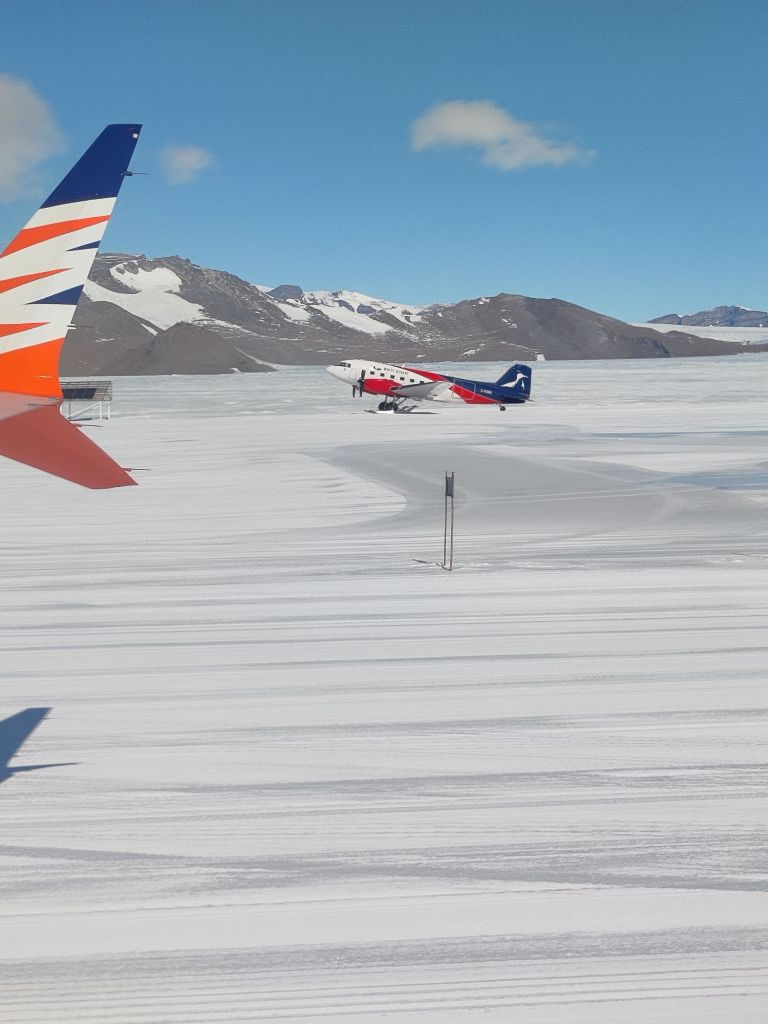
Similarly, in Cape Town, mostly spent in a hotel room finishing off reports, except for dinner and an occasional walk. And then a very smooth and easy 5 hour flight first to Troll, to be met by welcoming Norwegian colleagues and a vintage Basler (a DC3 airframe dating back to 1944, but with new engines – I’ve seen it in Greenland before – it still works!), that took us more or less directly to Wasa, where our Swedish colleagues met us on the glacier runway. And what a welcome! Everyone has been extremely helpful and very friendly.

The “vintage” Basler, an unpressurized aircraft. Very fun to fly in and beautiful views..

Operating in Antarctica is a bit like working in Greenland and also not at all like Greenland. In both places you have to be pretty flexible, self reliant and able to work in difficult conditions and across broad teams. It’s just much more extreme in terms of isolation, logistics, costs and everything else here in Antarctica.

The nunataks of Dronning Maud Land: it’s a big and very beautiful place

We are extremely fortunate to be so well- supported by such a great crew and it is important to me that we repay that investment with some excellent science results.

So far though, we’ve been laying the groundwork, getting our safety training done, testing some new coring equipment, unpacking and testing the LISA box and learning how to use the arks (a kind of plastic shell on skis that we will use for camping in while out of the station) and preparing for what I believe is sometimes called “deep field” (perhaps a touch melodramatic for what is basically camping).

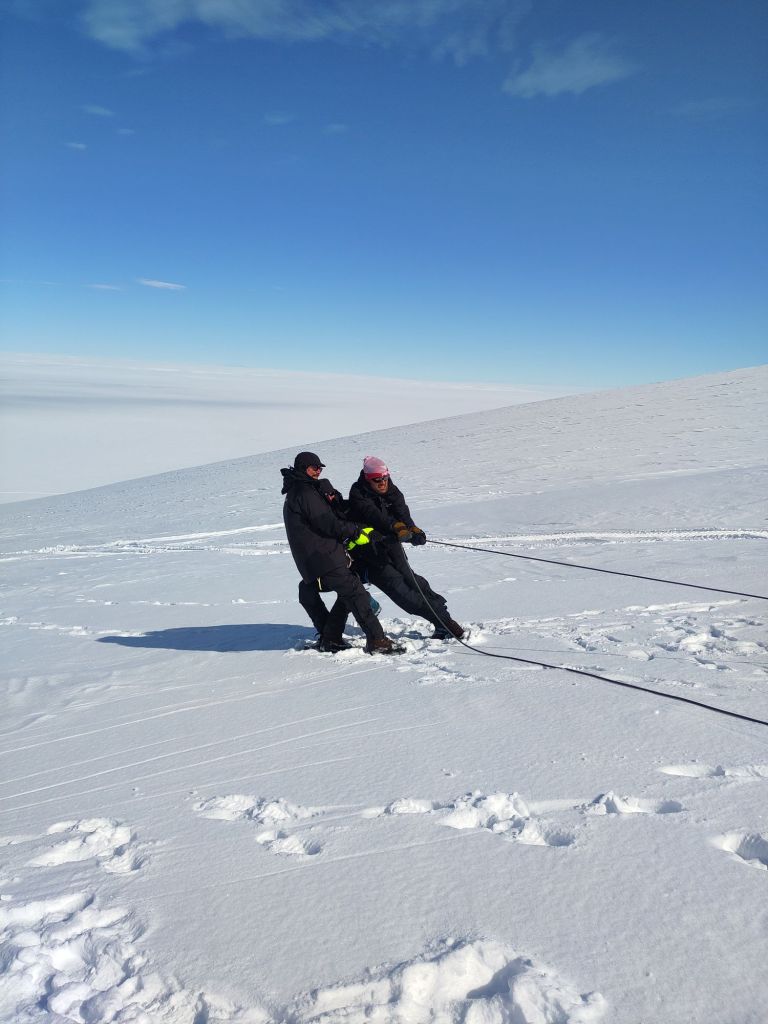
Safety training: testing a snow anchor for crevasse rescue purposes

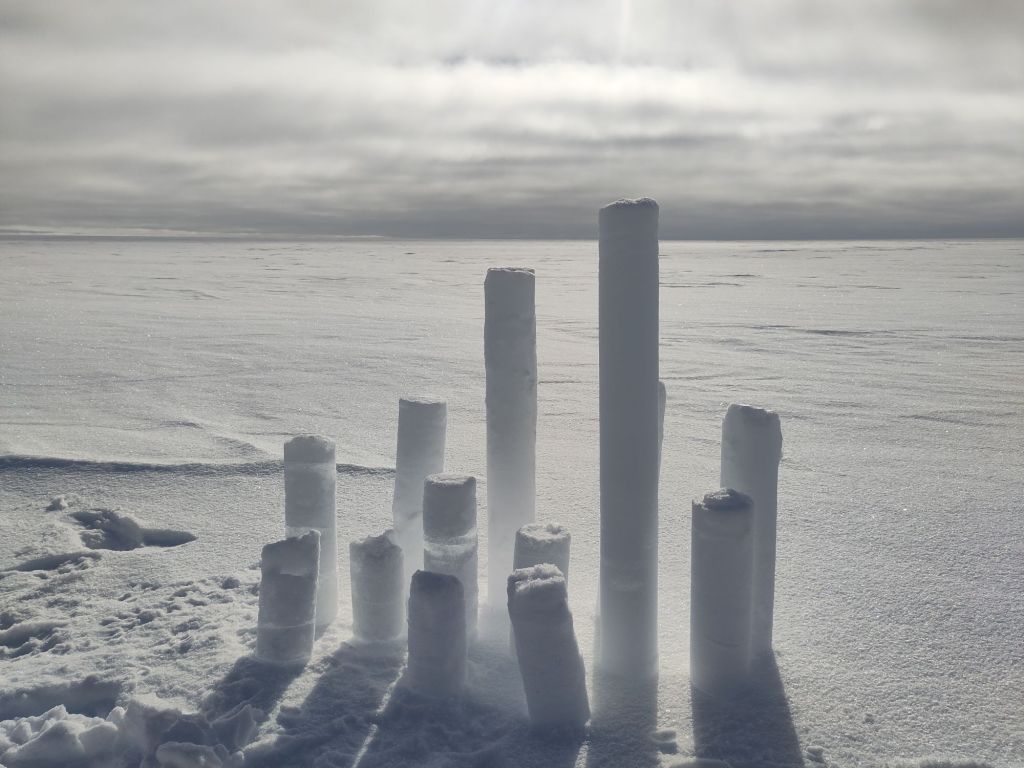
We’ve also tested some new drilling equipment, finding some very interesting firn features in the process, including several thick ice lenses in a region we didn’t expect.

Stacked firn cores on the glacier.

There have been a few anxious moments around our old friend LISA. She is a complex machine with many pieces that can go wrong but finally at 9.30 this evening Clément managed to get her working. In a tiny “lab” but one with a great view. A huge relief all round (and hopefully field operation will be more straightforward now we’ve had some practice).

  Tomorrow will be mostly packing up and preparation for a few days away, so Christmas Eve will likely find us camping out on a glacier somewhere working away. Weather permitting of course. So far we’ve been pretty lucky with that and we need to make the most of it while it lasts.

So that was a quick field update, it’s been pretty busy and a bit weird to think I’ve only been here 3 days so far. I’ve already slipped into field mode and slightly lost track of time.

The next update will probably be after Christmas, but I’m posting pictures as we go along to my pixelfed account. There are also some nice entries on the official iQ2300 expedition blog.

Meeting LISA

LISA: the Lightweight In Situ Analysis box is one of a kind; built by our friends at PICE in the Niels Bohr Institute. Later this year we’re taking LISA to Antarctica for the first time ever, to analyse shallow snow and firn cores directly in the field.

This is part of our contribution to the EPIC iQ2300 – a project led by Prof. Arjen Stroeven in Stockholm and organised by the Swedish Polar Research Secretariat.

iQ2300 is a huge project, and we are just a small part of it: the aim is to understand Dronning Maud Land’s evolution from the Holocene and out to 2300. Expect to hear a lot more about this effort in coming months…

Map of Antarctica, I lifted from polar.se : LISA will be visiting the Swedish Wasa station in DML – the top bit on this map – with us


Now back to our humble friend.

We hope LISA will help us understand how much snow falls in Dronning Maud Land, how much it varies from year to year and what is the influence of sea ice and far field atmospheric processes on the rate of snowfall. Snowfall is exceptionally difficult to measure and one of our biggest uncertainties in working out Antarctic mass budget and the response of Antarctica to a changing climate (spoiler alert: we might have a paper coming out about this shortly)…

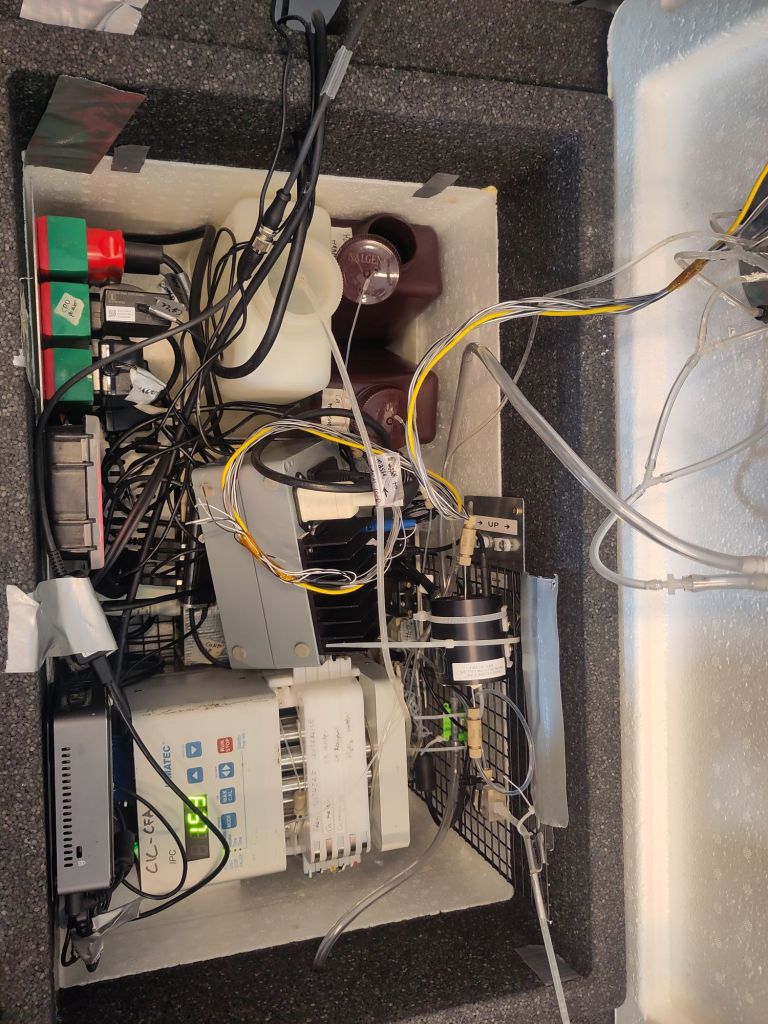
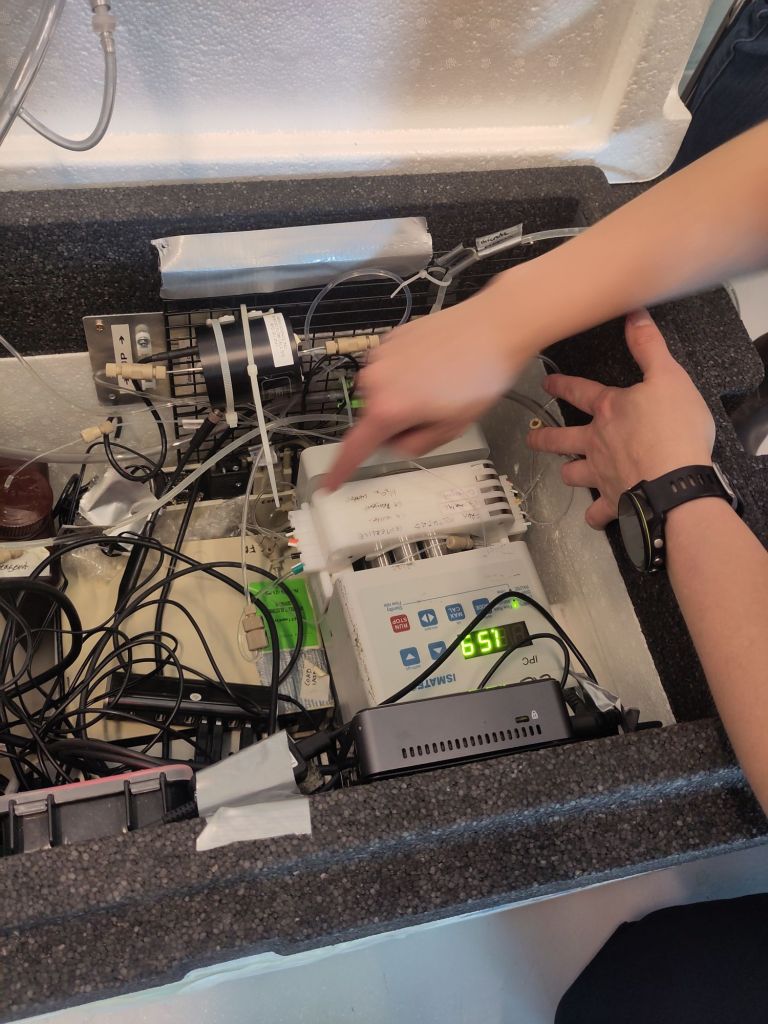
Meet LISA: a view inside the Magic Box..


Although LISA has been used in Greenland before, this is quite an experimental deployment, which means potentially really a lot of valuable scientific results. We would ultimately liek to build an Antarctic specific box, but that will have to wait to see if the results of this deployment are as good as we hope. (And some funding – if you are a billionaire with a spare couple of hundred thousand Euros, we’re always interested in talking).

The box itself is conceptually simple but in practice a little complex with a multiplicity of tubes, connectors and spare parts. This means it’s easy to fix if it breaks down, but also we need to understand how it works first.

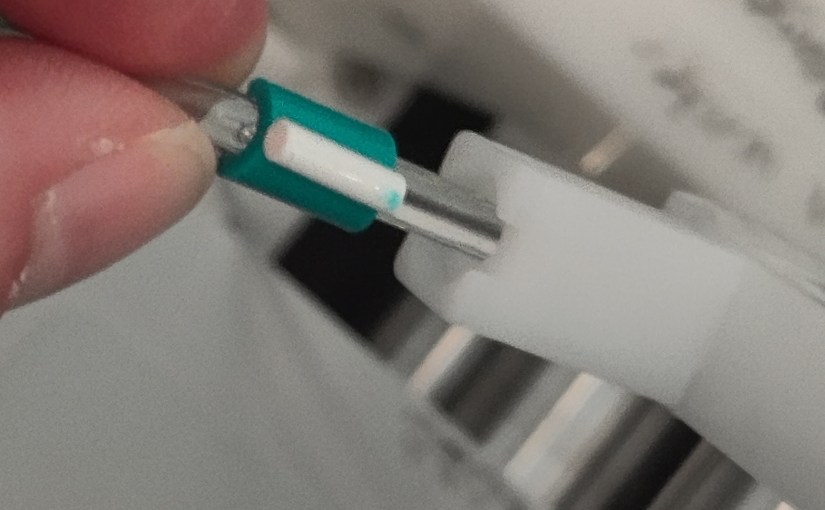
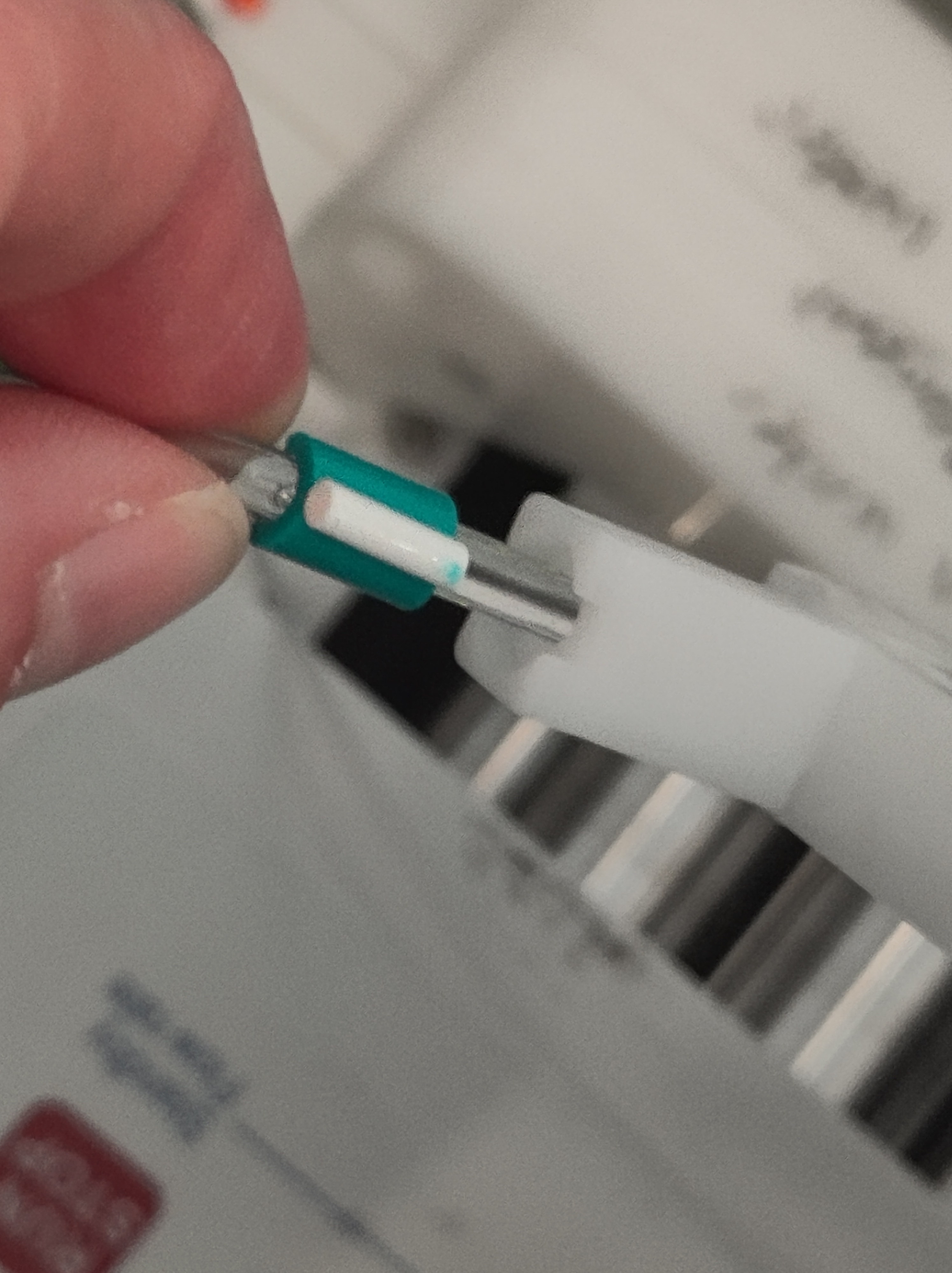
Some parts of LISA are quite fiddly…


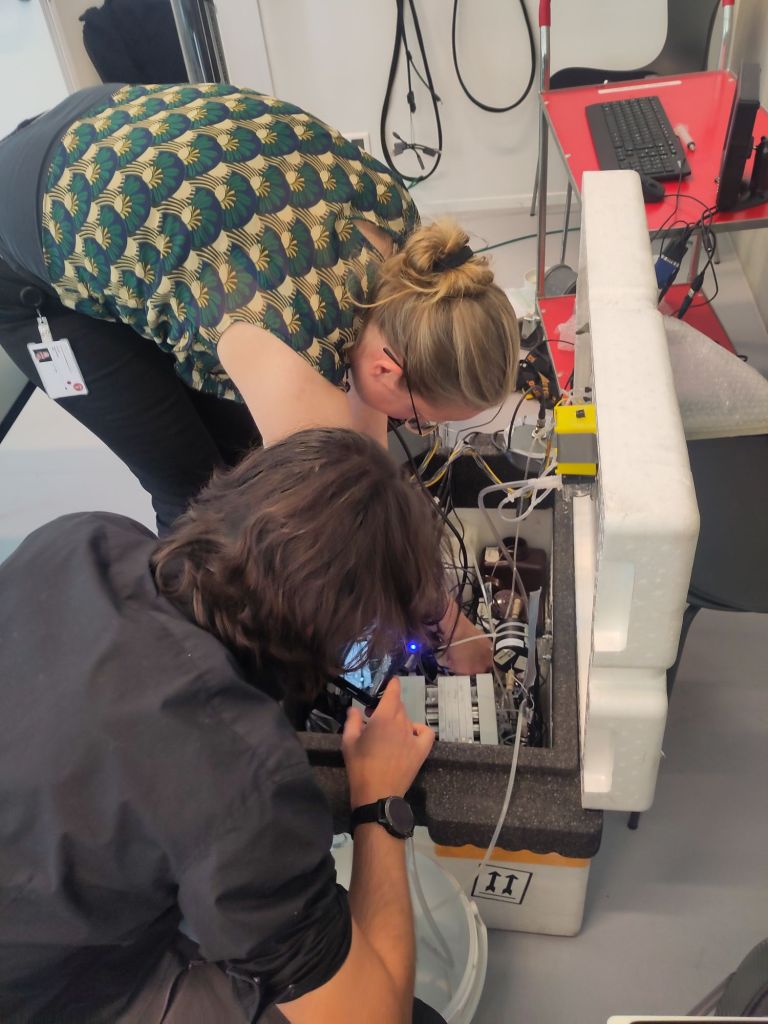
Today, the awesome and exceptionally generous Associate Professor Helle Kjær took myself, Stockholm Uni Prof Ninis Rosqvist and our PhD colleague from the Novo Nordisk funded PRECISE project, Clément Cherblanc through the use of the box.

Helle showing Clément the workings inside LISA

There’s a lot to remember and a lot to check but we’re reasonably hopeful we’ll get good results. The aim is to understand both the interannual variability on decadal timescales and the spatial gradients in snowfall accumulation. It’s a huge task, so it’s probably fortunate that we have 6 weeks or so (depending on the weather always!) to try and get it deployed at anumber of different sites which will hopefully allow us to do this.

It’s a big change to my normal fieldwork activities, but also a logical extension of them. And highly complementary to the climate and SMB modelling we are developing.

Nonetheless, ithere’s a lot of new stuff and I have in the past weeks learnt a great deal about transporting very small amounts of mildly hazardous chemicals on airlines, how to deal with customs and pack fragile instruments in large boxes.

Much more to come on this project, so stay tuned…

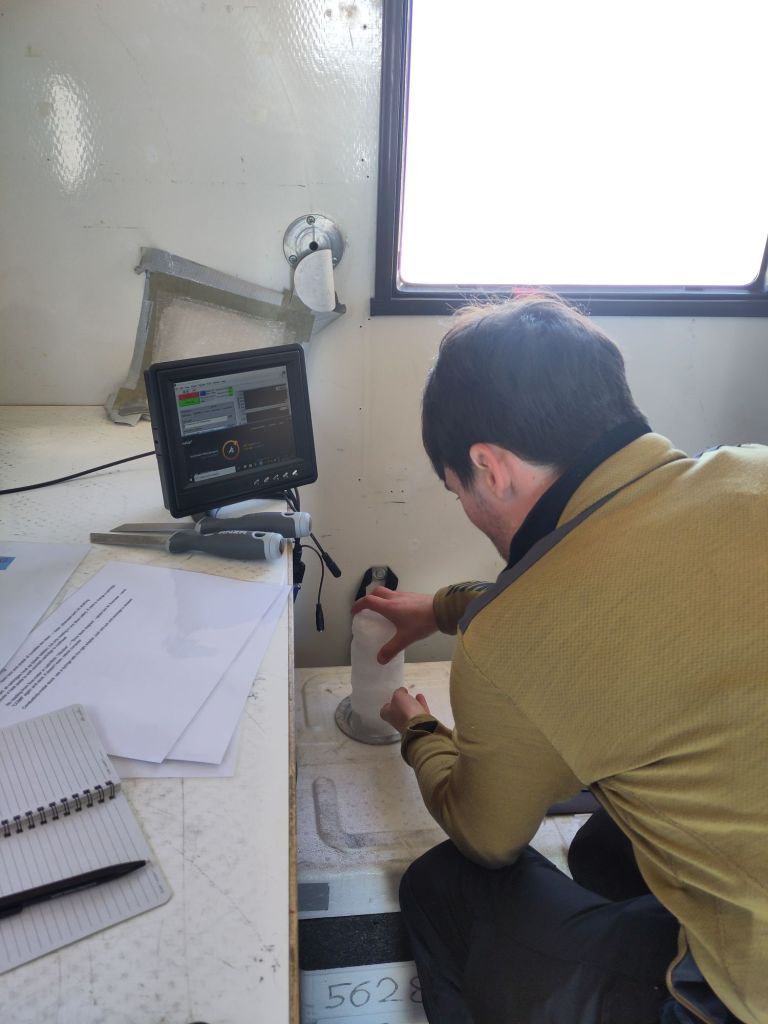
Clement getting stuck into using the software that measures different properties in the cores.