It’s been a good start to the field season, incredible competent logistics, great field equipment, super helpful colleagues and incredible food by the station cook. For the first time ever I suspect I’ll be putting on weight in the field. But everything also takes a lot longer in Antarctica so little in the way of actual scientific results to report yet. Nevertheless we’ve some tantalising hints of some interesting processes and we’ve been settling in to the expedition frame of mind.
We had a very good flight from Oslo, a small delay in Prague notwithstanding, very friendly cabin crew and 3 seats each to lie across meant a relatively good sleep and a decent amount of work finalised on route.
Clouds over Namibia’s Etosha National Park. We basically crossed a third of the world to get here. A carbon debt I’ll be paying for years…
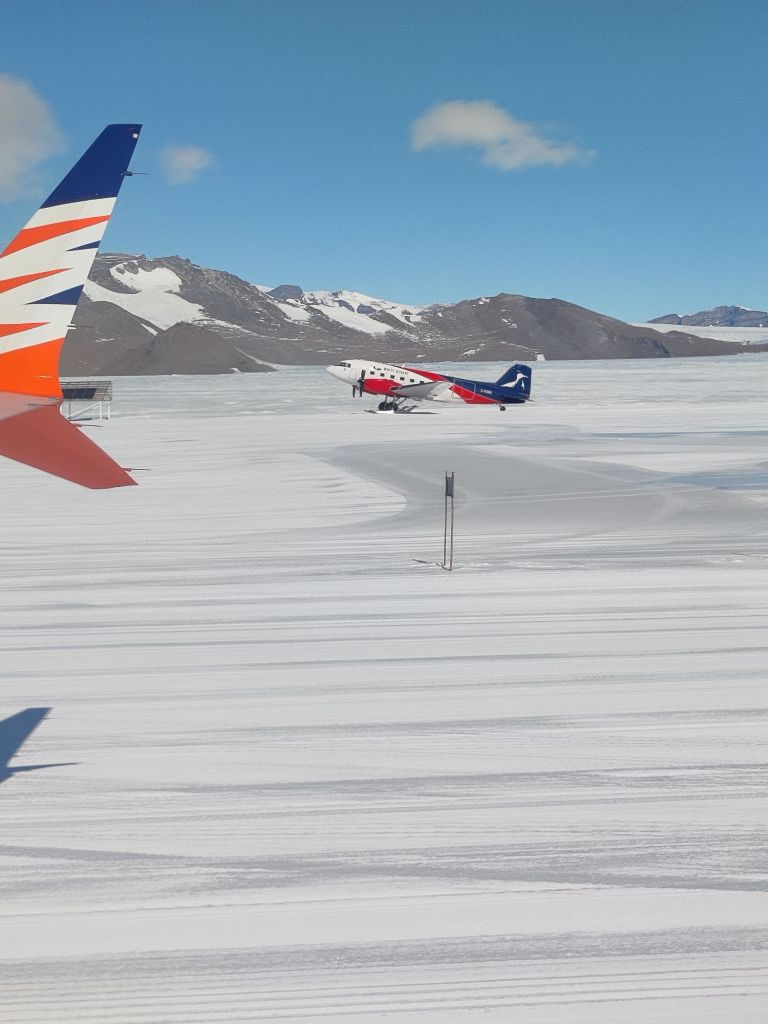
Similarly, in Cape Town, mostly spent in a hotel room finishing off reports, except for dinner and an occasional walk. And then a very smooth and easy 5 hour flight first to Troll, to be met by welcoming Norwegian colleagues and a vintage Basler (a DC3 airframe dating back to 1944, but with new engines – I’ve seen it in Greenland before – it still works!), that took us more or less directly to Wasa, where our Swedish colleagues met us on the glacier runway. And what a welcome! Everyone has been extremely helpful and very friendly.
The “vintage” Basler, an unpressurized aircraft. Very fun to fly in and beautiful views..
Operating in Antarctica is a bit like working in Greenland and also not at all like Greenland. In both places you have to be pretty flexible, self reliant and able to work in difficult conditions and across broad teams. It’s just much more extreme in terms of isolation, logistics, costs and everything else here in Antarctica.
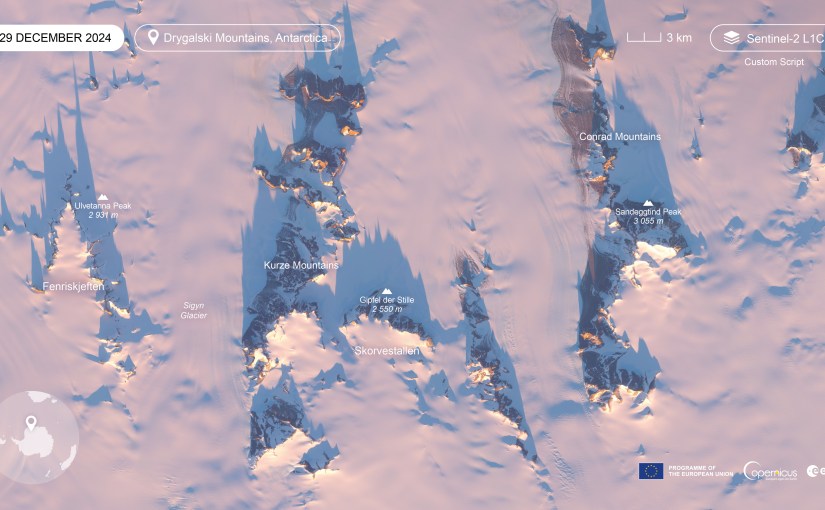
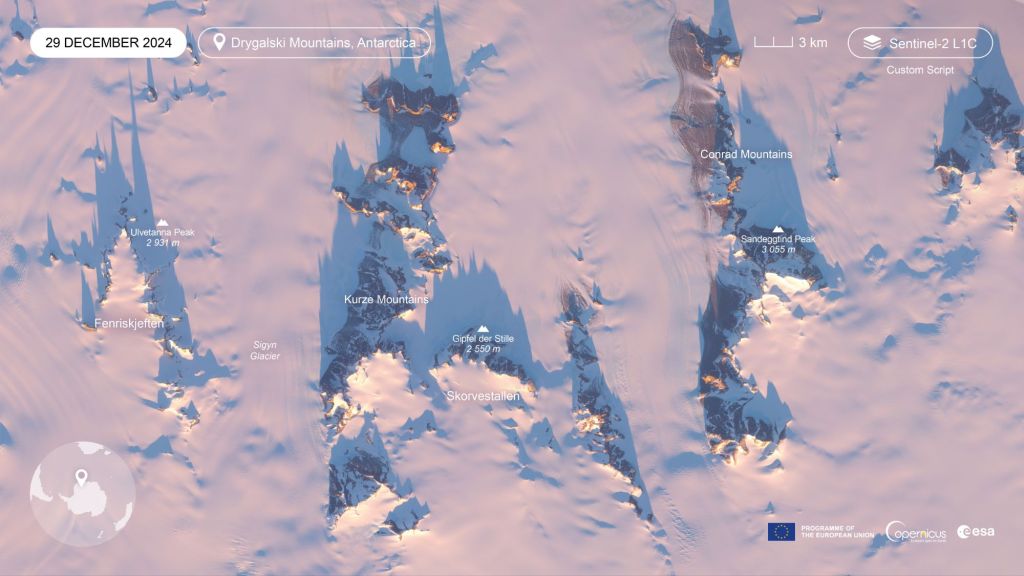
The nunataks of Dronning Maud Land: it’s a big and very beautiful place
We are extremely fortunate to be so well- supported by such a great crew and it is important to me that we repay that investment with some excellent science results.
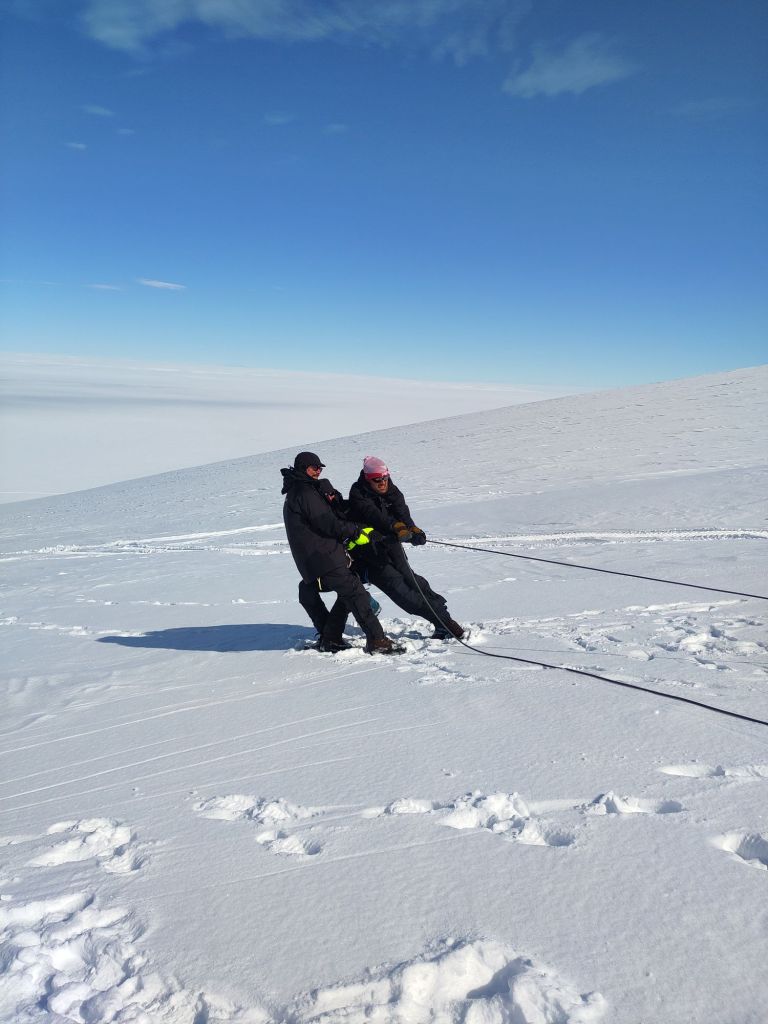
So far though, we’ve been laying the groundwork, getting our safety training done, testing some new coring equipment, unpacking and testing the LISA box and learning how to use the arks (a kind of plastic shell on skis that we will use for camping in while out of the station) and preparing for what I believe is sometimes called “deep field” (perhaps a touch melodramatic for what is basically camping).
Safety training: testing a snow anchor for crevasse rescue purposes
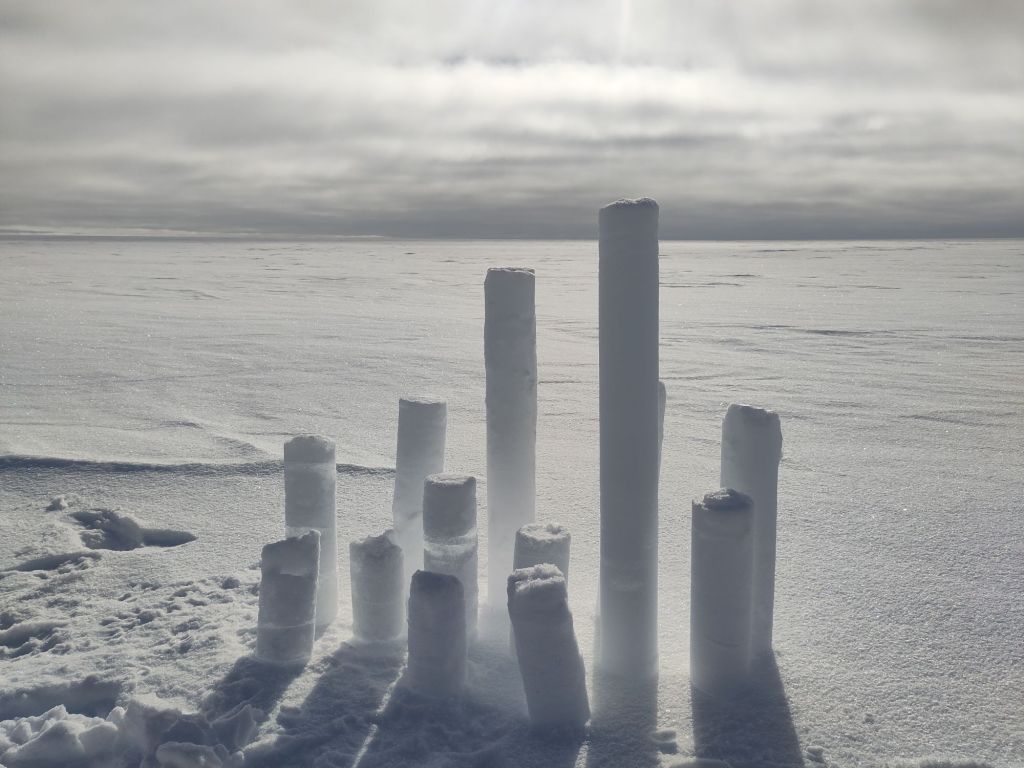
We’ve also tested some new drilling equipment, finding some very interesting firn features in the process, including several thick ice lenses in a region we didn’t expect.
Stacked firn cores on the glacier.
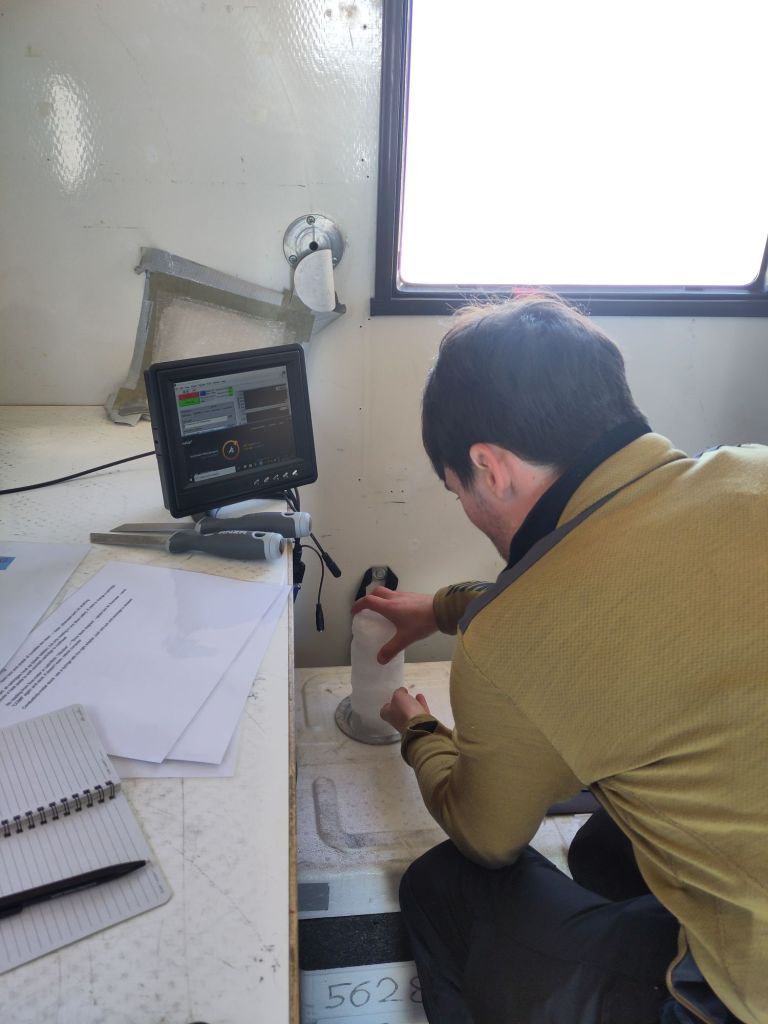
There have been a few anxious moments around our old friend LISA. She is a complex machine with many pieces that can go wrong but finally at 9.30 this evening Clément managed to get her working. In a tiny “lab” but one with a great view. A huge relief all round (and hopefully field operation will be more straightforward now we’ve had some practice).
Tomorrow will be mostly packing up and preparation for a few days away, so Christmas Eve will likely find us camping out on a glacier somewhere working away. Weather permitting of course. So far we’ve been pretty lucky with that and we need to make the most of it while it lasts.
So that was a quick field update, it’s been pretty busy and a bit weird to think I’ve only been here 3 days so far. I’ve already slipped into field mode and slightly lost track of time.
Tomorrow I’m taking the first stage of the journey to Antarctica, ironically enough though, I’m heading south by first heading north, to Oslo, where the Norwegian Polar Institute have organised an almost direct flight from Oslo to Troll station with a short stopover in Cape Town.
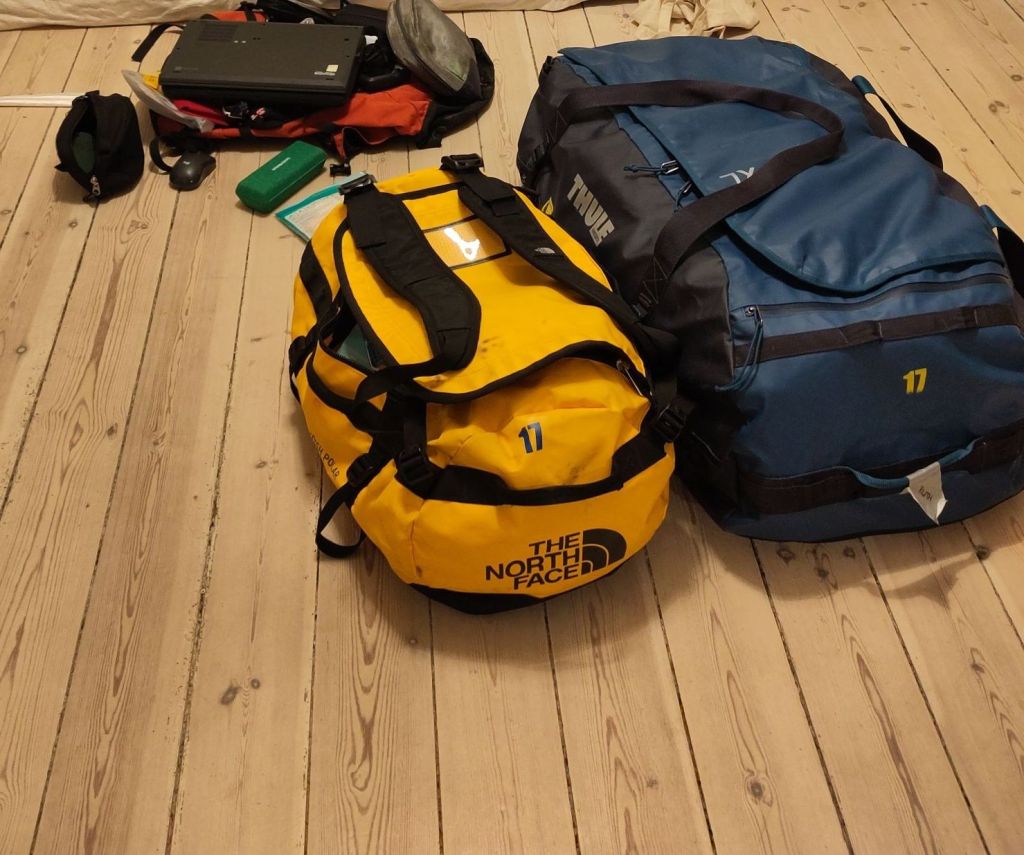
Bags almost packed and ready to go…
I’m super excited and also suffering a little trepidation. It will be my first field visit to Antarctica, even though I’ve worked in Greenland for many years, the differences will, I imagine be pretty huge…
We also have a very ambitious work plan with pretty novel and experimental equipment. It’s going to be interesting to see how much of what we have planned actually works. Small points of failure can destroy a field season. Though in our case, I’m pretty confident we’ll bring something back, even if it is not as much as I hope. And I’m always a little over-ambitious, but surprisingly often it pays off.
The opportunity to participate in iQ2300 first came up almost 3 years ago, so it’s been on the cards for a while and fieldwork has been on my mind all year. It will be nice to finally get going, even if I don’t necessarily feel ready in spite of the long run-up.
I never really feel ready for fieldwork, but at some point you just have to get on with it, like the penguins nervously clustering on the edge of the iceberg, wondering if there is a leopard seal in the water. Eventually someone jumps (or is pushed), and then they all go in and usually, the water is lovely. Although in our case, I doubt I will even get to see any penguins, the Wasa station, my home for the next 6 weeks or so is rather a long way for the sea. In the meantime the first groups are already out, opening the station ready for our arrival next week, deploying weather stations, running ice penetrating radar and checking out the equipment we’ll need to use. The signal groups we have are no longer just coordination but field updates direct from Antarctica – a miracle of telecommunications that we don’t even think about anymore!
The Autumn has also been far too hectic with my eternal inability to say no to interesting opportunities challenging everyone around me and especially myself. Will I ever learn? I remain extremely grateful for the team at DMI and at home for keeping things ticking over.
However, it has also felt like a sequence of tasks to tick off while the grand départ gets closer, annual meeting, tick, Hackathon, tick, panel meeting, tick and then eventually, annual report, tick, expense claims, tick, Christmas presents, yep, and finally tomorrow may actually come. Hence though, the notable lack of updates on here, I have had to find some slack somewhere on these informal little pieces that I’m unsure anyone reads have definitely been a casualty.
I’m not sure much is going to change the next couple of months either. But I will try to post at least occasionally, work schedule, weather and internet access permitting.
But first it’s time for a little Christmas hygge with my incredible family and my lovely husband who have never asked me not to go..
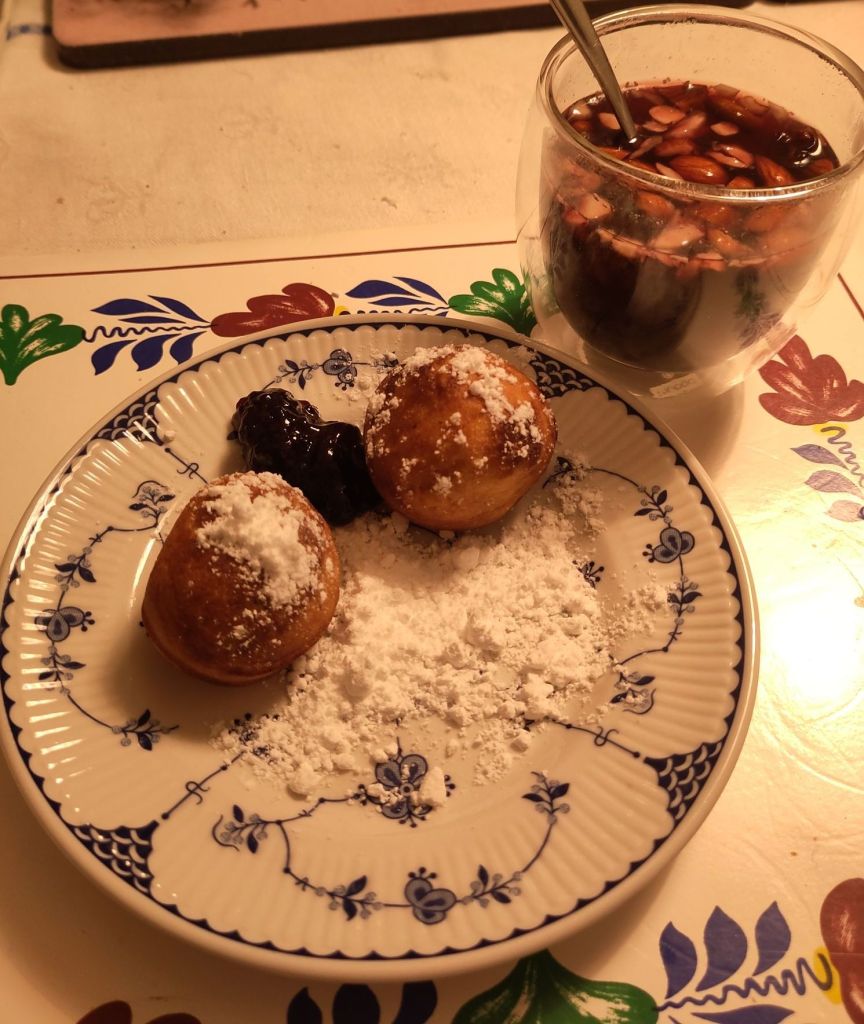
Danish æbleskiver and gløgg by candle light, perfect for a dark December evening, bring on the 24 hour daylight…
As ever I’m grateful to the Swedish Polar Secretariat for giving me and the team the opportunity to participate in this field season, as well as the Novo Nordisk Fund whose PRECISE challenge grant has also helped us to pay some of the other costs.
It’s always nice to kick off a week with notification that a paper you have co-authored has been published.
In this case, and due to a magnificent effort by lead author Gavin Schmidt (who heaven knows must have many other things on his plate at NASA GISS right now), the” Datasets and protocols for including anomalous freshwater from melting ice sheets in climate simulations ” is now out in Geoscientific Model Development.
If that sounds a bit clunky, well it is. The idea is that the paper is a technical guidance, to help climate models (specifically for CMIP7), to include the effects of ice sheets into the earth system, without having to actually include a full ice sheet model, which turns out to be quite hard, particularly in Antarctica.
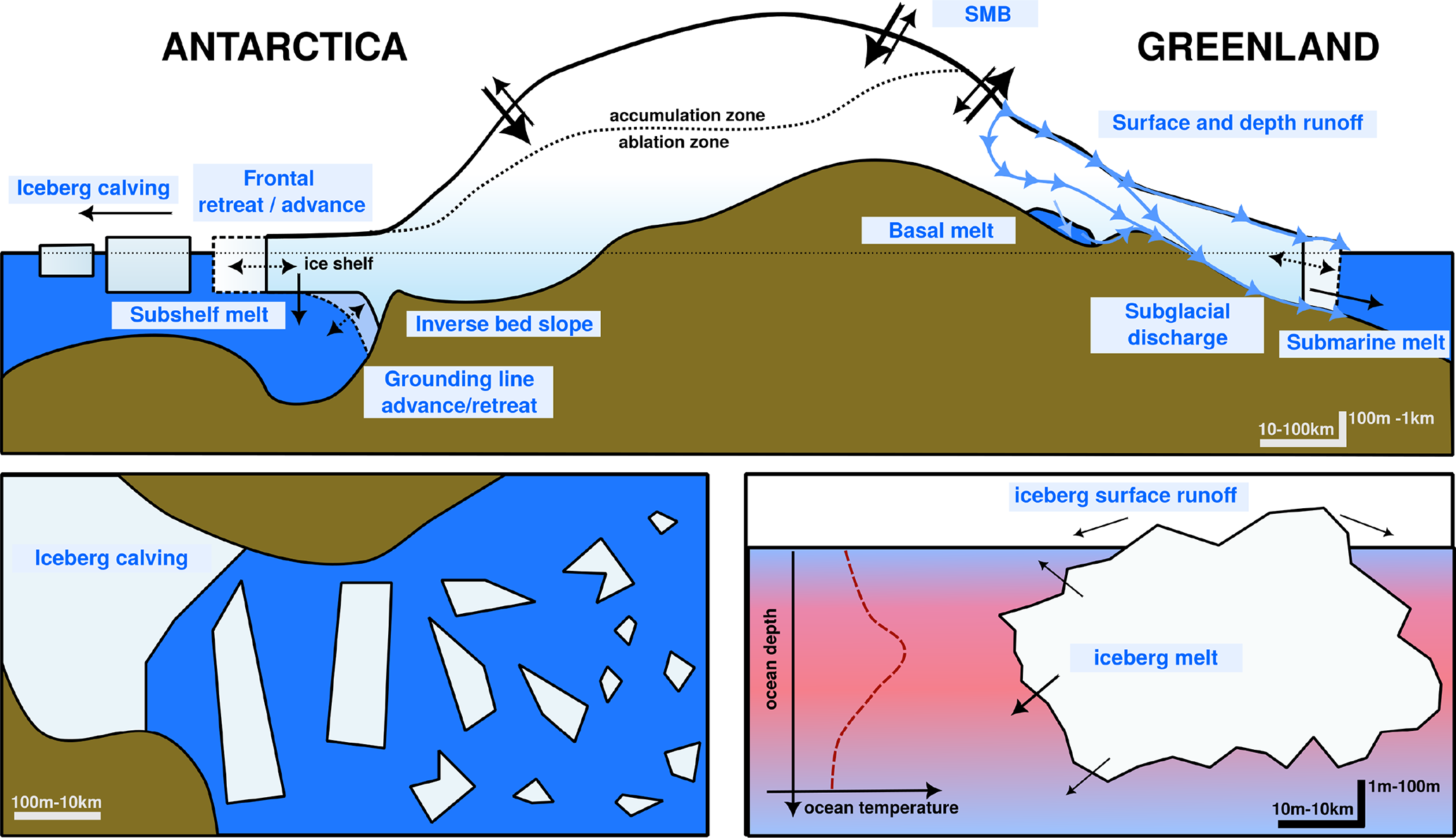
Even so there’s a lot of general interest in the paper, including how this is usually done now (there are a range of different approaches, each with their quirks). And then a particularly nice and clear section is given on all the many different ways that ice sheets lose ice. The figure below from the paper shows some of these and as they all have different downstream effects on ocean circulation, sea ice and of course sea level rise, it’s important to work out how to include them efficiently. The paper as it stands is a really nice introduction to the subject.
Figure 1 from Schmidt et al., 2025 showing a schematic of how ice sheets lose ice.
Icebergs are particularly interesting as a source, as the meltwater from these can take years to be added to the ocean, in which time, they will have drifted hundreds or thousands of kilometres. We have some suggestions on those too.
In any case, we hope this paper, which grew out of a technical online workshop on the subject, partly organised by our Ocean Ice project, will turn out to be a useful source for the groups that actually run the global climate models for CMIP and the IPCC. Many of these models are still in development or being initialised now, so time is already short for those of us involved in the technical parts of the exercise. The publishing process is slow, but this is also why preprints are so valuable. This paper in its submitted form has been up for months, it’s only now the final version is ready, but it hasn’t changed much. While it feels hard enough keeping up with published papers that preprints feel like a distraction, science is moving so fast, it’s probably essential. Maybe I’ll write more about that later. Of course preprints (and indeed published papers) can lead you astray, especially in fields you don’t know much about (as COVID was a helpful reminder), so perhaps sensibly the IPCC insists on acceptance of manuscripts before including them in their reports. Nonetheless, keeping up with preprints is now probably almost as important for scientists as keeping up with the published literature.
On the subject of the IPCC, I was reminded this weekend that it’s now less than 500 days until the submission deadline for the working group 1 part of the next IPCC report (AR7), so it’s time to start thinking about what are the priorities to get into the scientific literature to inform this effort. IPCC can only report published work, and doesn’t do its own, so now is the moment to pull out that unfinished but crucial piece of evidence of something or other relevant and get it submitted.
Not coincidentally, it’s time to talk about Academic Writing Month (AcWriMo). I actually try to write all through the year but November is time for a final push to try and meet my (usually far too ambitious) annual goals.
I had intended to start AcWriMo again this year, I’ve a huge backlog of papers to get done and it seemed a good way to start. However, a big proposal writing effort (more on here if the funding comes through) and a Hackathon (of which more also anon), both extremely rewarding and in fact also involving a lot of writing, somewhat derailed the first 10 days of my effort…
Now however it is time to focus on the remaining almost 3 weeks of November. The plan is one hour per day, except weekends, just focused on papers. I’ve put it in my calendar already. Let’s see if I can stretch more than that. Also non- negotiable is daily exercise. The fresh air and time away from the computer is almost as important as sitting down to do the work.
I’ve got an almost done experimental protocol to write for the PolarRES project (which finishes his month, so there’d be a nice symmetry to getting that done). And then there’s the much delayed reply to reviewers on our ice mélange study in NW Greenland as my main foci, but I also want to help my Hackathon group get their project knocked into shape, so some time will be spent there.
I’ve also got various diverse co-authored papers I need to contribute to, read,edit and give my options on. I hate to become a roadblock for colleagues so that also needs some attention but I’m for sure already out of time.
So if you want to see all stages of the sausage being made, follow along with the hashtag (#AcWriMo25) on socials, but hopefully you won’t see me there much because I #amwriting.
There is currently some discussion in the Danish media about sea level rise hazards and the risk of rapid changes that may or may not be on the horizon. Some of the discussion is about IPCC estimates. That’s a little unfortunate and in fact a bit unfair as the IPCC report has not been updated since 2021, nor was it intended to have been. In the mean time there has been a lot of additional science to clear up some of the ambiguities and questions left from the last report.
I’ve been working quite a bit on the cryosphere part of the sea level question of late, so thought I’d share some insights from the latest research into the debate at this point. And I have a pretty specific viewpoint here, because I’ve been working with the datasets, models, climate outputs etc that will likely go into the next IPCC report as part of a couple of EU funded projects. As part of that, we have prepared a policy briefing that will be presented to the European Parliament in June this year, but it’s already online now and will no doubt cross your socials later this week. I’m going to put in some highlights into this post too.
Now, I want to be really clear that everything I say in this post can be backed up with peer reviewed science, most of which has been published in the last 2 to 3 years. Let’s start with the summary:.:
The sea is rising. And the rate of rise is currently accelerating.
The sea will continue to rise long into the future. The rate of that sea level rise is largely in our society’s hands, given that it is strongly related to greenhouse gas emissions.
We have already committed to at least 2m of sea level rise by 2300.
By the end of 2100 most small glaciers and ice caps will be gone, mountain glaciers will contribute 20-24% of total sea-level rise under varying emission scenarios.
Antarctic and Greenland ice sheet mass loss will contribute significantly to sea-level rise for centuries, even under low emissions scenarios
Abrupt sea level rise on the order of metres in a few decades is not credible given new understanding of key ice fracture and iceberg calving processes.
By the end of this century we expect on the order of a half to one metre of sea level rise around Denmark, depending on emissions pathway. (If you want to get really specific: the low-likelihood high impact sea level rise scenario corresponds to about 0.9 m (on average), or at the 83rd percentile, about 1.6 m of sea level rise).
Your local sea level rise is not the same as the global average and some areas, primarily those at lower latitudes will experience higher total sea level rise and earlier than in regions at higher latitudes.
Sea level rise now is ~5mm per year averaged over the last 5 years, 10 years ago it was about 3 mm per year). Much of that sea level rise comes from melting ice, particularly the small glaciers and ice caps that are melting very fast indeed right now. Even under lower levels of emissions, those losses will increase. There won’t be many left by the end of this century.
Greenland is the largest single contributor and adds just less than a millimetre of sea level rise per year, with Antarctica contributing around a third of Greenland, primarily from the Amundsen Sea sector. The remaining sea level rise comes from thermal expansion of the oceans. Our work shows very clearly that the emissions pathway we follow as a human society will determine the ultimate sea level rise, but also how fast that will be achieved. The less we burn, the lower and slower the rise. But even under a low-end Paris scenario, we expect around 1 metre of sea level by 2300.
The long tail of sea level rise will come from Antarctica, where the ocean is accelerating melt of, in particular, West Antarctica. However, our recent work and that of other ice sheet groups shows that the risk of multi-metre sea level rise within a few decades is unrealistic. Again, to be very clear: We can’t rule out multiple metres of sea level rise, but it will happen on a timescale of centuries rather than years. High emissions pathways make multiple metres of sea level rise more likely. In fact, our results show that even under low emissions pathways, we may still be committed to losing some parts of especially West Antarctica, but it will still take a long-time for the Antarctic ice sheet to disintegrate. We have time to prepare our coastlines.
There’s so much more I could write, but that’s supposed to be the high level summary. Feel free to shoot me questions in the comment feeds. I’ll do my best to answer them.
Five years ago, a small group of European scientists got together to do something really ambitious: work out how quickly and how far the sea will rise, both locally and on average worldwide, from the melting of glaciers and ice sheets. The PROTECT project was the first EU funded project in 10 years to really grapple with the state-of-the-art in ice sheet and glacier melt and the implications for sea level rise and to really seek to understand what is the problem, what are the uncertainties, what can we do about it.
We were and are a group of climate scientists, glaciologists, remote sensors, ice sheet modellers, atmospheric and ocean physicists, professors, statisticians, students, coastal adaptation specialists, social scientists and geodesists, stakeholders and policymakers. We’ve produced more than 155 scientific papers in the last 5 years (with more on the way) and now our findings are summarised in our new policy briefing for the European Parliament.
It’s been a formative, exhilarating and occasionally tough experience doing big science in the Horizon 2020 framework, but we’ve genuinely made some big steps forward, including new estimates of rates of ice sheet and glacier loss, a better understanding of some key processes, particularly calving and the influence of the ocean on the loss of ice shelves. More importantly for human societies, by integrating the social scientists into the project, we have had a very clear focus on how to consider sea level rise, not just as a scientific ice sheet process problem, but also how to integrate the findings into usable and workable information. In Denmark, we will start to use these inputs already in updating the Danish Climate Atlas. If you are elsewhere in the world, you may want to check out our sea level rise tool, that shows how the emissions pathway we follow, will affect your local sea level rise.
Our final recommendations?
Accelerate emission reductions to follow the lower emission scenario to limit cryosphere loss and associated sea-level rise
Enhance monitoring of glaciers and ice sheets to refine models and predictions
Support the long-term development of ice sheet models, their integration into climate models, and the coupling of glacier models with hydrological models, while promoting education and training to build expertise in these areas
Invest in flexible and localized coastal management that incorporates uncertainty and long-term projections
Foster international collaboration to share knowledge, resources, and strategies for mitigating and adapting to global impacts
This is the first in a two-parter. At this time of year, posts making bold statements about what happened last year and what we plan to do this year start to become prominent. The last few years I have spent a few hours in the first week of January reviewing what worked, what was fun and what was cool, what was awful and what definitely was a waste of time. I’m not honestly sure that any of this is of interest to anyone except me, so read on, but you have been warned..
2024: Themes of this year: Greenland, Machine Learning, people, and big data…
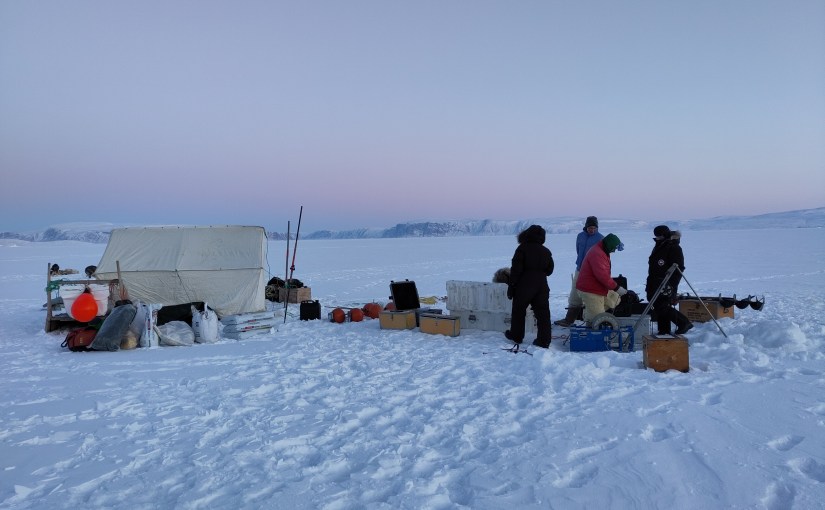
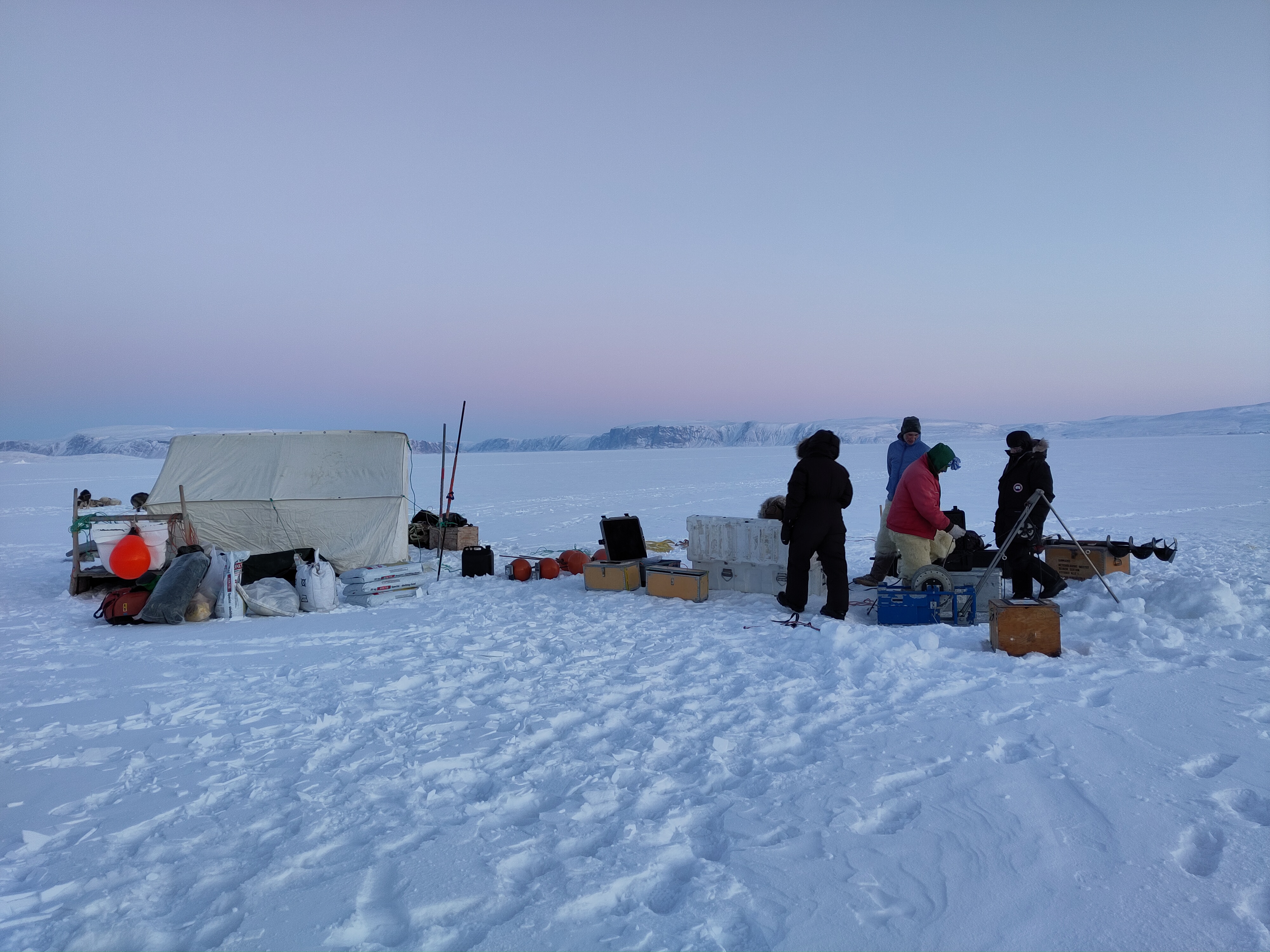
Working with scientists from the Greenland natural resources institute and local hunters on the sea ice.
The final trip was in October for a workshop with scientists in Greenland about climate change impacts in Greenland, the subpolar gyre and AMOC for the UN Ocean decade. It was a memorable meeting for the sheer range and quality of science presented as well as for being stranded in Nuuk by a broken aeroplane in quite ridiculously beautiful weather (I mostly stayed in my hotel room to write the aforementioned paper, sadly. In 2025 I will work on my priorities) .
Apart from fieldwork I have really tried hard on publications this year. I have (like many scientists I suspect), far more data sitting around on hard drives than I have published. It’s a waste and it’s also fun to work on actual data instead of endless emails. This is something I intend to continue focusing on the next few years as well. There is gold in them thar computers…
We had a couple of writing retreats were very successful. These I plan to continue also and the PRECISE project grant is happily flexible enough to do this. I probably achieve as much in terms of data processing and paper writing in 3 focused days as I would in 3 months in the office. It paid off too. I managed to co-author 8 papers published this year (including my first 1st-author paper in ages – a workshop report, but nevertheless it counts.). Some of these are still preprints, so will change, and there are a couple more that have been submitted but are not yet available as preprints. I will submit two more papers in the next 3 weeks as well (1 first author), so January 2025 is going to be the 13th month of 2024 in my mind.
Bootcamps have been a theme the last 3 years, I organised the first in 2022 and so far there have been 4 publications from that first effort. There was another this year in June, ( I have attended them in 2023 and 2024 but was not organising) where we really got going on a project for ESA that I have had my eye on for a while – I hope the publication from that will be ready in the Spring this coming year.
Machine Learning: This was the year I really got machine learning. I’ve been following a graduate course online, and learning from my colleagues and students about implementations. I understand a lot more about the architecture and how to in practice apply neural networks and other techniques like random forests now. This is not before time, as we intend to implement these to contribute to CMIP7 and the next IPCC report. We still have a lot of work to do, but the foundation is laid. And it’s been fun to learn something that, if not exactly new, is a new application of something. In fact the biggest barrier has really been learning new terminology. We have also been fortunate that Eumetsat and the ECMWF have been very helpful in providing us with ML-optimised computer resources to test much of these new models out on. We’re actually running out of resources a bit though, so it’s time to start investigating Lumi, Leonardo and the new Danish centre Gefion to see what we can get out of these.
People: This year our research group has grown with another 2 PhD students, and at the end of the year we also employed a new post-doc. I think it’s large enough now. I’m very aware that if I don’t do my job properly, then not only the research but the people will suffer, so developing people management skills is really important. In any case it’s extremely stimulating to work with such talented young people and I’m really excited to see where the science will take us, given the skills in the team. I hope I have been good enough at managing such a large and young team, but I have my doubts. A focus for 2025 for sure.
Data: This has been the year of big data, not necessarily just for ML purposes but also in the PolarRES project the production and management of an enormous set of future climate projections at very high resolution. More on this anon. Suffice to say, it has taken a lot of my time and mental energy and it’s probably not the most exciting thing to talk about, but we now have 800 Tb of climate simulation data to dig into. I suspect that rewards of this will be coming for years. There has also been a lot of digging into satellite datasets and the bringing together of the two has been very rewarding already. It’s a rich seam, to continue the metaphor, that will be producing scientific gold for many years.
Projects: we have gone in the final year of two projects, PROTECT and PolarRES, both of which will finally end in 2025. We also arrived at the half way point of OCEAN:ICE. So rather than being a year of starts, it has been a year where we have started to prepare for endings – actually this is a fun part of many projects where a lot of the grunt work is out the way and we can start to see what we have actually found out. It can also be a slog of confusing data, writing and editing papers and dealing with h co-author comments. I’ve definitely been in that process this year, hopefully with some of the outputs to come next year…
Proposals: I started 2024 writing a proposal. Colleagues were in 3 different consortia for the same call, alas ours didn’t get funded, but 2 of the others did and will start this year. That is a good result for DMI and our group. I wrote another proposal in the Autumn and contributed to a 4th and finally at the end of the year I heard that both will *likely* be funded (but are currently embargoed and in negotiation, so no more will be said now). It sometimes feels that spending so much time and energy on proposal writing is putting the cart before the horse, but in fact I find proposal writing something akin to brainstorming. It’s essential of course to ensure we can continue to do the science we want, but it can also help us to clarify our ideas and make sure we’re not on the wrong track. It’s also a good way to keep track of what the funders are actually wanting to know and to help us focus on policy relevance.
There was also an incredible number of meetings, reports, milestones and deliverables, but you probably don’t want to hear about that…
Also missing from this summary is personal life, and, well that is not for sharing publically, but suffice to say, I learnt about raising teenagers, I also had some very good times with friends and family, to all of whom I immensely grateful for being a part of my voyages around the sun.
Anyway, reading all that back, I’m not surprised I ended the year exhausted! I am not planning on quite such a slog in future. I should probably pace myself a bit more this year, the plans for which will be the subject of next week’s post.
The personal finance community have an important concept of “paying yourself first”*, by which they mean, that when your salary or other form of payment comes in, the first thing you should do is put a given percentage, 10% is commonly used, into a savings account. Only then should you consider spending the rest of your income.
I kind of like this as a concept, and I think it could very usefully be applied to other areas of my life, notably, which is where of course it comes into this blog, science. As I’ve got more senior I’ve found I’m spending more and more time on managerial tasks, meetings, emails, reports, proposals, supervision and less and less on actual science. This is probably fine, it’s the way of the world, but it’s also a pity when part of (most of?) the joy of science is really in the doing. That’s why we put up with paltry wages, high workloads, social media hostility and the rest.
Actually doing science is so much fun.
Admittedly, some of it is more type 2 fun (best enjoyed retrospectively, as anyone who has spent a month CMORising model output or digging snow pits in freezing driving snow conditions can tell you), than type 1 fun (enjoyed in the moment). Nonetheless, I occasionally feel I’m in danger of losing the thread of why I started in this career in the first place.
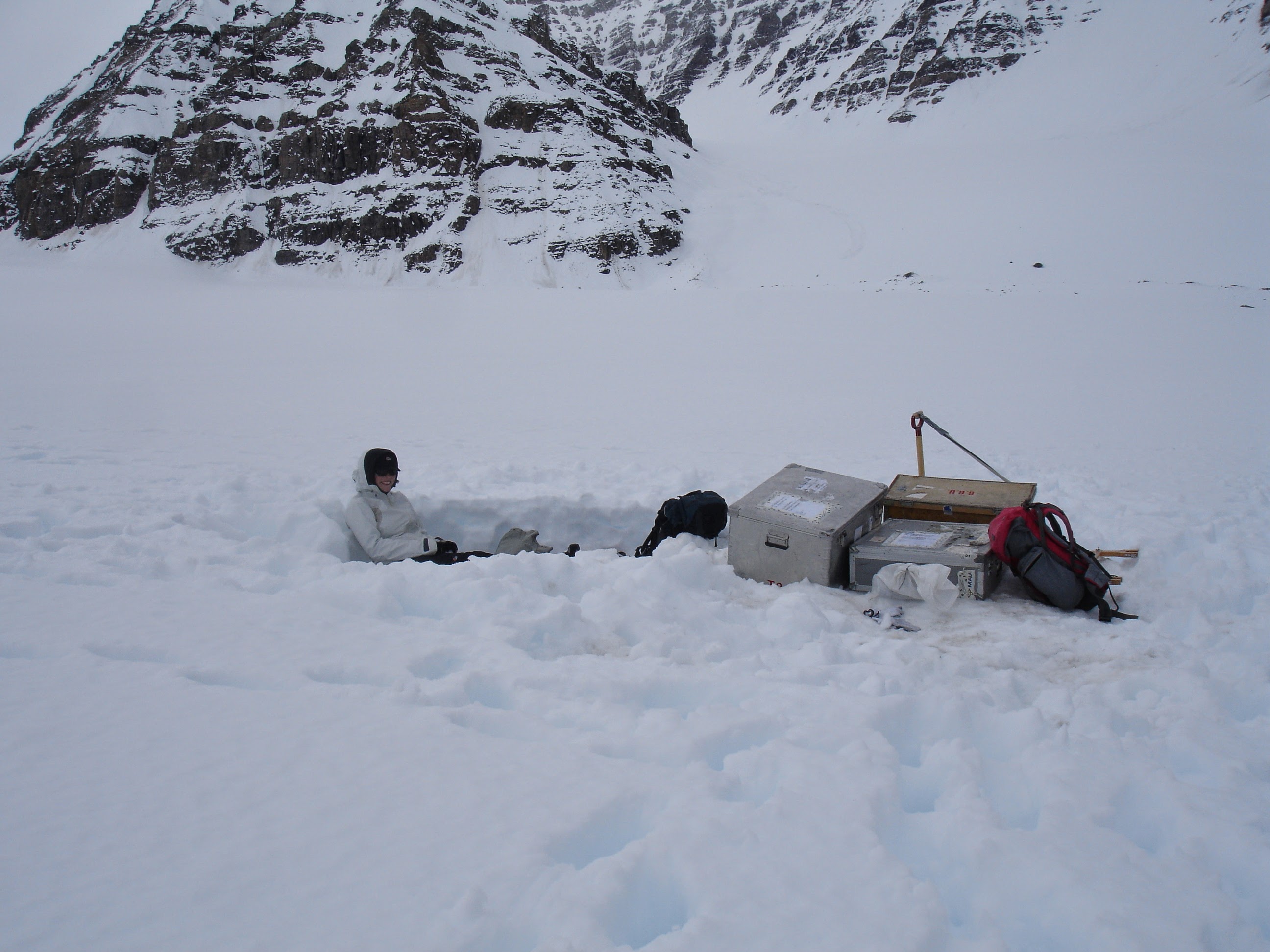
Type 2 fun: It took us 4 hours to locate and dig that lot out in wind and occasional blizzard conditions.
Autumn was absolutely and ridiculously hectic, many project meetings, as well as technical conferences and symposia, proposal deadlines, deliverable deadlines and one-off workshops. I welcome November with open arms. Finally time to do some actual work again! And in the way of paying myself forward, I have started two different but related tracks to get back into the groove this month.
The first, #30DayMapChallenge you can already see some entries for here on a dedicated page. The idea is a new map, according to the prompts from the website 30DayMapChallenge , every day. I’m certainly not going to make all 30. I will be doing well if I manage 10, but already after only 2 days, I can feel my geospatial mojo coming back. There’s nothing like practicing your GIS skills to make you want to do more of them
The second is #AcWriMo, academic writing month. I have 3 papers I’d really like to submit before the end of this year. I’m very close with one, fairly close with the second and to be entirely honest I’m not really sure where I am with the third… Now it may seem unwise to commit to 2 daily activities in November, while recovering from September and October, but in fact they’re pretty complementary. I plan to post maps that are relevant to, or even actually from the papers, and just the process of looking at data is a motivation to get the work done.
So my commitment to #AcWriMo is:
I will have the first 2 papers submitted by end November
I will write at least 20 minutes per day – every day!
I will write at least 8 hours per week
I will rediscover the joy of science.
Let’s call it paying myself first…
*Far be it from me to offer financial advice, but if I was a young graduate student, I’d be saving up pretty hard on whatever meagre wages I have. The research field can be fickle with contracts, even permanent jobs have to continue raising money and we can’t keep up the pace for ever. Nonetheless, I wouldn’t swap it for another job…
This post is in response to a thread posted on blue sky* by Jeremy Bassis and a discussion between Felicity mcCormack and Gavin Schmidt. All these people are well-respected climate scientists and the original thread was posted as a result of a Nature piece about operationalising climate models (and sea level rise), like we forecast the weather. This is something I’ve been thinking about for a while too, as sea level rise is an undeniable existential threat to my home country…
Anyway, I replied with a link to the Danish Climate Atlas – which to my mind is very much a model for how climate information should be done. I can’t give a full overview of the Climate Atlas, largely because it’s not my story to tell, but as Jeremy asked me to talk more in depth about it, and given the 300 character limit, I thought I’d formulate a few thoughts here first before sharing…
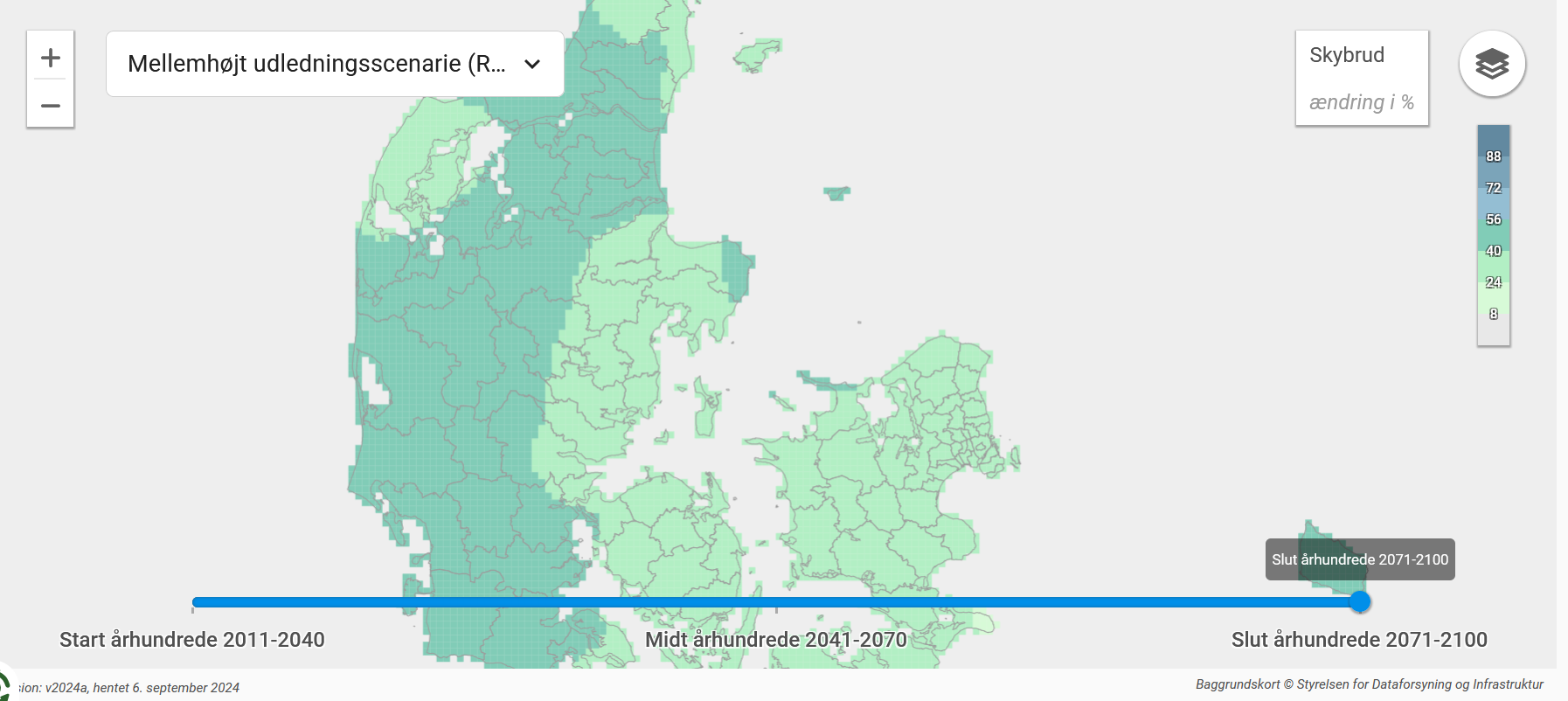
The climate atlas is not a book but a web frontpage that allows anyone with an internet connection to get high quality climate information at a local scale in Denmark. The map interface makes it easy and intuitive to use, and for detail a whole bunch of reports and datasets in different formats can be downloaded (everything from ASCII to GIS to netcdf). You can explore it here. All the data is given on a kommune (local authority) level except for sea level rise data which is divided up by coastal stretches.
Example of a Climate atlas figure – this is the overview figure, each local authority area is clickable for local information
For audiences that just want a quick message there are these easy to interpret icons with a key message below, like this one about higher water levels.
I was involved in the early stages and to my mind there are 4 crucial elements that have made it very successful:
Legal Requirement: Every local authority (a kommune, don’t think hippies, think regional councils) in Denmark has a legal obligation to make climate adaptation plans and to keep them updated. This element is important as it created awareness of the problem and effects of climate change and the necessity of investigating adaptation options. The initial plans were rather patchy and not very consistent with each other. Many regions had employed a consultant who was also maybe not an expert. Several kommune ended up with data based on CMIP resolution data! Hardly appropriate for a small local region in Denmark (which is barely resolved in most global climate models).
Data Foundation: At the same time we have been dynamically downscaling these simulations for decades, to provide really high quality locally bias corrected data (using also DMI’s long climatological time series to understand if and where biases exist). Colleagues at DMI identified a need to provide this in an easy to use format to everyone in the country. We had long ago discovered that working with motivated kommune employees led to a really good outcome: readable climate variables that are meaningful to an individual city, data formats that can be used by non-scienists (who definitely can’t deal with netCDFs).
Funding: Doing a data project properly requires money. The Climate Atlas is, compared to the cost of not doing anything, extremely cheap, nonetheless, it still costs something. Ear marked funding from the danish state to build up the Climate Atlas from the ground, to develop it as new needs are identified and to improve both communication and presentation has been crucial. Along the way several different needs have arisen (droughts, deep uncertainty in sea level rise), a new version will hopefully be coming soon.
Intense engagement: Probably the most crucial aspect to getting the climate atlas off the ground and into use has been communication over and over and over again. Not just initially with kommune to find out what they need (building on many years of background experience first), but also reaching out to special interest groups raning from local farmers in mid-west Jylland to sewage engineers, high school teachers and property developers. This continues, but has undeniably been helped by Denmark’s open trusting society and generous tradition of cultural meetings, continuing education and festivals.
The climate atlas in Denmark is the example I know best, we should be rightly proud of the team that constructed, maintain and continue to develop it. Other countries certainly have similar products in the Nordic and Blatic countries, and likely elsewhere, a network meets annually within the region to discuss developments etc. After a coincidental meeting, DMI was also invited to help develop one for Ghana, which is ongoing, and of course, will have completely different needs and requirements, However, the decision early one to base the back end of the Climate Atlas on open tools: python, cdo, github and CORDEX simulations, makes a lot of the learnings transferable.
If you want to know more, contact my colleagues at the Klima Atlas! I’m happy to put you in touch..
*As an aside, it’s interesting how many of the climate science and policy community have moved over to Blue Sky. It was rather quiet for a while but activity seems to have picked up. I’m not abandoning mastodon, which I actually prefer, but I’m happy to see an alternative to what has become known as Birdchan. I’d urge you to try it if you’re interested in a social media presence in a slightly more appealing environment. There are a number of handy tools, including fedica, that allow you to crosspost to multiple channels at the same time (including X, mastodon, bsky, TikTok and threads) and I’m also using the OpenVibe app, which has a common timeline from multiple platforms.
At DMI we’re currently recruiting for student helpers to work in the National centre for climate research (NCKF) as a part time study job.
(Note that this is a special category of internship type job for students in receipt of a student grant in Denmark only and therefore has limited hours).
It’s a very exciting project, funded by the European Space Agency and in collaboration with the Horizon Europe project PolarRES.
The successful student will be using new satellite datasets to evaluate the performance of new state of the art climate models over the Greenland and Antarctic ice sheets. As you can probably imagine, we’re looking for a student with some experience of coding, in e.g. python and an interest in climate and ice sheet modelling.
The job posting is in Danish (machine translation works, try DeepL). It’s not actually required to speak Danish, however note bold text above!
I was going to blog about this cool new paper that my colleagues at DMI have produced, but John Kennedy has as always done such a good job I will just point you over there…
Wondering whether a warm bias in the Arctic in ERA5 affects our estimates of global temperature change.
Hands-up who is looking for a new and very cool job in ice sheet and climate modelling and developing new machine learning tools?
REMINDER: 4 days left to apply for this PhD position with me at DMI looking at Antarctic Ice Sheet mass budget processes and developing new Machine Learning models and processes.
UPDATE 2: The PhD position on Antarctica is now live here. Deadline for Applications 18th February!
UPDATE: It’s not technically a PRECISE job, but if you’re a student in Copenhagen and are looking for a part-time study job (Note that this is a specific limited hours job-type for students in higher education in Dnmark) , DMI have got 2 positions open right now, at least one of which will be dedicated to very related work – namely working out how well climate and ice sheet models work when compared with satellite data. It’s part of a European Space Agency funded project that I and my ace colleague Shuting Yang, PI on the new TipESM project, are running. Apply. Apply. Apply…
This is a quick post to announce that our recruitment drive is now open. We’re split across three institutes. We are two in Copenhagen, ourselves at DMI and the Niels Bohr Institute at the University of Copenhagen, and then the University of Northumbria in Newcastle, UK.
The PI at the Niels Bohr Institute is the supremely talented Professor Christine Hvidberg, aided by material scientist and head of the institute, Joachim Mathiesen. I am leading for DMI, and the Northumbria work is led by Professor Hilmar Gudmundsson. We are also very fortunate to have the talents of Aslak Grindsted, Helle Schmidt, Nicolas Rathmann and Nicolaj Hansen already on board.
The project is already very cohesive between institutes, we’ve been working together for some time already and know each other well.
We have a good budget for travel and exchanges between groups, workshops, symposia, summer schools and the like, but perhaps more importantly, all the positions are focused at the very cutting edge (apologies for the cliche) of climate and ice sheet modelling. We are developing not just existing models and new ways to parameterise physical processes, but we also want to focus on machine learning to incorporate new processes, speed-up the production of projections for sea level rise, not forgetting an active interface with the primary stakeholders who will need to use the outcomes of the project to prepare society for the coming changes.
There’s also a healthy fieldwork component (particularly in Greenland, I don’t rule out Antarctica either), and if you’re that way inclined, some ice core isotope work too. So, if you’re looking for a new direction, feel free to give me a shout. I’m happy to talk further.
Links to all the openings, will be updated as they come out, these are currently open and have deadlines at the end of January:











 Sterna Paradisaea