I’m lifting my head from the semi-organised chaos that is my office, my home office, our family basement and the office workshop to write a quick post. This might be for reasons of despairing procrastination.
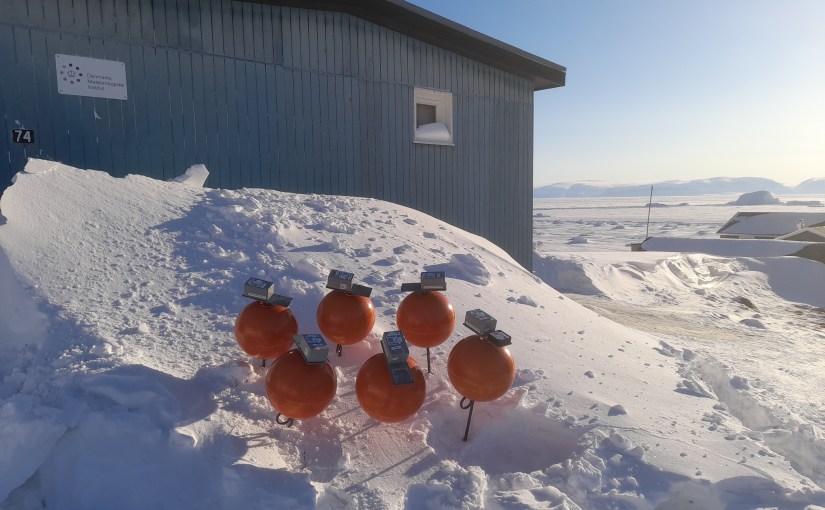
The reason for the chaos is that fieldwork season has come round again and on Friday I and my DMI colleague Steffen will be off to Northern Greenland once again. I’ll try to post a few photos to pixelfed (and perhaps even Instagram, though I swore off Meta products after the Brexit fiasco).
This year my focus is again on the melange zone and we’ll be placing our instruments out to record the break-up of the fast ice. I also hope to get time to establish a new snow measurement programme – which I partly piloted last year. However, we will only be 2 scientists instead of the team of 4 this year, so this may have to wait until the second fieldwork period we have planned in early June (when the sea ice starts to break up). We are fortunate indeed that the local hunters, who still live a semi-subsistence lifestyle, are both incredibly competent and helpful and willing and eager to help when we go out on fieldwork.
Last year was a test of concept, and noone was more astonished than I was that the final set up not only survived the ice break up and floated safely down the fjord, we also managed to retrieve them and I hope they are waiting patiently in Qaanaaq so I can reprogramme and redeploy this year.
I wrote this piece on our work last year, promising a whole load of posts I didn’t end up having time to write. Sadly even my lego scientists never got an update. So instead of promising a whole lot of new posts, let me know what you’d like to see and read about either in the comments here or on my mastodon feed, and I’ll try to make some time to answer one or two of them while we go.
The area we travel to is going through very rapid changes now – not just climatic and environmental, but, perhaps even higher impact, social and cultural. I am privileged to be abel to witness it and we try hard to leave as little impact as possible.
At this stage it’s hard to imagine I’ll ever be ready to leave, but the clock is ticking down..
If you follow me on mastodon you may have noticed a higher than normal number of posts, boosts and the like, many of them dealing with train travel in Europe.
View from a bridge: crossing the Great Belt Bridge (Storebæltsbroen) on the way to Germany
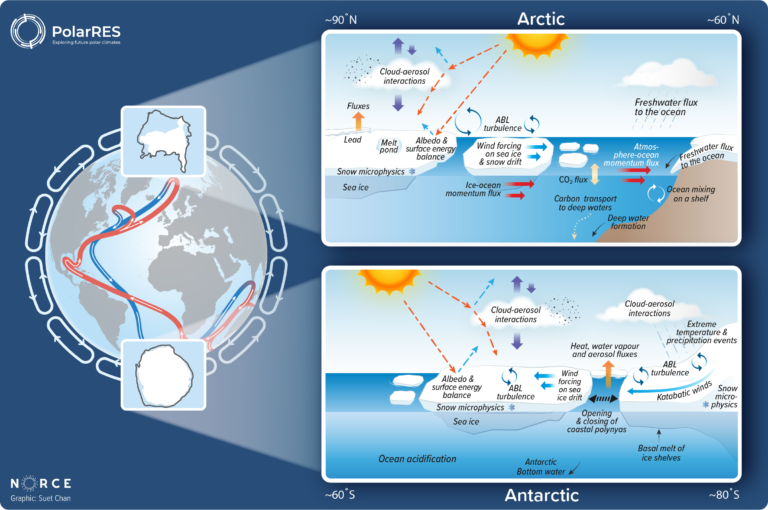
It is annual meeting season and that means the Horizon Europe projects I’m involved in (PolarRES, PROTECT, OCEAN:ICE) are gathering together somewhere more or less central (this year the Netherlands is popular) and discussing, presenting and planning with consortia members is going full speed ahead. After the pandemic when projects started online only or were written entirely via online meetings, even involving people who had never met each other, it’s clearly past time to come together in-person and discuss the newest findings.
I am involved in many different projects in varying roles (work package lead, project scientist, project coordinator). I find these meetings are incredibly stimulating and challenging. They help to get the scientific creativity going, to make new connections and meet new researchers, often early career scientists with new ideas and new techniques. Often this is an opportunity to see results that will not appear in the literature for months or years, as well as being an opportunity for planning new work.
On the way to Utrecht for PolarRES annual meeting. The first train of the meeting season was a Deutsche Bahn IC train loaned by Danish operator DSB to cope with increased demand between Copenhagen and Hamburg.
They’re also exhausting, often starting 8.30am and nominally finishing at 6pm but with many delegates in the same hotels and meeting over breakfast, not to mention late into the evening discussions over dinner, the days are long and non-stop.
I suspect it is much worse for those who do not have English as a first language. My Danish is fairly fluent these days, but I know how tiring it is to speak a foreign language all day. At the end all you want to do is crawl away to a dark room with no sensory stimulation at all..
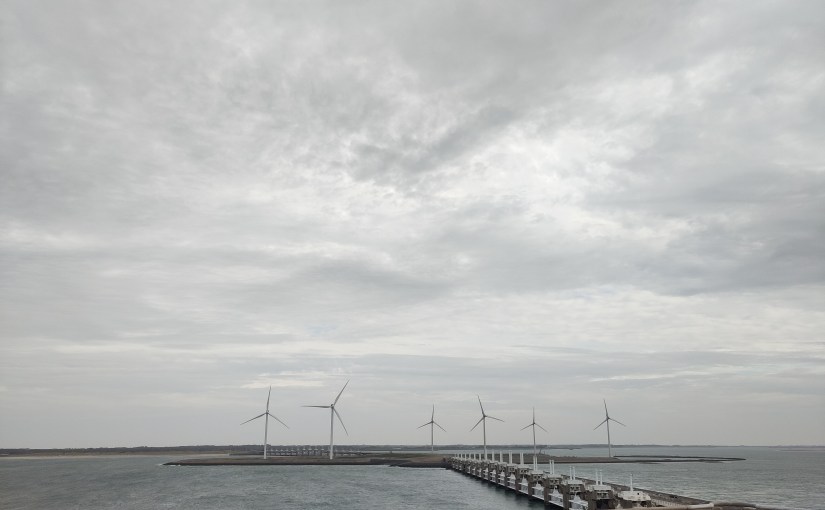
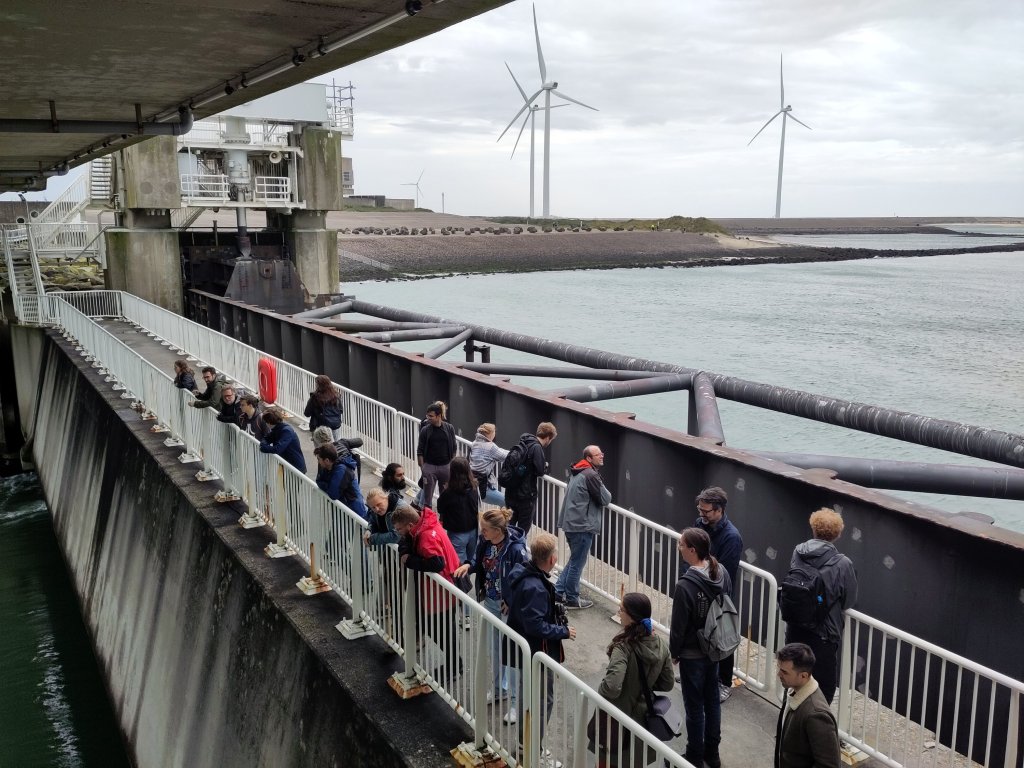
The PROTECT project on sea level rise contributions from the cryosphere had a field trip this year, to the Eastern Scheldt Barrier, a wonder of the modern world and really frontline when it comes to European sea level rise adaptation. Inspiring to see how our work can be applied but also an opportunity for networking and informal discussions
This year, as in other years, I’m trying to do as much travelling as possible by train. It’s actually a nice way to travel to meetings, with plenty of time and space to get work done while travelling.
Far more pleasant than flying, with more legroom, space to move about and without the ridiculous security queues. I use my time to prepare presentations for the meeting and reflect and follow up from them on the way home as well as to (try) to keep my inbox under control..
(I have notably failed at this task this year, but on the up side I’ve drafted or contributed to 3 different papers, which I think/hope will endure a bit longer than my emails.)
An impromptu dinner meeting: also an opportunity to write papers and see how colleagues write their code.
The Deutsche Bahn trains are particularly pleasant, especially the ICE including buffet cars, excellent food and nice spacious train seats with good WiFi. The TGV was by comparison a little disappointing in terms of comfort but a nice smooth ride. Let’s not get into a discussion on punctuality..
Relaxing on the way home in the dining car with Deutsche Bahn’s finest vegan pasta and a good (actually *excellent*) book. Skål.
Train tickets can be surprisingly economical compared to flying, though usually the plane wins on money and time alone. My current trip from Copenhagen cost a mere 18 euros to get to Hamburg and the sleeper train connection to (near) Paris actually saves money as a berth turns out to be far less than the Paris hotel room I otherwise would have stayed in.
It is, however, aggravating how few sleeper connections there are between major European cities. Surely a connection to Brussels at least if not also Amsterdam makes sense? Props to the Austrian railways for keeping the sleepers alive at all in northern Europe.
There is a toll on family life from flying less. Although my family is growing more independent, the series of meetings have not made me popular at home, and probably rightly so. Travelling by train even to somewhere relatively close like the Netherlands or Paris easily adds a day either side. Letting the train take the strain turns out to also lead to strain on partners and children. In this I have to more than acknowledge my husband who is taking on far more than his fair share this month and who is also extremely supportive when it comes to the extra time.
I imagine not all employers are as tolerant of the extra day on either side travelling either, though as I said, it’s often quite productive, without meetings and office interruptions. Certainly, most of the other scientists have travelled by train from London, Vienna, Grenoble and even Kyiv.
A sleeper connection from city centre to centre would make all these links much more bearable from both points of view.
Even the few remaining sleepers leave only from Hamburg, not Copenhagen. That means a 4.5 hour (on a good day, it can be up to 6 hours on a slow train) each way connection to Copenhagen to factor in. Though, I should give an honourable mention to the Snälltaget, whose Stockholm- Copenhagen -Hamburg -Berlin service has been so popular it is now a year round service after being a temporary summer trial.
Don’t get me wrong, I quite like Hamburg, it is, if not charming, certainly culturally vibrant and a melting pot to rival London (let’s not forget it’s where the Beatles learnt their trade) and there is some excellent food and drink at the station. I’m practically at the Syrian mezze kitchen (seriously, check it out next time you’re passing through). However, it is also a gigantic bottleneck on the railway network and I’ve learned the hard way to allow at least an hour connection time and preferably more ..
Then there is the whole hassle of booking tickets and finding connections. Which is not to be underestimated. As a committed train traveller, I’m pretty good at it now, but it takes a lot of practice and as Jon Worth has eloquently pointed out, particularly when transferring internationally, some rail companies take a perverse delight in senseless connection times..
This is why I am a huge supporter of the Trains for Europe #CrossBorderRail initiative. If we want to reduce flying. And let’s be frank. We MUST, there is no way around it if we want to keep carbon out the atmosphere, then making it easy to replace planes with trains and buses (comfy, long distance ones and where possible electrified) is going to be essential.
And harmonising timetables, tickets and booking across Europe could be the kind of boring stuff that turns out to usher in a kind of quiet revolution in transport…
UPDATE THE MORNING AFTER (21/10/2023): water levels are now falling rapidly to normal and the worst of the gales are past, so it’s time for the clean-up and to take stock of what worked and where it went wrong. It’s quite clear that we had a hundred year storm flood event in many regions, though the official body that determines this has not yet announced it. Their judgement is important as it will trigger emergency financial help with the cost of the clean-up.
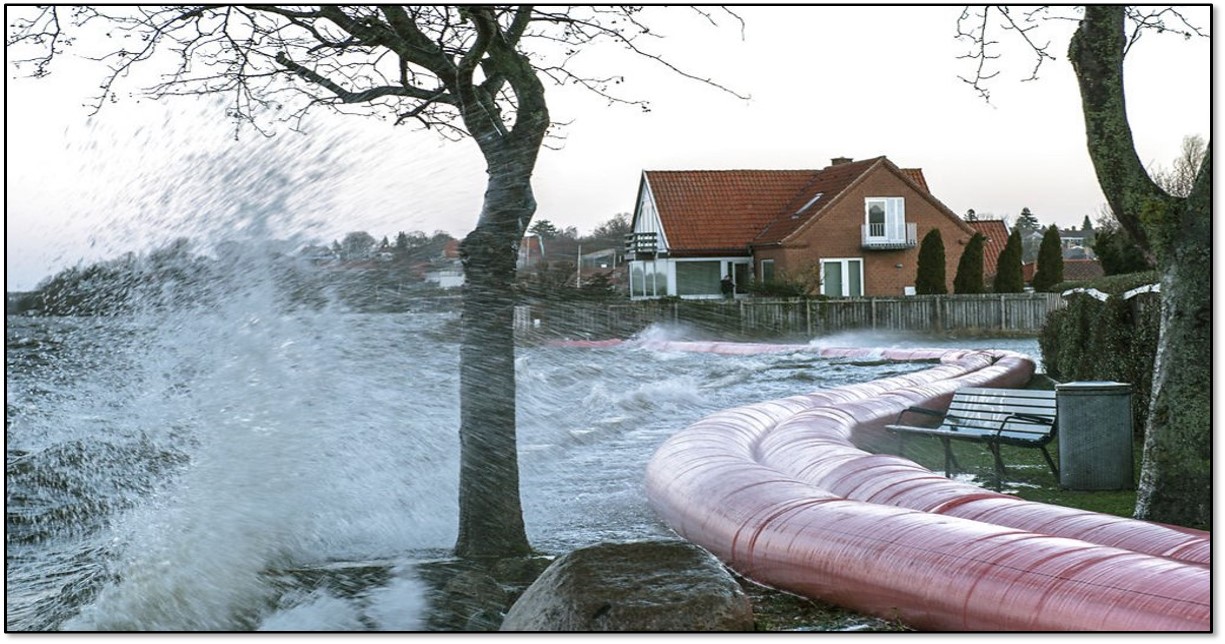
In most places the dikes, sandbags and barriers mostly worked to keep water out, but in a few places they could not deal with the water and temporary dikes (filled pvc tubes of water km long in some cases) actually burst under the pressure, emergency sluice gates and pumps could also not withstand the pressure in one or two places.
Trains and ferries were delayed or cancelled and a large ship broke free from the quayside at Frederikshavn and is still to be shepherded back into place.
Public broadcaster DR has a good overview of the worst affected places here.
Water levels reached well over 2m in multiple places around the Danish coast and in some places, water measurements actually failed during the storm..
In other places, measurements show clearly that the waters are pretty rapidly declining. So. A foretaste of the future perhaps? We will expect to see more of these “100 year flood” events happening, not because we will have more storms necessarily but because of the background sea level rising. It has already risen 20cm since 1900, 10cm of that was since 1991, the last few years global mean sea level has risen around 4 – 4.5 mm per year. The smart thing to do is to learn from this flood to prepare better for the next one.
But we as a society also to assess how we handle it when a “hundred year” flood happens every other year…
-Fin-
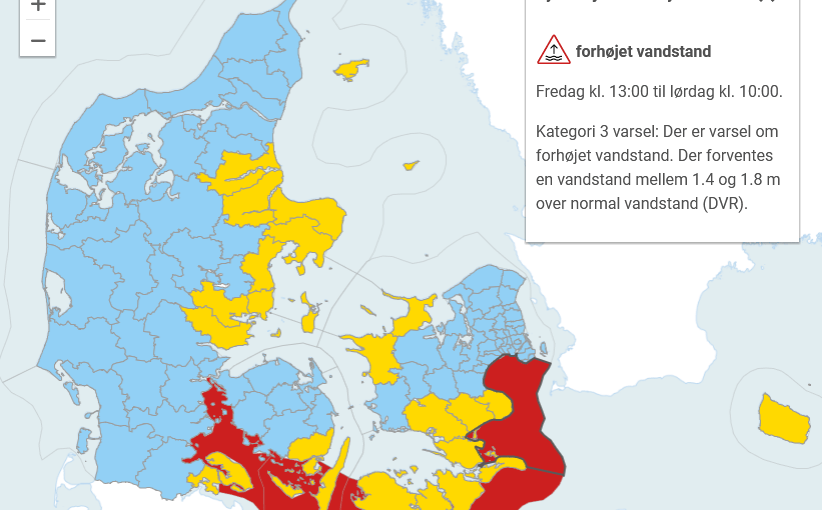
Like much of northern Europe we have been battening down the hatches, almost literally, against storm Babet in Denmark this week. DMI have issued a rare red weather warning for southern Denmark, including the area I often go kayaking in.
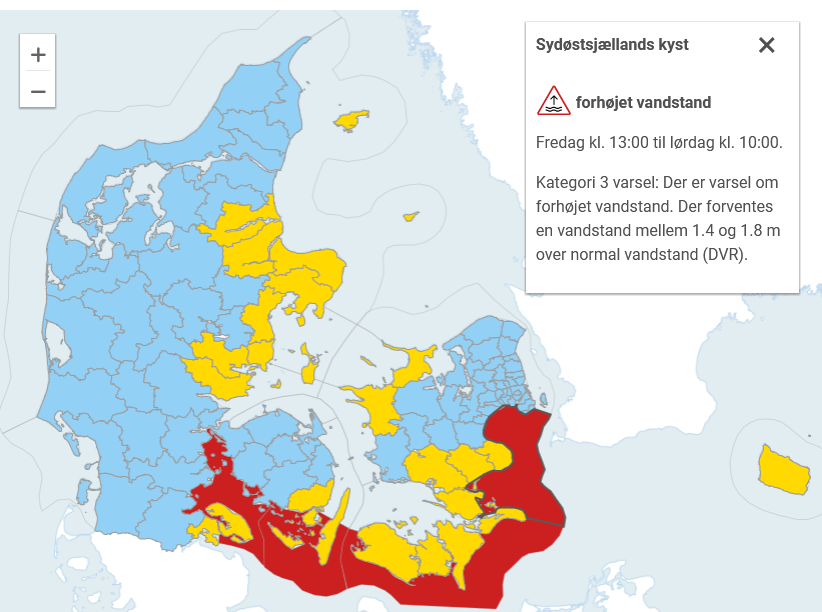
Weather warning issued by DMI 20th October 2023 There are three levels, blue signifies the lowest, yellow is medium and the highest is red, which is rather rarely issued. The boxed text applies to the red zome around southern Denmark and states it relates to a water level of between 1.4 and 1.8m above the usual.
I should probably start by saying that this storm is not caused by climate change, though of course in a warming atmosphere, it is likely to have been intensified by it, and the higher the sea level rises on average, the more destructive a storm surge becomes, and the more frequent the return period!
Neither are storm surges unknown in Denmark -there is a whole interesting history to be written there, not least because the great storm of 1872 brought a huge storm surge to eastern Denmark and probably led directly to the founding of my employer, the Danish Meterological Institute. My brilliant DMI colleague Martin Stendel persuasively argues that the current storm surge event is very similar to the 1872 event in fact, suggesting that maybe we have learnt something in the last 150 years…
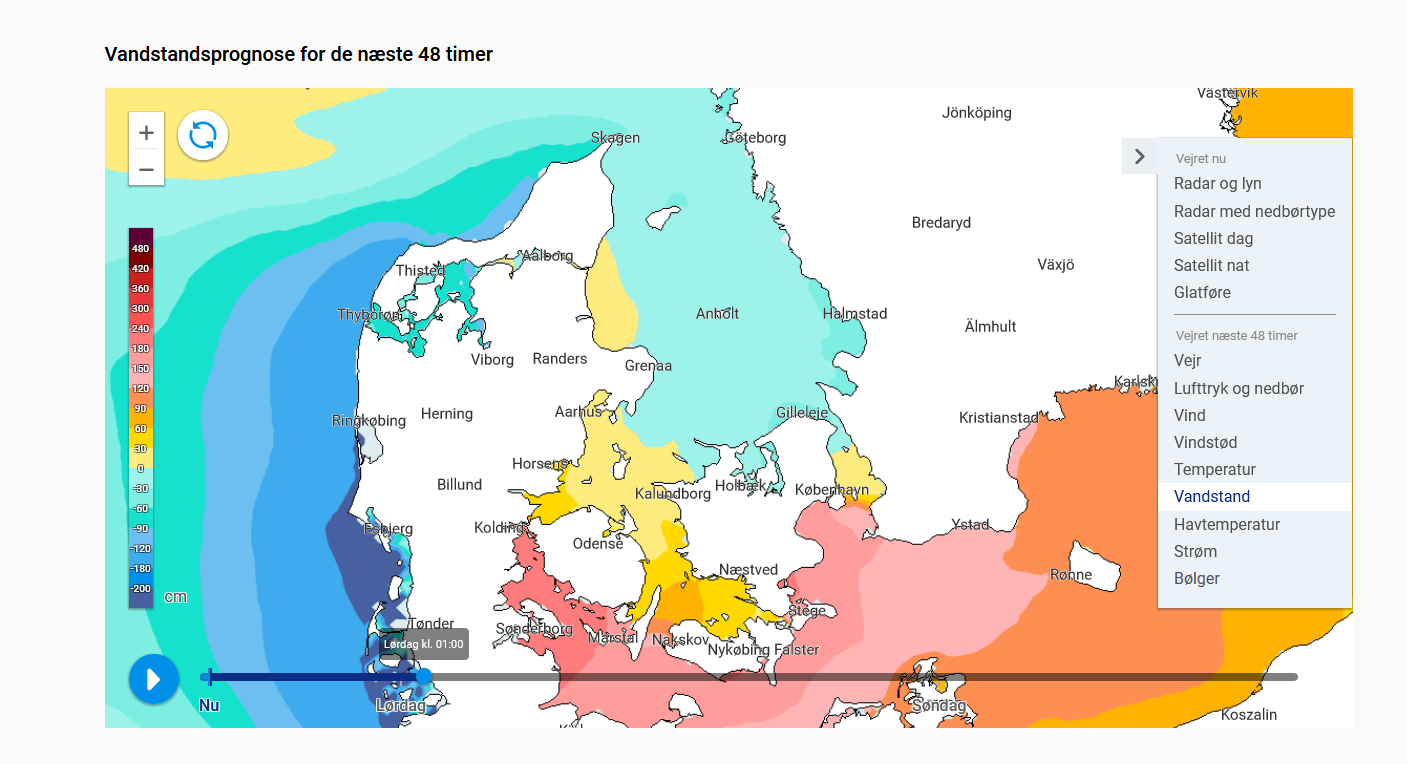
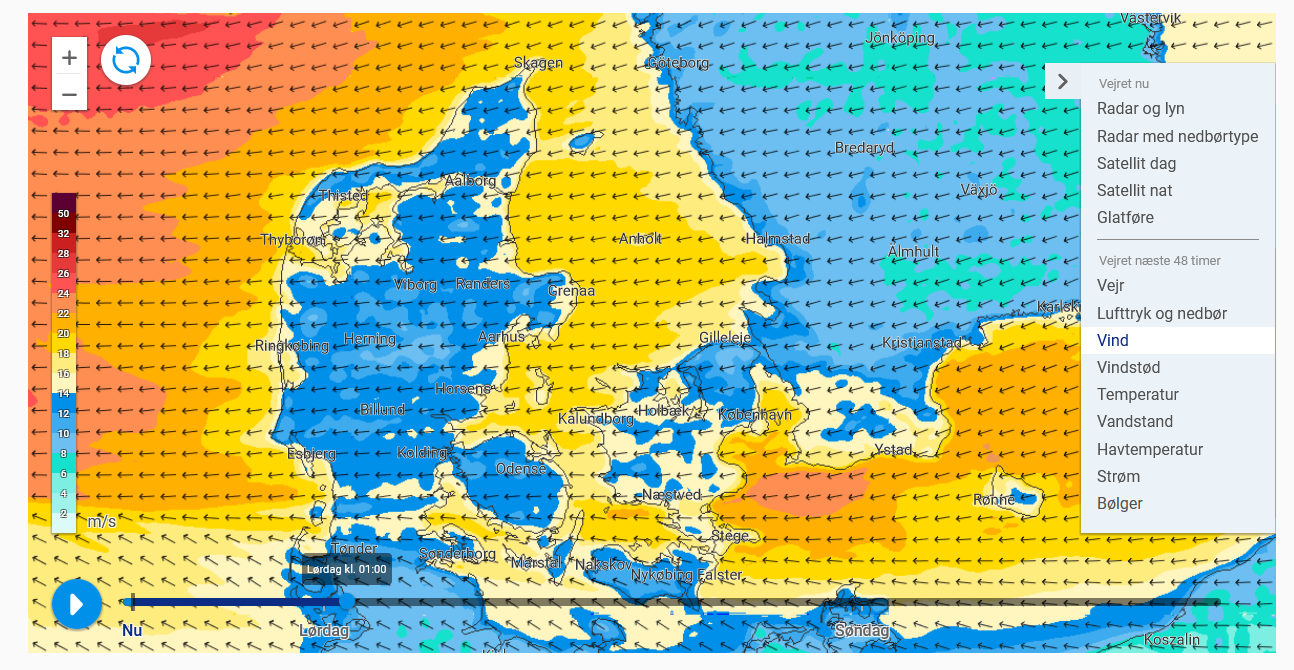
However, back to today: the peak water is expected tonight, and the reason why storm surges affect southern and eastern Denmark differently to western Denmark is pretty clear in the prognosis shown below for water height (top produced by my brilliant colleagues in the storm surge forecasting section naturally) and winds (bottom, produced by my other brilliant colleagues in numerical weather prediction):
Basically, the strong westerly winds associated with the storm pushed a large amount of water from the North Sea through the Kattegat and past the Danish islands into the Baltic Sea over the last few days. Imagine the Baltic is a bath tub, if you push the water one way it will then flow back again when you stop pushing. Which is exactly what it is now doing, but now, it is also pushed by strong winds from the east as shown in the forecast shown above. These water is being driven even higher against the coasts of the southern and eastern danish islands.
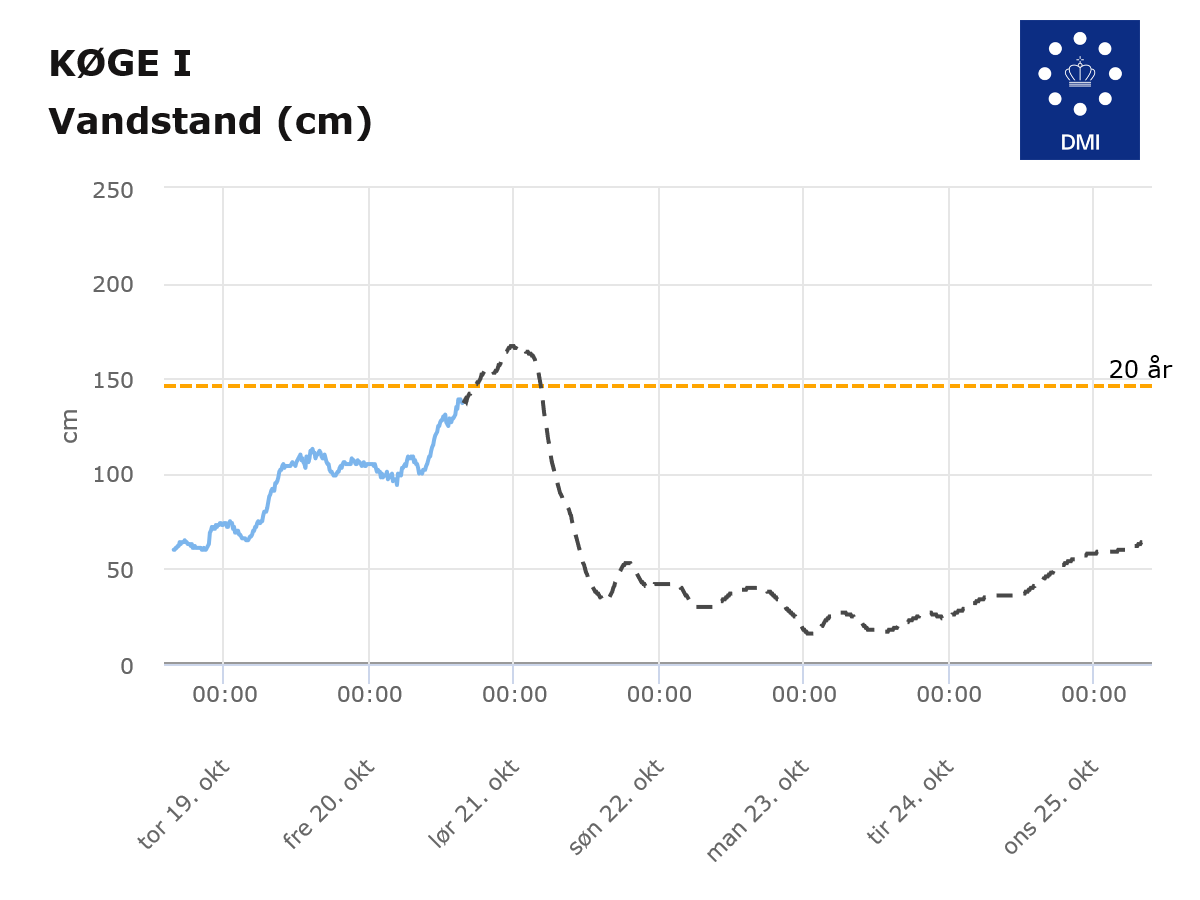
These kind of storm surges are sometimes known as silent storm surges by my colleagues in the forecasting department because they often occur after the full fury of the storm has passed. I wrote about one tangentially in 2017. This time, adding to the chaos, are those gale force easterly winds, forecast to be 20 – 23 m/s, or gale force 9 on the Beaufort Scale if you prefer old money, which will certainly bring big waves that are even more problematic to deal with that a slowly rising sea, AND torrential rain. So while the charts on dmi.dk which allow us to follow the rising seas (see below for a screengrab of a tide gauge in an area I know fairly well from the sea side), water companies, coastal defences and municipalities also need to prepare for large amounts of rain, that rivers and streams will struggle to evacuate.
Water height forecast for Køge a town in Eastern Sjælland not far from Copenhagen. The yellow line indicates the 20 year return period for this height. Blue line shows measurements and dashed black lines show the forecast from the DMI ocean model. You can find more observations here.
In Køge the local utilities company is asking people to avoid running washing machines, dishwashers and to avoid flushing toilets over night where possible to avoid overwhelming sewage works when the storm and the rain is at the maximum.
This brings me to the main lessons that I think we can learn from this weather (perhaps super-charged by climate) event.
Firstly, it’s the value of preparedness, and learning from past events. There will certainly be damage from this event, thanks to previous events, we have a system of dykes and other defence measures in place to minimse that damage and we know where the biggest impacts are likely to be.
Secondly, the miracle, or quiet revolution if you will, of weather and storm forecasting means we can prepare for these events days before they happen, allowing the deployment of temporary barrages, evacuations and the stopping of electricity and other services before they become a problem.
This is even more important for the 3rd lesson, that weather emergencies rarely happen alone – it’s the compound nature of these events that makes them challenging – not just rising seas but also winds and heavy rain. And local conditions matter – water levels in western Denmark are frequently higher, the region is much more tidally influenced than the eastern Danish waters. This is basically another way of saying that risk is about hazard and vulnerability.
Finally, there are the behavioural measures that mean people can mitigate the worst impacts by changing how they behave when disaster strikes. Of course, this stuff doesn’t happen by itself. It requires the slightly dull but worthy services to be in place, for different agencies to communicate with each other and for a bit of financial head room so far-sighted agencies can invest in measures “just in case”. We are fortunate indeed that municipalities have a legal obligation to prepare for climate change and that local utilities are mostly locally owned on a cooporative like basis – rather than having to be profit-making enterprises for large shareholders..
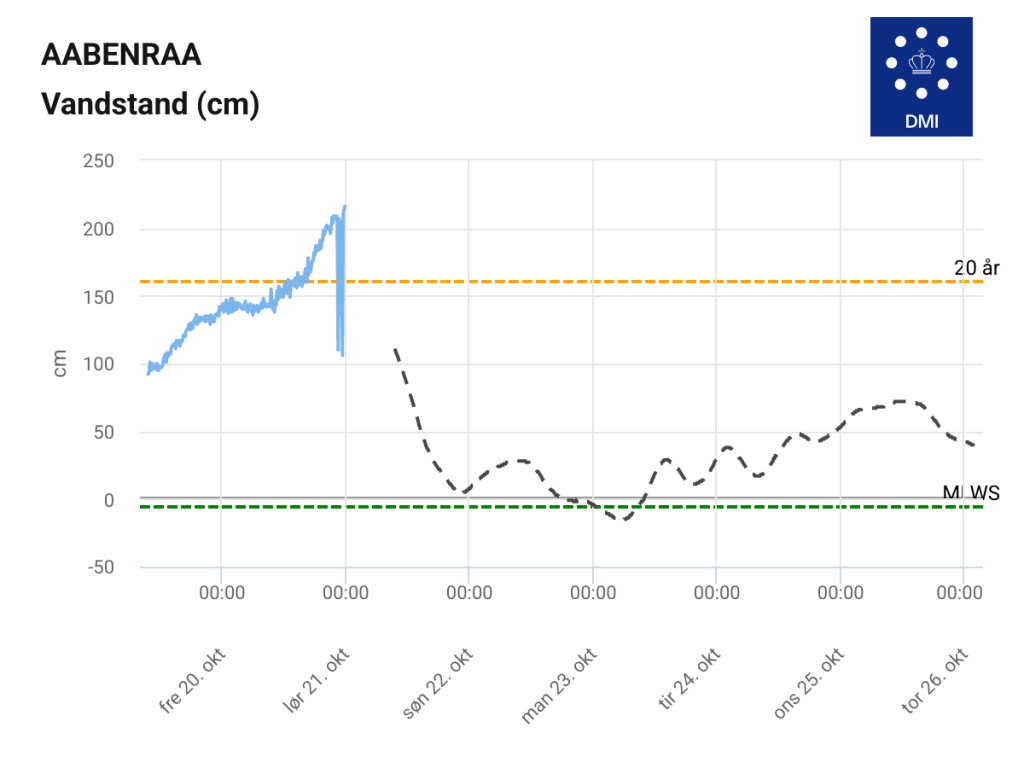
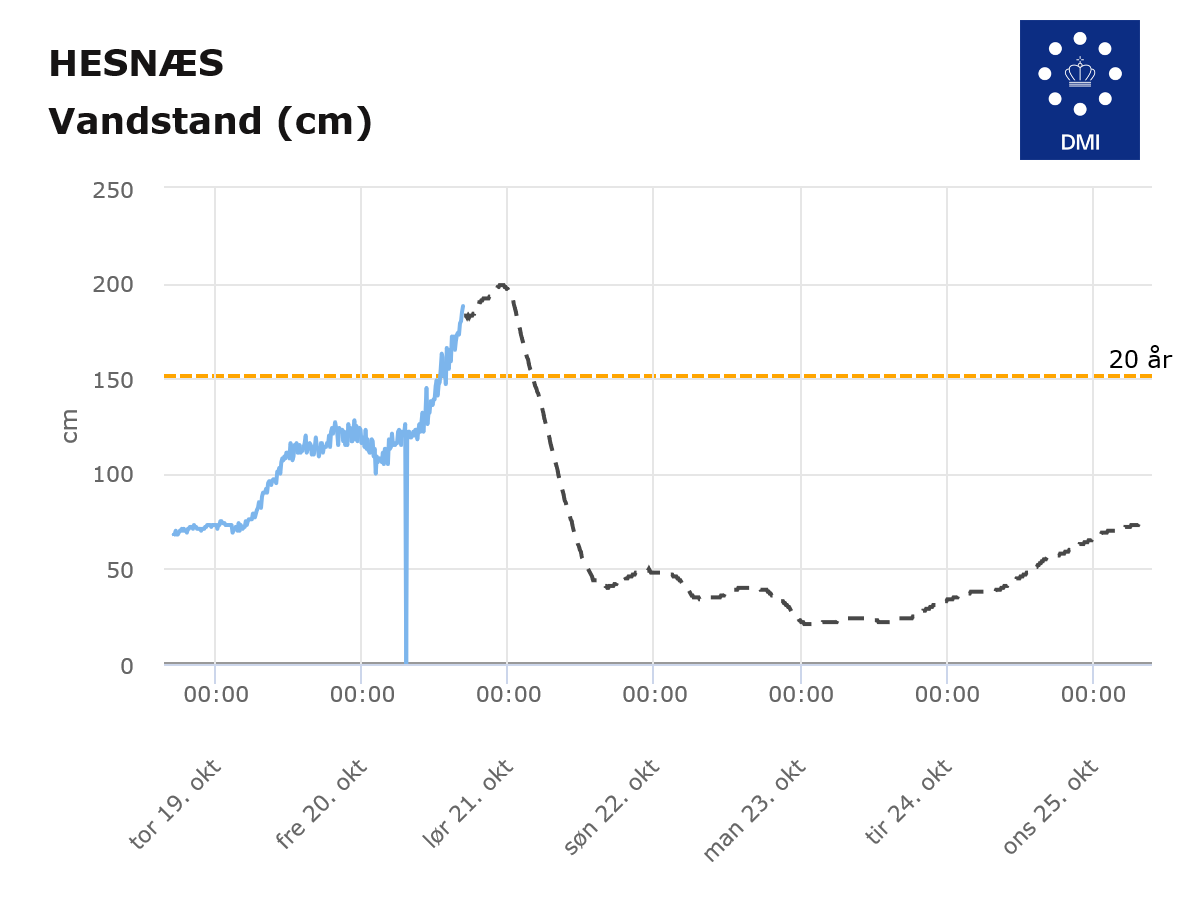
This piece is already too long, but there is one more aspect to consider. The harbour at Hesnæe Havn has just recorded a 100 year event, that is a storm surge like this would be expected to occur once ever hundred years, in this case the water is now 188cm. The previous record of 170cm was set in 2017. We need to prepare for rising seas and the economic costs they will bring. The sea will slowly eat away at Denmark’s coasts, but the frequency of storm surges is going to change – 20cm of sea level rise can turn a 100 year return event into a 20 year return event and a 20 year return event into an ever year event.
Screenshot of the observations of sea level from Hesnæs
We need to start having the conversation NOW about how we’re going to handle that disruption to our coastlines and towns.
It’s been almost a year since I started to seriously explore Mastodon and the rest of the fediverse. I wrote a piece on here in December 2022 and again in February 2023 as I transferred pretty much all my activity to mastodon. There are other competitors to the dead bird site, and mastodon is not a complete replacement for the site formerly known as twitter, but it’s also very clear that in spite of recent improvements, it’s still quite hard for people to transfer. If at this point you want to skip ahead to the quick start go ahead, but indulge me a little justification first, there is a point, I promise…
EDIT: if you’re just here looking for good climate follows, the climate migration account at mastodon.world has put together this great list. Did you know you can import .CSV formatted files of accounts on mastodon?
As to why you should transfer or at least consider diversifying to different platforms? Well, we all have our own thresholds, but the increasingly appalling behaviour of the new owner means I certainly do not regret my decision to switch last year. I did not and do not want to have my “content” making X or whatever you call it now money either. If you wouldn’t buy a newspaper given outrageous racism and circulation of misinformation, then it’s probably worth asking yourself if there’s any difference posting to a social media site that has been proven to be a haven for trolls and one of the most active ways that misinformation spreads.
So where then? Well it’s a fractured social media environment today and as I wrote before, I’ve ended up blogging a lot more. And it’s been fun. I’ve really enjoyed restarting this effort.
I have been offered a couple of BlueSky invites, and I may check it out, but it will never be an “only” because that would suggest we have learnt nothing from handing over control of our digital lives to yet another VC funded start-up. If their promises of interoperability come good, I may review this opinion. I might start to share these wordpress posts over at Substack too – though there also the ownership gives me pause, I will certainly not allow it to be come the one platform to rule them all.
This excellent post by Elizabeth Tai put it much better than I can. And at least with Mastodon I have much more control and ownership over my own content and my own data – nobody is trying to monetise me.
“The Twitter meltdown made me realize something important: I’m a seriously prolific content creator. And I’ve been giving away all that content free to a platform that not only profits from it but treats me like garbage unfairly when it comes to sharing said profits. Meaning, they don’t share a dime. When I downloaded my Twitter archive, it hit me like a ton of bricks that most of that content was not sitting in my website, so they could just disappear if a billionaire decides to cut me off from the platform.”
The point of course is that we do not need to be bound to just one platform, it takes time and effort but it is still possible to share in more than one place, if we can keep out of the walled gardens. In the future my strategy is probably something like longer thoughts and pieces here, probably also shared on substack at some point (if relevant) and then shared out via mastodon, where I’m on the fediscience server – and if you’re a scientist you might want to join too (see point one below though) and linked in (yes I know, weird, it’s like a zombie, keeps coming back and seems to be booming). But it will not go on the dead bird site, nor the meta site (which I left long before for basically similar reasons) and certainly not after the latest lurch into
So to the point of this post. Hopefully you got to this part and you’re thinking, great. Where do I start?
Now to repeat: Mastodon is *a bit* like Twitter, but it’s not quite the same. You’ll probably have to use it a bit to get used to it. Now twitter, used to be thought of as “difficult” too. It really was (as an ancient episode of Dr Who proves, the place only nerds went to hang out). The last I read (may no longer be accurate), only 10% of the people who set up accounts were active a year later. So it does take some time to get used to a new platform and you should definitely bear that in mind.
Social media needs to leverage network effects. it takes time to get to the stage of “but this is how it’s always done”. With that in mind, and given that social media is absolutely not for everyone, here are some tips (based only and in a completely biased way, on my own experiences)
Mastodon works on servers – it really doesn’t matter that much which server you choose initially, but you probably want to avoid the really big ones. They are sometimes unstable and it can be difficult to follow. There’s a huge range from single user servers (called instances) to large language/country/interest based ones. I’m on fediscience.org. You can use the servers page on joinmastodon.org to find one you think sounds interesting. And if you don’t like it you can switch (and take your followers with you, though not your posts). Within mastodon you will have a button to see what other people on your server are posting, so choosing something relevant and larger may help at first. (Map nerds might like to check out this beautiful visualisation tool -see what I mean about the creativity and do it yourself attitude of the fediverse?)
Set up your profile with as much detail as possible, include an OrcID, a personal webpage, some interests so people can see who you are if that’s important. it’s also fine to be anonymous on the fediverse though. You decide.
Make an introduction post, tagged #introduction and if you know a few people already on there tag them too. If they are on different servers to you will need to include the server address. In much the same way that an email to @alice is not going to arrive but an email to @alice@emails.com will.
Follow a lot of people. And I mean really a lot. At first you may want to follow all the people you can find, they will be your algorithm, you can easily prune back later.
Use lists to organise by topic or interest. For instance i have one for climate scientists, one for danish mastodon, one for press accounts – it’s an easy way to curate your feed a bit.
More on finding people to follow: There’s a github for that which includes many curated lists on specific topics. If you’re following me, it’s quite likely you’re interested in earth science, so here’s a list to check out and to add yourself too if you want. You can also download and upload lists of followers in csv format which is quite helpful for bulk following. Once you have a few followers there’s a handy tool called followgraph that will scan your followers and they look at who they follow to help you find similar accounts
Boost much more than you think you need to, including reupping your own posts to catch different audiences at different times of day (it’s like twitter before the algorithm became so dominant). Likes just make the person who posted feel warm fuzzy. There is no algorithm! You have to make your own feed
Follow hashtags to find good content and new accounts that interest you. As an example I follow #Birds, #Ukraine #mosstodon + #SeaLevelRise among others. Some user interfaces (e.g. Halcyon.social) allow you to read these in the same way you would on tweetdeck. Sprinkle your posts liberally with hashtags too.
Try out different apps to find the one you like best. I have been mostly using Tusky on my phone but I’m now testing fedilab too. I believe you have even more choice on iphones On the desktop using elk.social gives a very beautiful interface.
Put in some effort to curate your own experience in the early days. You’ll need to work at it the first few weeks to find good accounts, hashtags etc to follow. Don’t expect everything to be served up on a plate, it’s different here. As I already said, it’s hard to remember how much like hard work twitter was at this stage and Mastodon is doing it on a shoestring budget.
If you experience harassment and spam, and I’m sure it happens, though I’ve not seen anything like the abuse on the dead birdsite, report and block. If you have a good instance admin they will be on it straight away. If you don’t, move to a different instance. Unfortunately mastodon does have its share of reply guys. I just shrug and ignore. They seem to go away. If they don’t, see above.
Give it time. To build up a network and a feed takes time. Invest a little and you’ll find you reap rewards. And remember to boost much more than you think is necessary.
Some additional tips: check your preferences in your profile. If you are hoping to connect with others with a similar interest, make sure you are findable.
You can set a post to have different levels of visibility. I usually post to everyone, but sometimes I might make replies unlisted so people don’t get their timelines spammed with a long thread. Be aware that direct messages between you and other users are not encrypted and can easily be read by your instance admin (Mind you there is evidence this is true of twitter too – this story is another reason to get off the platform in my opinion).
I think this is about it. If you find it useful or if you have stuff to add please feel free to leave a comment. There is in fact a wordpress ActivityPub plug-in that allows comments to crosspost to mastodon, which I may investigate at some point, when I have time.
A final thought, different people have different tolerances for privacy and data sharing – as I’ve got older, and frankly as I’ve been more on mastodon where people talk about this stuff, and refuse to take for granted the normal tracking that happens elsewhere in the web, my tolerance for being tracked has gone down and down, so here is something else to consider.
Thanks to mastodon user @micron for this image showing just how much data you hand over access to on different services.
And that should be that, except:
I have an extra message to governmental institutes and agencies.
Does this sound familar?
“I represent a government agency, all our users are on twitter/X/facebook”
I would argue that the last thing governmental agencies should be doing is supporting or relying on these commercial platforms, especially if your job is to distribute information important for public safety or wellbeing. Your users are there, because you are there – they will find other ways to access your info if you do.
If you’re a government employee, you might want to draw your employer’s attention to the very helpful FediGov.eu – why? Well as their website says:
“Sovereignty Digital sovereignty pursues the goal of enabling the independent and self-determined use and design of digital technologies by the state, the economy and individuals. Decentralized free software solutions, give all people and organizations the right to use, understand, distribute and improve them for any purpose. This is a cornerstone for our democracy in an increasingly digitalized society.
Privacy The public should not be forced to pass on their data to large corporations in order to be able to communicate with public institutions. The public administration should support the public in data protection and therefore also offer alternatives.
Public funds When using taxpayers’ money, care must be taken to ensure that it is used efficiently and effectively. The procurement, provision and use of free software solutions must therefore be the focus of digitization.
Legal certainty The use of social networks by large, globally active digital corporations is difficult to reconcile with European data protection laws. As a public authority, it is necessary to ensure a legally compliant communication for the public. In the area of social networks, public institutions and authorities must therefore also rely on federated free software solutions!”
The German and Dutch governments have already set-up their own instances. Shouldn’t you be using them or setting up your own if you live in a different country?
This is a lightly edited and expanded post in response to a Reuters fact checking query. I gather one of the usual suspects (in the place formerly known as the birdsite) has been spreading misinformation and confusion about the magestic Petermann Glacier in Northern Greenland. So here’s a few thoughts. The TL;DR is in the title, but if you want to know why it’s not growing, how we know it’s not growing and what it means, read on…
But, that’s not why it is a glacier of choice for a section of the climate (denier) community. It behaves very much like any ice shelf; that is, it calves a large iceberg, but as the glacier is still flowing from areas of accumulation to areas where melt and calving balance it, so the front continues moving forward to roughly it’s previous position, before calving another large iceberg. This is a well understood cylce but it also means that if you cherry pick your starting and ending dates you can indeed show that the front is “advancing”. However, this is not the same as the glacier “growing”. Let’s take a look.
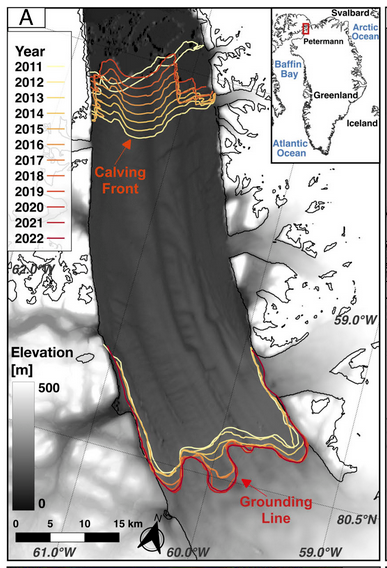
It is one of the only remaining ice shelves in Greenland – all of the others have collapsed and not regrown and there is good reason to suspect Petermann is also on the same trajectory. I had a student a few years ago who showed the ice shelf itself is thinning, and that it was unlikely to remain stable for long. We never managed to publish it, though a publication from Eric Rignot’s group that came out earlier this year largely shows the same things we found. The cycle of calving and advance is quite clear in their Figure 1a, as is the retreat of the grounding line – the point at which the glacier starts to float. This is significant because as the glacier gets thinner, the grounding line will likely retreat inland.
Figure from Caraci et al., 2023 showing the slow advance of the calving front in recent years and the retreat of the ground ing line at the same time.
So does NASA Worldview imagery show that Petermann glacier has been growing at roughly 3 metres per day for the past 11 years? (As intimated by a number of accounts on the internet.)
No it does not.
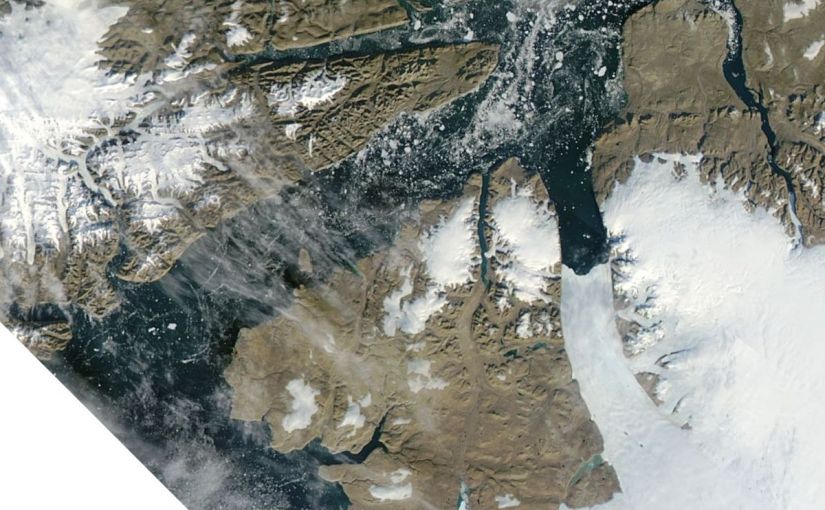
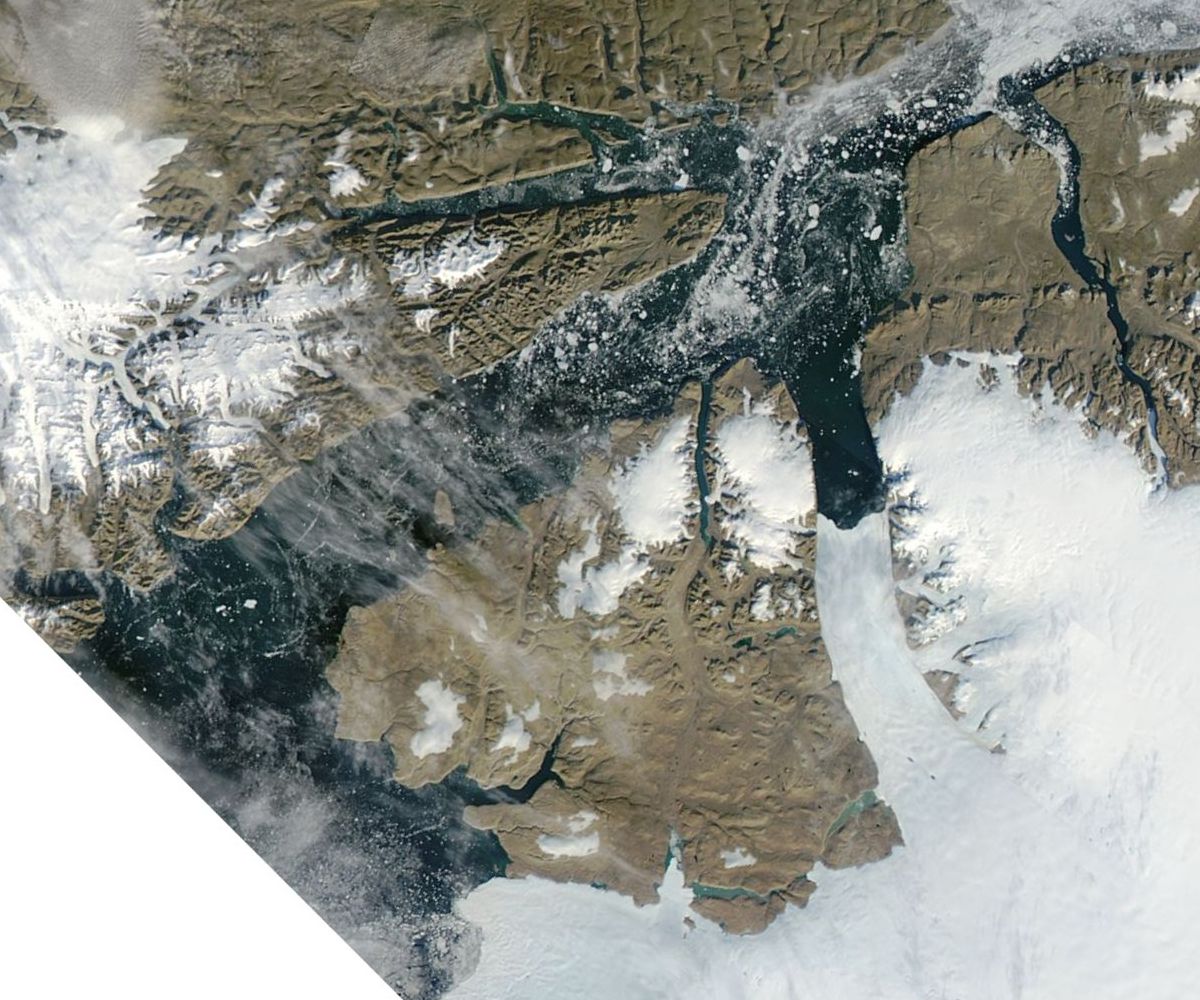
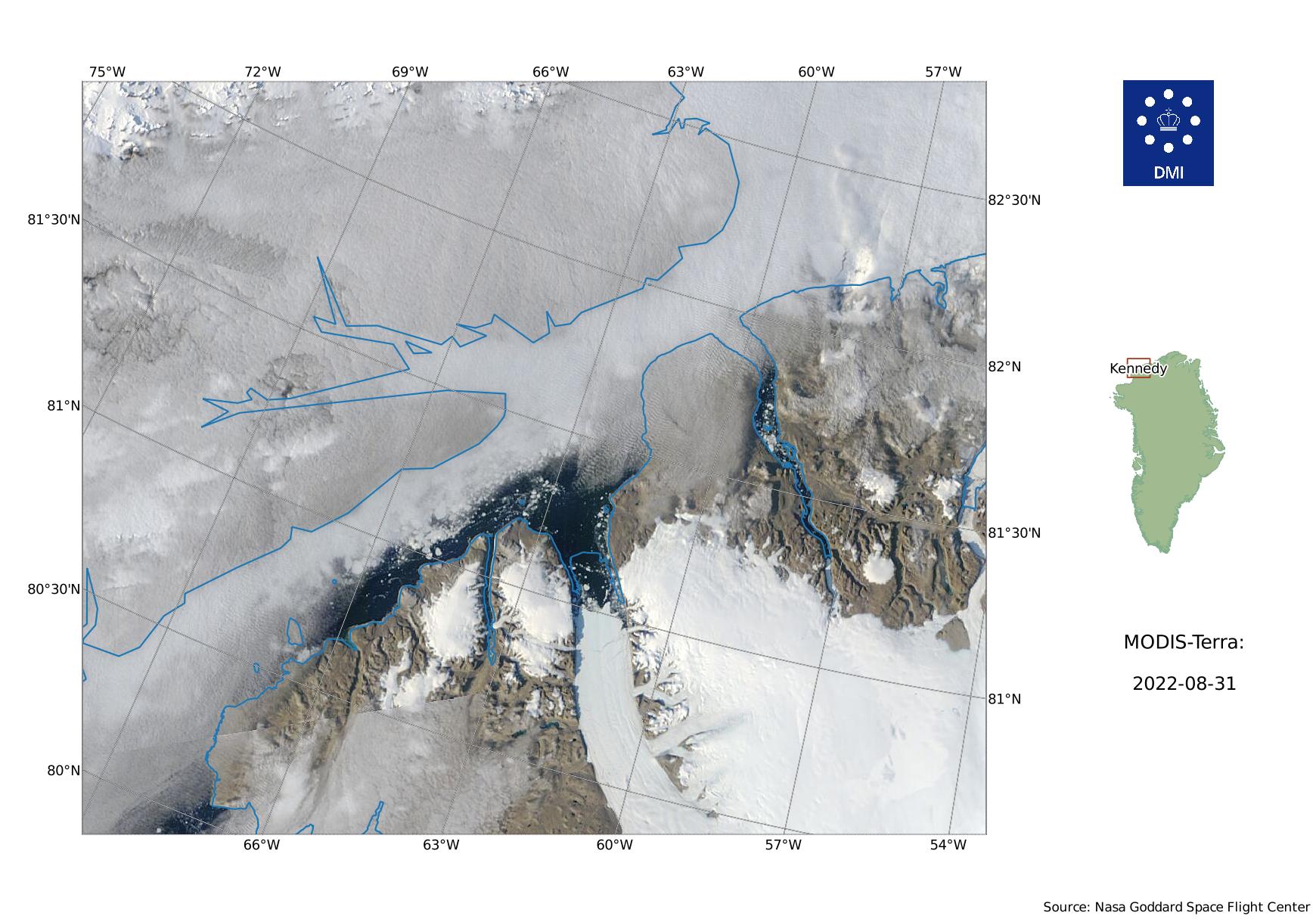
You can play a semantic trick here though. Satellite imagery shows that the front of the glacier has been moving forward for the past 11 years (note that it doesn’t move much in winter, it’s mostly a summer feature after the sea ice has broken up). Compare these two images which I grabbed from DMI’s satellite picture archive around the coast of Greenland, in it the glacier terminus does appear to be ahead in 2022 compared to 2012.
Two MODIS satellite images, TERRA taken 31st August 2012 top and AQUA taken 31st August 2022 bottom. The end of the glacier is closer to the end of the fjord in 2022 than in 2012, but that is due to a large calving event that occurred just prior to these images.
But the choice of 2012 is a trick as a large calving event occurred on the 16th July 2012, after a previous large one in 2010, so the glacier was more or less at it’s minimum in recent years if you choose 2012 as a starting position.
Here is that large iceberg, so big it’s called an ice island, detaching from the front of Petermann glacier on the 18th July 2012 as captured by NASA’s TERRA MODIS satellite.
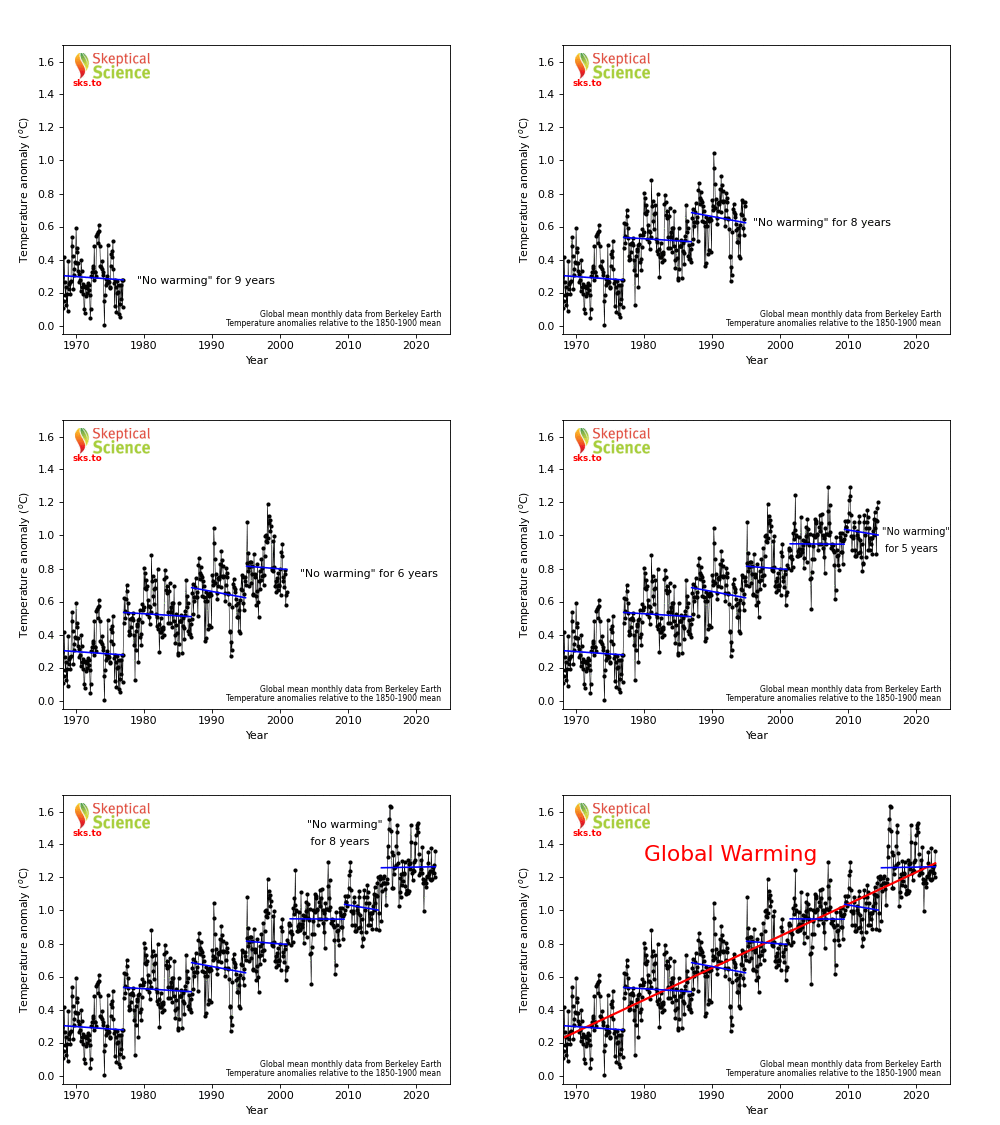
This is of course the difference between noise and signal and a similar trick to choosing to start your temperature curve in 2016 for example, right after a big El Nino event.
The skeptical Science global warming escalator – a neat graphic that you can read more about here
After the glacier calves a large iceberg the glacier behind continues to push ice out through the channel. The ice still flows and the front eventually moves back to roughly the same position it was in before the calving. However that does not mean the glacier is “growing”.
A glacier only grows if it gains more glacier ice each year than it loses.
Glaciers lose ice in 3 ways: they melt at the surface and this runs off the glacier; they can calve icebergs off – at a glacier like Petermann, this may only happen every few years; or, they can be melted from underneath by warm ocean water.
If these three mass budget terms added together are bigger than the amount of snow falling each year then the glacier will shrink. If more snow falls than is lost by these three processes, then the glacier is growing.
At Petermann glacier all three ways to lose ice are happening. We have seen the calving, the surface melt and runoff is clearly visible in the satellite image below and the thinning of the glacier (ocean melt as well as stretching as the ice flows) has been measured by satellites and radar measurements.
Petermann Glacier this summer, the blue shows surface melt ponds with surface streams forming distinctive meanders over the surface. These drain through surface cracks, that have progressively formed over several years as the ice shelf has thinned.
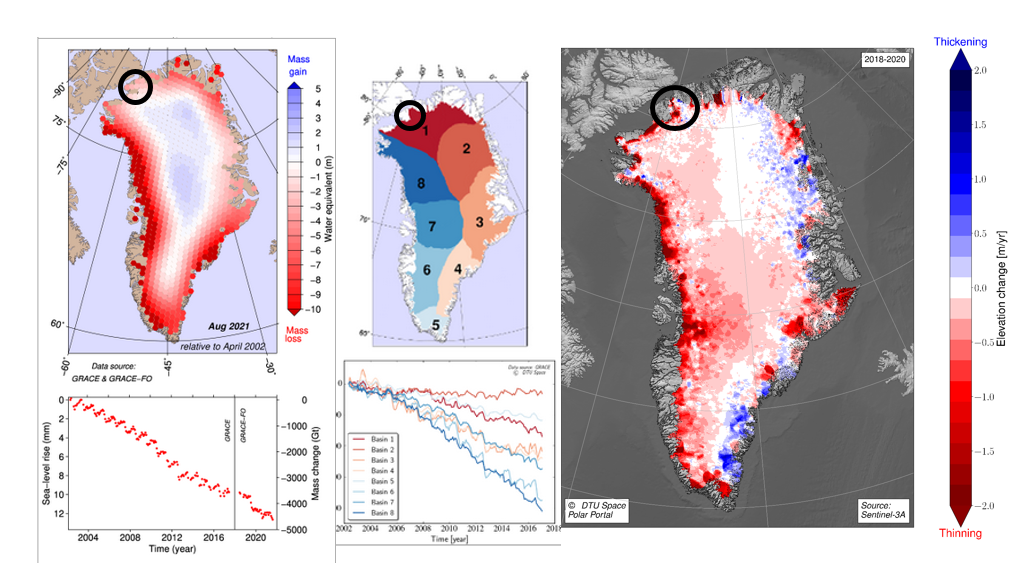
We can therefore check how much this net ice change budget is by using GRACE satellite data. GRACE measures change in mass by gravimetry and the data, processed by DTU Space colleagues, is displayed on our polar portal website here: http://polarportal.dk/en/greenland/mass-and-height-change/
And it shows that this region of Greenland has lost ice every single year since 2002 when the satellite was launched.
This is not a surprise, a paper by Jeremie Mouginet et al. all the way back in 2019 estimated that Petermann glacier alone had lost 56 Gt of ice for the period 1972 to 2017. Most of this ice has been lost since the late 1990s. Their estimate agrees well with results presented in Mankoff et al., 2021, who update their dataset each week and show that there is pretty steady net ice loss from Petermann from both calving and surface melt that continues to the present day.
Three screenshots from the polar portal showing full mass change from all processes: I have circled the location of Petermann Glacier, note the red colour indicates net ice loss from all processes. Left is from the GRACE gravity satellite, the centre and right show surface elevation change, measured by radar satellites. Note that virtually the entire ice sheet is getting thinner, except in some areas with higher snowfall. The Petermann glacier is close to the maximum rate measured of 2m of surface lowering (mostly surface melt) between 2018 and 2020 alone.
So the Petermann Glacier is not growing, even if the front is advancing. But the satellite pictures of the glacier do tell us something about the local conditions of the glacier. Petermann glacier is in a long narrow fjord in a region where there is a lot of sea ice. This is probably why the ice shelf has survived so long when many other similar ice shelves have collapsed and disappeared over the last 30 years or so. 50 years ago there were a lot more ice shelves in Greenland and across the whole of the Arctic. Most of them have now gone.
The figure below (from Hill et al., 2018 https://tc.copernicus.org/articles/12/3243/2018/) shows all the places where there used to be floating ice tongues, only Petermann, Ryder glacier (which is significantly shorter now than it was in the 1990s) and 79 North remain in Northern Greenland with some floating bits of Storstrømmen also technically still counting as shelves in the east.
From Hill et al., 2018 Study region of northern Greenland. Green circles show the location of each of 18 northern Greenland study outlet glaciers. Average glacier velocities (m a−1) are shown between 1993 and 2015 derived from the multi-year mosaic dataset (Joughin et al., 2010). Black outlines show glacier drainage catchments. Symbols represents the state of the glacier terminus. Stars show glaciers which currently have floating ice tongues, circles represent glaciers which lost their ice tongues *[see footnote] (during 1995 to 2015), squares denote glaciers which have some previous literature record of a floating ice tongue, and triangles are glaciers which are grounded at their termini and have been throughout the study record.
Given the thinning that has been recorded at the Petermann Shelf, it’s probably only a matter of time before this magestic glacier also loses its shelf. And there are two ways that might go. It might follow the path of Sermeq Kujalleq, previously known as Jakobshavn Isbræ. The fairly dramatic collapse of which over a few months in 2002 was a massive wake-up call to the glaciology community that things can change very fast indeed and they may not be reversible.
Series of Landsat images from June 2001 to June 2003 showing the large retreat of Sermeq Kujalleq (Jakobshavn Isbræ)
Or it may retreat in a more low-key way, like the relatively nearby glacier C.H. Ostenfeld where the ice shelf indeed was more ice tongue like* and slowly fragmented and washed out the fjord over several years.
Series of Landsat pictures from 1999 (top), 2002 (middle) and 2005 (bottom) showing remaining icebergs floating away. The stripes are unfortunately due to a well-known sensor problem in Landsat7C. H. Ostenfeld glacier this year from Sentinel 2 imagery. The ice shelf/tongue has not reformed.
It’s not very easy to say which path Petermann will take, it may even take a hybrid between the two, with first slow disintegration like Ostenfeld, with a more rapid collapse like Sermeq Kujalleq as the grounding line approaches.
Time will, unfortunately, almost certainly tell.
And now back to the day job..
*An ice shelf and an ice tongue are similar but not quite the same, I would call Petermann an ice shelf whereas C H Ostenfeld was rather tongue like by the time it collapsed, though the others in nrthern Greenland are and were definitely more shelf like. See for example this spectacular image of the Erebus ice tongue in Antarctica. Glacier tongues still exist in Antarctica but with the loss of Ostenfeld, they are now non-existent in Greenland.
By Jesse Allen, NASA Earth Observatory, using data provided courstesy of NASA/GSFC/METI/ERSDAC/JAROS, and the U.S./Japan ASTER Science Team. – [1], Public Domain, https://commons.wikimedia.org/w/index.php?curid=795403
Yesterday, I attended a mini conference on power to X and the potential to generate green synthetic fuels in Greenland.
Power to X became a big thing in Denmark a few years ago and the government is keen to promote it. Danish company Topsoe are currently building a green fuel facility in Herning and they have a nice explainer on their website of the concept.
In Greenland the fuels could be anything from hydrogen to methanol (though I learnt methanol is least likely as it requires a CO2 source that Greenland doesn’t have, ammonia seems the most plausible initially).
It was an interesting meeting, lots of different companies, institutions and the Greenlandic MP Aaja Chemnitz as well as academics were in the room. The emphasis was very much on the social and economic aspects of power to X, but as the title implied: Greenland has the potential to be the “world’s largest energy island.” From a local point of view, Greenland has very high per capita emissions and is heavily dependent on energy imports for transport, though a majority of electricity, at least in the south west, is already hydropower.
Many other smaller and more remote communities however are dependent on diesel generators for heating and power as well as for shipping, fishing and flying between communities.* Transitioning away from these fuels will be challenging but the potential for much larger developments is clear.
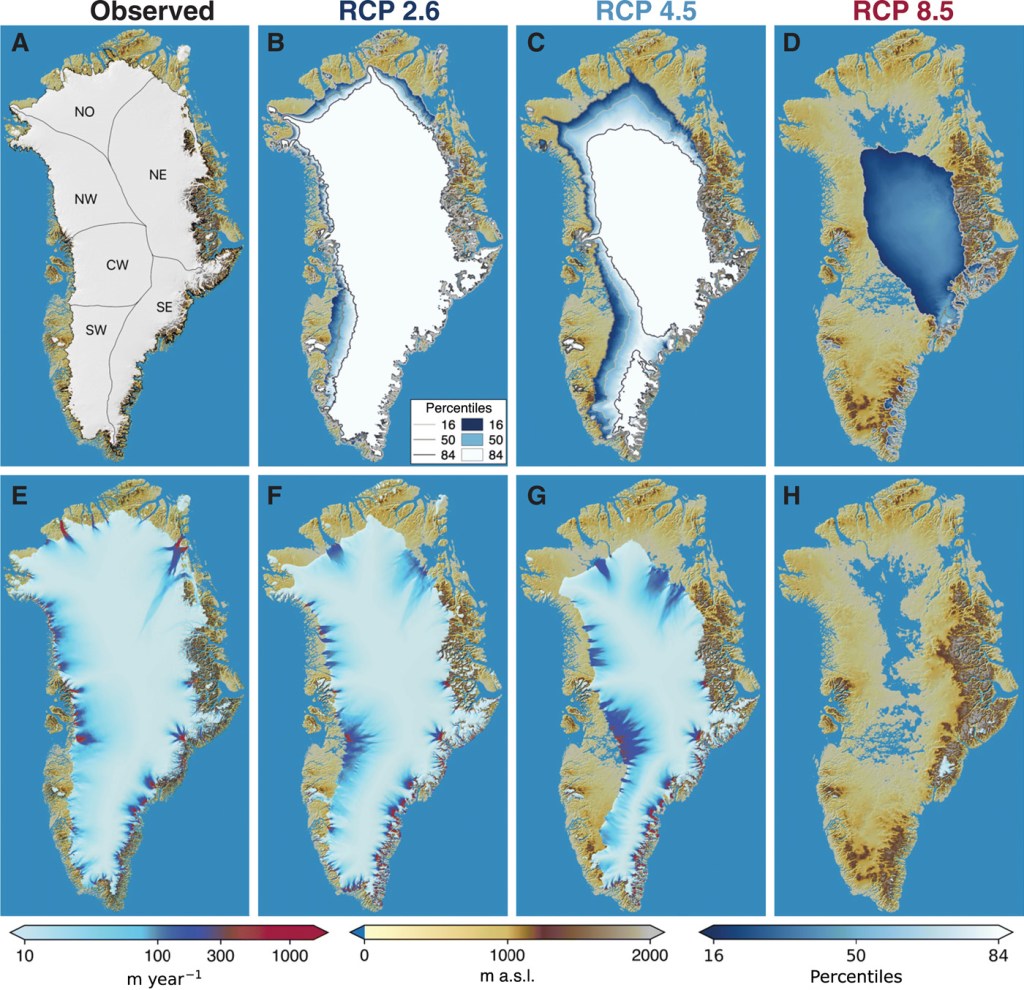
Head of development at NunaGreen (the recently rebranded and reoriented NunaOil), Rasmus Wendt, emphasised just how cheap and in theory at least, abundant, Greenland hydropower is. Probably some of the cheapest electricity in the world is generated by Greenlandic dams already operating or planned. And indeed the potential is massive. As the ice sheet melts, enormous amounts of water are produced more or less endlessly in Greenland. It will take at least a thousand years to melt the whole ice sheet, even under a high emissions scenario. We’re not going to run out of water soon.
Figure 2 from Aschwanden et al., 2019. Observed 2008 state and simulations of the Greenland Ice Sheet at year 3000. (A) Observed 2008 ice extent (53). (B to D) Likelihood (percentiles) of ice cover as percentage of the ensemble simulations with nonzero ice thickness. Likelihoods less than the 16th percentile are masked. (E) Multiyear composite of observed surface speeds (61). (F to H) Surface speeds from the control simulation. Basin names shown in (A) in clockwise order are southwest (SW), central-west (CW), northwest (NW), north (NO), northeast (NE), and southeast (SE). RCP 2.6 (B and F), RCP 4.5 (C and G), and RCP 8.5 (D and H). Topography in meters above sea level (m a.s.l.) [(A) to (H)].
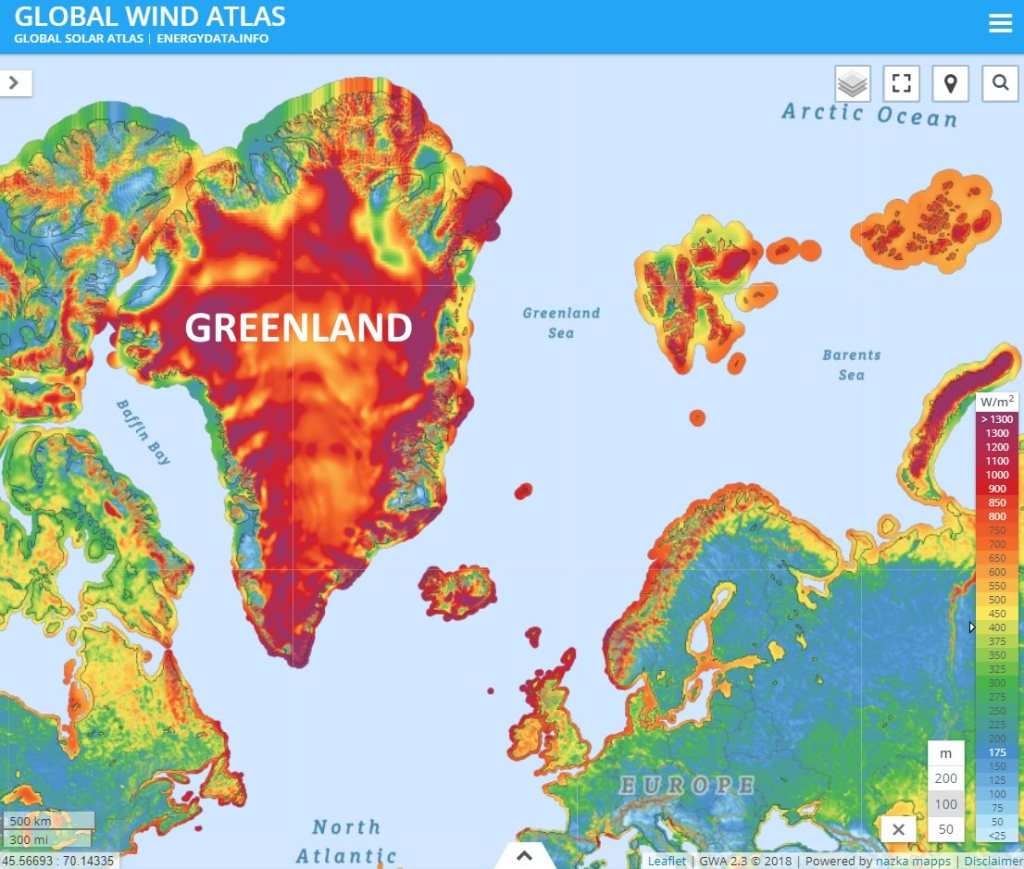
Wind energy too is extremely underdeveloped but potentially huge in Greenland. The problem is of course, all that potential energy is a long way from the end users as this screenshot from the global wind atlas, shared by energy scenario planner Brian Vad Mathiessen shows well.
Screenshot from the global wind atlas showing wind energy potential in Greenland and the north Atlantic margin of Europe
By sheer coincidence, this morning I stumbled over this article in the Dutch newspaper NRC on mastodon about the large green hydrogen facility currently under construction by Shell in Rotterdam.
It’s a really interesting read – (if you don’t speak Dutch try DeepL translation) and I was struck by many of the same issues being raised there as in the Greenland meeting: lack of trained staff, uncertain commercial environment, cost and competitiveness with other energy sources. Unlike in Greenland, energy in the Netherlands for producing synthetic fuels is scarce, but the market for using the energy is huge and nearby, and given the EU’s ambitions to produce and, crucially, import large amounts of hydrogen fuel by 2030, it seems like many of the important stars are aligning. Importing ammonia to Rotterdam for cracking back into hydrogen seems like it could actually be a viable future for Greenlandic generated fuels in Greenland he medium to long term.
We at DMI are shortly starting a project within the National Centre for Climate Research framework looking at exactly the potential to generate renewable energy from a climate and weather angle. But what I took away from yesterday’s meeting is that while the physical potential in Greenland really is HUGE, the regulatory environment – and probably the local population – is supportive, the economic certainty is not quite there yet.
It felt a bit like being in a bunch of young seabirds clustered on the edge of the cliff, none quite daring to take the flight, in spite of the undoubted rewards. And indeed, this seems the situation in the Netherlands too. I was especially struck by this quote in the NRC piece:
“Another problem is that many parties are just waiting for each other to take the first step so that they themselves dare to go. Producers, for instance, invest only sparingly because they are not sure whether there will soon be customers, and customers in turn hesitate because they are not sure whether the producers will deliver. The classic chicken-and-egg story.” (Translated with DeepL)
Chris Hensen, NRC, 17thnMay 2023 “De Europese waterstofambities zijn groot, maar bedrijven zijn nog altijd afwachtend”
Perhaps the diving in of Shell, a company that can afford to risk investing a billion Euros in a new facility in Rotterdam, is what the development of Power to X needs?
BP, Air liquide and Uniper already have plans to build follow on plants in Rotterdam. Once one of the birds have taken flight, others will surely follow.
Thanks to Aalborg University,and especially my Danish Arctic Research Forum colleague Carina Ren for an interesting and inspiring meeting.
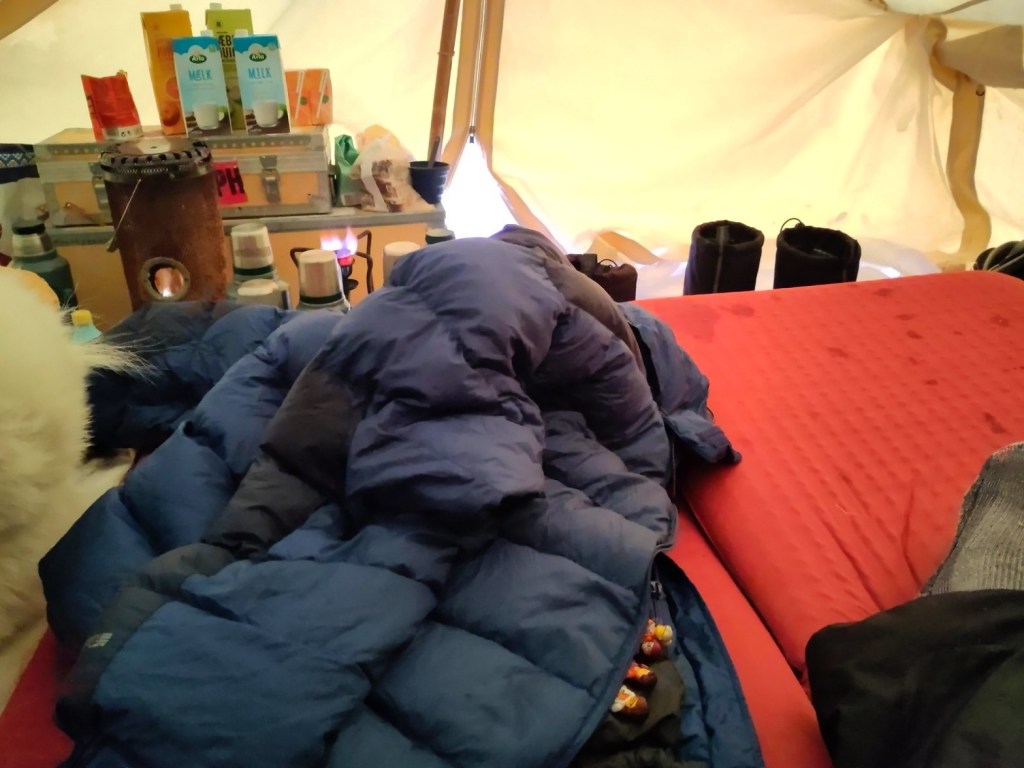
*(As an aside, I was reflecting while on fieldwork just how difficult removing fossil fuels from scientific work in Greenland will be. We rely on petrol generators to power equipment and oil stoves to warm tents. What if we could develop an easy to operate “tabletop” (or even just room sized) electrolysis system to generate clean fuels from e.g. wind energy, that we could burn instead of paraffin and/petrol? I’d invest in that and it would be a quick win for Greenland science.)
Inside of the tent during fieldwork, note the primus stove, running on petrol, for melting ice for water and food and the paraffin powered oven to keep the inside warm and dry while camping.
In the before times I would usually spend this week walking around a world class city humming an old 80’s hit (- don’t ask me why it was so durable in my head, probably something to do with being an impressionable age at a time when access to pop music meant half an hour on a Thursday evening).
Anyway, it is the time for EGU… Sadly I will not be wandering the streets of the ever beautiful (and most livable) capital of Austria this year. I have to get some actual work done, but I’m following the #EGU23 on mastodon and hoping to catch a few highlights on the sides. I do have a poster, which will be capably presented by PolarRES PI Priscilla Mooney and my DMI Colleague Abraham Torres on Thursday.
The topic is our PolarRES project – an ambitious Horizon 2020 effort to produce a large ensemble of regional climate simulations over both poles. These are state-of-the-art regional climate models run at unprecedented high spatial resolution and all data will be made open access and free via the CORDEX project.
I will also put it here later – feel free to comment here or ask questions on mastodon or get in touch by email if it sounds exciting.
Other posters and talks I’ve contributed to from PolarRES are
Kristiina Verro’s talk on HCLIM_Arome results from the Antarctic peninsula:
Verro, K., van de Berg, W. J., Orr, A., Landgren, O., and van Ulft, B.: New non-hydrostatic polar regional climate model HCLIM-AROME: analysis of the föhn event on 27 January 2011 over the Larsen C Ice Shelf, Antarctic Peninsula, EGU General Assembly 2023, Vienna, Austria, 24–28 Apr 2023, EGU23-13864, https://doi.org/10.5194/egusphere-egu23-13864, 2023.
Abraham Torres joined our group last year and is primarily working on PolarRES also. He will show some of our preliminary HCLIM results for both the Arctic and the Antarctic
Torres-Alavez, A., Landgren, O., Boberg, F., Christensen, O. B., Mottram, R., Olesen, M., Van Ulft, B., Verro, K., and Batrak, Y.: Assessing Performance of a new High Resolution polar regional climate model with remote sensing and in-situ observations: HCLIM in the Arctic and Antarctica, EGU General Assembly 2023, Vienna, Austria, 24–28 Apr 2023, EGU23-14090, https://doi.org/10.5194/egusphere-egu23-14090, 2023
Quentin Glaude is a collaborator from Liege in the Horizon 2020 PROTECT project on sea level rise contributions from the cryosphere . Baptiste Vandecrux, a former PhD student with me here and now working at GEUS is also presenting some work based on the same models as Quentin, with a comparison to the PROMICE observation statons on the Greealnd ice sheet. It’s very cool application of machine learning and the results are very interesting.
Glaude, Q., Noel, B., Olesen, M., Boberg, F., van den Broeke, M., Mottram, R., and Fettweis, X.: The Divergent Futures of Greenland Surface Mass Balance Estimates from Different Regional Climate Models, EGU General Assembly 2023, Vienna, Austria, 24–28 Apr 2023, EGU23-7920, https://doi.org/10.5194/egusphere-egu23-7920, 2023
Vandecrux, B., Fausto, R. S., Box, J. E., Covi, F., Hock, R., Rennermalm, A., Heilig, A., Abermann, J., Van As, D., Løkkegaard, A., Fettweis, X., Smeets, P. C. J. P., Kuipers Munneke, P., Van Den Broeke, M., Brils, M., Langen, P. L., Mottram, R., and Ahlstrøm, A. P.: Historical snow and ice temperature compilation documents the recent warming of the Greenland ice sheet, EGU General Assembly 2023, Vienna, Austria, 24–28 Apr 2023, EGU23-9080, https://doi.org/10.5194/egusphere-egu23-9080, 2023.
Nicolaj Hansen (who finished his PhD with me and Sebastian Simonsen at DTU Space last year) has just submitted a beauty of a paper which he will talk about – also partof PROTECT.
Hansen, N., Sørensen, L. S., Spada, G., Melini, D., Forsberg, R., Mottram, R., and Simonsen, S. B.: ICESat-2 Ice Sheet Mass balance: Going below the surface, EGU General Assembly 2023, Vienna, Austria, 24–28 Apr 2023, EGU23-12349, https://doi.org/10.5194/egusphere-egu23-12349, 2023
Mathias Larsen is a current Phd student with me and is presenting a poster on the CARRA dataset and an application in surface mass balance modelling. This work falls under the danish National center for klima forskning
Larsen, M., H. Mottram, R., and L. Langen, P.: CARRA-driven simulation of Greenland Ice Sheet surface mass balance at 2.5 km resolution, EGU General Assembly 2023, Vienna, Austria, 24–28 Apr 2023, EGU23-5852, https://doi.org/10.5194/egusphere-egu23-5852, 2023
Last year I co-organised a bootcamp for early career researchers on Arctic processes in the CMIP6 models. It was super fun and would not have been possible without the support offered by Anne Fouilloux, Tina Odaka and colleagues from the Pangeo project. Their poster is super interesting and if you’re interested in optimising the use of big climate data, go and check it out!
Fouilloux, A., Marasco, P. L., Odaka, T., Mottram, R., Zieger, P., Schulz, M., Coca-Castro, A., Iaquinta, J., and Eynard Bontemps, G.: Pangeo framework for training: experience with FOSS4G, the CLIVAR bootcamp and the eScience course, EGU General Assembly 2023, Vienna, Austria, 24–28 Apr 2023, EGU23-8756, https://doi.org/10.5194/egusphere-egu23-8756, 2023.
Excitingly, at least 3 of the projects at the bootcamp will also be presented at EGU this year. So, lots to be getting on with, for now, here’s a link to Ultravox’s finest…
Back in Denmark after 2 weeks in Greenland. Always a bit strange to come back, not just that transition from Arctic cold to European Spring but the sheer abundance of the fertile mid-latitudes, colours, plants, trees, the sheer number of people.
Not to mention that expedition frame of mind, where you are really focused on accomplishing a given set of often quite complex tasks (almost) without distraction. It is the ultimate deep work task, and naturally readjusting to family life, not to mention the tsunami of work tasks left on hold is… difficult.
The town was formerly a summer hunting spot, but after Thule was decided on, the community was moved to Qaanaaq year round. It has an association with the famous Danish explorer Knud Rasmussen, whose old house is a museum (allegedly. I’ve never actually had time to visit it..)
This year we again visited the glaciers at the head of the Inglefield Fjord – expanding a new research programme we piloted last year. We also did a lot of work on the sea ice – not just Steffen Olsen‘s ocean programme, but a new NCKF research programme looking at biological productivity and carbon cycling in the fjord, led by Anna Pedersen, a DMI PhD student also at the University of Southern Denmark. I and another colleagues also did a lot of work on snow processes that is something of a pilot programme for a processes project we’d like to establish next year that will also involve (hopefully) our weather forecasting colleagues and perhaps also the GEUS PROMICE programme.
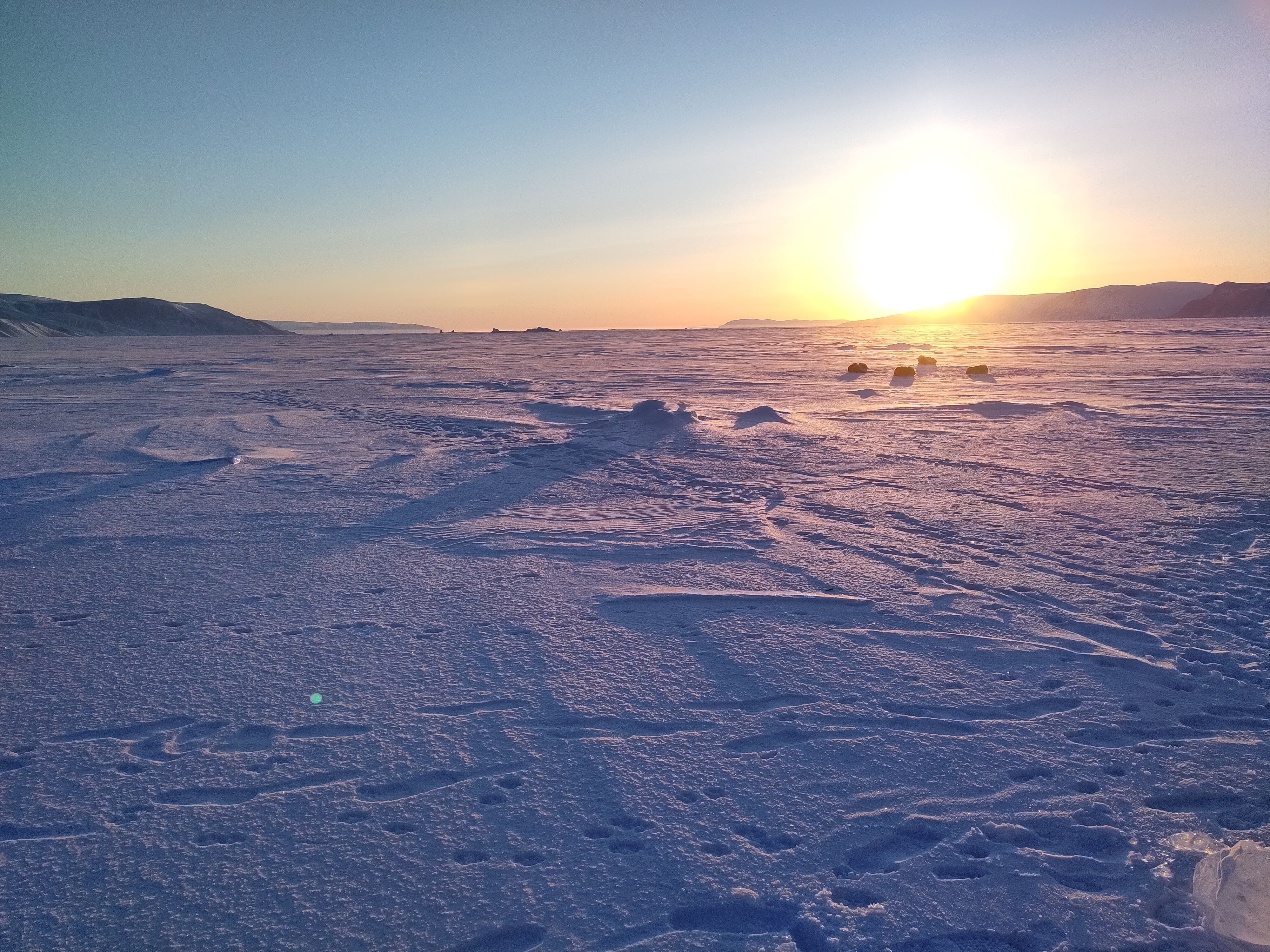
All of this work involved 6 days of travelling over and camping on the sea ice, plus an additional day trip. We were lucky with the weather, although it was *extremely* cold, around -25 to -28C most days, and dipping well below -30C at night (though being after the equinox it was never truly pitch dark). However, in general there was little wind, no fresh snow (which can really slow the dogs down as they struggle to pull through deep soft snow) and the sun shone every day. This meant we basically managed to achieve the full planned programme – including our extra-optimistic goals – which almost never happens in fieldwork.
I intend to write a whole series of posts based on what we have been doing scientifically and technically as well as some general observations. There have been various hints already in my preferred social network. The whole trip was super inspiring, it’s always valuable to get out and observe the real world when you’re trying to model it, understand it and make projections of sea level rise.
I also promised to make another Lego scientists series and took quite a few photos in between times to do so. However, the research programme was packed, so I had no time at all to make the comic during fieldwork, that will have to wait a few weeks.
Expect my pixelfed account to host gratuitous numbers of dog pictures. And ice pictures. And unexpectedly clear blue skies. For now it’s time to unpack, get the washing machine going and spend some time with my family.
As ever, thanks to my amazing colleagues Steffen Malskær Olsen, Andrea Gierisch and Anna Pedersen for an incredible trip and to DMI station manager in Qaanaaq Aksel Ascanius without whom most of this work would be impossible.
Special thanks to our friends in Qaanaaq, the local hunters, whose unfailing energies and knowledge are absolutely essential to these scientific projects. We literally could not do this without them and of course their dogs.
I must also credit DMI and the Danish Government for funding via the National Center for Klima Forskning and thanks also to Horizon Europe projects PROTECT on sea level rise and PolarRES for additional inspiration and funding and to my colleagues at the Horizon Europe/NERC project OCEAN:ICE for indulging my two weeks away. All three projects will benefit from the insights gained in this fieldwork.
Currently, I’m very busy getting ready with colleagues to travel to Greenland next week. We have an extremely full programme of fieldwork activities covering oceanography, biology, sea ice, snow and glacier processes as part of our NCKF work. More on these no doubt in a future post…
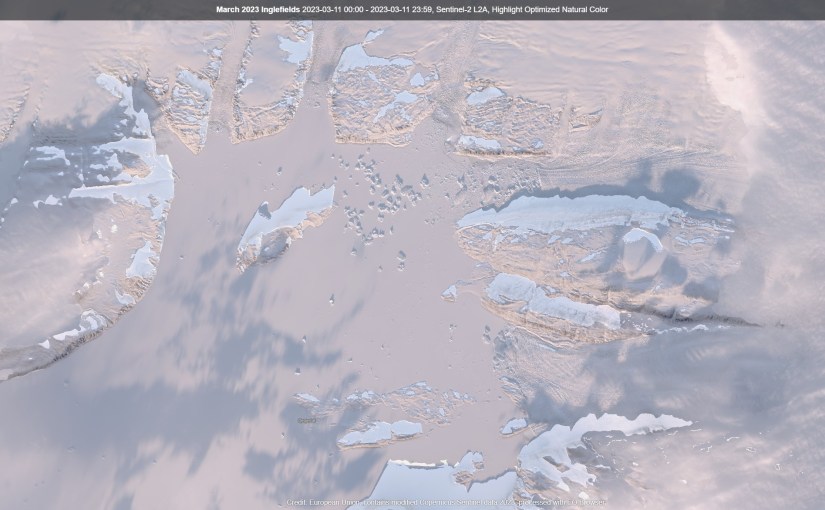
Yesterday, one of my ace DMI colleagues (without whom most of the work we plan would definitely not happen) shared the first optical satellite image of the area this year – taken by ESA’s Sentinel 2 (a truly astonishing source of free imagery and everone should know about it). Because the area is very far north, it has been in the Polar night until now so we have been reliant on the ESA Sentinel 1 imagery based on radar.
First Sentinel-2 optical satellite image of the year downloaded from Sentinel Hub’s EO Browser today. Processing with Sentinel Hubs optimised natural colour filter has introduced some artefacts, notable the brigh white patches which probably represent areas of shadow due to the low solar angle. The area is blanketed in thin cloud and only parts of the glaciers, sea ice and icebergs are clearly visibe.
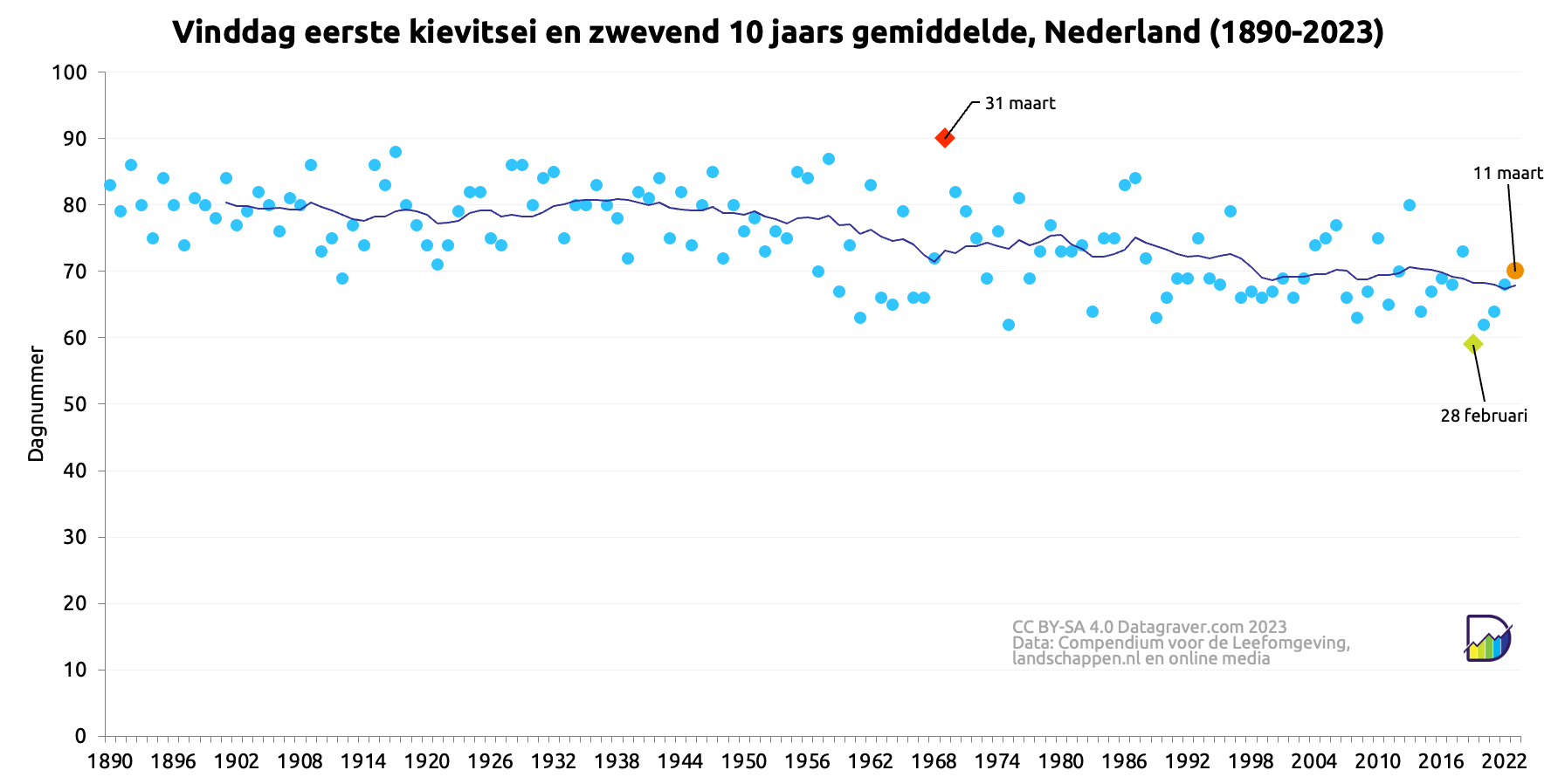
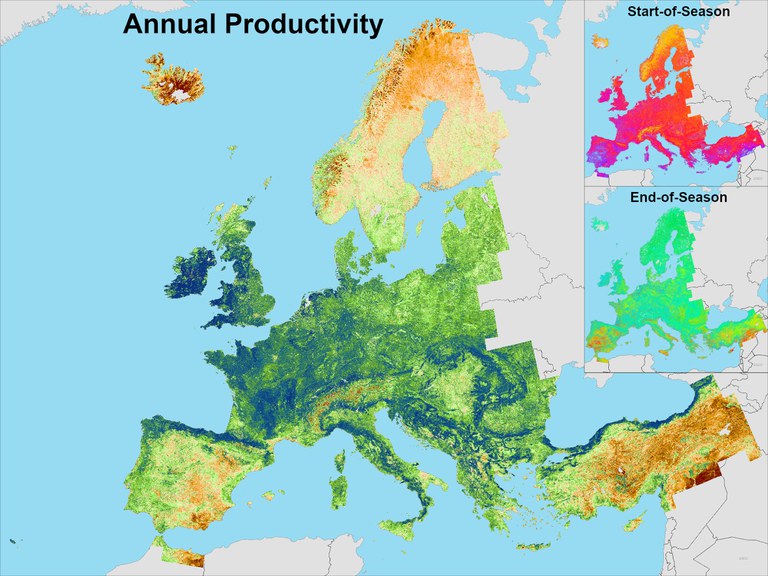
Where biology is clearly showing us earlier springs due to climate change, the date of the first optical image is unlikely to change any time soon due to climate change.
I’ve been on holiday this last week and I’m combining the trip to the UK with a visit to colleagues and collaborators at the University of Leeds. I’ve also been nabbed while I’m in Leeds to give a wider interest talk at the Royal Meteorological Society Yorkshire branch in Leeds.
I’ll be discussing ice sheets, their contribution to sea level rise and how the future is looking. There may also be some nice photos from our fieldwork in Northern Greenland for those who like dogs, icebergs and snow…
If you’re in Leeds and fancy joining you’re most welcome to register and attend at this link.
In general, I’m trying to reduce my travel this year, last year, with all the rolled over meetings from the COVID times was disruptively busy with work travel, it makes it challenging to actually get the work done. So I think combining work and holidays and rolling up meetings into a block is the way forward.
Although I very much appreciate the opportunity to present online at various meetings, I’m less convinced about hybrid meetings where the purpose is mostly scientific discussions, that is something that works much better either all online or all in person in my opinion, but I think they work well when the aim is to present new and ongoing work (like EGU).
For those who are interested but can’t attend I will see if the talk tomorrow will be recorded and can be uploaded somewhere. Here’s the abstract:
Frozen Threats: Understanding the Role of Ice Sheets in Sea Level Rise
In this talk, we will delve into the world’s ice sheets and explore their importance in the climate system. Ice sheets are the largest stores of freshwater on the planet, their size and location means they influence our climate but their interactions with the atmosphere and ocean are complex. As the world warms, they will inevitable have an impact on sea level. Adapting to sea level rise will be one of our civilisations biggest and longest challenges, so understanding ice sheets is now of critical importance. They are also beautiful and fascinating environments in their own right. In this talk I will discuss some of the scientific challenges, but also show how far we have come in understanding ice sheets and glaciers.
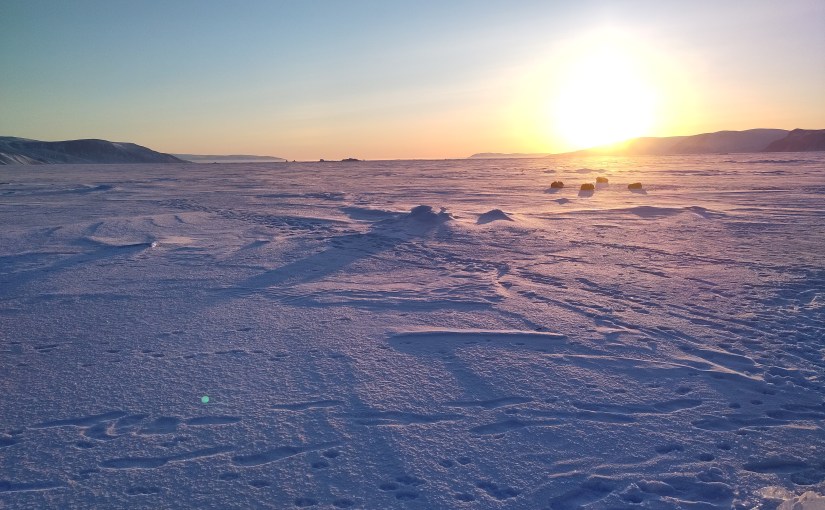
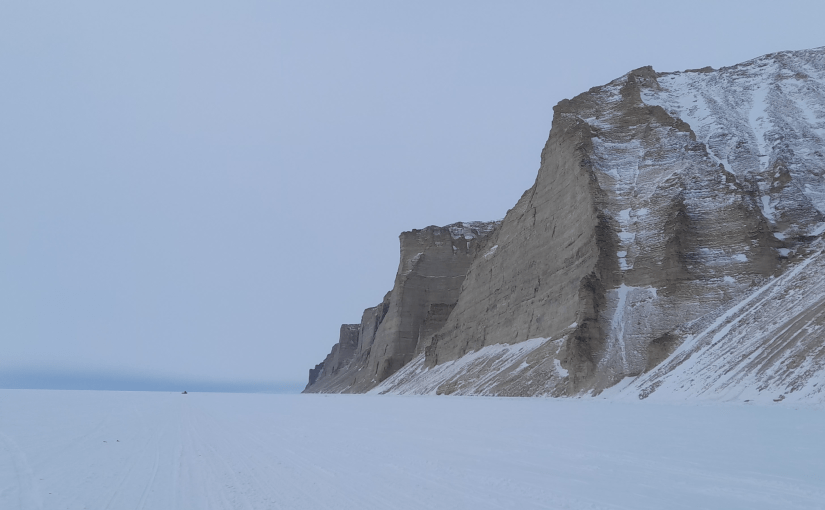
The Inughuit cliffs near Qaanaaq in Northern Greenland rising up above the sea ice. In the far distance a dog-sled is a small black speck.



















 Sterna Paradisaea