Field Diary 2025

I very rarely have time to write a proper field diary, our time in the field is usually extremely hectic and filled with 12-18 hour working days that blend seamlessly together. I suspect this week is also going to be busy, but Nature has offered an olive branch in the shape of an early break-up of the sea ice, so I’m taking a moment to write a few things down. Updates will be posted at the top so scroll down to read the first day.

And finally…

I’m writing this on the metro home, I’ll spare you the flight delays, the packing up dramas, the last minute, “just one more snow pit”…

Melville Bugt from the air

 It was a good tour. Enormous amount of work done, perhaps more importantly, it has also been foundational work, on both data and field site management, it will be much easier for colleagues to help us maintain this and to build up a long term data set of all the observations (and more that I haven’t written about here) in future. That should reduce costs and field time in the future but also give others the opportunity to visit and do their own research up here.

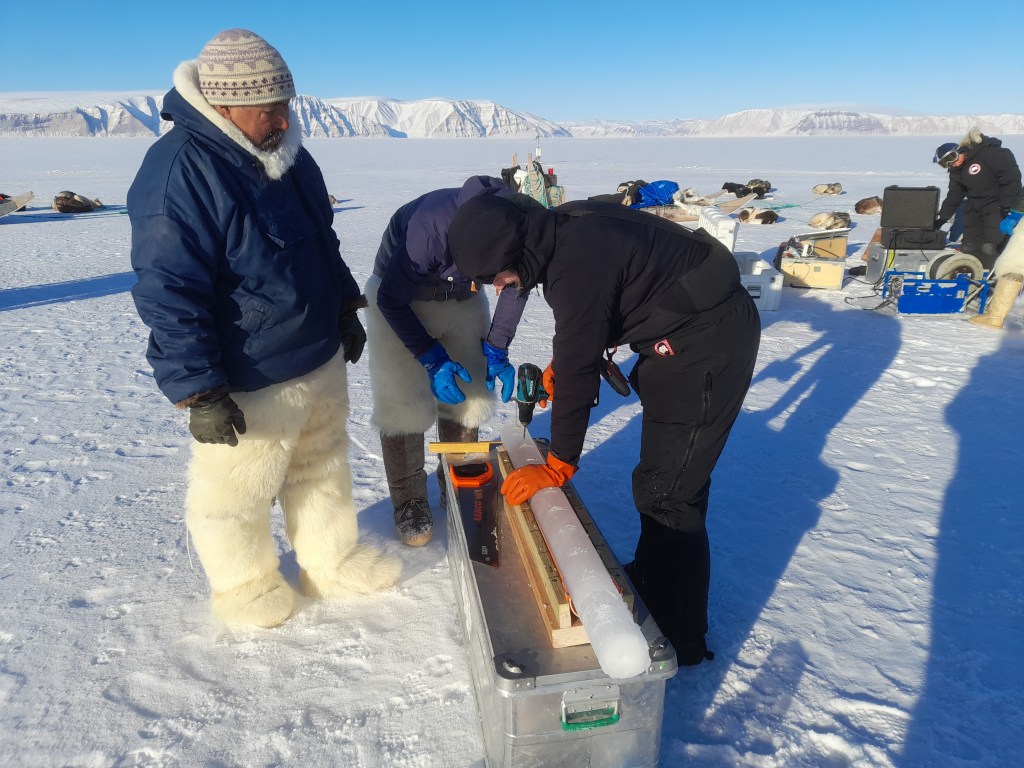
The traditional hunters gloves turn out to be by far the best thing to work in when programming outside. You can put your hands in and out very fast and they are super warm.

I think streamlining the storage of data is extremely important. There is far too much data in the world on hard drives and in field notebooks, doing no good to anyone. This system will be much easier for other colleagues to use what we have collected and we will be able to publish them outside of DMI soon too. I remain committed to FAIR publishing, but I often feel the barriers are practical rather than psychological.

I’ve also introduced my new(ish) colleague Abraham to the Arctic. Given he grew up in a place without snow it has been a delight to watch him discover the processes and problems that I’ve been working on the last 20 years and that we’ve been discussing together the last 18 months.  I believe it’s extremely important for climate modellers to understand and see the system they’re trying to model. This trip has definitely confirmed me in that. This was not just a field campaign but also a pedagogical field trip in some ways too. We have also had the opportunity to brainstorm a lot of new research ideas along the way, there is rarely such time in the office, so plenty more to work on in coming years..
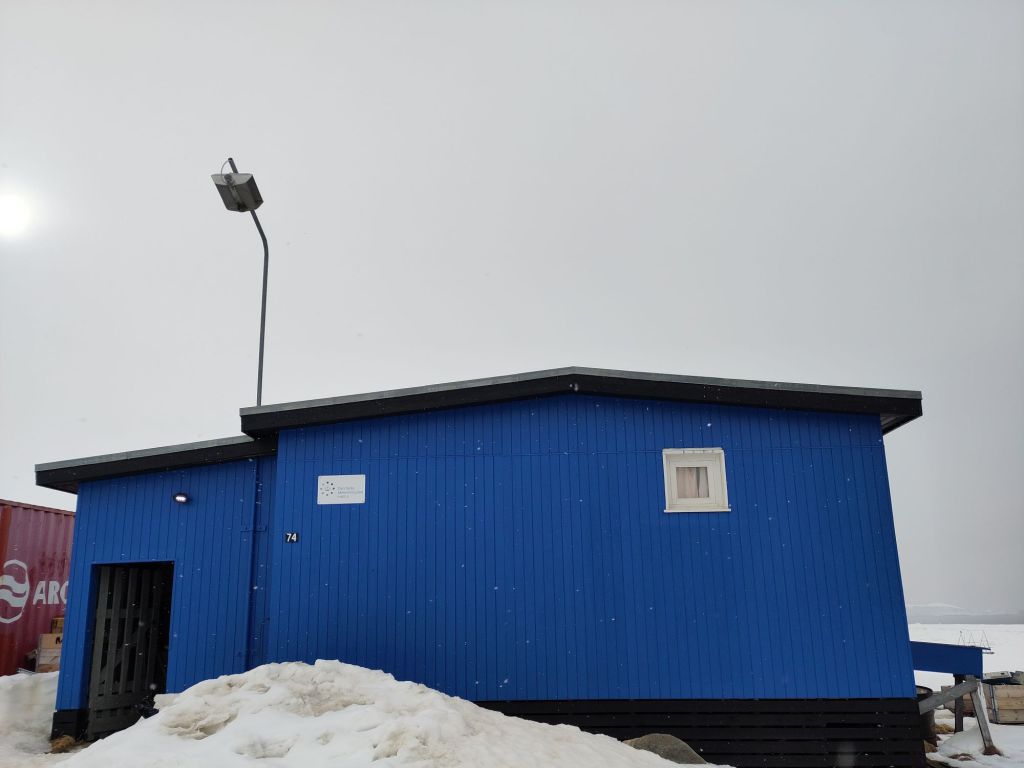
The DMI geophysical facility, newly painted!

As ever massive thanks to many colleagues, especially Aksel our DMI station manager without whom this work would be close to impossible given he is both interpreter and collaborator on the practical observations; Qillaq Danielsen for taking us out on to the sea ice with his sled. Steffen for running an extremely valuable long-term programme, Andrea for helpful and practical discussions and of course Abraham for making it a very good week. Glad we got to do this.

I should also say a large thankyou to my husband for keeping the home front running smoothly along whilst I am travelling. None of this would work otherwise.

Tak for denne gang Qaanaaq!

Day 6: Last day

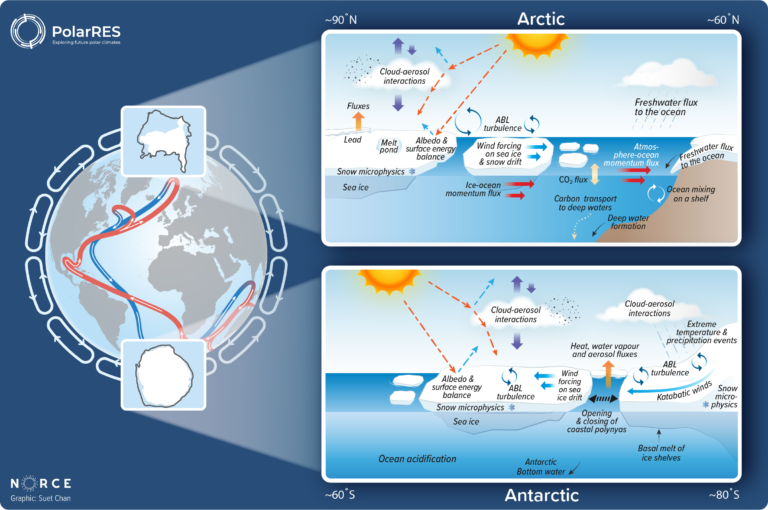
It’s amazing how fast the tine goes, our last full day in the field (we’d originally planned for 9 days, but that was partly because last year we planned a week and it got cut to 3 days due to flight weather problems, I learned and left a safety margin this year). Nonetheless, a busy day. As we’re really interested in lots of different processes that combine in what we call the Arctic Earth System our focus for today was twofold, looking at the atmosphere and the subsurface, both of which are partly other scientists projects, but giving data we really want to use with our climate model, both for evaluation and development.

Aksel and Abraham giving the site a few last tweaks

The main aim was to finalise the snow site ready for observations over the next year. We finally reinstalled the remaining FC4 and new logger, this has been ticking over and being tested in our station kitchen for the last couple of days. I’m rather pleased with myself in managing to get these 2 talking to each other, I was envisaging a bigger struggle, but the Campbell Scientific software is very easy to use with good user guides.

The installation was the last element for the snow site and after Aksel and Abraham’s sterling work in building our new logger station, it was trivially easy.

Et voilá! We have a fully functional snow site…

The experience with the new Campbell system proved invaluable in the next task, downloading a whole bunch of data from colleagues’ weather stations for shipping back to Denmark. Normally, we would have been a bigger crew to handle work on the sea ice as well as at the station, but as the sea ice broke up so early (see Day 1), our local hunter friends had taken them down and brought them in to Qaanaaq for us. They needed a bit of repacking, data downloads and checks and we set up a skin temperature calibration station for the satellite group, which I think will also be quite interesting for us in polar regional climate modelling to use. This we left overnight for longest possible calibration.

As we have many collaborations we also spent an hour trying to collect some data from the subsurface permafrost sensors installed by our colleagues at the University of Copenhagen. Unfortunately, it appears they need rather more maintenance than we can provide, so that will need a full team. I am extremely keen to see the data though, ten years + of permafrost and temperature measurements is a seldom dataset and will be super interesting to use in the further development of our surface scheme. Qaanaaq is somewhat vulnerable to permafrost disturbance as it is built on sediments, so monitoring this in a warming climate is pretty important.

A long day, but made even longer by the excitement of narwhals in the bay! We headed out to the ice edge at 11pm, (the polar day plays havoc with your body clock), where quite a few hunters had gathered and were busy slicing up a freshly caught narwhal, eagerly filmed by at least one of the several film crews and photographers there appear to be in the town right now. We have noticed increasing numbers of film crews visiting this part of the world. It can be surprisingly busy.

Greenland does have a strictly regulated quota on narwhals, it’s an important part of the culture, but it is a bit brutal to watch if you’re not used to seeing animals sliced up. Personally, I think everyone should see where the meat they eat comes from. It would make us all more honest about agriculture. But I digress, I was actually more excited to see live ones out in the bay. We’re immensely fortunate to see them, this is only the 2nd time in 5 years I have seen live narwhal here, and it’s only really because the ice has shrunk so early allowing them in. I have immense respect for the hunters who go out in flimsy lightweight kayaks to harpoon them. That must take some courage.

It’s such a peaceful scene, hard to imagine the life and death struggle implied here.

UPDATE: And as an aside, our ace colleagues and collaborators at the Greenland Institute of Natural Resources have a wonderful series of videos exploring all kinds of research in Greenland, including this brilliant one featuring Malene Simon Hegelund and my DMI colleague Steffen Olsen, together with Qillaq Danielsen who we were also out with this year, which really gives a flavour of fieldwork in Qaanaaq and just how important our collaborations with the local community and Greenlandic scientists are.

Day 5: Glacier Day!

As an unrepentant glaciologist, I always look forward to glacier day, when we get up onto the land ice. In this case it’s only a tiny outlet glacier from a rather small local ice cap (well I say small, in the Alps it’d be considered quite large, but by Greenland standards it’s small but well studied). It’s easily accessible and the point about today was to take surface snow measurements and density profiles, so accessible is good.

The deep soft snow that has been a bit of a bane everywhere this year was also a problem. It was very heavy going, there isn’t really a path, just very loose rocks in a (at this time of year dry) riverbed, which is bad enough in summer but when covered in 30cm of snow was quite heavy going. Nonetheless we made a decent pace and got quite high up. By the time we came down again, the outwash river was starting to show signs of life again. It was a cold day, between -3 and -5C but the blazing sunshine alone is enough to start to generate melt and we saw plenty of signs of radiation driven melt going on under the surface snow crust, especially where there were dust layers to accelerate the process.

The snow pits proved indeed how cold the snow has been, typically around -10C at the bottom of the pits, but in one we also found signs of refrozen melt water, perhaps from the brief March warm period?

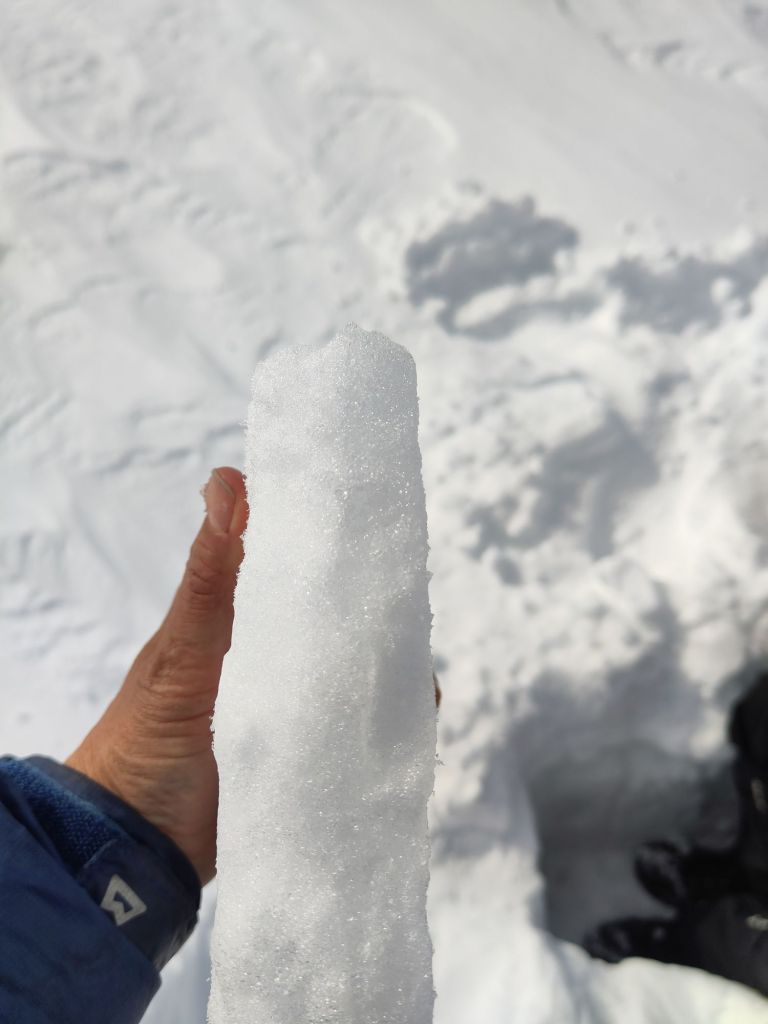
Ice layers in the snow, surprisingly difficult to photograph, you’re going to have to trust us on this one!

We did a transect down with our borrowed infrasnow, made several density profiles and had quite an efficient time. The idea is to repeat this transect at different times of the year so we can see how the snow properties change. In particular, I’m interested in surface albedo (how much incoming light is reflected by a surface). The reflectivity of the snow and ice surface is extremely important for the energy budget, which in turn controls how fast the snow (and ice) melt as well as being important for satellite data retrievals of surface temperature.

The Infrasnow is a very neat device that measures density and specific surface area. It’s not quite the same thing as albedo but it will help us to develop our albedo scheme in the model as it is based on grain size. Unfortunately it does not work on glacier ice, which is some places we also saw peeking out the top where wind has scoured the surface snow away. The movement of snow by wind is the subject of our final full day in the field. 

Lethally smooth glacier ice clearly visible beneath fresh surface snow

We continued the observations off the glacier all the way to the road so we have a nice base transect that can be repeated to assess how conditions change through the year.

Although we only hiked 10km, it was quite tough, so next year we’ll bring snow shoes…

Tomorrow is our final full day. Lots more to do.

Day 4

Day 4 was pretty typical of the highs and lows of fieldwork. We finished (or I should say my colleagues finished) a new mounting for the snow site logger box so hopefully the icing problem will be reduced, we (re-)installed all the instruments except for the new loggers and generally tidied up. It’s looking pretty nice now. This was a high.
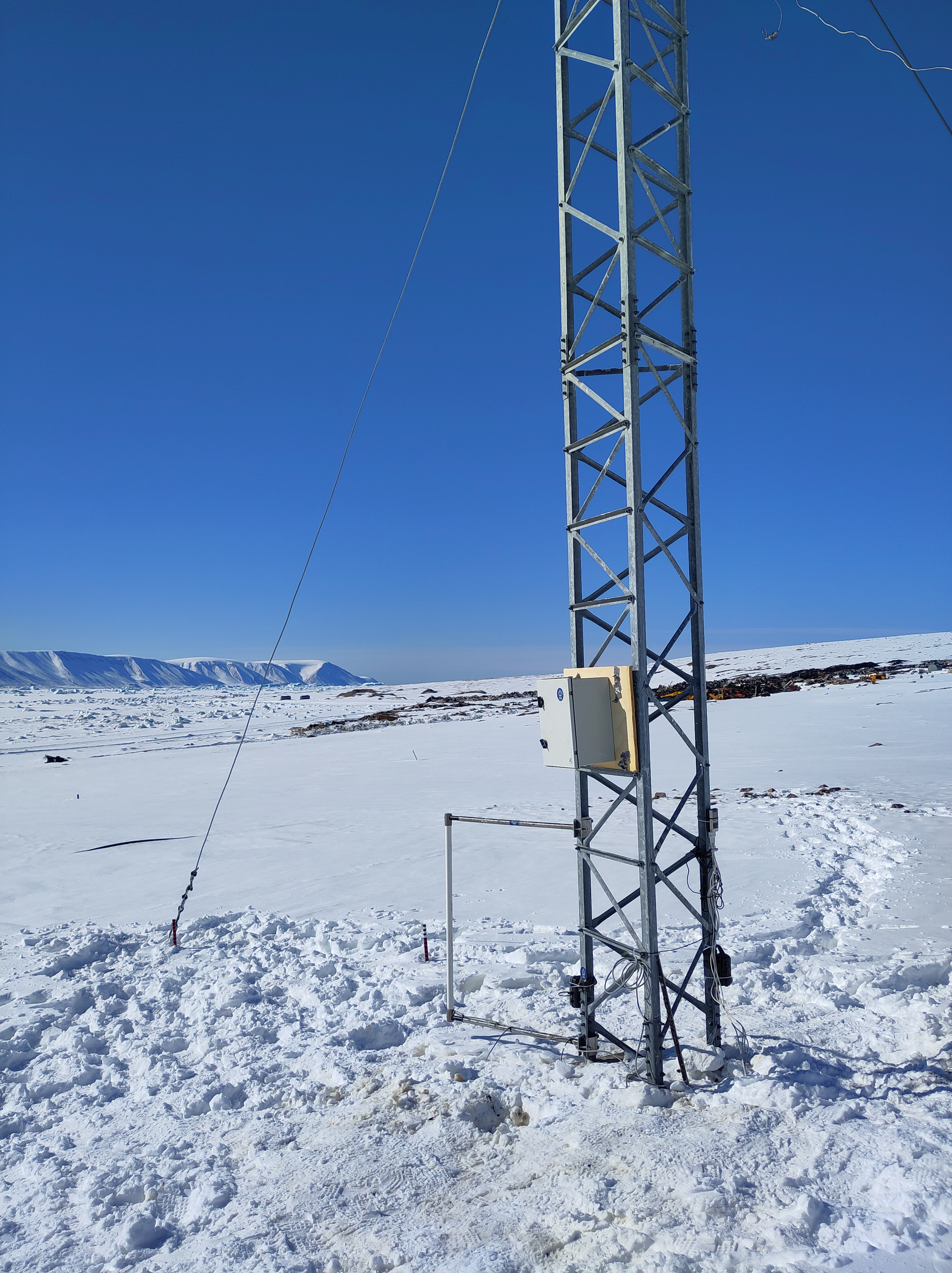
Part way through the reinstallation at the snow site

Then, I struggled and failed for about 4 hours to try and get the snow drift sensors to talk to the new logger. That was frustrating low. low. However, a walk around on the fast ice in the bay to try and take a new sea ice core was some valuable breathing space – a little bit of rewiring later and the first numbers started ticking in as planned…. Hurray! That was a high!

It’s immensely satisfying solving these kind of problems. And it was the first time I’ve programmed one of these loggers – new skills are also always rewarding to learn, even if the process is frustrating. I’ve learnt a lot about SDI-12 interfaces and how the instruments actually work too. I need to remember to give myself more deep work time back in the office too. It’s much more personally rewarding and advances the science much more than endless emails and meetings.

While the attempt to get an ice core was interesting, ultimately we failed due to very broken and uneven ice that made access to the part of the sea ice we wanted to get to with our kit too difficult – that was a low. I am simply counting the attempt as my evening walk, in which case maybe it counts as a high? I’ve often thought of Caspar David Friedrich’s famous Arctic painting The Sea of Ice in the coastal part of the fast ice. It’s spectacularly fractured and churned up, though FReidrich’s ice blocks are a little too angular – the real sea ice flakes are a bit more rounded.
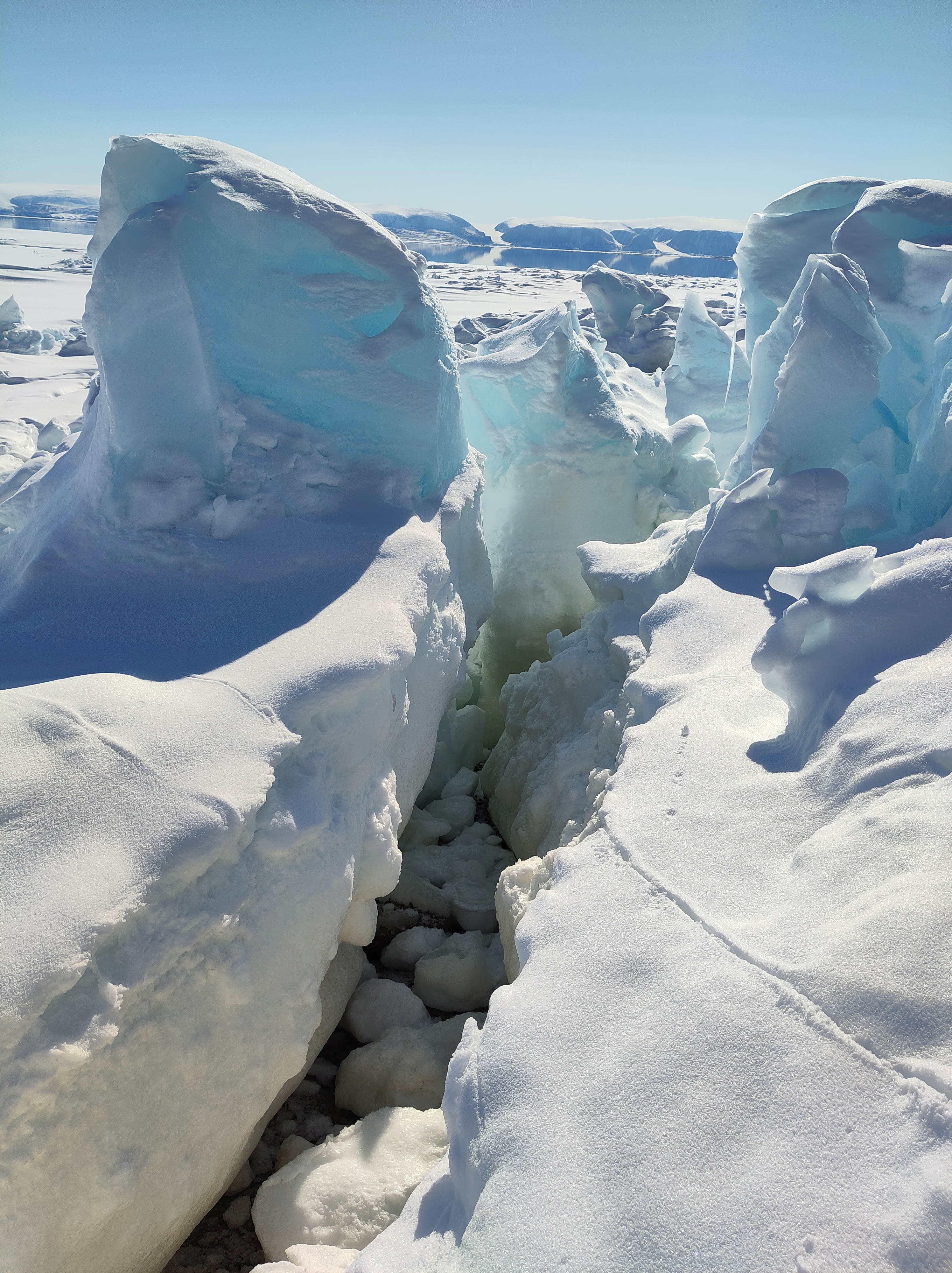
Where the fast ice meets the land…

We also did lots of preparation for day 5’s trip to the local glacier, planned a final UAV structure-from-motion mapping campaign on land and got software working to download data on permafrost from sub-surface loggers for colleagues at the University of Copenhagen – that will all however have to wait until tomorrow, our last full day in the field. Today, we have a date with a tiny local glacier.

Day 3

I’d originally assigned only one day in the fieldwork plan for the snow site work, but given we missed our prep day to go directly into the field, we have missed a few crucial steps, so we have been busy today trying to catch up, but mostly in the workshop here at the DMI geophysical facility in Qaanaaq with a couple of visits out to the snow site.

I realised I haven’t introduced the snow site.

View over towards the south west from the old ionospheric research station on the edge of Qaanaaq. Our snow site in the foreground. It has a great view, if you ignore the town dump at the coast!

It is a small area on the edge of the village (unfortunately near the town dump, but otherwise perfect) where we are conducting a long-term (hopefully) series of observations – we’re currently only at the end of the first year so there are a few teething troubles to sort out. We’re installing a new logger for our snow drift sensors, adding a new snow cam and downloading data from the current one. We also have a standardised set of measurements of snow properties (density, temperature, reflectivity) that we carry out whenever time and opportunity permits, that we will hopefully use to better understand how the snowpack evolves through time. The land based side is a kind of complement to a longer set of observations I have from throughout the region – all point measurements made at rather random times and locations, so the constant monitoring site will hopefully help us to understand the wider context in space and time of those point data. In fact I have a student workign on digitising that data now, so I hope to soon make available the whoel dataset for research purposes.

Snow is incredibly important in the Arctic: it forms an insulating layer over sea ice that prevents futher formation in the winter, but also helps to stop or delay surface melt in the spring and summer. On land, the insulating properties of snow also help to preserve vegetation, insects and mammals through the winter, with specific vegetation assemblages being very much determined by the local snow patterns. And that’s without even discussing the importance of snow to glaciers and ice sheets.

Do you want to do a snow pit? (I asked) Yes! said my colleague. It’s always good to get the modellers to understand just how hard observations can be.

However, it turns out to be difficult to measure when it falls, difficult to work out how much blows around, challenging to model when it melts and when it refreezes and generally a larger than we’d hope uncertainty in weather and climate models. Much of the work developing parameterisations that describe snow properties has been done at lower latitudes too. High Arctic snow is certainly different in many respects to more southerly locations and that needs to be accounted for.

Hence the establishment of our snow programme. Which sounds rather big and impressive, but we’re hoping to set it up sufficiently smoothly this year that it will almost run itself with minimal input from us and assistance from colleagues. Let’s see, there are still some teething troubles to sort out.
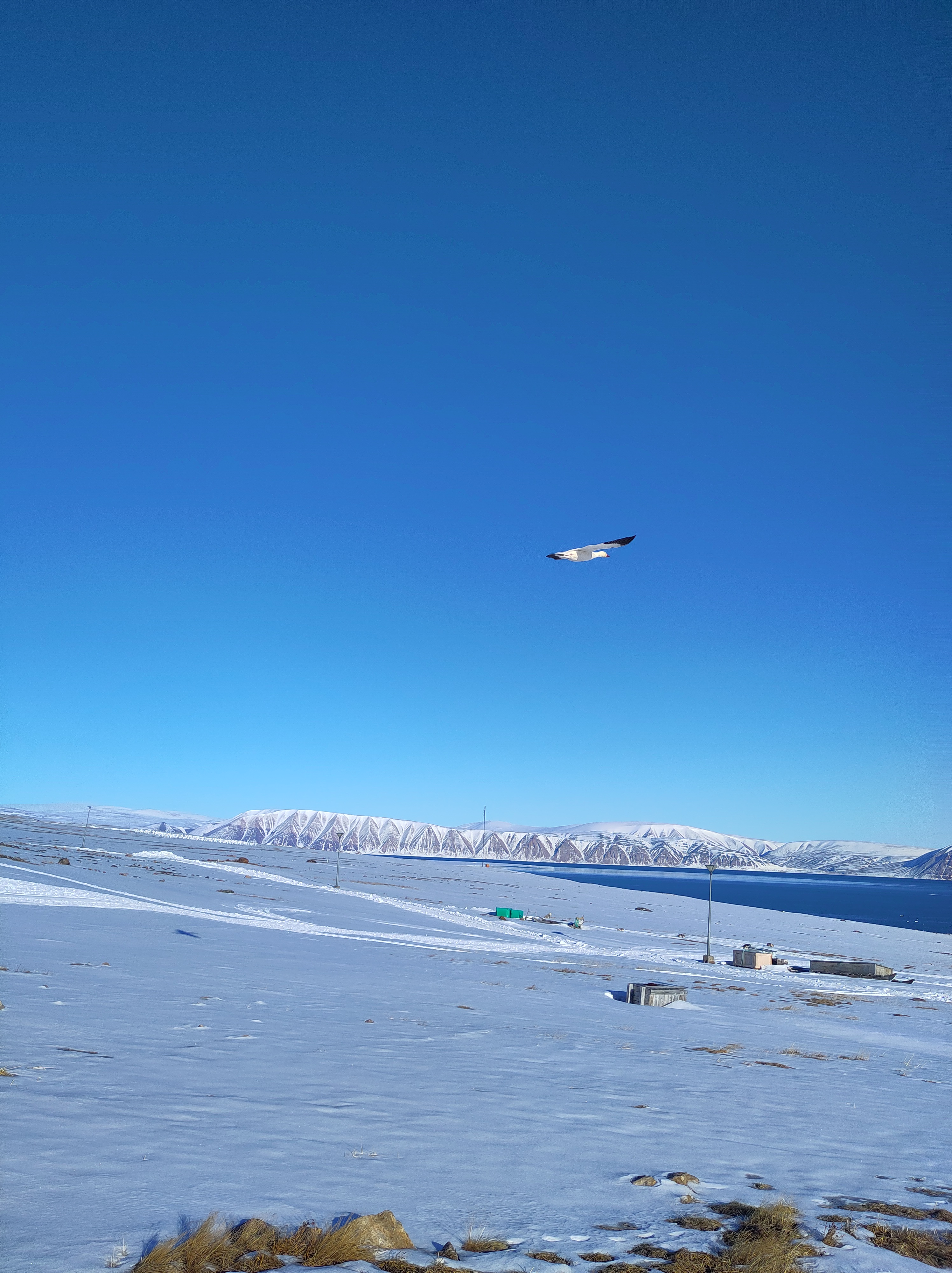
The sea ice has now cleared out of a huge part of the bay in front of Qaanaaq and the hunters have been busy taking boats out from the edge of the ice so there are clearly narwhals expected soon. Although, we’ve spent most of the last two days indoors, I keep looking outside, hoping to see some of the marine mammals that visit here. There are already masses of sea birds arriving. Yesterday managed to spot a rather handsome snow goose couple on my evening walk at 11pm.

On my evening walk today I went to the very eastern edge of the town to get a look at the sea ice in the fjord – it’s quite clearly retreating rapidly now; much of the area we travelled over on Friday has gone.
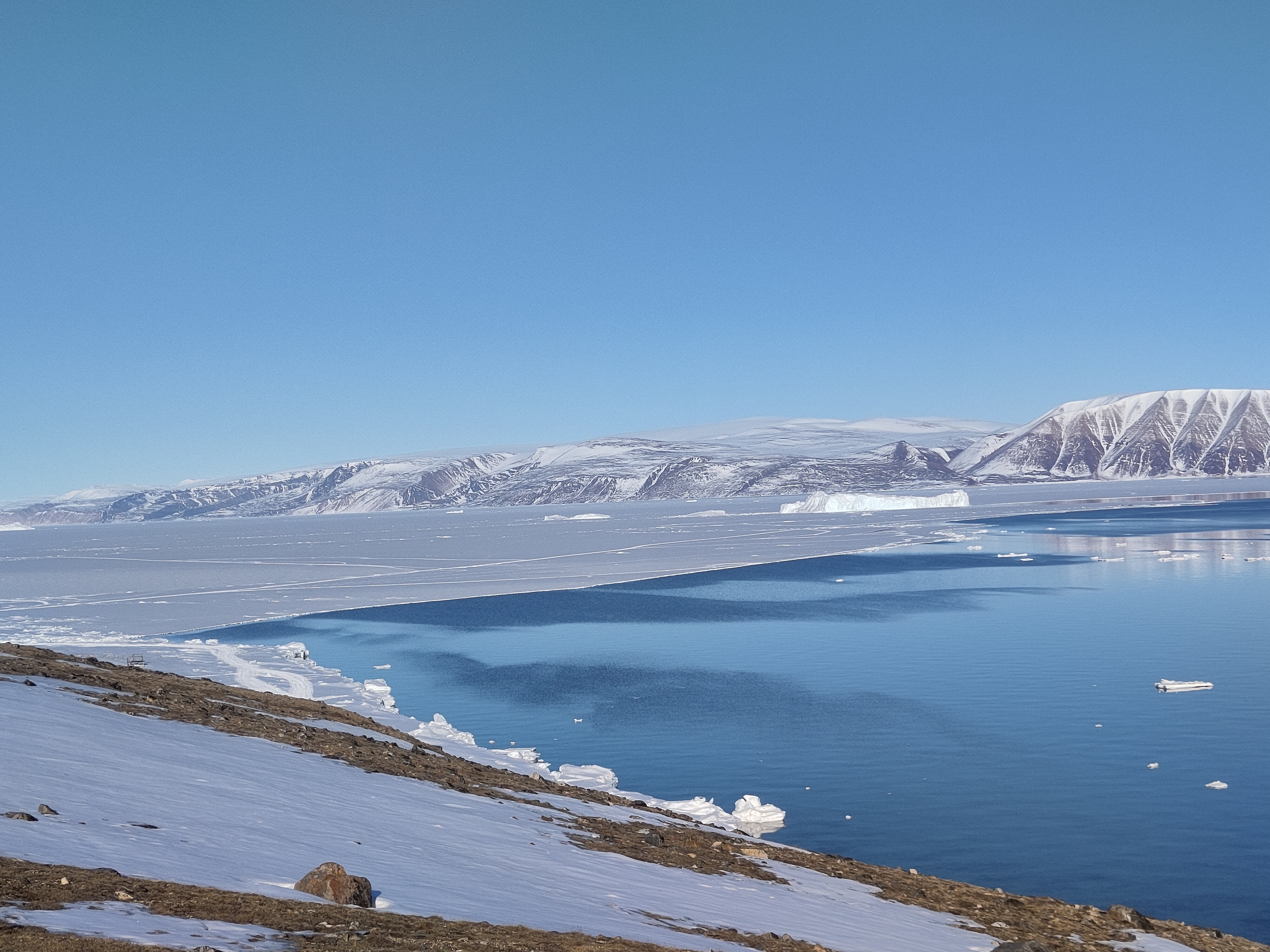
View down Inglefield Fjord with the sea ice breaking up in the distance

Day 2

After Day 1’s rather hectic and busy time, Day 2 was assigned post-processing status. We had a slightly later than the 6am start yesterday, and put some serious effort into assessing our results from the previous day. That means downloading data, clearing up wet kit to dry it off properly, repacking stuff we don’t need further. Then there is the computer work, doing some initial processing, backing up files, writing field notes and doing some measurements (of salinity) on the sea ice cores we collected.

Conductivity/salinity measurements of a melted sea ice core in the workshop, fieldwork is very diverse. And fun.

We also made time to visit our snow site to download data from the instruments there. Unfortunately, it was clear that we need to somewhat reorganise the site, the logger box was completely snowed in, and I was a bit sceptical there would be any data at all. So we collected in some of the instruments for testing and further data downloads in the workshop instead of trying it out in the field. In fact, fieldwork means a lot of tidying up and computer work! I used the opportunity to reorganise and standardise the way we archive all our data, including the UAV images as well as the meteorology instruments, which will also hopefully mean we have an easier time to find and use it in the future.

It wasn’t all laptop work though, we did a few snow pits and some further testing of the Infrasnow system we have borrowed. I’m actually quite impressed with it – very straightforward to use and very consistent data produced.

It’s also always fun to check our snowcam – this takes a photo of a stake every 3 hours to monitor the depth of the snow pack, and quite often we get beautiful views and some cheeky ravens hopping past too – I live in hope for an Arctic fox, or even a bear.
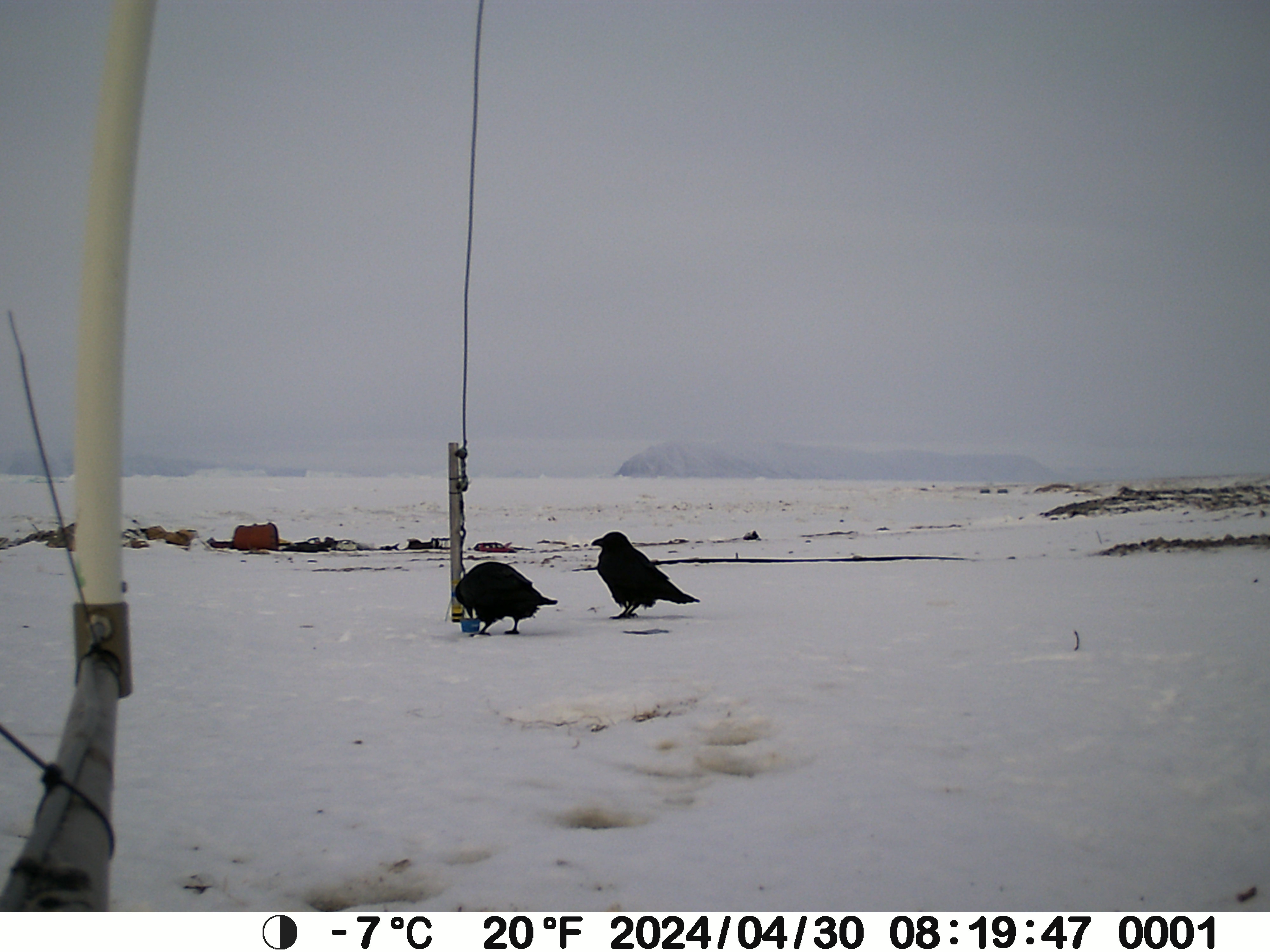
Two ravens in the snow, exploring some leftovers apparently.

On the subject of bears, I had heard there were rumours of one near the snow site, but sure enough there were the footprints – rather small and filled in with snow but quite distinctive and heading up towards the ice cap. We shall be extra careful when we go up on to the glacier later this week.

Day 1

We had originally planned terrestrial, glacier and sea ice work, primarily focused on snow processes. The sea ice part though was altered and expanded when the rapid break up in April and again this month was observed. Normally, we’d have a preparation day between arrival and going into the field, but the threat of winds and high temperatures meant we decided not to risk it and we went out straight away on the first full day. Our instincts to just go yesterday turned out to be correct, we had perfect weather and with the help of Qillaq, one of the local hunters we still made it out on to the sea ice. So all is not lost. I woke up this morning to see a wide blue sea just off the last pieces of fast ice on Qaanaaq, so I’m very happy with that decision. Sentinel-2 captured this yesterday while we were out in fact.

It probably looks more dangerous than it is. We were working on the stable fast ice to the east of the big flake, that stretches right into the fjord. The local topography make it very stable and our measurements yesterday confirmed it’s pretty typical for the time of year in thickness, though there was a surprising amount of snow on top, which can actually help to protect the ice from melt at this time of year.

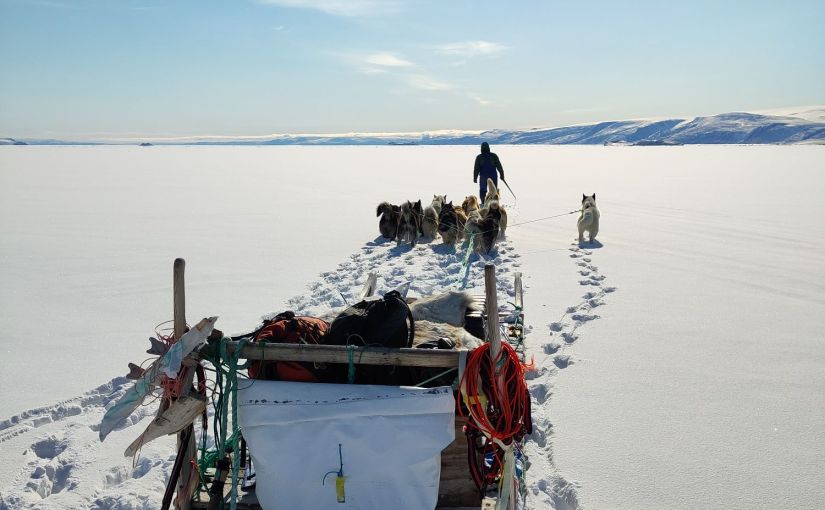
Getting around the coast was surprisingly straightforward, the fast ice has a very stable platform, though some large churned up part of the ice with cracks made for some slightly bumpy manoeuvres to get on and off the stable parts.

Manoeuvring the sled through the coastal zone

The dogs were I think happy when it was over. But in fact it was much more straightforward than I’d feared. The large crack we noticed earlier in the week that opened into a wide lead further extended while we were out, see below, and I woke up this morning to a wide open lagoon. It’s an extraordinarily beautiful place to work and I feel so privileged, especially on days like today when the weather is also being extra nice.

Happy dogs on the way home. Note the large area of open water behind that opened up while we were out.

Work wise it was a successful day, we managed 2 stations, where we did very extensive work. I’d have liked a third but the deep snow made it very heavy and slow going to travel on and in spite of the early start we basically ran out of time and had to return home.

Qillaq and Abraham taking a manual measurement of snow depth and ice thickness next to target for the UAV calibration flights.

We flew the UAV for surface properties, did a lot of snow pits and snow surface properties work, drilled some ice cores (which I will be working on this morning) and even got our loaned EM31 working to do automated ice thickness mapping. We will hopefully start to look at the data later on today to make sure it makes sense before we leave on Thursday.

Our first sea ice core of the season

The reduction in ice means we can actually concentrate on the terrestrial part of the work plan for the rest of the week. And there’s a lot to do!

Last year I set up a semi-permanent snow site to monitor conditions on land through the year. It is going to get a bit of an upgrade this week with some new instruments and of course we need to get the rest of the data downloaded and processed from here too.

Onwards.

Falling Apart…

I’m writing this from a hotel room in Ilulissat, rather than Qaanaaq where I had intended to be arriving shortly, because our plane has been cancelled due to bad weather (at time of writing the airport was measuring gusts of 14 m/s, so I’m actually quite glad it was cancelled).

Weather and flight cancellations are an eternal hazard when doing fieldwork in Greenland, but in this case it also means an impact on our planned fieldwork, because the sea ice is falling apart. And rather earlier than usual (though we have not yet done a systematic review to prove this). In fact, part of the reason for coming here in May (instead of my usual March trip) was to investigate an interesting event that happened earlier this spring. In the animation of satellite pictures below you can see the sea ice rather dramatically falling apart in mid-April and then again at the end of April.

The March to May sea ice season from Sentinel 2 in NW Greenland

To understand what is happening and why it’s unusual, first a bit of background. As I have written before, my DMI colleagues have been working up in NW Greenland for about 15 years on a programme of ocean measurements in the fjord (see map below). I joined about 5 years ago, working in the melange zone of the glaciers at the head of Inglefield Bredning (PSA: a paper we recently submitted about this programme will hopefully be online soon). We use the sea ice as highway and stable platform for observations, so it’s pretty important for us and came to the conclusion it wa squite important for some parts of the glaciers too. The local community, with whom we work closely use it also for travelling, hunting and fishing from. It’s extremely important for them.

The region of North West Greenland we’re talking about

Normally there’s pretty thick (~1m) sea ice covering the whole of Inglefield Bredning (Gulf of Inglefield, also known as Kangerlussuaq, but not that one) out to the islands of Qeqertarsuaq and Kiatak. You can seen an example of what this looks like normally in the satellite animation from 2020, which happens to be when my first trip out on to the sea ice in Qaanaaq took place at the end of May and beginning of June. We were actually very lucky, we had great weather, got very close to the ice edge and watched narwhals swimming out in the North Water polynya. (Yes, sometimes I wonder how I managed to get this job too). The animation below is Sentinel-2 images as cloud free as I could find them from that first field season. As you can see, the sea ice already in March was much much more extensive than this year at the same time. And perhaps that is part of the answer.

It’s probably worth pointing out at this stage that although there were some pretty warm (unusually so) spikes in March and April, the sea ice breakup in April was probably largely driven by ocean swell, and perhaps some winds which were strong, though not excessively so as far as we can see in the observations. The latest break-up seems to be driven also by high winds.

Back to our current field season. We had in fact planned a brief trip up here already – I am currently setting up a project looking at snow processes with the team and we had planned to install and test some new instruments and protocol that we hope to use in Antarctica later this year (more on all of that later hopefully). However, as the soon to be published preprint shows, I and the team have developed pretty extensive sea ice interests recently, so this unusual behaviour rather piqued our curiosity.

We have a lot of questions:

Why did it happen this year? Is it really the earliest in the satellite record? What makes the ice vulnerable? Composition, thickness, temperature? Is the ocean driving it or the atmosphere or both (it’s usually both), and what makes this year so unusual? Further down the line, can we model it and use those simulations to understand if this is a single aberration or likely to be more common in the future? And what impact will the earlier breakups have on the ecosystem, the adjacent glaciers and the local community?

Or fieldtrip thus appeared an excellent opportunity to grab some real data on all of these points. Our colleague Henriette Skourup at DTU-Space was kind enough to lend us one of her instruments, which we shipped up last minute to allow us to do an add-on. It is all currently sitting there waiting for us.

Unfortunately the sea ice is not waiting for us, if the photos from my colleague in Qaanaaq, Aksel are anything to go by.

A large and widening crack in the sea ice in front of Qaanaaq. The small objects on the sea ice (fishing gear?) suggest we were not the only ones surprised). Credit: Aksel Ascanius, DMI

The high winds which grounded our plane have also been busy on the sea ice, which is falling apart in the bay with surprising speed as far as I can see. We are still waiting for today’s optical imagery but the quick look from radar based Sentinel-1 suggests cracks widening rapidly as the photo above confirms.

Temperature observations from Qaanaaq airport

With a bit of luck we will get to Qaanaaq on Thursday (immaqa) to see if our sea ice research plan can go ahead. At this stage I rather doubt it. But it will very much depend on the next few hours. The wind speeds are quite high still but the temperature which was well above freezing has now dropped down to just below.

Wind observations from Qaanaaq airport

We are fortunate that we work with local hunters on the sea ice who are immensely experienced. The first rule is always safety first. We do have *a lot* of other work to do and rather fewer days to do it all in, so either way we’ll be busy. Ffor now, it’s keep checking in with the weather, the satellite images and our friends in Qaanaaq and use the time in Ilulissat wisely – in our case, it’s time to write some papers. And one of them is all about sea ice.

To be continued…

All satellite imagery on this page is from the European Space Agency Sentinel-2 mission, processed on the Copernicus EO Browser – a FREE!! and easy to use entry point to use ESA data. Weather observations are from Qaanaaq airport, operated by Mittarfeqarfiit A/S – Grønlands Lufthavne (Greenland Airports) and processed by DMI. It’s actually pretty nice how much high quality data we have access to these days…

This fieldwork is undertaken as part of the PRECISE (Predicting Ice Sheets on Earth) project funded by the Novo Nordisk Foundation and by the ESA Climate Change Initiative for Sea Ice and the Climate Modelling Research Group

Small differences that make a really big difference.

I’m a co-author on a new paper that has just come out in GRL. It’s based on simulations we did with our collaborators in the PROTECT project on sea level contributions from the cryosphere.  What Glaude et al shows is that, to quote the first of the 3 key points:

“With identical forcing, Greenland Ice Sheet surface mass balance from 3 regional climate models shows a two-fold difference by 2100”

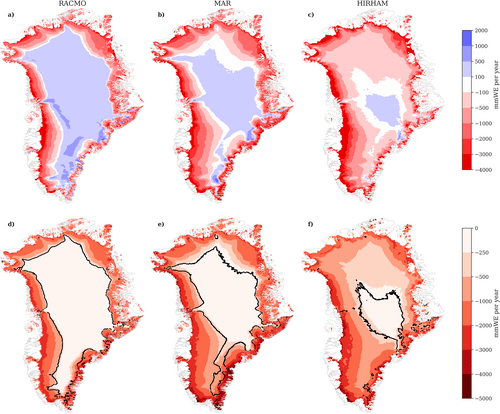
In perhaps more familiar terms, if you run 3 regional climate models (that is a climate model run only over a small part of the world, in this case Greenland) with identical data feeding in from the same global climate model around the edges, you will get 3 quite different futures. Below you can see how the 3 different models think the ice sheet will look on average between 2080 and 2100. The model on the right, HIRHAM5 is our old and now retired RCM. It has a much smaller accumulation area left by the end of the century than the other two, which have much more intense melt going on in the margins.

Greenland Ice Sheet annual surface mass balance (a, b, c, 2080–2099 average) and annual surface mass balance anomaly (d, e, f, 2080–2099 average relative to 1980–1999) [mm WE/yr]. From left to right, RACMO (a and d), MAR (b and e), and HIRHAM (c and f). The equilibrium line (SMB = 0) is displayed as a solid black line in (d-f). Glaude et al., 2024, GRL.

In fact, by the end of the century, although the maps above seem to show HIRHAM having much more melt, there is in fact more runoff from the MAR model, because of this intense melt.

Spatially aggregated annual GrIS SMB anomalies (a), total precipitation (PP, b), and runoff (RU, c) [Gt/yr]. The solid lines represent the anomalies using a 5-year moving average, while the transparent lines display the unfiltered model output.

The surface mass balance (SMB) at the present day is in fact positive. This often surprises people, but SMB as the name suggests, only describes surface processes. Ice sheets can (and do) also lose a lot of ice by calving and subglacial and submarine melt. As SMB should balance everything if a glacier is to remain stable or even grow, present day SMB is usually 300 to 400 GT positive at the end of each year, and even so the Greenland ice sheet loses, net around 270Gt per year.

Our work here shows that, at least under this pathway, not only does SMB become net negative in itself by the middle of this century, there are significant differences in SMB projections between the estimates of how negative it will be, between the three RCMs. The global model we used, CESM2 under the high-end SSP5-8.5 scenario, is famously a warm scenario, but our estimated end of the century SMBs are extraordinary : (−964, −1735, and −1698 Gt per year, respectively, for 2080–2099). As I’ve discussed previously, one gigatonne is a cubic kilometre of water, 360Gt is roughly 1mm global mean sea level rise. (Though note your local sea level rise is *definitely* not the same as global average!) Even the lowest estimate here the  is giving around 3 mm of global average sea level rise from surface melt and runoff *alone* by the end of this century each year. That’s pretty close to the modern day observed sea level rise from all sources.

And this is in spite of the fact that at the present day, the 3 models are rather similar in their estimates of SMB. The Devil is as usual in the details.

We attribute these startling divergences in the end of the century results to small differences in 1) the way melt water is generated, due to the albedo scheme (that is how the ice sheet surface reflects incoming energy); 2) but also due to the cloud parameters that control long-wave radiation at the surface, which again can promote or suppress melting. (We really need to know how much liquid water or ice there are in clouds, as this paper also emphasises in Antarctica); and 3) mainly down to the way liquid water that percolates down from the surface is handled in the snow pack. That is, how much air there is in the snowpack, how warm the snow is and how much refreezing can occur to buffer that melt.

The problem is that all of these processes happen at very small scales, from the mm (snow grains and air content), to the micron scale (cloud microphysics). That means that even in high (~5km) resolution regional models, we need to use parameterisations (approximations that generalise small scale processes over larger spatial and/or time scales). Small differences between these parameterisations add up over many decades.  Essentially,  much like the famous butterfly flapping its wings in Panama and causing a hurricane in Florida, the way mixed phase clouds produce a mix of water vapour and ice over an ice surface might ultimately determine how fast Miami will sink beneath the waves.

More data would certainly help to refine these parameterisations. The main scheme to work out how much liquid can percolate into snow was originally based on work by the US Army engineers in the 1970s. More field data with different types of snow would surely help refine these. Satellite data will be massively helpful, if we can smoothe out some wrinkles in how clouds (there they are again) affect surface reflectivity.

These 3 different types of processes also interact with each other in quite complex ways and ultimately affect how much runoff is generated as well as the size of the runoff zone in each model. So integration of many different types of observations is crucial.

“Different runoff projections stem from substantial discrepancies in projected ablation zone expansion, and reciprocally” as we put it in Glaude et al., 2024.

The timing and magnitude of the expansion of the runoff zone is quite different between the models, but all of them show a very consistent increase in melt and runoff over the next 80 years.

It’s probably also important to understand a couple of key points:

Firstly we ran a very high emissions pathway: SSP5-85 is probably not representative of the path we will follow in emissions (at least I hope not), but in this study we wanted to address the spread on different model estimates. And this is a way to get a good check on the sensitivity.

Secondly, the ice sheet mask and topography in these runs is kept fixed all the way through the century. This means we do not account for any elevation feedbacks (as the ice sheet gets lower because of melt, a larger area becomes vulnerable to melt because it’s lower and thus warmer), but we also don’t account for ice that has basically melted away no longer contributing to calculated runoff later in the century. Ice sheet dynamics are also not factored in.

Finally, we ran different resolution models, and that can have an impact particularly on precipitation and is one of the reasons why the new models we developed and have run in PolarRES (and which are now being analysed), have used a much more consistent set-up.

The 3 models we used, MAR, RACMO and HIRHAM have all been used in many different studies over both Greenland and Antarctica, but we haven’t really done a systematic comparison of future projections before. I think this work shows we need to get better at doing this to capture the uncertainty in the spread, especially when you consider that we’re now looking at using these models as training datasets for AI applications: training on each one of these models would give quite different results long-term. We need to think about how to both improve numerical models and capture that spread better. But ultimately, it’s how fast we can reduce greenhouse gas emissions and bend the carbon dioxide curve down that will determine how much of Greenland we will lose, and how quickly.

All data and model output from these simulations is available to download on our servers (we’re transitioning to a new one download.dmi.dk, not everything has been moved there yet). We also of course have data over land points and the surrounding seas, and we’ve run many more global climate models through the regional system to get high resolution (5km!) climate data also looking at different emissions pathways, if you’re interested in looking at, analysing or using any of this data – get in touch!

My warmest thanks to Quentin Glaude who led this analysis and special thanks to our colleagues in the Netherlands, France and Belgium for running these models and contributing to the paper analysis. Clearly, we have much work to do to get better at this ahead of CMIP7.

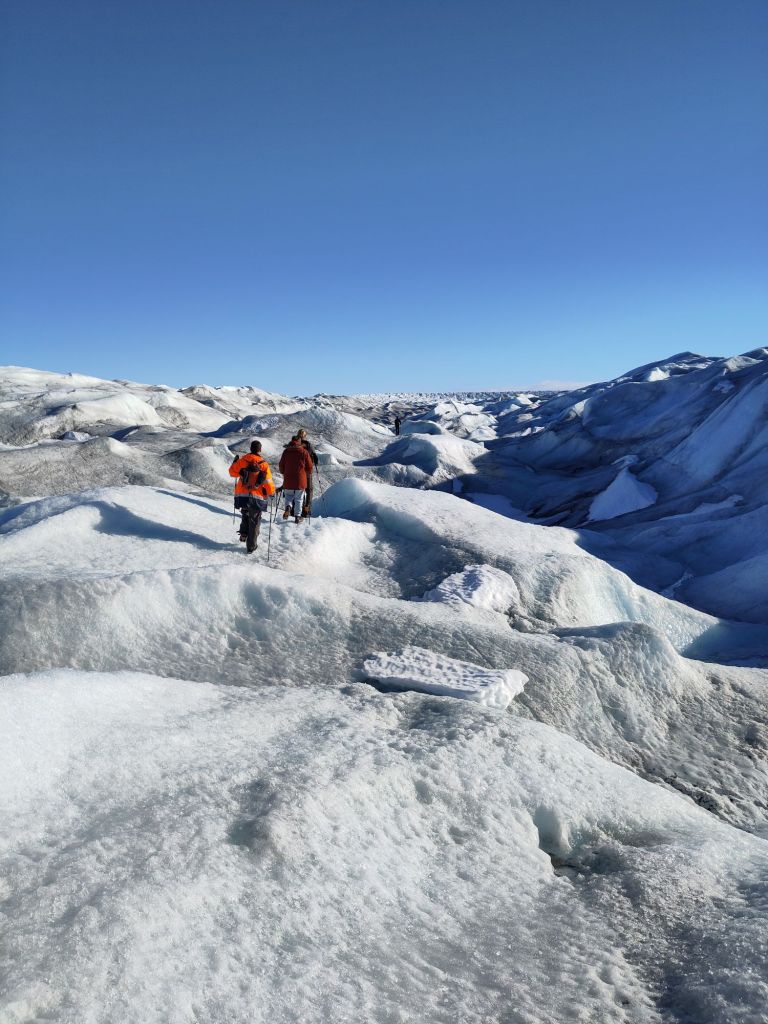
Group field trip the Greenland ice sheet: it’s important to see what you’re modelling actually looks like….

Heading North again…

I’m lifting my head from the semi-organised chaos that is my office, my home office, our family basement and the office workshop to write a quick post. This might be for reasons of despairing procrastination.

The reason for the chaos is that fieldwork season has come round again and on Friday I and my DMI colleague Steffen will be off to Northern Greenland once again. I’ll try to post a few photos to pixelfed (and perhaps even Instagram, though I swore off Meta products after the Brexit fiasco).

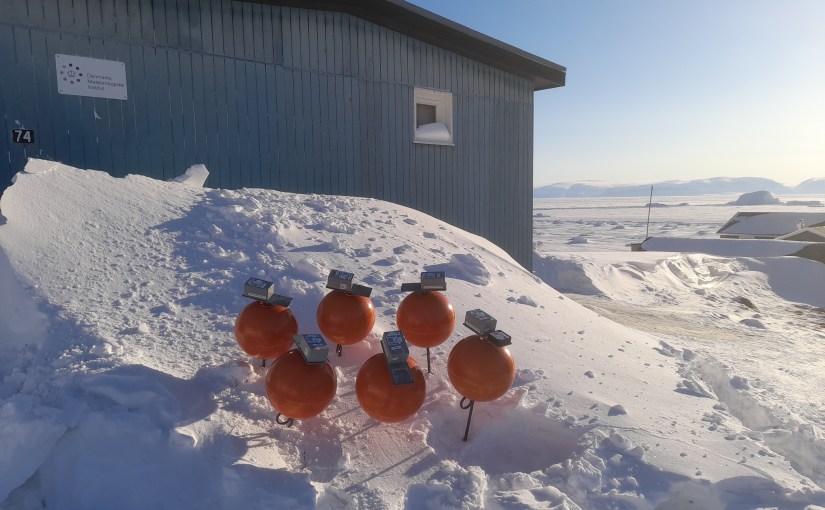
Buoys with GNSS and iridium transmitters (designed and assembled for us by Trustedglobal) ready to be taken out and deployed on the sea ice in northern Greenland. DMI’s geophysical facility building in the background.

This year my focus is again on the melange zone and we’ll be placing our instruments out to record the break-up of the fast ice. I also hope to get time to establish a new snow measurement programme – which I partly piloted last year. However, we will only be 2 scientists instead of the team of 4 this year, so this may have to wait until the second fieldwork period we have planned in early June (when the sea ice starts to break up). We are fortunate indeed that the local hunters, who still live a semi-subsistence lifestyle, are both incredibly competent and helpful and willing and eager to help when we go out on fieldwork.

This photo and excerpt was part of my contribution to a display at the Ocean decade conference in Barcelona next week. Last year we tested an open science variant of the trusted buoys above known as an Open Met Buoy. It’s incredibly smart, and completely open. You can download full instructions and make it and programme it yourself, or , as I did, order them from the german labmaker company who specialise in building open science kit.

Last year was a test of concept, and noone was more astonished than I was that the final set up not only survived the ice break up and floated safely down the fjord, we also managed to retrieve them and I hope they are waiting patiently in Qaanaaq so I can reprogramme and redeploy this year.

I wrote this piece on our work last year, promising a whole load of posts I didn’t end up having time to write. Sadly even my lego scientists never got an update. So instead of promising a whole lot of new posts, let me know what you’d like to see and read about either in the comments here or on my mastodon feed, and I’ll try to make some time to answer one or two of them while we go.

The area we travel to is going through very rapid changes now – not just climatic and environmental, but, perhaps even higher impact, social and cultural. I am privileged to be abel to witness it and we try hard to leave as little impact as possible.

At this stage it’s hard to imagine I’ll ever be ready to leave, but the clock is ticking down..

Building the Next Generation…

Hands-up who is looking for a new and very cool job in ice sheet and climate modelling and developing new machine learning tools?

REMINDER: 4 days left to apply for this PhD position with me at DMI looking at Antarctic Ice Sheet mass budget processes and developing new Machine Learning models and processes.

UPDATE 2: The PhD position on Antarctica is now live here. Deadline for Applications 18th February!

UPDATE: It’s not technically a PRECISE job, but if you’re a student in Copenhagen and are looking for a part-time study job (Note that this is a specific limited hours job-type for students in higher education in Dnmark) , DMI have got 2 positions open right now, at least one of which will be dedicated to very related work – namely working out how well climate and ice sheet models work when compared with satellite data. It’s part of a European Space Agency funded project that I and my ace colleague Shuting Yang, PI on the new TipESM project, are running. Apply. Apply. Apply…

I’ve written about the PRECISE project before, our new Novo Nordisk funded project looking at ice sheets and sea level rise.

This is a quick post to announce that our recruitment drive is now open. We’re split across three institutes. We are two in Copenhagen, ourselves at DMI and the Niels Bohr Institute at the University of Copenhagen, and then the University of Northumbria in Newcastle, UK.

The PI at the Niels Bohr Institute is the supremely talented Professor Christine Hvidberg, aided by material scientist and head of the institute, Joachim Mathiesen. I am leading for DMI, and the Northumbria work is led by Professor Hilmar Gudmundsson. We are also very fortunate to have the talents of Aslak Grindsted, Helle Schmidt, Nicolas Rathmann and Nicolaj Hansen already on board.

The project is already very cohesive between institutes, we’ve been working together for some time already and know each other well.

We have a good budget for travel and exchanges between groups, workshops, symposia, summer schools and the like, but perhaps more importantly, all the positions are focused at the very cutting edge (apologies for the cliche) of climate and ice sheet modelling. We are developing not just existing models and new ways to parameterise physical processes, but we also want to focus on machine learning to incorporate new processes, speed-up the production of projections for sea level rise, not forgetting an active interface with the primary stakeholders who will need to use the outcomes of the project to prepare society for the coming changes.

There’s also a healthy fieldwork component (particularly in Greenland, I don’t rule out Antarctica either), and if you’re that way inclined, some ice core isotope work too. So, if you’re looking for a new direction, feel free to give me a shout. I’m happy to talk further.

Links to all the openings, will be updated as they come out, these are currently open and have deadlines at the end of January:

Newcastle: A three-year postdoctoral research position in machine learning emulators of ice-ocean processes

Newcastle: A two-year postdoctoral researcher (PDRA) position in subglacial modeling of the Antarctic Ice Sheet

Copenhagen (NBI) PhD Project in Greenland ice sheet climate and precipitation variability

Copenhagen (DMI) PhD Project in Antarctic ice sheet surface mass budget (also keep an eye here, where there are also some other interesting jobs announced)

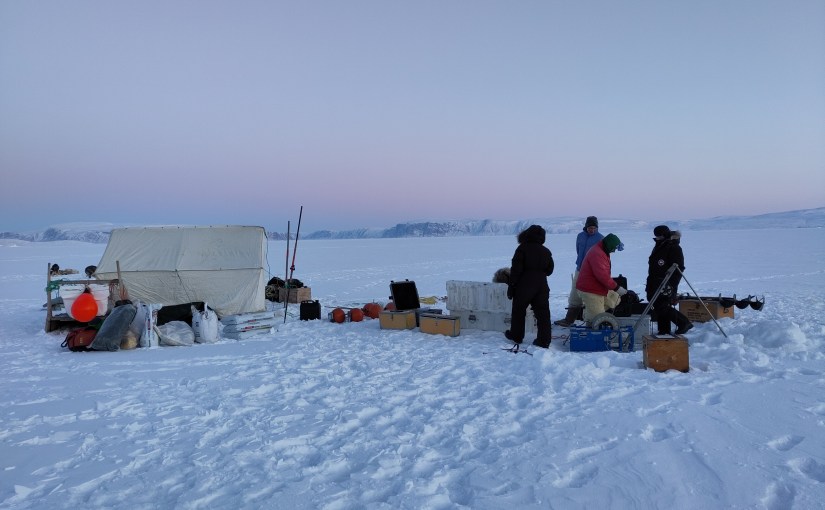
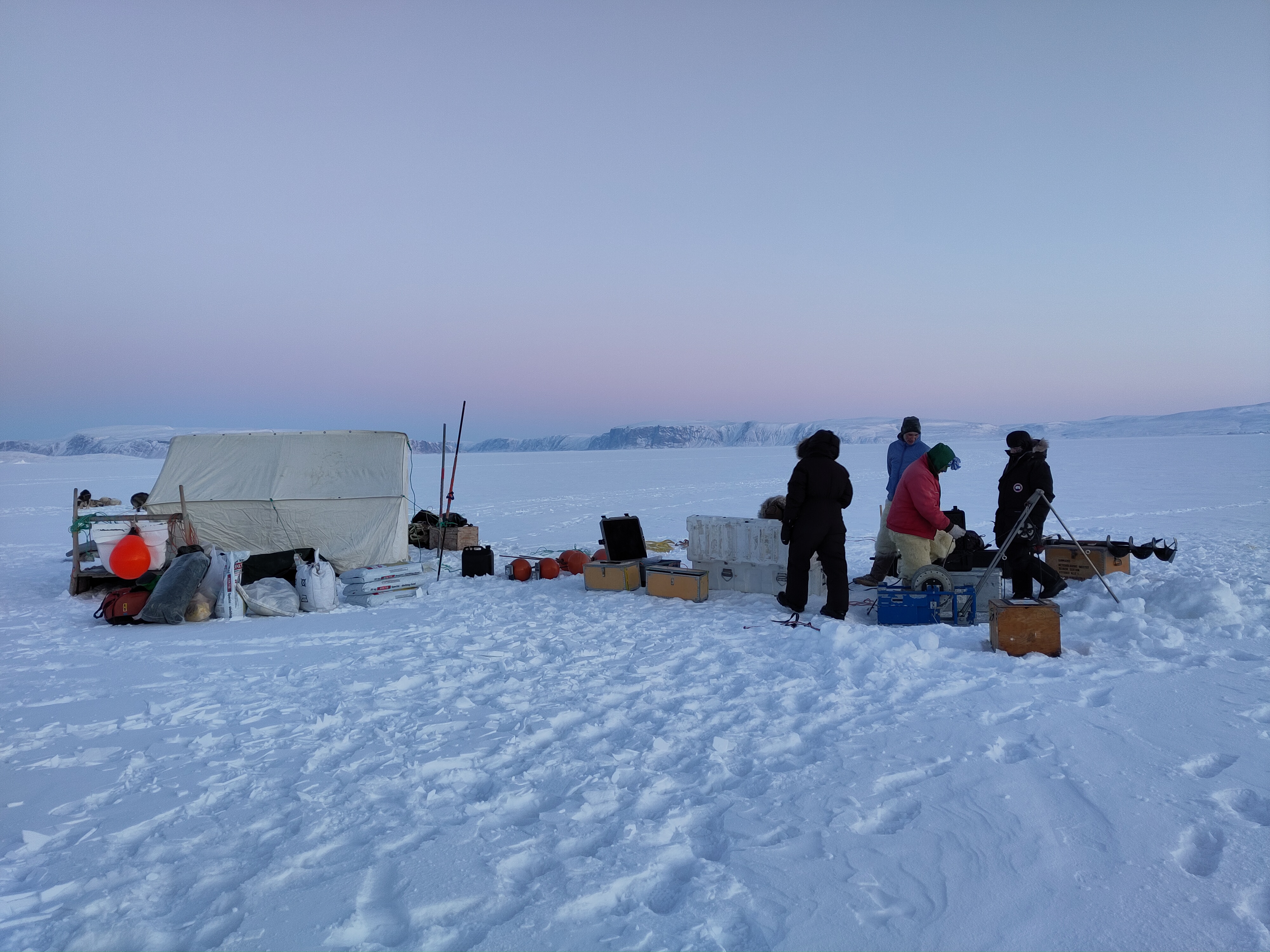
photo showing a small white tent on a snow covered sea ice surface with people dressed in thick warm clothes dropping instruments through a whole in the ice. The sky is a clear blue fading to vioet and pink at sunset
Field camp on sea ice, northern Greenland 2023, measure ocean influences on calving outlet glacier.
(Photo credit: Ruth Mottram, DMI)

No, Petermann Glacier is not growing..

This is a lightly edited and expanded post in response to a Reuters fact checking query. I gather one of the usual suspects (in the place formerly known as the birdsite) has been spreading misinformation and confusion about the magestic Petermann Glacier in Northern Greenland. So here’s a few thoughts. The TL;DR is in the title, but if you want to know why it’s not growing, how we know it’s not growing and what it means, read on…

Petermann Glacier is a truly awesome outlet glacier of the Greenland ice sheet. It drains about 4% of the ice sheet and sadly I’ve only seen it in satellite photos as it’s rarely visited, for all the good reasons you can imagine (expense, remoteness, sea ice, terrible weather…). But the photos show a floating ice shelf, sometimes called an ice tongue, enclosed in a narrow fjord with steep cliffs. Underneath Petermann glacier a canyon, similar to but much bigger than the Grand Canyon, carved by ancient rivers pre-glaciation snakes all the way to the centre of the Greenland ice sheet.

But, that’s not why it is a glacier of choice for a section of the climate (denier) community. It behaves very much like any ice shelf; that is, it calves a large iceberg, but as the glacier is still flowing from areas of accumulation to areas where melt and calving balance it, so the front continues moving forward to roughly it’s previous position, before calving another large iceberg. This is a well understood cylce but it also means that if you cherry pick your starting and ending dates you can indeed show that the front is “advancing”. However, this is not the same as the glacier “growing”. Let’s take a look.

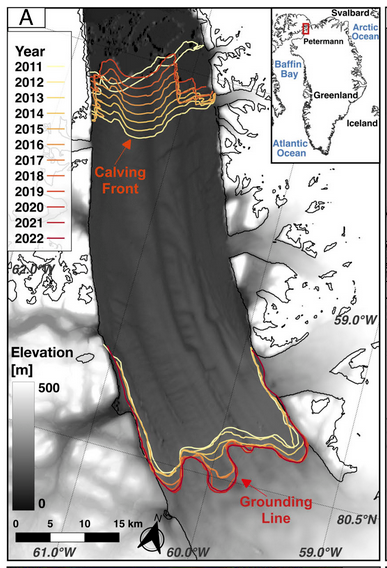
It is one of the only remaining ice shelves in Greenland – all of the others have collapsed and not regrown and there is good reason to suspect Petermann is also on the same trajectory. I had a student a few years ago who showed the ice shelf itself is thinning, and that it was unlikely to remain stable for long. We never managed to publish it, though a publication from Eric Rignot’s group that came out earlier this year largely shows the same things we found. The cycle of calving and advance is quite clear in their Figure 1a, as is the retreat of the grounding line – the point at which the glacier starts to float. This is significant because as the glacier gets thinner, the grounding line will likely retreat inland.

Figure from Caraci et al., 2023 showing the slow advance of the calving front in recent years and the retreat of the ground ing line at the same time.

So does NASA Worldview imagery show that Petermann glacier has been growing at roughly 3 metres per day for the past 11 years? (As intimated by a number of accounts on the internet.)

No it does not.

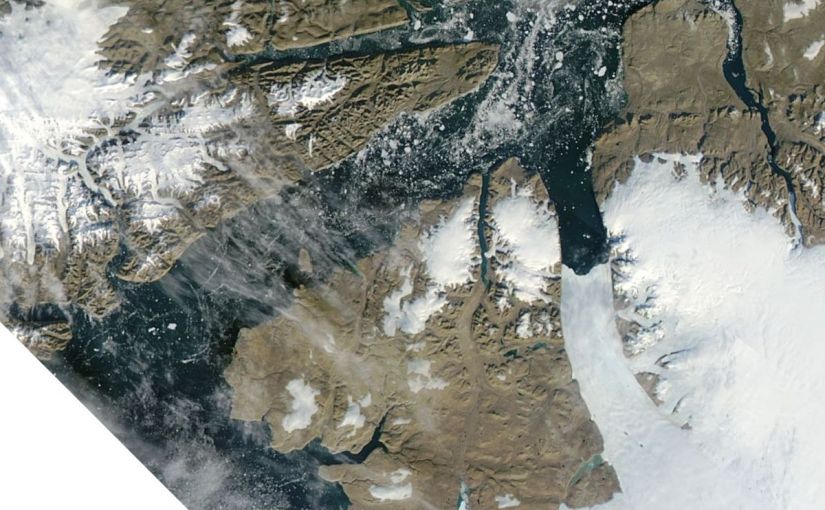
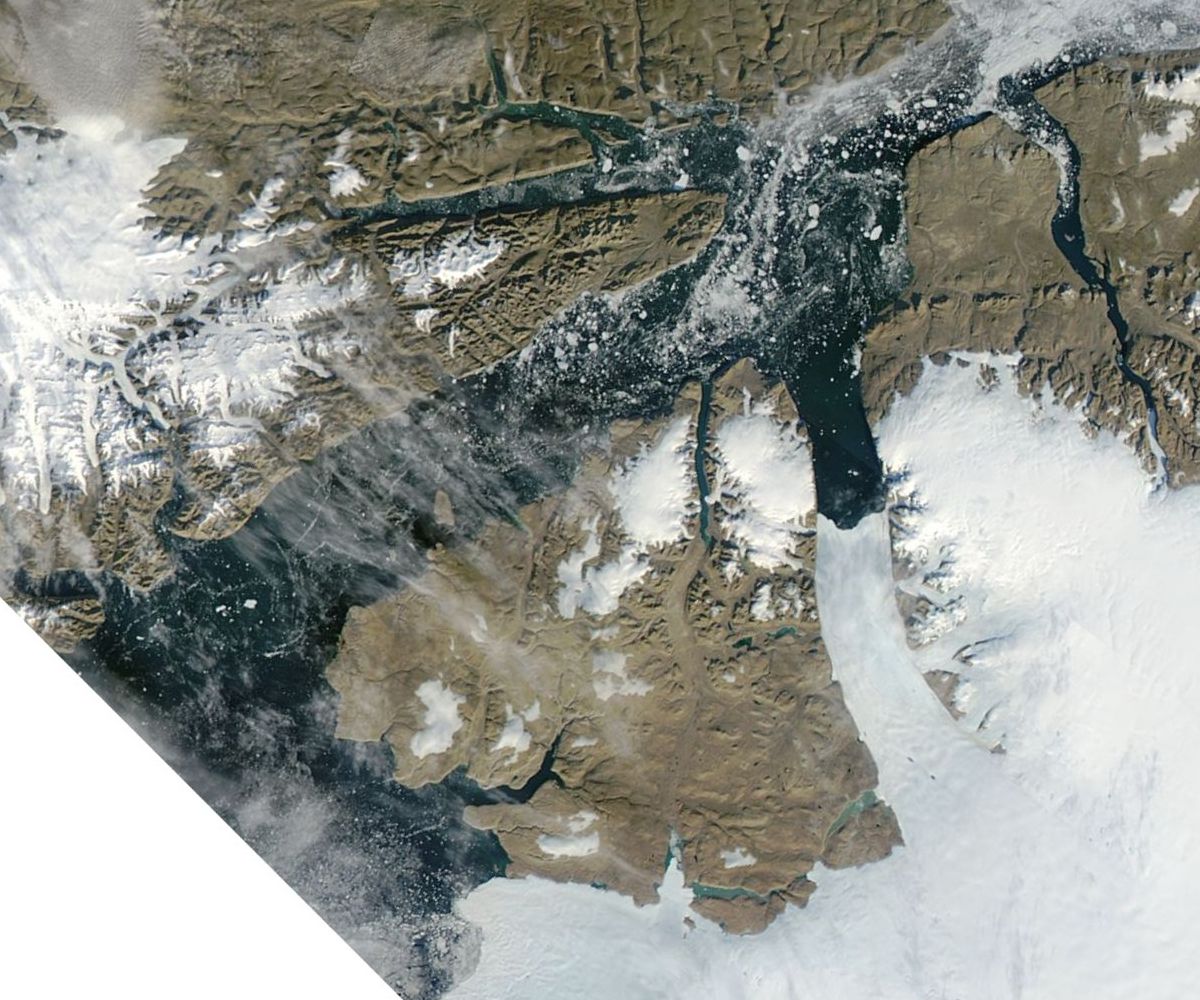
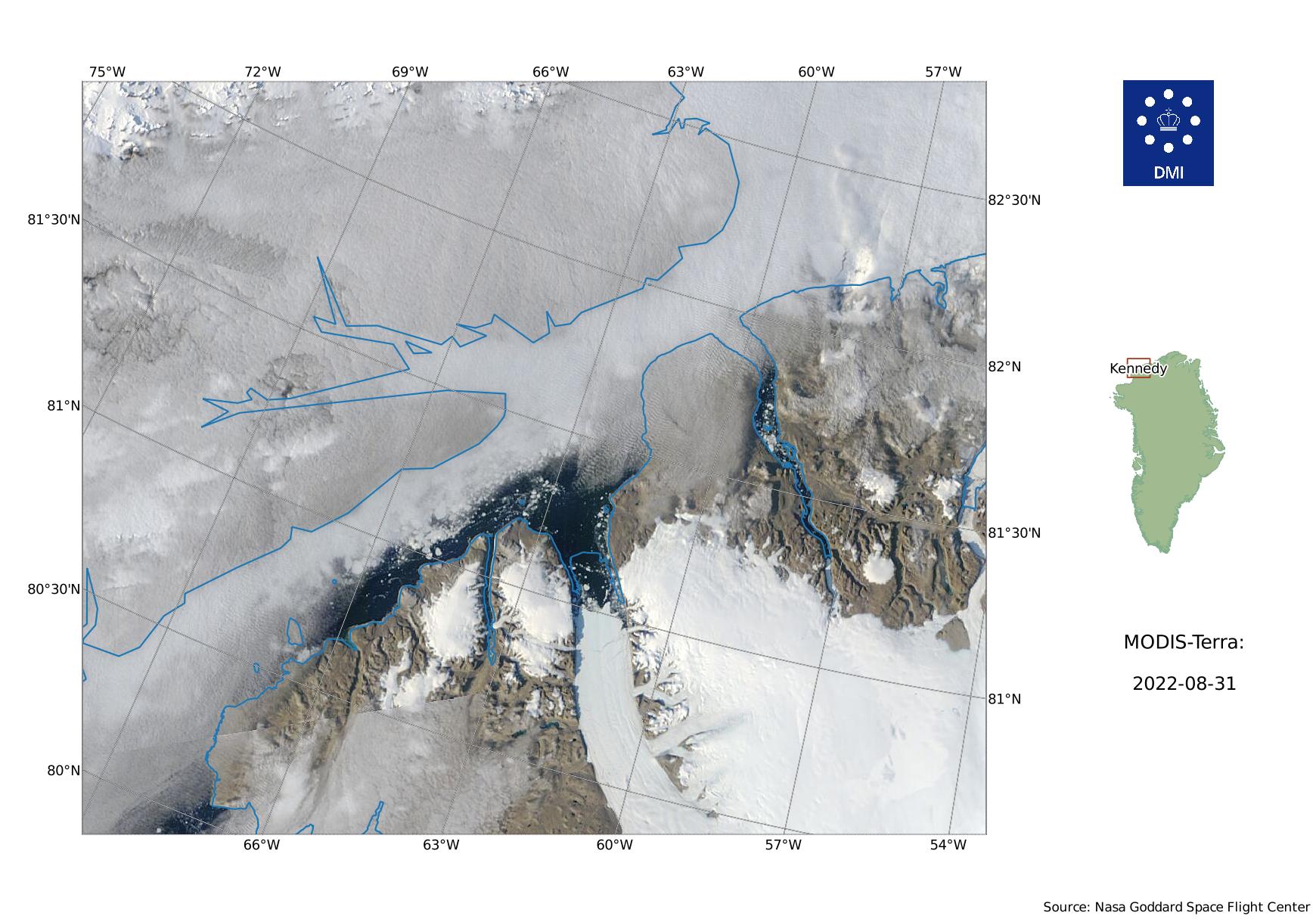
You can play a semantic trick here though. Satellite imagery shows that the front of the glacier has been moving forward for the past 11 years (note that it doesn’t move much in winter, it’s mostly a summer feature after the sea ice has broken up). Compare these two images which I grabbed from DMI’s satellite picture archive around the coast of Greenland, in it the glacier terminus does appear to be ahead in 2022 compared to 2012.

Two MODIS satellite images, TERRA taken 31st August 2012 top and AQUA taken 31st August 2022 bottom. The end of the glacier is closer to the end of the fjord in 2022 than in 2012, but that is due to a large calving event that occurred just prior to these images.

But the choice of 2012 is a trick as a large calving event occurred on the 16th July 2012, after a previous large one in 2010, so the glacier was more or less at it’s minimum in recent years if you choose 2012 as a starting position.

Here is that large iceberg, so big it’s called an ice island, detaching from the front of Petermann glacier on the 18th July 2012 as captured by NASA’s TERRA MODIS satellite.

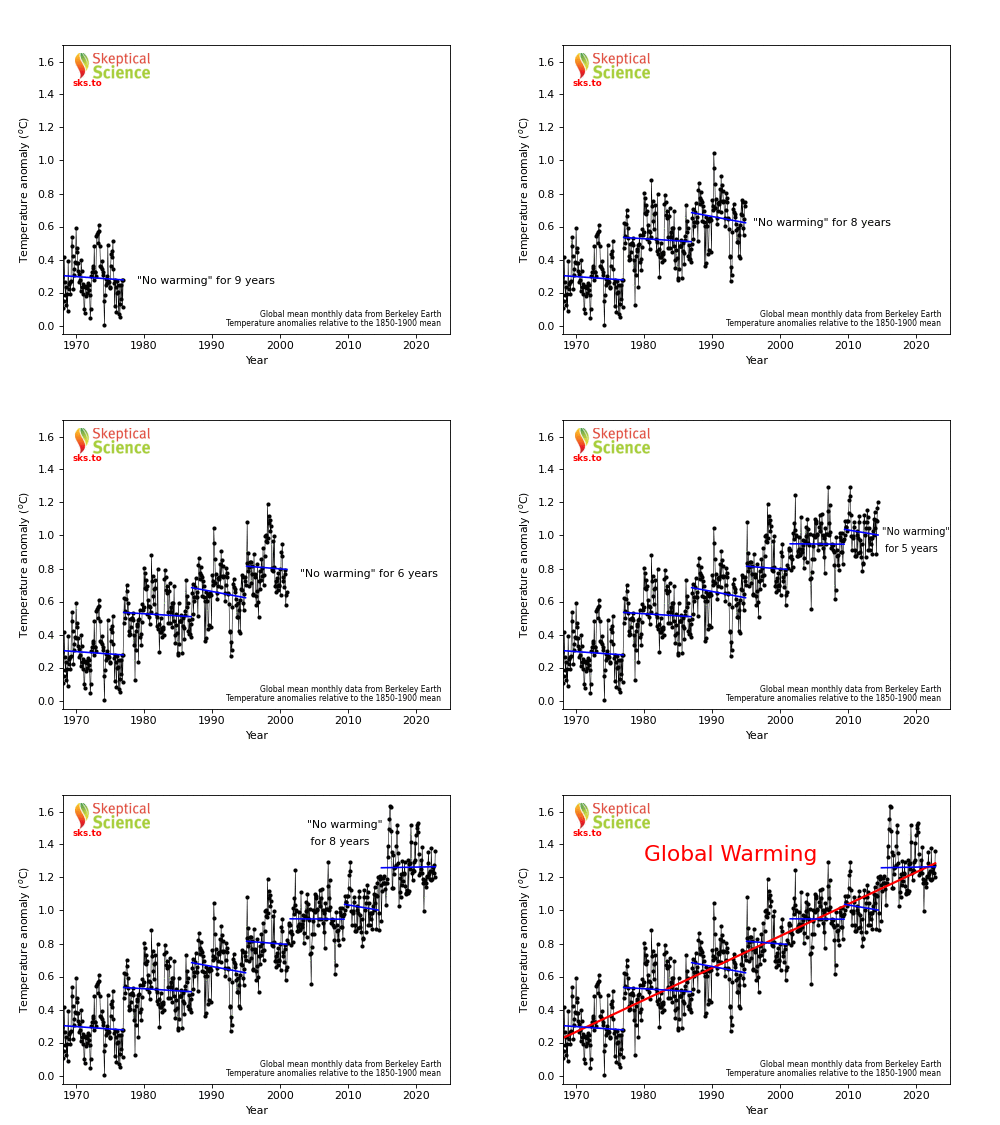
This is of course the difference between noise and signal and a similar trick to choosing to start your temperature curve in 2016 for example, right after a big El Nino event.

The skeptical Science global warming escalator – a neat graphic that you can read more about here

After the glacier calves a large iceberg the glacier behind continues to push ice out through the channel. The ice still flows and the front eventually moves back to roughly the same position it was in before the calving. However that does not mean the glacier is “growing”.

A glacier only grows if it gains more glacier ice each year than it loses.

Glaciers lose ice in 3 ways: they melt at the surface and this runs off the glacier; they can calve icebergs off – at a glacier like Petermann, this may only happen every few years; or, they can be melted from underneath by warm ocean water.

If these three mass budget terms added together are bigger than the amount of snow falling each year then the glacier will shrink. If more snow falls than is lost by these three processes, then the glacier is growing.

At Petermann glacier all three ways to lose ice are happening. We have seen the calving, the surface melt and runoff is clearly visible in the satellite image below and the thinning of the glacier (ocean melt as well as stretching as the ice flows) has been measured by satellites and radar measurements.

Petermann Glacier this summer, the blue shows surface melt ponds with surface streams forming distinctive meanders over the surface. These drain through surface cracks, that have progressively formed over several years as the ice shelf has thinned.

Adding up all the ways glaciers lose ice, together with the amount of snow that falls each day or each year gives a new mass budget. We do this for the whole of the Greenland ice sheet on the polar portal in near real-time.

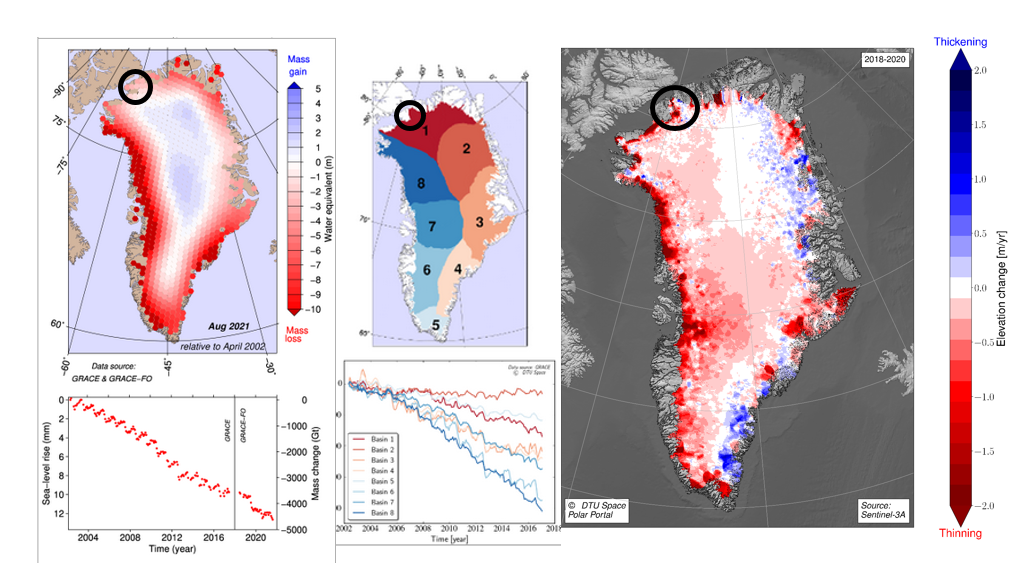
We can therefore check how much this net ice change budget is by using GRACE satellite data. GRACE measures change in mass by gravimetry and the data, processed by DTU Space colleagues, is displayed on our polar portal website here: http://polarportal.dk/en/greenland/mass-and-height-change/

And it shows that this region of Greenland has lost ice every single year since 2002 when the satellite was launched.

This is not a surprise, a paper by Jeremie Mouginet et al. all the way back in 2019 estimated that Petermann glacier alone had lost 56 Gt of ice for the period 1972 to 2017. Most of this ice has been lost since the late 1990s. Their estimate agrees well with results presented in Mankoff et al., 2021, who update their dataset each week and show that there is pretty steady net ice loss from Petermann from both calving and surface melt that continues to the present day.

Three screenshots from the polar portal showing full mass change from all processes: I have circled the location of Petermann Glacier, note the red colour indicates net ice loss from all processes. Left is from the GRACE gravity satellite, the centre and right show surface elevation change, measured by radar satellites. Note that virtually the entire ice sheet is getting thinner, except in some areas with higher snowfall. The Petermann glacier is close to the maximum rate measured of 2m of surface lowering (mostly surface melt) between 2018 and 2020 alone.

So the Petermann Glacier is not growing, even if the front is advancing. But the satellite pictures of the glacier do tell us something about the local conditions of the glacier. Petermann glacier is in a long narrow fjord in a region where there is a lot of sea ice. This is probably why the ice shelf has survived so long when many other similar ice shelves have collapsed and disappeared over the last 30 years or so. 50 years ago there were a lot more ice shelves in Greenland and across the whole of the Arctic. Most of them have now gone.

The figure below (from Hill et al., 2018 https://tc.copernicus.org/articles/12/3243/2018/ ) shows all the places where there used to be floating ice tongues, only Petermann, Ryder glacier (which is significantly shorter now than it was in the 1990s) and 79 North remain in Northern Greenland with some floating bits of Storstrømmen also technically still counting as shelves in the east.

From Hill et al., 2018 Study region of northern Greenland. Green circles show the location of each of 18 northern Greenland study outlet glaciers. Average glacier velocities (m a−1) are shown between 1993 and 2015 derived from the multi-year mosaic dataset (Joughin et al., 2010). Black outlines show glacier drainage catchments. Symbols represents the state of the glacier terminus. Stars show glaciers which currently have floating ice tongues, circles represent glaciers which lost their ice tongues *[see footnote] (during 1995 to 2015), squares denote glaciers which have some previous literature record of a floating ice tongue, and triangles are glaciers which are grounded at their termini and have been throughout the study record.

Given the thinning that has been recorded at the Petermann Shelf, it’s probably only a matter of time before this magestic glacier also loses its shelf. And there are two ways that might go. It might follow the path of Sermeq Kujalleq, previously known as Jakobshavn Isbræ. The fairly dramatic collapse of which over a few months in 2002 was a massive wake-up call to the glaciology community that things can change very fast indeed and they may not be reversible.

Series of Landsat images from June 2001 to June 2003 showing the large retreat of Sermeq Kujalleq (Jakobshavn Isbræ)

Or it may retreat in a more low-key way, like the relatively nearby glacier C.H. Ostenfeld where the ice shelf indeed was more ice tongue like* and slowly fragmented and washed out the fjord over several years.

Series of Landsat pictures from 1999 (top), 2002 (middle) and 2005 (bottom) showing remaining icebergs floating away. The stripes are unfortunately due to a well-known sensor problem in Landsat7
C. H. Ostenfeld glacier this year from Sentinel 2 imagery. The ice shelf/tongue has not reformed.

It’s not very easy to say which path Petermann will take, it may even take a hybrid between the two, with first slow disintegration like Ostenfeld, with a more rapid collapse like Sermeq Kujalleq as the grounding line approaches.

Time will, unfortunately, almost certainly tell.

And now back to the day job..

*An ice shelf and an ice tongue are similar but not quite the same, I would call Petermann an ice shelf whereas C H Ostenfeld was rather tongue like by the time it collapsed, though the others in nrthern Greenland are and were definitely more shelf like. See for example this spectacular image of the Erebus ice tongue in Antarctica. Glacier tongues still exist in Antarctica but with the loss of Ostenfeld, they are now non-existent in Greenland.

By Jesse Allen, NASA Earth Observatory, using data provided courstesy of NASA/GSFC/METI/ERSDAC/JAROS, and the U.S./Japan ASTER Science Team. – [1], Public Domain, https://commons.wikimedia.org/w/index.php?curid=795403

Celebration time: PRECISE

Quick update: our project website is now live where updates will be posted as we go…

The news is now officially out: I’m really delighted to announce the funding of our large project, PRECISE, by the Novo Nordisk Foundation.

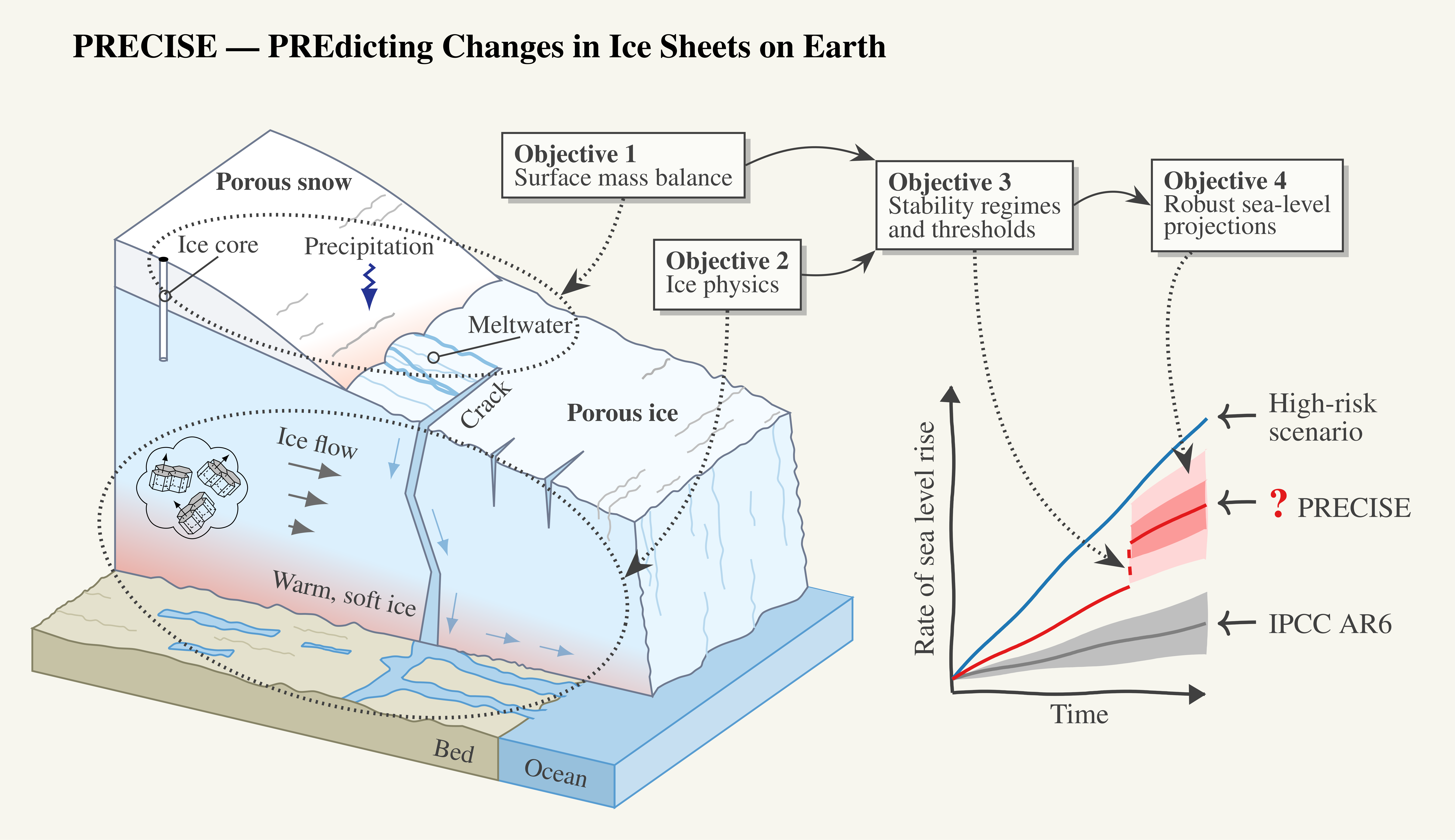
The project is led by Professor Christine Hvidberg at the Niels Bohr Institute and there is a really nice interview with her on their website about our plans that’s worth a read. I’m co-PI and lead on surface mass balance processes and coupled climate models within the project so I thought it might be worth giving a quick overview of what we hope to achieve.

TL;DR? We will be improving estimates of and assessing the uncertainties in sea level rise projections from the two big ice sheets in Greenland and Antarctica.

Every science proposal has a graphic like this somewhere showing how the whole project hangs together.
This is ours…

Slightly longer version: we’re using new approaches from materials science to incorporate “new” physics in ice sheet models. We’re also integrating in-situ observations and satellite data into our model frameworks and using these to train machine-learning tools. My work package will emulate our physics based numerical climate models to expand the ensemble and generate a statistical approach for assessing ice sheet stability as well as investigating important feedbacks between different elements of the earth system. Finally, we (or rather my colleague Christian Rodehacke and his postdoc) will run our coupled climate – ice sheet model (EC-EARTH-PISM), including these advances, to generate new sea level rise projections.

The outputs from all these experiments will be communicated and developed in collaboration with the Danish Klima Atlas (Climate Atlas) to ensure we are focused on the right kind of data and time periods for use by stakeholders and local populations when it comes to adaptation planning.

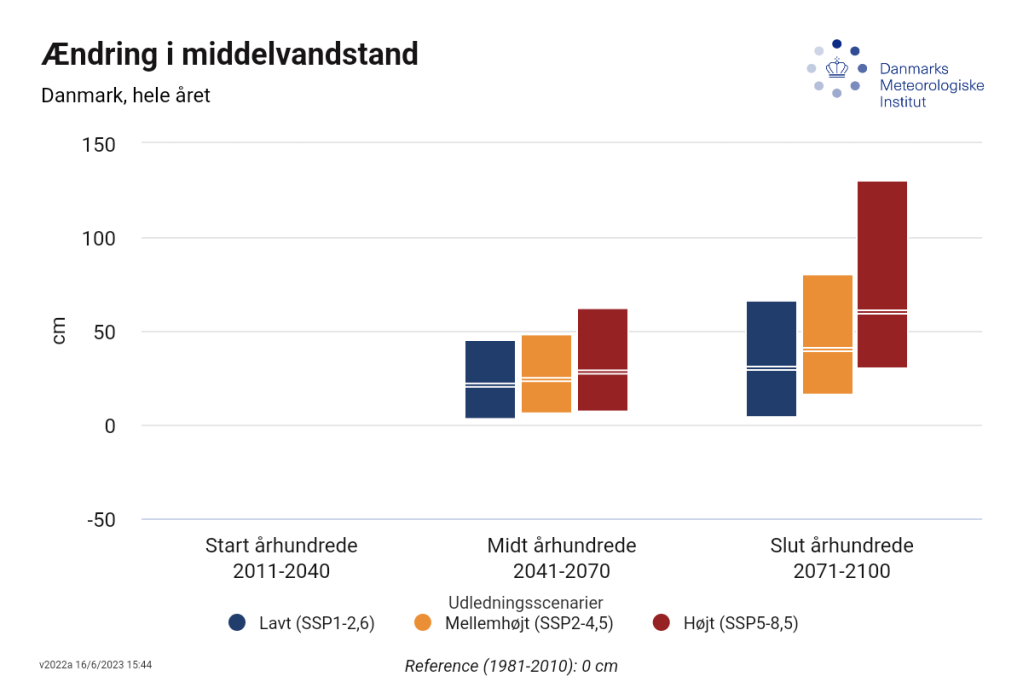
Current projections of change in average sea level around Denmark from the klima atlas

So why this project?

One of the most iconic images to come out of the last IPCC 6th asessment report (at least in my little corner of the climate science universe) is this one on sea level rise projections out to 2100.

Much of climate science has, at least to some extent been “solved”. At least in the sense that we understand the mechanisms and processes quite well and the remaining uncertainty is to some extent tinkering around the edges, often bound up with uncertainty on scenario, or related to impacts – there’s still quite large uncertainty on what will happen to the Amazon rainforest at different levels of emissions for example. However, sea level rise is really an exception to this. It’s very difficult to be sure that some very unpleasant surprises are really implausible.

We’re reasonably certain that global mean sea level will rise by at least 2 metres and around a metre by the end of this century with further sea level rise likely to continue perhaps for centuries.

The IPCC for example, concluded that sea level rise of 15 metres or more by 2300 can’t be ruled out, even if it seems rather unlikely. And this poses a pretty large problem to planners, politicians, stakeholders and providers of coastal services. Working out how far and how fast we expect the sea to rise is really our challenge.

But there is also a risk of abrupt and extreme sea level rise that could come round the corner to surprise us. However, it’s hard to know how likely this is or even how to evaluate that risk.

This has become something of a theme for me in the last few years. I have been working on the Horizon 2020 project PROTECT which very much focuses on the cryosphere and sea level rise, and I’m coordinating Horizon Europe’s OCEAN:ICE which focuses much more on the influence and feedbacks between Antarctic ice sheet and ocean.

Where PRECISE differs is that we have the flexibility within this project to develop new and innovative techniques that we’re not quite sure will work: especially the development of machine learning tools.

The EU science budget is a brilliant thing, but risky research is difficult to get through, the Move Nordisk challenge centres allow us to try really new and, yes, risky techniques. Though climate is a new topic for them, so we’re very much test bunnies in this new phase of funding science for them.

So what are we going to be doing practically?

Measuring snow pack properties in Greenland, with the help of the Lego scientists..

Our partners at NBI include Joachim Mathiesen, Helle Astrid Kjær, Aslak Grinsted and Nicholas Rathmann. They will be focusing on assembling field data from both ice sheets, and developing new physical solutions for ice sheet models based on solutions from materials science. They will be looking at phase field approaches for ice flow, at new solutions for calving and ice fracture and integrating these into ice dynamical models. NBI will also be doing fieldwork to collect new surface mass budget (SMB) data from the ice sheets.

A new ice fracture appears, how to understand and model these is a key part of the NBI contribution in PRECISE project.

The SMB part of the work is part that I’m especially involved in. Not just in modelling SMB with our climate and weather models as we do on the polar portal but also in getting a much better understanding on the uncertainty in these models associated with precipitation (which is much higher than that associated with e.g. temperature, especially when it is snowfall). So new observations with a high time resolution will be key for improving our current snowpack models.

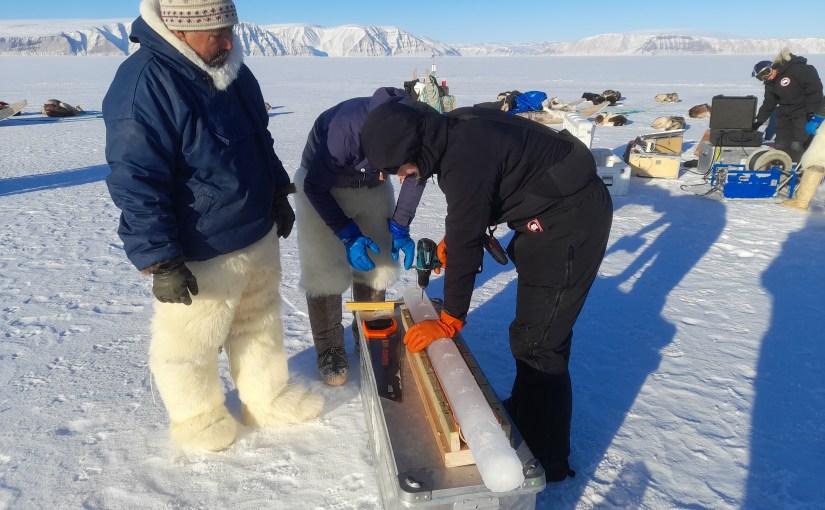
A shallow ice core, in this case sea ice, but part of the fieldwork will focus on taking more of these samples and doing isotope analysis on situ to get high quality data on snowfall accumulation

We will also be working on bringing regional climate emulators into use over both ice sheets to see how varying starting conditions will vary the outcomes. We know that on a chaotic system like weather starting conditions are key and emulators allow us to do many many more experiments than with our physics based numerical codes alone. It’s pretty cutting edge stuff right now but I know several groups are working on this – including this fantastic paper that recently came out of the Delft/Leuven group, which really shows what is possible

Our other collaborator, Hilmar Gudmundsson at University Northumbria Newcastle will be working on implementing these processes in ice sheet models and examining how plausible instability in ice sheet simulations is using ensembles of multiple model simulations. They will also be using and developing their ice shelf emulator to look at basal melting and investigating the potential instabilities in Antarctic ice shelves that could lead to abrupt sea level rise.

Finally, bringing it all together, our EC-Earth-PISM model will be deployed to do coupled climate and ice sheet simulations to see how the two ice sheets influence each other. This work will mostly be supervised by my DMI colleague Christian Rodehacke.

The project will receive 42 million Danish kroner in total (about 5 million euros) of which 8 million dkk will fund work at DMI, work to be carried out by 2 postdocs and a PhD student (so if this sounds like something you’d be interested in working on do get in touch) over the next 6 years from September. In fact most of the funding we have received will go directly to early career scientists, there is nothing in the budget for us seniors! Naturally this has some disadvantages, but given the rapidly aging population within Europe and European science, I see it as a positive and we have lots of cool summer schools, bootcamps and other networking activities planned that will hopefully reach out beyond PRECISE to the rest of the ice sheet – climate community.

So watch this space…

Power to X

Yesterday, I attended a mini conference on power to X and the potential to generate green synthetic fuels in Greenland.

Power to X became a big thing in Denmark a few years ago and the government is keen to promote it. Danish company Topsoe are currently building a green fuel facility in Herning and they have a nice explainer on their website of the concept.

In Greenland the fuels could be anything from hydrogen to methanol (though I learnt methanol is least likely as it requires a CO2 source that Greenland doesn’t have, ammonia seems the most plausible initially).

It was an interesting meeting, lots of different companies, institutions and the Greenlandic MP Aaja Chemnitz as well as academics were in the room. The emphasis was very much on the social and economic aspects of power to X, but as the title implied: Greenland has the potential to be the “world’s largest energy island.” From a local point of view, Greenland has very high per capita emissions and is heavily dependent on energy imports for transport, though a majority of electricity, at least in the south west, is already hydropower.

Many other smaller and more remote communities however are dependent on diesel generators for heating and power as well as for shipping, fishing and flying between communities.* Transitioning away from these fuels will be challenging but the potential for much larger developments is clear.

Head of development at NunaGreen (the recently rebranded and reoriented NunaOil), Rasmus Wendt, emphasised just how cheap and in theory at least, abundant, Greenland hydropower is. Probably some of the cheapest electricity in the world is generated by Greenlandic dams already operating or planned. And indeed the potential is massive. As the ice sheet melts, enormous amounts of water are produced more or less endlessly in Greenland. It will take at least a thousand years to melt the whole ice sheet, even under a high emissions scenario. We’re not going to run out of water soon.

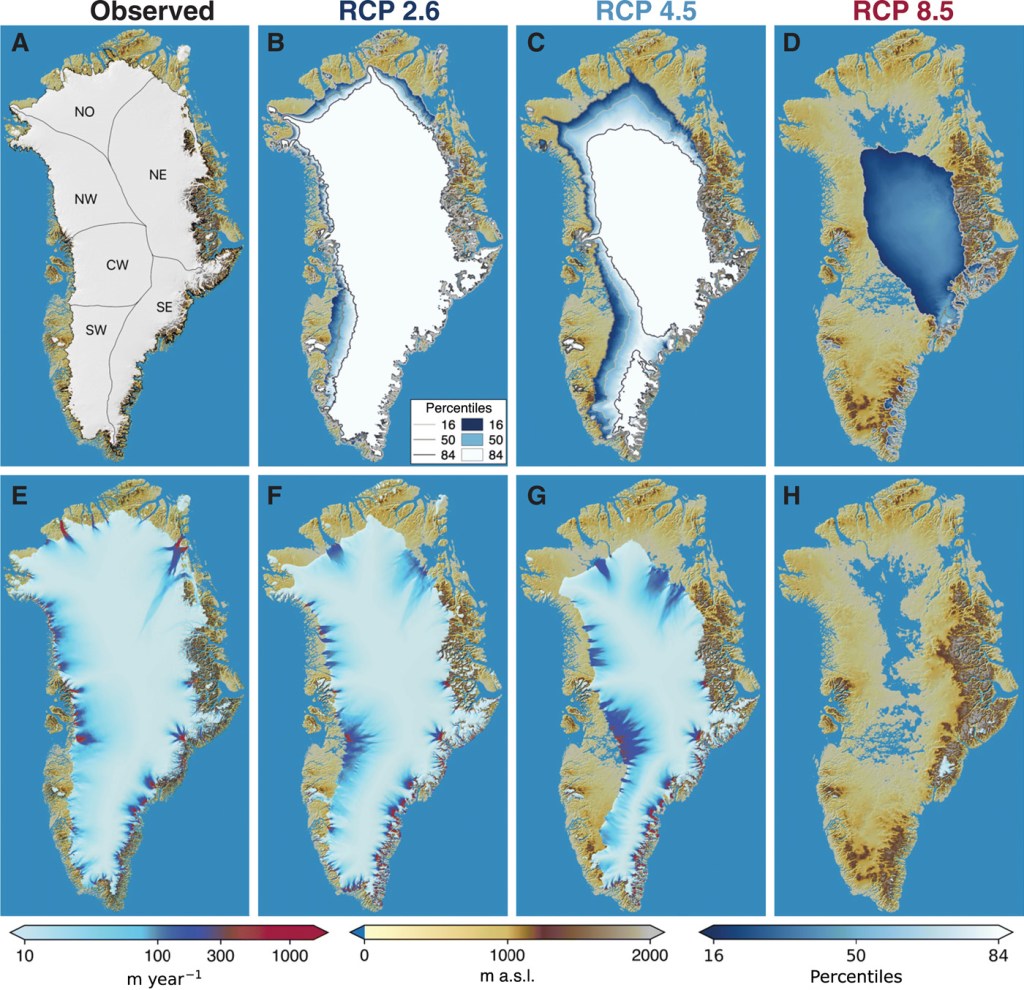
Figure 2 from Aschwanden et al., 2019.
Observed 2008 state and simulations of the Greenland Ice Sheet at year 3000.
(A) Observed 2008 ice extent (53). (B to D) Likelihood (percentiles) of ice cover as percentage of the ensemble simulations with nonzero ice thickness. Likelihoods less than the 16th percentile are masked. (E) Multiyear composite of observed surface speeds (61). (F to H) Surface speeds from the control simulation. Basin names shown in (A) in clockwise order are southwest (SW), central-west (CW), northwest (NW), north (NO), northeast (NE), and southeast (SE). RCP 2.6 (B and F), RCP 4.5 (C and G), and RCP 8.5 (D and H). Topography in meters above sea level (m a.s.l.) [(A) to (H)].

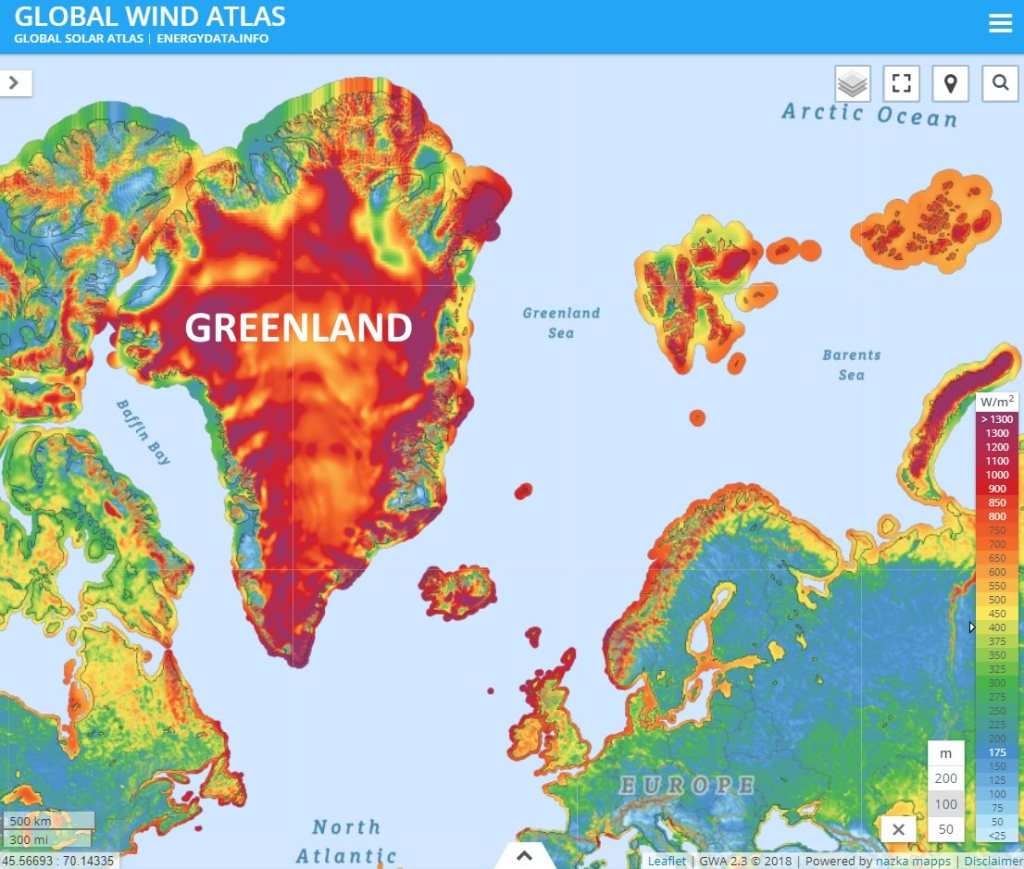
Wind energy too is extremely underdeveloped but potentially huge in Greenland. The problem is of course, all that potential energy is a long way from the end users as this screenshot from the global wind atlas, shared by energy scenario planner Brian Vad Mathiessen shows well.

Screenshot from the global wind atlas showing wind energy potential in Greenland and the north Atlantic margin of Europe

By sheer coincidence, this morning I stumbled over this article in the Dutch newspaper NRC on mastodon about the large green hydrogen facility currently under construction by Shell in Rotterdam.

It’s a really interesting read – (if you don’t speak Dutch try DeepL translation) and I was struck by many of the same issues being raised there as in the Greenland meeting: lack of trained staff, uncertain commercial environment, cost and competitiveness with other energy sources. Unlike in Greenland, energy in the Netherlands for producing synthetic fuels is scarce, but the market for using the energy is huge and nearby, and given the EU’s ambitions to produce and, crucially, import large amounts of hydrogen fuel by 2030, it seems like many of the important stars are aligning. Importing ammonia to Rotterdam for cracking back into hydrogen seems like it could actually be a viable future for Greenlandic generated fuels in Greenland he medium to long term.

We at DMI are shortly starting a project within the National Centre for Climate Research framework looking at exactly the potential to generate renewable energy from a climate and weather angle. But what I took away from yesterday’s meeting is that while the physical potential in Greenland really is HUGE, the regulatory environment – and probably the local population – is supportive, the economic certainty is not quite there yet.

It felt a bit like being in a bunch of young seabirds clustered on the edge of the cliff, none quite daring to take the flight, in spite of the undoubted rewards. And indeed, this seems the situation in the Netherlands too. I was especially struck by this quote in the NRC piece:

“Another problem is that many parties are just waiting for each other to take the first step so that they themselves dare to go. Producers, for instance, invest only sparingly because they are not sure whether there will soon be customers, and customers in turn hesitate because they are not sure whether the producers will deliver. The classic chicken-and-egg story.”
(Translated with DeepL)

Chris Hensen, NRC, 17thnMay 2023 “De Europese waterstofambities zijn groot, maar bedrijven zijn nog altijd afwachtend”

Perhaps the diving in of Shell, a company that can afford to risk investing a billion Euros in a new facility in Rotterdam, is what the development of Power to X needs?

BP, Air liquide and Uniper already have plans to build follow on plants in Rotterdam. Once one of the birds have taken flight, others will surely follow.

Thanks to Aalborg University,and especially my Danish Arctic Research Forum colleague Carina Ren for an interesting and inspiring meeting.

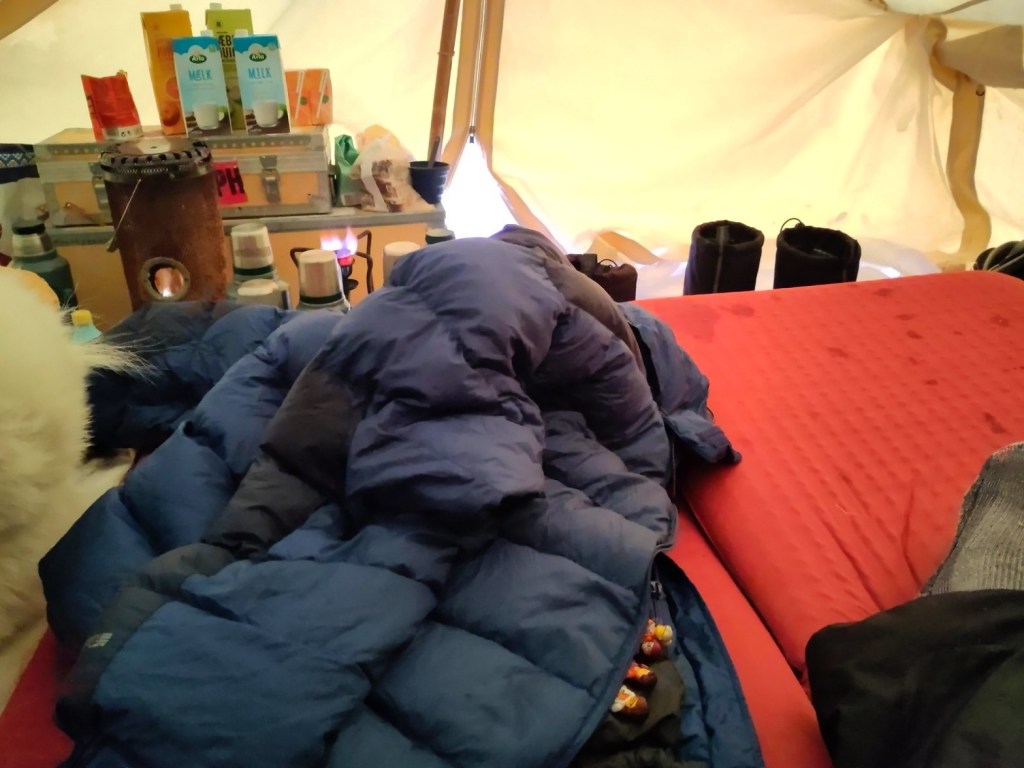
*(As an aside, I was reflecting while on fieldwork just how difficult removing fossil fuels from scientific work in Greenland will be. We rely on petrol generators to power equipment and oil stoves to warm tents. What if we could develop an easy to operate “tabletop” (or even just room sized) electrolysis system to generate clean fuels from e.g. wind energy, that we could burn instead of paraffin and/petrol? I’d invest in that and it would be a quick win for Greenland science.)
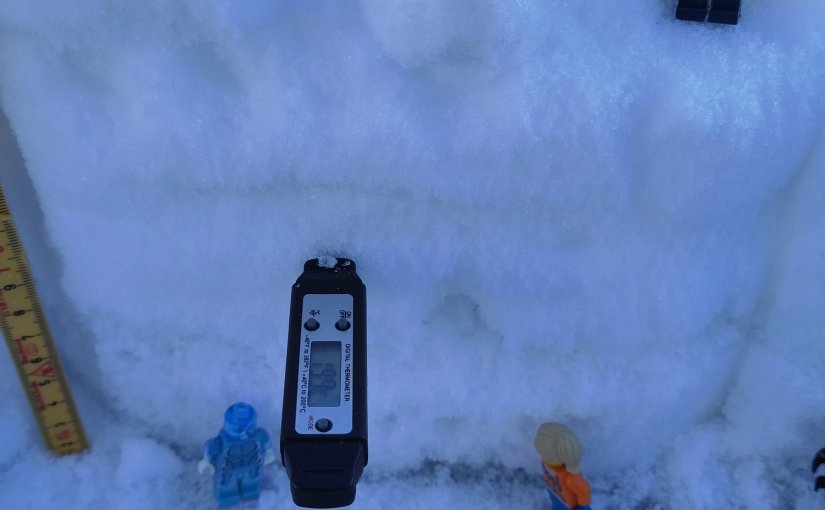
Inside of the tent during fieldwork, note the primus stove, running on petrol, for melting ice for water and food and the paraffin powered oven to keep the inside warm and dry while camping.

Is it time for a change..?

My employer DMI, and specifically my team at the National Centre for Climate Research are recruiting.

Not an earth-shattering revelation perhaps but these are premium research jobs, and this is probably a once in a generation opportunity in Denmark.

Let me explain. They are full time and permanent positions, working right at the cutting edge of both basic climate research, and importantly, climate services. You can see the full adverts at the links below:

DMI scientists collaborating with local hunters in the field in Greenland

I call these positions once in a generation positions because these kind of positions just don’t come up very often. Part of the reason these are now available is related to the generation change* that is coming to DMI. Right now we are fortunate also to have a number of large EU funded projects as well as danish funding for our Climate Atlas and new hydrology department which is giving us the opportunity to plan for the long term.

Sea level rise is an existential threat for Denmark, at least in the long term and we are putting a great deal of effort not just into the science of melting ice, tipping points and so forth to try and assess the potential risks, but also into planning climate adaptation and mitigation in the short and medium term.

The new positions related to climate and ice sheets and sea level rise will have some flexibility with them in terms of how the jobs evolve and research directions. There will certainly be opportunities for whoever is hired to steer in their own direction and initiate their own research programmes within the broad frame of the topics. I can certainly also only praise the management for the generally supportive and research positive encouragement.

I’d like to help cast the net wide and deep to get as strong a pool of candidates as possible, so please do feel free to get in touch with me either here or via the usual email, and other social media feeds if I can help at all. And if you have good students, postdocs or others, please do share.

We will be holding some “open house” events where you can come in person to visit DMI or sign on in a virtual event to hear more about the positions, about DMI and what it’s like to work in Denmark. Again get in touch to hear more about those.

*”Generations skift” in Danish – I have not looked at the statistics but I suspect many public institutes, including weather and climate services are greying. There was an expansion during the 80s and 90s as numerical techniques became more widespread and integrated into weather prediction and by extension climate – many of the staff employed then are getting close to retirement. In my view DMI is wise to start trying to replace these staff now so there will be continuity and knowledge exchange before it becomes a problem.

Oh Vienna…

In the before times I would usually spend this week walking around a world class city humming an old 80’s hit (- don’t ask me why it was so durable in my head, probably something to do with being an impressionable age at a time when access to pop music meant half an hour on a Thursday evening).

Anyway, it is the time for EGU… Sadly I will not be wandering the streets of the ever beautiful (and most livable) capital of Austria this year. I have to get some actual work done, but I’m following the #EGU23 on mastodon and hoping to catch a few highlights on the sides. I do have a poster, which will be capably presented by PolarRES PI Priscilla Mooney and my DMI Colleague Abraham Torres on Thursday.

The topic is our PolarRES project – an ambitious Horizon 2020 effort to produce a large ensemble of regional climate simulations over both poles. These are state-of-the-art regional climate models run at unprecedented high spatial resolution and all data will be made open access and free via the CORDEX project.

I will also put it here later – feel free to comment here or ask questions on mastodon or get in touch by email if it sounds exciting.

Mottram, R., Mooney, P., and Torres, J. A. and the PolarRES Consortium: A first look at the new PolarRES ensemble of polar regional climate model storylines to 2100, EGU General Assembly 2023, Vienna, Austria, 24–28 Apr 2023, EGU23-14470, https://doi.org/10.5194/egusphere-egu23-14470, 2023.

Other posters and talks I’ve contributed to from PolarRES are

Kristiina Verro’s talk on HCLIM_Arome results from the Antarctic peninsula:

Verro, K., van de Berg, W. J., Orr, A., Landgren, O., and van Ulft, B.: New non-hydrostatic polar regional climate model HCLIM-AROME: analysis of the föhn event on 27 January 2011 over the Larsen C Ice Shelf, Antarctic Peninsula, EGU General Assembly 2023, Vienna, Austria, 24–28 Apr 2023, EGU23-13864, https://doi.org/10.5194/egusphere-egu23-13864, 2023.

Abraham Torres joined our group last year and is primarily working on PolarRES also. He will show some of our preliminary HCLIM results for both the Arctic and the Antarctic

Torres-Alavez, A., Landgren, O., Boberg, F., Christensen, O. B., Mottram, R., Olesen, M., Van Ulft, B., Verro, K., and Batrak, Y.: Assessing Performance of a new High Resolution polar regional climate model with remote sensing and in-situ observations: HCLIM in the Arctic and Antarctica, EGU General Assembly 2023, Vienna, Austria, 24–28 Apr 2023, EGU23-14090, https://doi.org/10.5194/egusphere-egu23-14090, 2023

Quentin Glaude is a collaborator from Liege in the Horizon 2020 PROTECT project on sea level rise contributions from the cryosphere . Baptiste Vandecrux, a former PhD student with me here and now working at GEUS is also presenting some work based on the same models as Quentin, with a comparison to the PROMICE observation statons on the Greealnd ice sheet. It’s very cool application of machine learning and the results are very interesting.

Glaude, Q., Noel, B., Olesen, M., Boberg, F., van den Broeke, M., Mottram, R., and Fettweis, X.: The Divergent Futures of Greenland Surface Mass Balance Estimates from Different Regional Climate Models, EGU General Assembly 2023, Vienna, Austria, 24–28 Apr 2023, EGU23-7920, https://doi.org/10.5194/egusphere-egu23-7920, 2023

Vandecrux, B., Fausto, R. S., Box, J. E., Covi, F., Hock, R., Rennermalm, A., Heilig, A., Abermann, J., Van As, D., Løkkegaard, A., Fettweis, X., Smeets, P. C. J. P., Kuipers Munneke, P., Van Den Broeke, M., Brils, M., Langen, P. L., Mottram, R., and Ahlstrøm, A. P.: Historical snow and ice temperature compilation documents the recent warming of the Greenland ice sheet, EGU General Assembly 2023, Vienna, Austria, 24–28 Apr 2023, EGU23-9080, https://doi.org/10.5194/egusphere-egu23-9080, 2023.

Nicolaj Hansen (who finished his PhD with me and Sebastian Simonsen at DTU Space last year) has just submitted a beauty of a paper which he will talk about – also partof PROTECT.

 Hansen, N., Sørensen, L. S., Spada, G., Melini, D., Forsberg, R., Mottram, R., and Simonsen, S. B.: ICESat-2 Ice Sheet Mass balance: Going below the surface, EGU General Assembly 2023, Vienna, Austria, 24–28 Apr 2023, EGU23-12349, https://doi.org/10.5194/egusphere-egu23-12349, 2023

Mathias Larsen is a current Phd student with me and is presenting a poster on the CARRA dataset and an application in surface mass balance modelling. This work falls under the danish National center for klima forskning

Larsen, M., H. Mottram, R., and L. Langen, P.: CARRA-driven simulation of Greenland Ice Sheet surface mass balance at 2.5 km resolution, EGU General Assembly 2023, Vienna, Austria, 24–28 Apr 2023, EGU23-5852, https://doi.org/10.5194/egusphere-egu23-5852, 2023

Last year I co-organised a bootcamp for early career researchers on Arctic processes in the CMIP6 models. It was super fun and would not have been possible without the support offered by Anne Fouilloux, Tina Odaka and colleagues from the Pangeo project. Their poster is super interesting and if you’re interested in optimising the use of big climate data, go and check it out!

Fouilloux, A., Marasco, P. L., Odaka, T., Mottram, R., Zieger, P., Schulz, M., Coca-Castro, A., Iaquinta, J., and Eynard Bontemps, G.: Pangeo framework for training: experience with FOSS4G, the CLIVAR bootcamp and the eScience course, EGU General Assembly 2023, Vienna, Austria, 24–28 Apr 2023, EGU23-8756, https://doi.org/10.5194/egusphere-egu23-8756, 2023.

Excitingly, at least 3 of the projects at the bootcamp will also be presented at EGU this year. So, lots to be getting on with, for now, here’s a link to Ultravox’s finest…