Musings in summer 2023: impacts + adaptation

I was talking to some friends today about climate change – in the light of the latest #AMOC paper, suggesting a tipping point. I’m far from an expert on AMOC so if you’re here for that I suggest this comprehensive piece on real climate from Stefan Rahmstorf.

Or the TL;Dr version in thread form compiled by Eleanor Frajka-Williams, PI of OCEAN:ICE sister project EPOC.

Anyway, the conversation turned to what’s going on this summer.
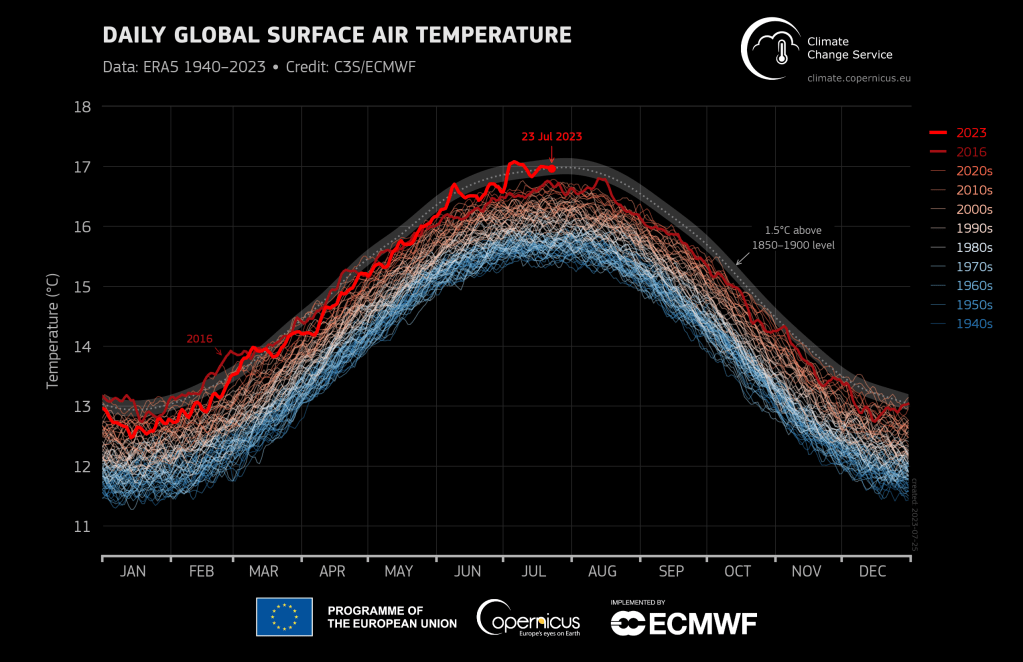
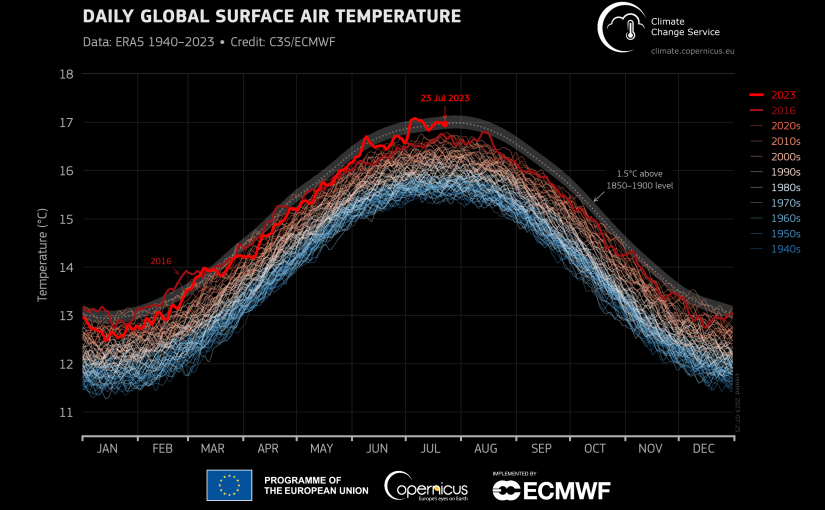
It’s hot, but don’t just take my word for it. Here is the authoritative Copernicus Climate Change Service stating it..

It’s been hot, in short and even if July has been cooler and rainy in Denmark, May and June were hot and record dry..

And it’s fair to say that, as when I’m asked why, or similar questions by journalists, there is an almost overwhelming temptation to say “we told you so”. I think that’s what Antonio Guttieres is getting at here too.

There’s of global boiling is upon us. Apparently. It certainly felt like it on my summer holiday this year…

However, that’s not what I was mostly musing on. Given the apocalyptic heatwaves, strange patterns of warming in the ocean and the Antarctic sea ice loss, it feels a little like end of days.

But pretty much all of these were projected pretty accurately by scientists, even if the timing was a bit off and we’re not entirely sure what is driving that extraordinary downturn in Antarctic sea ice (but do read Zack’s piece linked here, it’s very good).

In many ways, we’re fortunate in Denmark and the rest of rich northern Europe. The worst direct impacts, at least in the near and short term, we can probably adapt to, though it will be expensive. They are mostly engineering challenges with a dollop of social science mixed in. And, we should remember that even in wealthy and well-educated Europe, how heavily climate change impacts us is very much determined by our social class.

However, in the long-term (and I do mean really long-term – on the century to millennia scale), we’re facing something more existential. We’re going to lose a lot of Danish land to sea level rise. Exactly how much will largely be determined over the next 20 to 50 years as there’s a pretty clear relationship between greenhouse gases and melting ice.

But we do have time to prepare for it- and most importantly to have some grown up conversations about our priorities as a society. This is going to require a good bit more social and behavioural science. In the medium term, we will need to prepare for ever more storm surges, but adaptation to coastal flooding also falls into the engineering category.

Of course, these local to regional risks still need dealing with and that is largely why my employer has created the awesome Danish climate atlas – to give accurate but also useful climate information to those who need to plan for the future. I suspect an ever greater part of my job will be focused on producing usable projections and climate service information. This is certainly also something we will focus on in the PRECISE project. Being able to make useful sea level rise projections is about more than identifying if an ice sheet is stable* or not, it’s also about how quickly, how likely and how much it is likely to retreat. As we have also focused on at a regional level in the PROTECT project
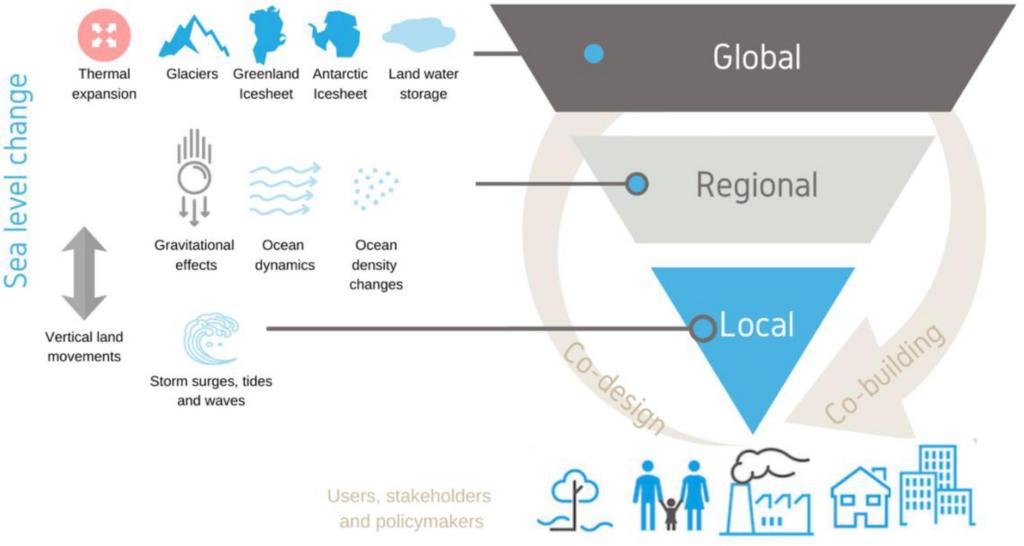
Figure from our paper in Frontiers describing co-production of useful climate information

So that’s ice sheets and sea level. The tl;dr is, we know they’re melting, we still don’t know by how much and how fast they’ll ultimately melt but we still have time to deal with it, at least in wealthy well educated societies like Denmark,.

There is a whole nother discussion to be had about the global south and less equal societies which I don’t feel confident enough to discuss here.

Where I do think we’re more vulnerable in the shorter and medium term is perhaps surprisingly, food production – and that goes for much of Europe too. It turns out that concentrating large amounts of food production in a few key places might be a big mistake. Especially where those places are vulnerable to drought, heatwaves, over extraction of water, not to mention appalling labour conditions, an over-reliance on groundwater, artificial fertilisers and pesticides.

And then there is some evidence that multiple heatwaves could occur concurrently, threatening food production in compound events across several key regions. Perhaps working out how to make the global food chain less vulnerable to disruption at key points should be more of a focus than it is?

And that’s after the latest banditry from Russia, destroying perfectly good foodstocks and the means to distribute them, has given us a clear wake-up call on the interdependence of human society.

(Anders Puck Nielsen a military commentator has an interesting take on that from a strategic point of view here: https://youtu.be/fvPcPZP-6os which is very interesting for Ukraine watchers)

If I were a wise and concerned government I think I’d be thinking about how exactly we’re going to be feeding our population over the next 5-20 years. Where will be able to produce like Spain and Italy today? Or will diets have to change? How do we persuade people to eat more healthily and ensure that food is equitably spread through society?

This is of course also a part of the job of the other working groups, 2 and 3 of the IPCC – and it’s possibly not just an accident or indeed good lobbying that the new IPCC chair, Jim Skea, is a former WG3 coordinator. Perhaps the IPCC also sees that we have now moved into a new world.

So, these are just some of the things I’m thinking about as I prepare to go back to the office after the summer break next week.

As I observed on Mastodon after the IUGG meeting, and online with this excellent heatmap article. Climate science is entering a new phase. It’s the end of the beginning and it’s time to prepare.

*On the subject of ice sheet stability, Jeremy Bassis has an excellent thread on what this does and does not mean over on Mastodon. Worth checking out

Bringing back the wild to Europe

Today the European Council is debating (behind closed doors), the proposed Nature Restoration Law – there has been heavy lobbying by several EU countries to water down the provisions. I believe this is a mistake and last week I and almost three and a half thousand other scientists signed a petition saying so.

It has now been reopened for signatures. Please do sign if you feel strongly about it. It’s worth a read anyway as the organisers (probably being scientists!) have written out what the agreement means in admirable clarity:

https://umfrage.uni-leipzig.de/index.php/837218?lang=en

Europe is a nature depleted continent already – restoring, or at least preserving what we can is going to be crucial in coming decades. And where Europe leads and sets strict environmental standards, other countries follow.

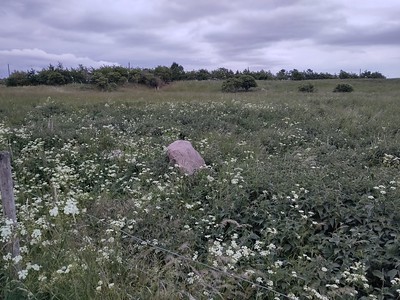
Rough land which has been allowed to turn into a wildflower haven in Copenhagen

I am a climate scientist who has become increasingly interested in and concerned about biodiversity. I have had a deep love and sense of wonder about nature since I was a kid – and probably my interest in glaciers and weather and climate have in in part grown out of that. I’m not a biodiversity expert, but I am acutely aware of the impact climate change is already having on the biosphere. It is at a fundamental level very hard to separate climate from biodiversity and probably unwise to try.

In the past I’ve considered it was a scientist’s duty to advise impartially and therefore to be politically completely inactive, I have regretfully come to the conclusion that actually, maybe we as a community do need to push a little more firmly in the direction our science is actually pointing us. Perhaps it is in fact irresponsible not to be involved?

As the great atmospheric chemist and Nobel Laureate Sherwood Rowland once said (in 1986!):

“After all, what’s the use of having developed a science well enough to make predictions, if in the end all we’re willing to do is stand around and wait for them to come true?”

Brodeur, 1986

This quote is something I have thought long and hard about myself. And I’m not the only one in the climate field for sure. If our biodiversity colleagues are also wrestling with this, then I also recommend this brilliant piece by NASA GISS scientist Gavin Schmidt in the Bulletin of Atomic scientists.

The petition I linked to above has been organised by german scientists, experts in ecology and biodiversity. They emphasise:

“Being proactive is thus important. We would therefore appreciate if you found your way of communicating this letter in your surroundings, and help delivering the science to whoever may be interested in it. The purpose is not to lobby but rather to support, to offer help, maybe even mediate where possible.”

We’re scientists and we’re also public servants.

Use us to help guide policy. If scientists are ringing alarm bells, then somewhere there is a fire…

Yellow flag iris around a wildlife rich garden pond.

Power to X

Yesterday, I attended a mini conference on power to X and the potential to generate green synthetic fuels in Greenland.

Power to X became a big thing in Denmark a few years ago and the government is keen to promote it. Danish company Topsoe are currently building a green fuel facility in Herning and they have a nice explainer on their website of the concept.

In Greenland the fuels could be anything from hydrogen to methanol (though I learnt methanol is least likely as it requires a CO2 source that Greenland doesn’t have, ammonia seems the most plausible initially).

It was an interesting meeting, lots of different companies, institutions and the Greenlandic MP Aaja Chemnitz as well as academics were in the room. The emphasis was very much on the social and economic aspects of power to X, but as the title implied: Greenland has the potential to be the “world’s largest energy island.” From a local point of view, Greenland has very high per capita emissions and is heavily dependent on energy imports for transport, though a majority of electricity, at least in the south west, is already hydropower.

Many other smaller and more remote communities however are dependent on diesel generators for heating and power as well as for shipping, fishing and flying between communities.* Transitioning away from these fuels will be challenging but the potential for much larger developments is clear.

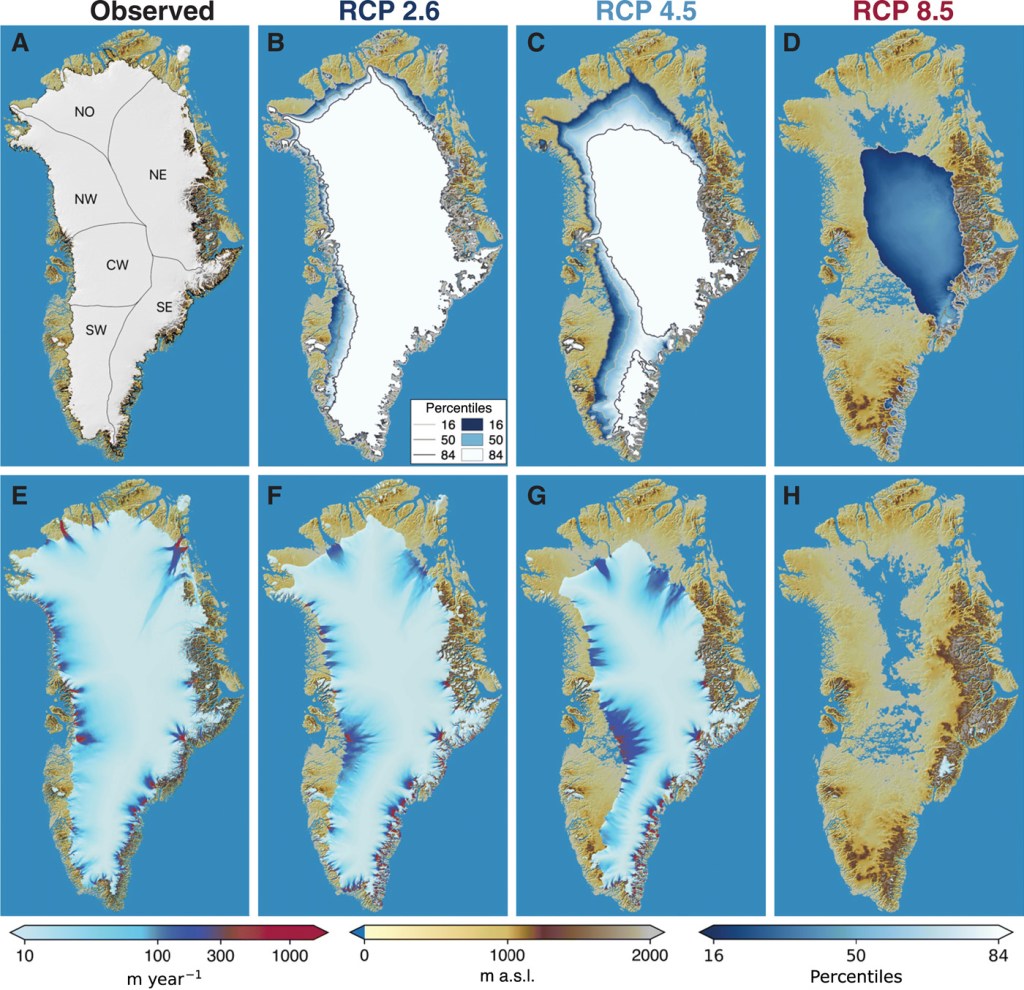
Head of development at NunaGreen (the recently rebranded and reoriented NunaOil), Rasmus Wendt, emphasised just how cheap and in theory at least, abundant, Greenland hydropower is. Probably some of the cheapest electricity in the world is generated by Greenlandic dams already operating or planned. And indeed the potential is massive. As the ice sheet melts, enormous amounts of water are produced more or less endlessly in Greenland. It will take at least a thousand years to melt the whole ice sheet, even under a high emissions scenario. We’re not going to run out of water soon.

Figure 2 from Aschwanden et al., 2019.
Observed 2008 state and simulations of the Greenland Ice Sheet at year 3000.
(A) Observed 2008 ice extent (53). (B to D) Likelihood (percentiles) of ice cover as percentage of the ensemble simulations with nonzero ice thickness. Likelihoods less than the 16th percentile are masked. (E) Multiyear composite of observed surface speeds (61). (F to H) Surface speeds from the control simulation. Basin names shown in (A) in clockwise order are southwest (SW), central-west (CW), northwest (NW), north (NO), northeast (NE), and southeast (SE). RCP 2.6 (B and F), RCP 4.5 (C and G), and RCP 8.5 (D and H). Topography in meters above sea level (m a.s.l.) [(A) to (H)].

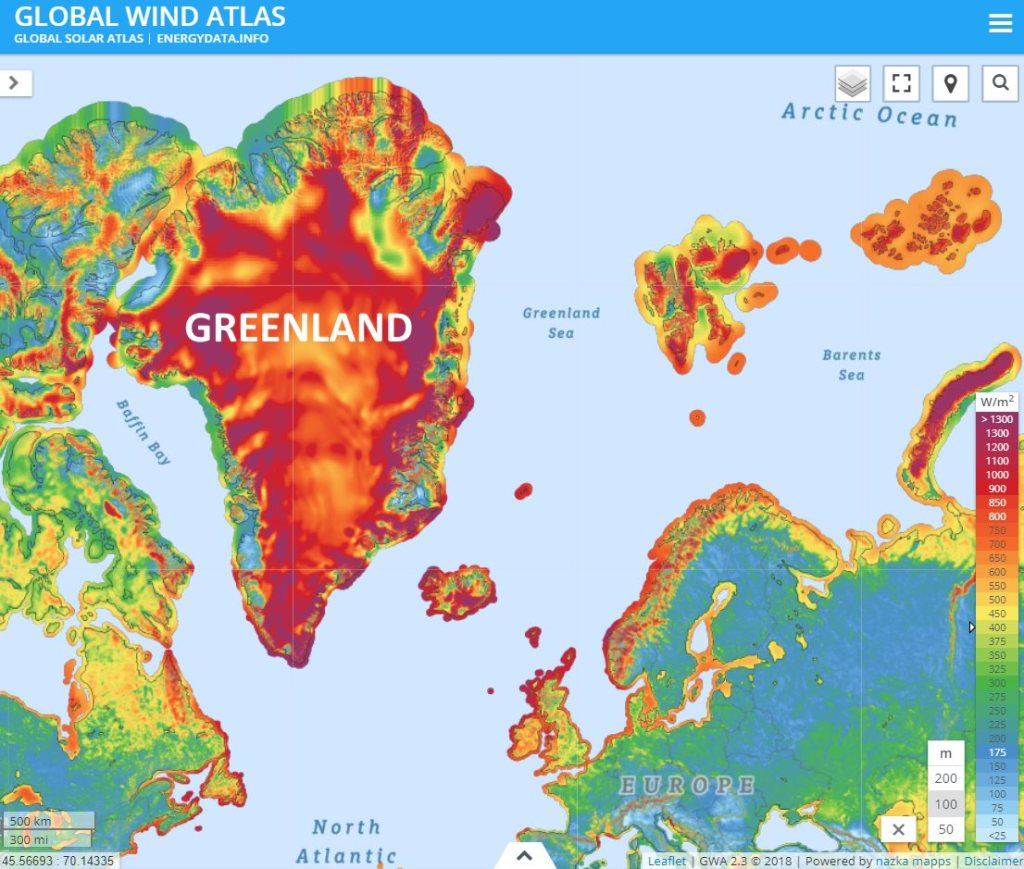
Wind energy too is extremely underdeveloped but potentially huge in Greenland. The problem is of course, all that potential energy is a long way from the end users as this screenshot from the global wind atlas, shared by energy scenario planner Brian Vad Mathiessen shows well.

Screenshot from the global wind atlas showing wind energy potential in Greenland and the north Atlantic margin of Europe

By sheer coincidence, this morning I stumbled over this article in the Dutch newspaper NRC on mastodon about the large green hydrogen facility currently under construction by Shell in Rotterdam.

It’s a really interesting read – (if you don’t speak Dutch try DeepL translation) and I was struck by many of the same issues being raised there as in the Greenland meeting: lack of trained staff, uncertain commercial environment, cost and competitiveness with other energy sources. Unlike in Greenland, energy in the Netherlands for producing synthetic fuels is scarce, but the market for using the energy is huge and nearby, and given the EU’s ambitions to produce and, crucially, import large amounts of hydrogen fuel by 2030, it seems like many of the important stars are aligning. Importing ammonia to Rotterdam for cracking back into hydrogen seems like it could actually be a viable future for Greenlandic generated fuels in Greenland he medium to long term.

We at DMI are shortly starting a project within the National Centre for Climate Research framework looking at exactly the potential to generate renewable energy from a climate and weather angle. But what I took away from yesterday’s meeting is that while the physical potential in Greenland really is HUGE, the regulatory environment – and probably the local population – is supportive, the economic certainty is not quite there yet.

It felt a bit like being in a bunch of young seabirds clustered on the edge of the cliff, none quite daring to take the flight, in spite of the undoubted rewards. And indeed, this seems the situation in the Netherlands too. I was especially struck by this quote in the NRC piece:

“Another problem is that many parties are just waiting for each other to take the first step so that they themselves dare to go. Producers, for instance, invest only sparingly because they are not sure whether there will soon be customers, and customers in turn hesitate because they are not sure whether the producers will deliver. The classic chicken-and-egg story.”
(Translated with DeepL)

Chris Hensen, NRC, 17thnMay 2023 “De Europese waterstofambities zijn groot, maar bedrijven zijn nog altijd afwachtend”

Perhaps the diving in of Shell, a company that can afford to risk investing a billion Euros in a new facility in Rotterdam, is what the development of Power to X needs?

BP, Air liquide and Uniper already have plans to build follow on plants in Rotterdam. Once one of the birds have taken flight, others will surely follow.

Thanks to Aalborg University,and especially my Danish Arctic Research Forum colleague Carina Ren for an interesting and inspiring meeting.

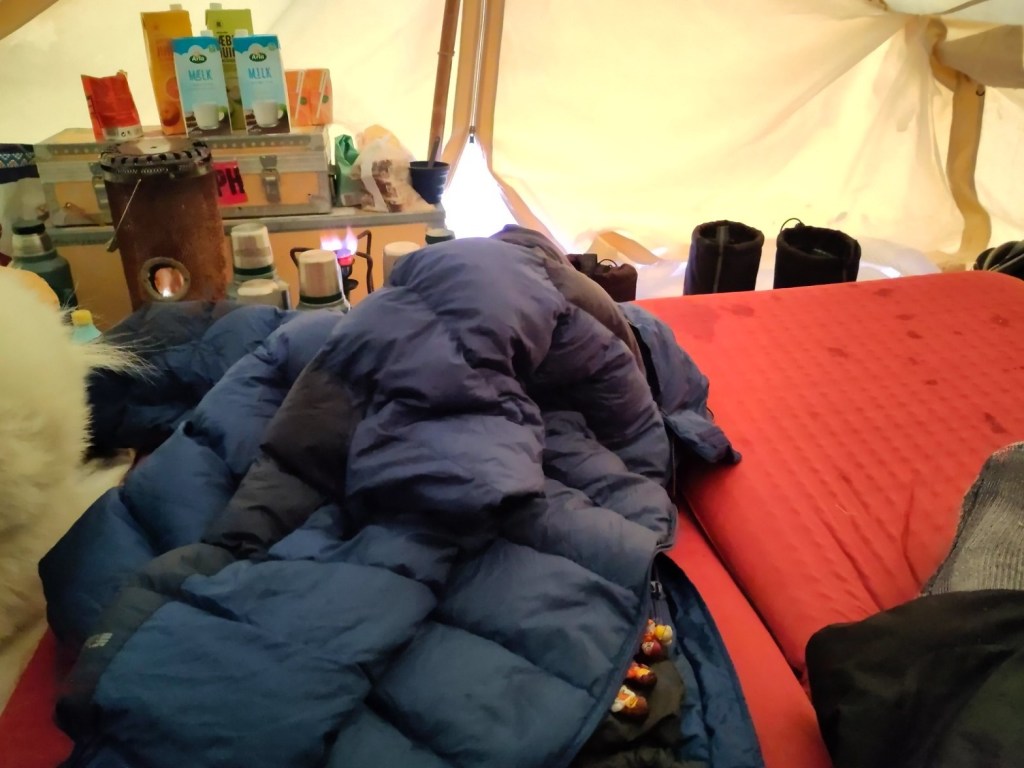
*(As an aside, I was reflecting while on fieldwork just how difficult removing fossil fuels from scientific work in Greenland will be. We rely on petrol generators to power equipment and oil stoves to warm tents. What if we could develop an easy to operate “tabletop” (or even just room sized) electrolysis system to generate clean fuels from e.g. wind energy, that we could burn instead of paraffin and/petrol? I’d invest in that and it would be a quick win for Greenland science.)

Inside of the tent during fieldwork, note the primus stove, running on petrol, for melting ice for water and food and the paraffin powered oven to keep the inside warm and dry while camping.

Is it time for a change..?

My employer DMI, and specifically my team at the National Centre for Climate Research are recruiting.

Not an earth-shattering revelation perhaps but these are premium research jobs, and this is probably a once in a generation opportunity in Denmark.

Let me explain. They are full time and permanent positions, working right at the cutting edge of both basic climate research, and importantly, climate services. You can see the full adverts at the links below:

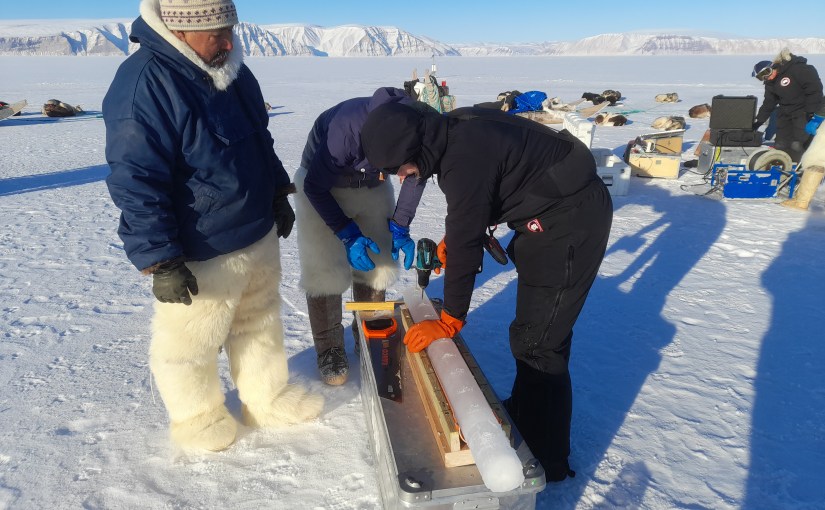
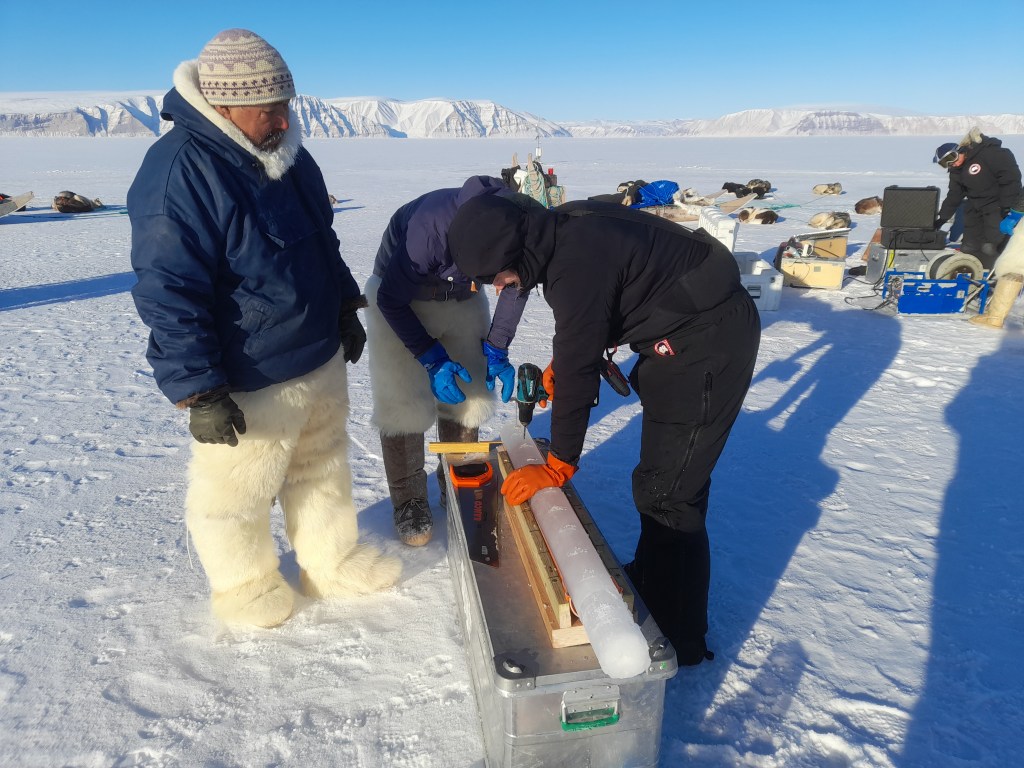
DMI scientists collaborating with local hunters in the field in Greenland

I call these positions once in a generation positions because these kind of positions just don’t come up very often. Part of the reason these are now available is related to the generation change* that is coming to DMI. Right now we are fortunate also to have a number of large EU funded projects as well as danish funding for our Climate Atlas and new hydrology department which is giving us the opportunity to plan for the long term.

Sea level rise is an existential threat for Denmark, at least in the long term and we are putting a great deal of effort not just into the science of melting ice, tipping points and so forth to try and assess the potential risks, but also into planning climate adaptation and mitigation in the short and medium term.

The new positions related to climate and ice sheets and sea level rise will have some flexibility with them in terms of how the jobs evolve and research directions. There will certainly be opportunities for whoever is hired to steer in their own direction and initiate their own research programmes within the broad frame of the topics. I can certainly also only praise the management for the generally supportive and research positive encouragement.

I’d like to help cast the net wide and deep to get as strong a pool of candidates as possible, so please do feel free to get in touch with me either here or via the usual email, and other social media feeds if I can help at all. And if you have good students, postdocs or others, please do share.

We will be holding some “open house” events where you can come in person to visit DMI or sign on in a virtual event to hear more about the positions, about DMI and what it’s like to work in Denmark. Again get in touch to hear more about those.

*”Generations skift” in Danish – I have not looked at the statistics but I suspect many public institutes, including weather and climate services are greying. There was an expansion during the 80s and 90s as numerical techniques became more widespread and integrated into weather prediction and by extension climate – many of the staff employed then are getting close to retirement. In my view DMI is wise to start trying to replace these staff now so there will be continuity and knowledge exchange before it becomes a problem.

Oh Vienna…

In the before times I would usually spend this week walking around a world class city humming an old 80’s hit (- don’t ask me why it was so durable in my head, probably something to do with being an impressionable age at a time when access to pop music meant half an hour on a Thursday evening).

Anyway, it is the time for EGU… Sadly I will not be wandering the streets of the ever beautiful (and most livable) capital of Austria this year. I have to get some actual work done, but I’m following the #EGU23 on mastodon and hoping to catch a few highlights on the sides. I do have a poster, which will be capably presented by PolarRES PI Priscilla Mooney and my DMI Colleague Abraham Torres on Thursday.

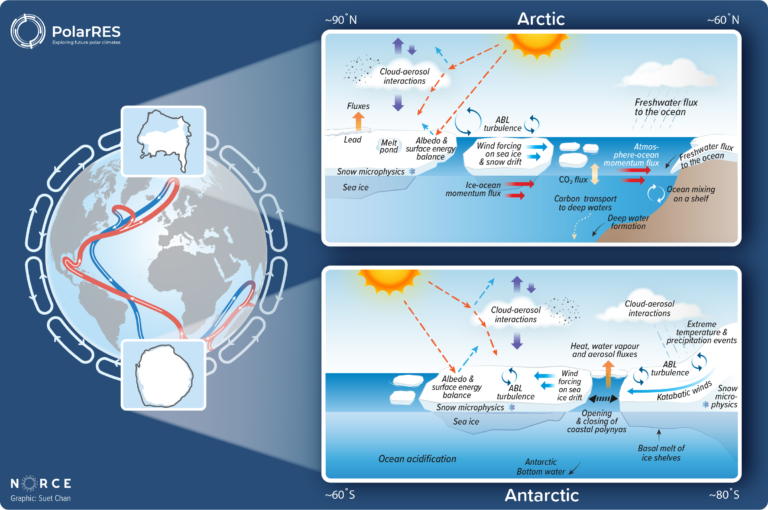
The topic is our PolarRES project – an ambitious Horizon 2020 effort to produce a large ensemble of regional climate simulations over both poles. These are state-of-the-art regional climate models run at unprecedented high spatial resolution and all data will be made open access and free via the CORDEX project.

I will also put it here later – feel free to comment here or ask questions on mastodon or get in touch by email if it sounds exciting.

Mottram, R., Mooney, P., and Torres, J. A. and the PolarRES Consortium: A first look at the new PolarRES ensemble of polar regional climate model storylines to 2100, EGU General Assembly 2023, Vienna, Austria, 24–28 Apr 2023, EGU23-14470, https://doi.org/10.5194/egusphere-egu23-14470, 2023.

Other posters and talks I’ve contributed to from PolarRES are

Kristiina Verro’s talk on HCLIM_Arome results from the Antarctic peninsula:

Verro, K., van de Berg, W. J., Orr, A., Landgren, O., and van Ulft, B.: New non-hydrostatic polar regional climate model HCLIM-AROME: analysis of the föhn event on 27 January 2011 over the Larsen C Ice Shelf, Antarctic Peninsula, EGU General Assembly 2023, Vienna, Austria, 24–28 Apr 2023, EGU23-13864, https://doi.org/10.5194/egusphere-egu23-13864, 2023.

Abraham Torres joined our group last year and is primarily working on PolarRES also. He will show some of our preliminary HCLIM results for both the Arctic and the Antarctic

Torres-Alavez, A., Landgren, O., Boberg, F., Christensen, O. B., Mottram, R., Olesen, M., Van Ulft, B., Verro, K., and Batrak, Y.: Assessing Performance of a new High Resolution polar regional climate model with remote sensing and in-situ observations: HCLIM in the Arctic and Antarctica, EGU General Assembly 2023, Vienna, Austria, 24–28 Apr 2023, EGU23-14090, https://doi.org/10.5194/egusphere-egu23-14090, 2023

Quentin Glaude is a collaborator from Liege in the Horizon 2020 PROTECT project on sea level rise contributions from the cryosphere . Baptiste Vandecrux, a former PhD student with me here and now working at GEUS is also presenting some work based on the same models as Quentin, with a comparison to the PROMICE observation statons on the Greealnd ice sheet. It’s very cool application of machine learning and the results are very interesting.

Glaude, Q., Noel, B., Olesen, M., Boberg, F., van den Broeke, M., Mottram, R., and Fettweis, X.: The Divergent Futures of Greenland Surface Mass Balance Estimates from Different Regional Climate Models, EGU General Assembly 2023, Vienna, Austria, 24–28 Apr 2023, EGU23-7920, https://doi.org/10.5194/egusphere-egu23-7920, 2023

Vandecrux, B., Fausto, R. S., Box, J. E., Covi, F., Hock, R., Rennermalm, A., Heilig, A., Abermann, J., Van As, D., Løkkegaard, A., Fettweis, X., Smeets, P. C. J. P., Kuipers Munneke, P., Van Den Broeke, M., Brils, M., Langen, P. L., Mottram, R., and Ahlstrøm, A. P.: Historical snow and ice temperature compilation documents the recent warming of the Greenland ice sheet, EGU General Assembly 2023, Vienna, Austria, 24–28 Apr 2023, EGU23-9080, https://doi.org/10.5194/egusphere-egu23-9080, 2023.

Nicolaj Hansen (who finished his PhD with me and Sebastian Simonsen at DTU Space last year) has just submitted a beauty of a paper which he will talk about – also partof PROTECT.

 Hansen, N., Sørensen, L. S., Spada, G., Melini, D., Forsberg, R., Mottram, R., and Simonsen, S. B.: ICESat-2 Ice Sheet Mass balance: Going below the surface, EGU General Assembly 2023, Vienna, Austria, 24–28 Apr 2023, EGU23-12349, https://doi.org/10.5194/egusphere-egu23-12349, 2023

Mathias Larsen is a current Phd student with me and is presenting a poster on the CARRA dataset and an application in surface mass balance modelling. This work falls under the danish National center for klima forskning

Larsen, M., H. Mottram, R., and L. Langen, P.: CARRA-driven simulation of Greenland Ice Sheet surface mass balance at 2.5 km resolution, EGU General Assembly 2023, Vienna, Austria, 24–28 Apr 2023, EGU23-5852, https://doi.org/10.5194/egusphere-egu23-5852, 2023

Last year I co-organised a bootcamp for early career researchers on Arctic processes in the CMIP6 models. It was super fun and would not have been possible without the support offered by Anne Fouilloux, Tina Odaka and colleagues from the Pangeo project. Their poster is super interesting and if you’re interested in optimising the use of big climate data, go and check it out!

Fouilloux, A., Marasco, P. L., Odaka, T., Mottram, R., Zieger, P., Schulz, M., Coca-Castro, A., Iaquinta, J., and Eynard Bontemps, G.: Pangeo framework for training: experience with FOSS4G, the CLIVAR bootcamp and the eScience course, EGU General Assembly 2023, Vienna, Austria, 24–28 Apr 2023, EGU23-8756, https://doi.org/10.5194/egusphere-egu23-8756, 2023.

Excitingly, at least 3 of the projects at the bootcamp will also be presented at EGU this year. So, lots to be getting on with, for now, here’s a link to Ultravox’s finest…

Q is for Qaanaaq

Back in Denmark after 2 weeks in Greenland. Always a bit strange to come back, not just that transition from Arctic cold to European Spring but the sheer abundance of the fertile mid-latitudes, colours, plants, trees, the sheer number of people.

Not to mention that expedition frame of mind, where you are really focused on accomplishing a given set of often quite complex tasks (almost) without distraction. It is the ultimate deep work task, and naturally readjusting to family life, not to mention the tsunami of work tasks left on hold is… difficult.

This particular deep fieldwork has been carried out in Qaanaaq, Northern Greenland, as I’ve written about before. The community of about 600 people (and maybe a 1000 dogs), was established in the 1950s when the US established the Thule air base. It is almost the most northern settlement in Greenland – and certainly the largest. The small village of Siorapaluk is about 45km (or 6 hours by dog sled) further away.

The town was formerly a summer hunting spot, but after Thule was decided on, the community was moved to Qaanaaq year round. It has an association with the famous Danish explorer Knud Rasmussen, whose old house is a museum (allegedly. I’ve never actually had time to visit it..)

DMI established a geomagnetic observatory there in the 1950s and today its part of the Comprehensive Test Ban Treaty Organisation network that DMI operates on behalf of the Danish government from what we now call the DMI geophysical facility. There is transnational access to this via the INTERACT network.

This year we again visited the glaciers at the head of the Inglefield Fjord – expanding a new research programme we piloted last year. We also did a lot of work on the sea ice – not just Steffen Olsen‘s ocean programme, but a new NCKF research programme looking at biological productivity and carbon cycling in the fjord, led by Anna Pedersen, a DMI PhD student also at the University of Southern Denmark. I and another colleagues also did a lot of work on snow processes that is something of a pilot programme for a processes project we’d like to establish next year that will also involve (hopefully) our weather forecasting colleagues and perhaps also the GEUS PROMICE programme.

All of this work involved 6 days of travelling over and camping on the sea ice, plus an additional day trip. We were lucky with the weather, although it was *extremely* cold, around -25 to -28C most days, and dipping well below -30C at night (though being after the equinox it was never truly pitch dark). However, in general there was little wind, no fresh snow (which can really slow the dogs down as they struggle to pull through deep soft snow) and the sun shone every day. This meant we basically managed to achieve the full planned programme – including our extra-optimistic goals – which almost never happens in fieldwork.

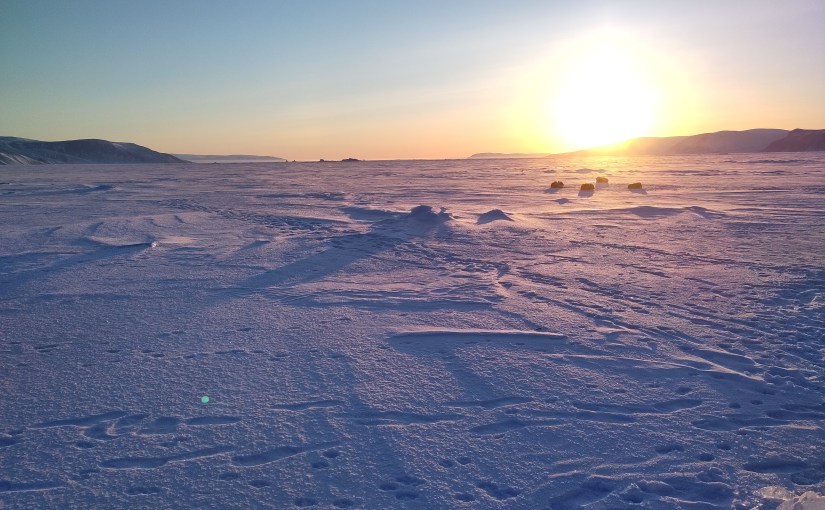
Camping on the sea ice at sunset. Northern Greenland
This work by Ruth Mottram is licensed under a Creative Commons Attribution-NonCommercial-ShareAlike 4.0 International License.

I intend to write a whole series of posts based on what we have been doing scientifically and technically as well as some general observations. There have been various hints already in my preferred social network. The whole trip was super inspiring, it’s always valuable to get out and observe the real world when you’re trying to model it, understand it and make projections of sea level rise.

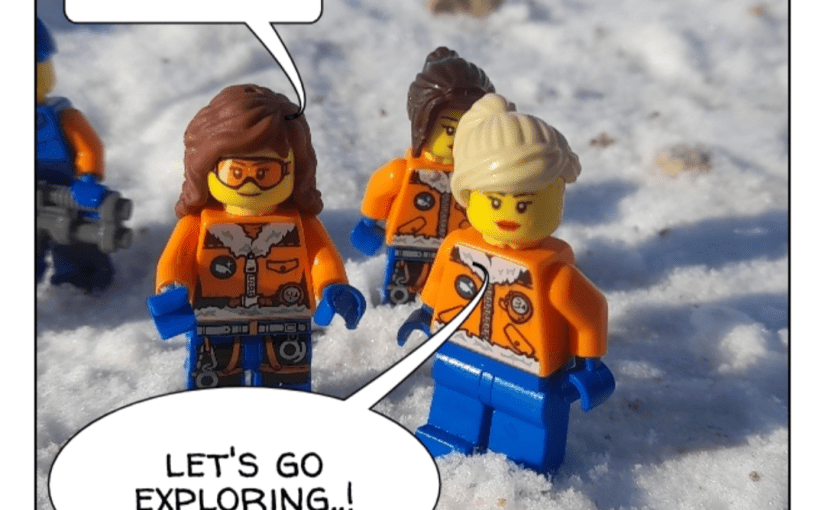
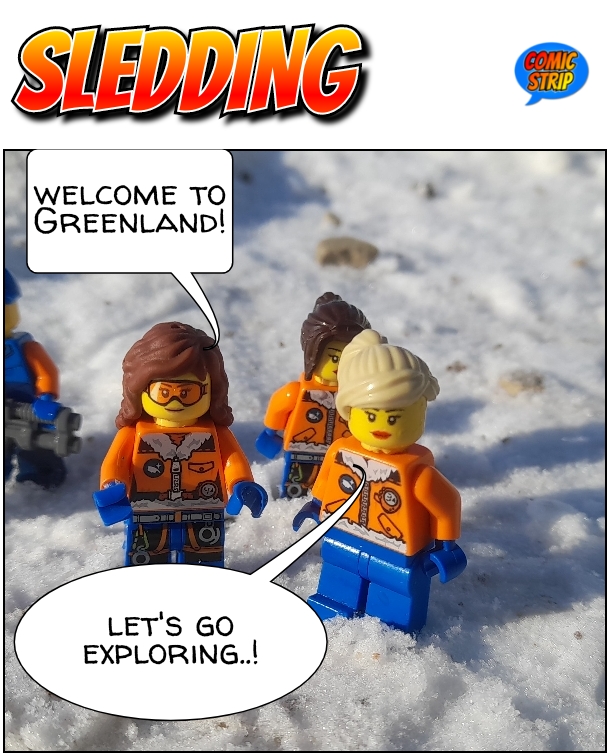
I also promised to make another Lego scientists series and took quite a few photos in between times to do so. However, the research programme was packed, so I had no time at all to make the comic during fieldwork, that will have to wait a few weeks.

Expect my pixelfed account to host gratuitous numbers of dog pictures. And ice pictures. And unexpectedly clear blue skies. For now it’s time to unpack, get the washing machine going and spend some time with my family.

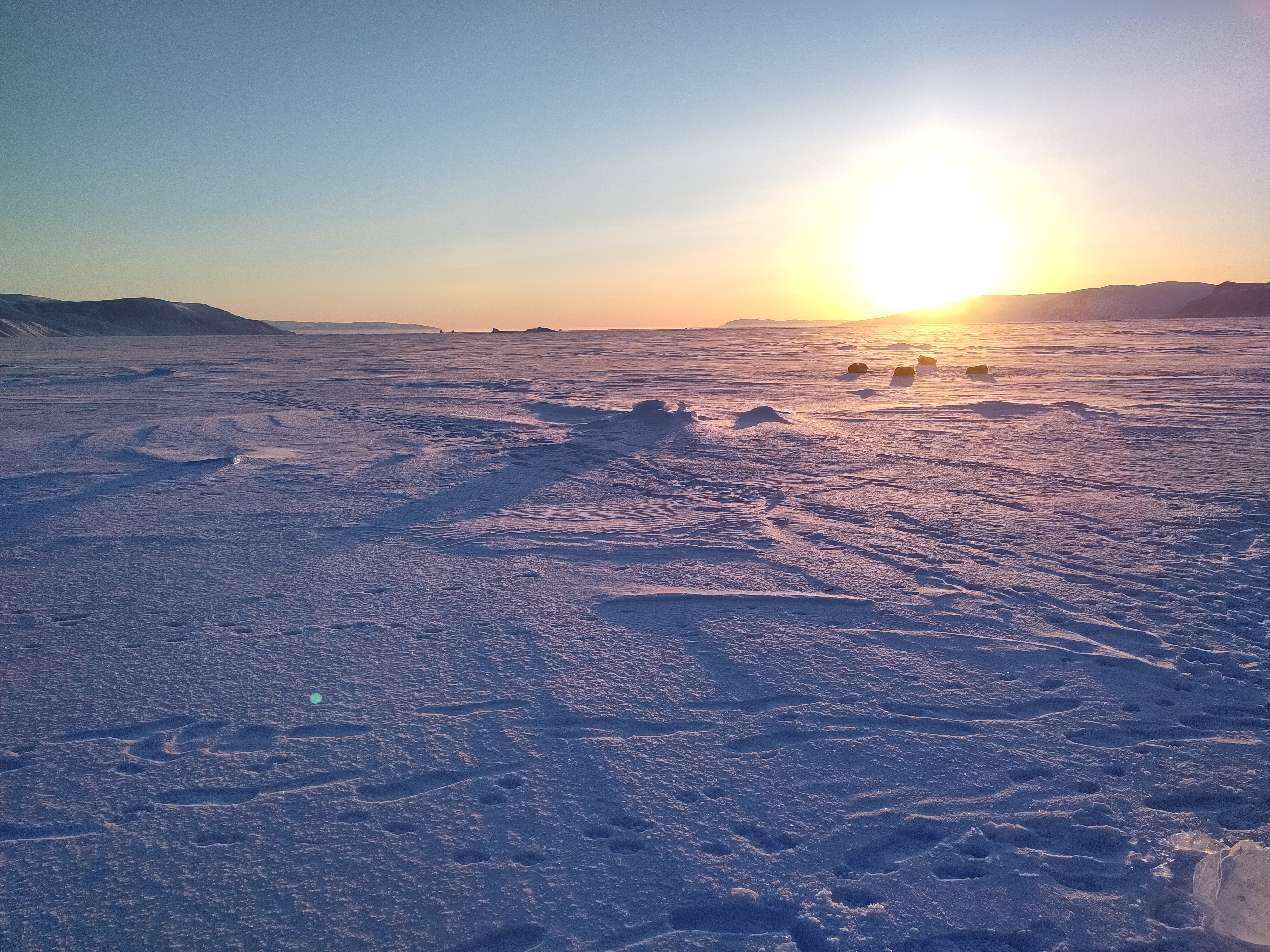
Sunset over sea ice near Qaanaaq, North West Greenland
This work by Ruth Mottram is licensed under a Creative Commons Attribution-NonCommercial-ShareAlike 4.0 International License.

As ever, thanks to my amazing colleagues Steffen Malskær Olsen, Andrea Gierisch and Anna Pedersen for an incredible trip and to DMI station manager in Qaanaaq Aksel Ascanius without whom most of this work would be impossible.

Special thanks to our friends in Qaanaaq, the local hunters, whose unfailing energies and knowledge are absolutely essential to these scientific projects. We literally could not do this without them and of course their dogs.

I must also credit DMI and the Danish Government for funding via the National Center for Klima Forskning and thanks also to Horizon Europe projects PROTECT on sea level rise and PolarRES for additional inspiration and funding and to my colleagues at the Horizon Europe/NERC project OCEAN:ICE for indulging my two weeks away. All three projects will benefit from the insights gained in this fieldwork.

The further adventures of batgirl…

I wrote this series of comics to amuse and inform my kids while I was on fieldwork a few years ago. It turned out to be quite a success and my kids classes both read the Danish versions at their school.

Last year I started https://icemangoeshome.wordpress.com/more-arctic-adventures/ the further adventures of batgirl on the ice with her new friends the Lego scientists and a couple of stowaways.. but last year’s season was extremely busy and I never managed to finish it.

I asked yesterday on mastodon if I should do another this year, and the only feedback I got was I should try to finish the one I started last year. So maybe that’s what I’ll try to do. It’s always challenging fitting around field tasks though so no promises.

This is just a quick post from the airport: you’ve been warned, bat girls and her friends are on their way back with a new season!

A New Arctic Adventure

Lego figures in the snow

Signs of Spring

Currently, I’m very busy getting ready with colleagues to travel to Greenland next week. We have an extremely full programme of fieldwork activities covering oceanography, biology, sea ice, snow and glacier processes as part of our NCKF work. More on these no doubt in a future post…

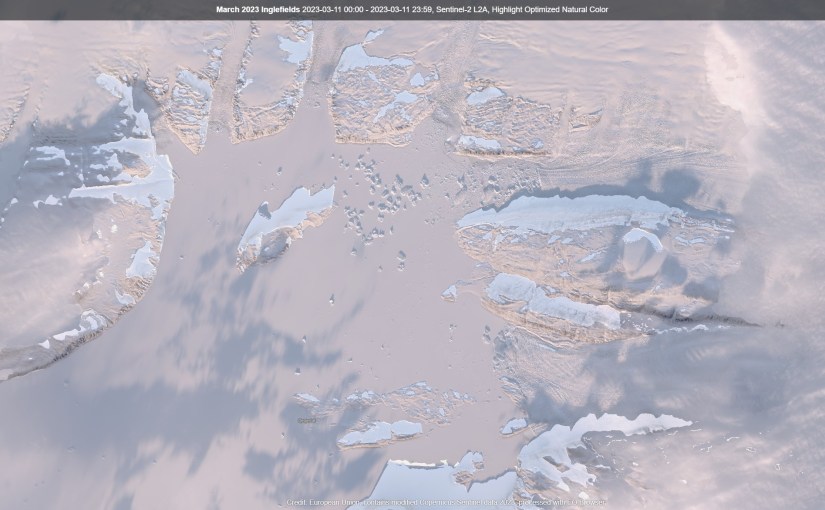
Yesterday, one of my ace DMI colleagues (without whom most of the work we plan would definitely not happen) shared the first optical satellite image of the area this year – taken by ESA’s Sentinel 2 (a truly astonishing source of free imagery and everone should know about it). Because the area is very far north, it has been in the Polar night until now so we have been reliant on the ESA Sentinel 1 imagery based on radar.

First Sentinel-2 optical satellite image of the year downloaded from Sentinel Hub’s EO Browser today. Processing with Sentinel Hubs optimised natural colour filter has introduced some artefacts, notable the brigh white patches which probably represent areas of shadow due to the low solar angle. The area is blanketed in thin cloud and only parts of the glaciers, sea ice and icebergs are clearly visibe.

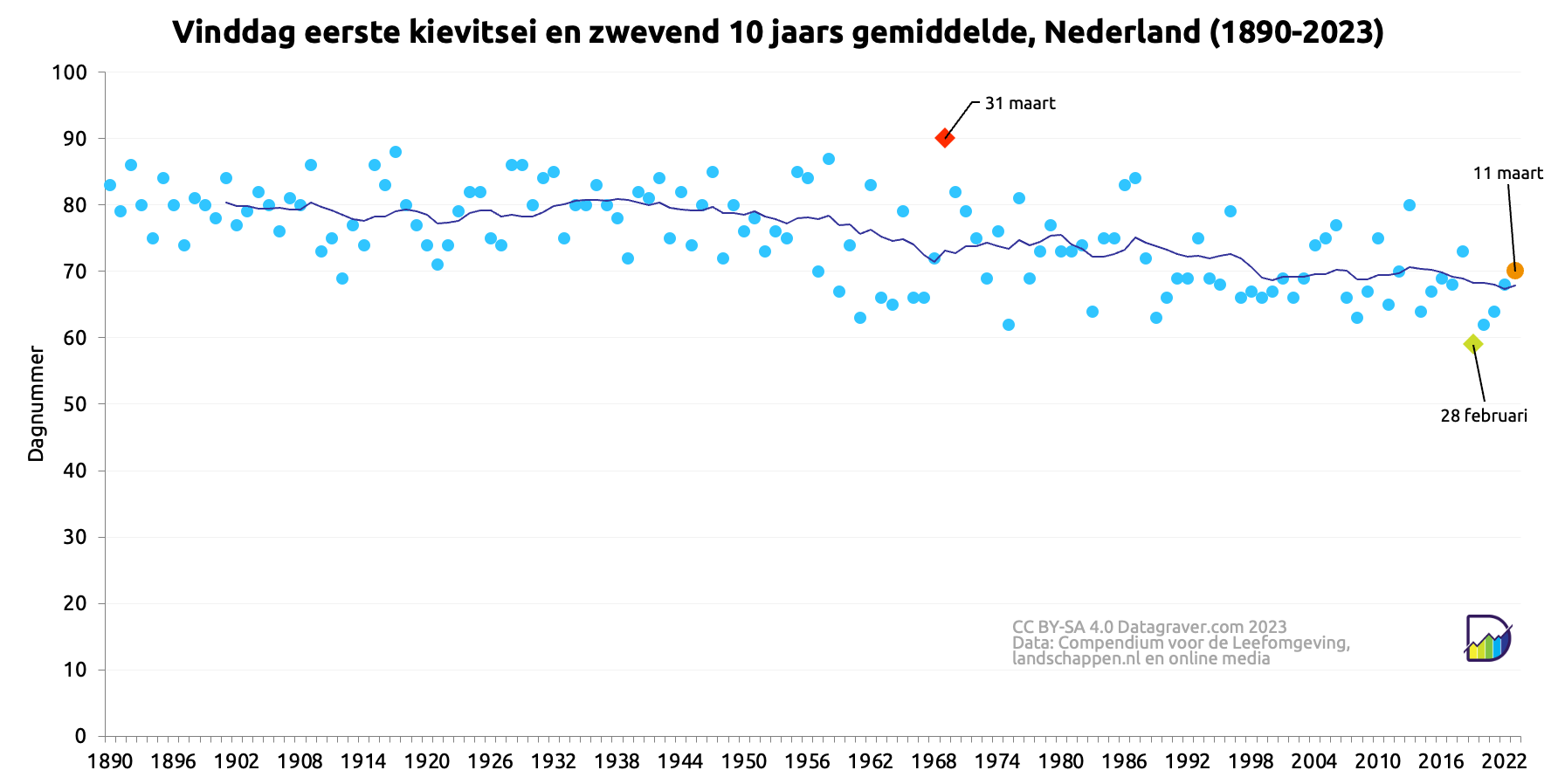
It’s a wonderful thing to see the first satellite image of Spring, akin to other signs like the first cuckoo (in the UK), the first peewit egg (in the Netherlands), and the timing of the cherry blossom in Kyoto.

The first lapwing (peewit) egg of the year was traditionally presented to the Dutch monarch – these days, given the

There was recently a very illuminating thread on phenology on mastodon in reply to a query by Pauline von Hellerman where the Diagram Monkey John Kennedy pointed out the existence of the Pan European Phenology network – not something I was aware of before (though I’d suspected it’s existence) – and who have all sorts of interesting data.

Where biology is clearly showing us earlier springs due to climate change, the date of the first optical image is unlikely to change any time soon due to climate change.

A newer updated version of the Economist’s cherry blossom flowering date plot provided by Datagraver after I posted the old one. See: https://mastodon.social/@Datagraver/110021046678442071

Nor are species assemblages (it’s not quite certain that it’s the same variety of cherry blossom for the whole 1200 year period), or biodiversity losses (the cuckoo is down 65% since the early 1980s alone in the UK, and heaven knows it was not particularly common then) likely to affect it. Not to mention human behaviour changes, the lapwing has gone from being a common agricultural bird to near threatened over the same period, which probably also affects the reliability of that data.

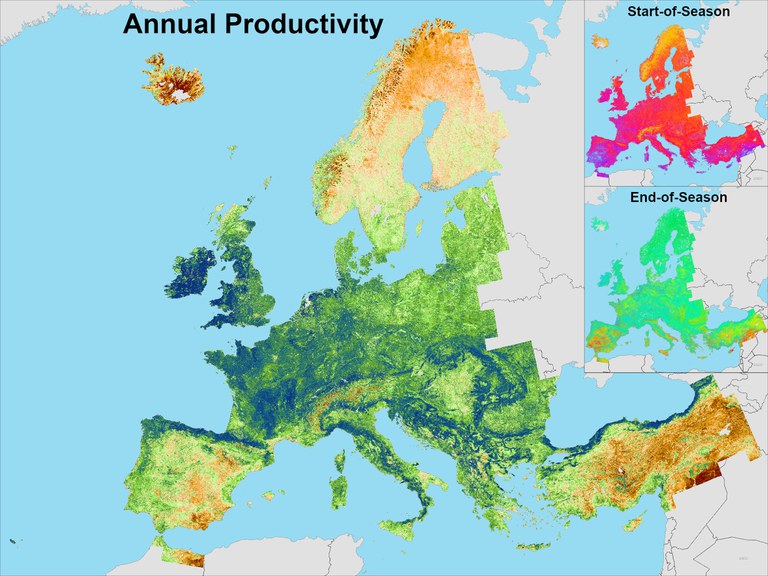
Of course, quite a bit of what you might call bulk phenology can be done by satellite too now…

Copernicus land dataset showing biological activity in Europe basedon satellite data available here

As for Qaanaaq, there is not much in the way of biological phenology, but a compilation and analysis of data on sea ice cover and thickness over the last 60 years would probably be as instructive. Do get in touch if you’re interested in doing this as a student project…

Out and about in Leeds..

I’ve been on holiday this last week and I’m combining the trip to the UK with a visit to colleagues and collaborators at the University of Leeds. I’ve also been nabbed while I’m in Leeds to give a wider interest talk at the Royal Meteorological Society Yorkshire branch in Leeds.

I’ll be discussing ice sheets, their contribution to sea level rise and how the future is looking. There may also be some nice photos from our fieldwork in Northern Greenland for those who like dogs, icebergs and snow…

If you’re in Leeds and fancy joining you’re most welcome to register and attend at this link.

In general, I’m trying to reduce my travel this year, last year, with all the rolled over meetings from the COVID times was disruptively busy with work travel, it makes it challenging to actually get the work done. So I think combining work and holidays and rolling up meetings into a block is the way forward.

Although I very much appreciate the opportunity to present online at various meetings, I’m less convinced about hybrid meetings where the purpose is mostly scientific discussions, that is something that works much better either all online or all in person in my opinion, but I think they work well when the aim is to present new and ongoing work (like EGU).

For those who are interested but can’t attend I will see if the talk tomorrow will be recorded and can be uploaded somewhere. Here’s the abstract:

Frozen Threats: Understanding the Role of Ice Sheets in Sea Level Rise

In this talk, we will delve into the world’s ice sheets and explore their importance in the climate system. Ice sheets are the largest stores of freshwater on the planet, their size and location means they influence our climate but their interactions with the atmosphere and ocean are complex. As the world warms, they will inevitable have an impact on sea level. Adapting to sea level rise will be one of our civilisations biggest and longest challenges, so understanding ice sheets is now of critical importance. They are also beautiful and fascinating environments in their own right. In this talk I will discuss some of the scientific challenges, but also show how far we have come in understanding ice sheets and glaciers.

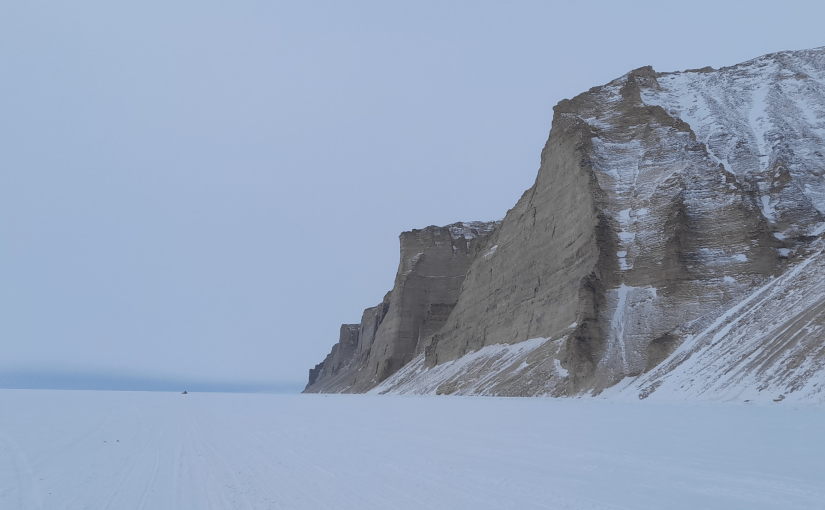
The Inughuit cliffs near Qaanaaq in Northern Greenland rising up above the sea ice. In the far distance a dog-sled is a small black speck.

A door closes, another opens…

It’s time to say goodbye to Twitter..

I posted towards the end of last year about my early explorations of the fediverse (the federated universe – seriously it’s awesome check it out) of apps and websites that can talk to each other but cover a vast range outside of the walled gardens of the corporate controlled internet. Like many people who were (probably far too) intensely online, the changes at Twitter were forcing me away from that platform, which I had been on for a decade. And on which I had more than 10,000 followers

After a few weeks I was completely enraptured by the community on mastodon, far more independently minded, creative and yes, that awful tech bro cliche, disruptive. It was, as is also now fast becoming a bit of cliche, like going back to 2011 Twitter.

On mastodon, as of February 2023 I now have 3600 followers and follow about 2000 accounts. I get far far more interesting interaction and discussion than on my old twitter account with three times as many followers. I’m not the only one noticing this. To be clear it’s taken some “work” to get there. Finding new accounts, dealing with a less than intuitive UX and working out what is of general interest has taken some time. If htis post makes you curious, I recommend the feditips page as a good starting point.

I’m now a fully signed up active member of the fediverse with a pixelfed account (think instagram before the annoying tiktok immitation and with a lot fewer “influencers”), 2 mastodon accounts (probably soon to be amalgamated to one tbh) and some tentative explorations of friendica (a bit like facebook when it still seemd like a cool way to keep in touch with friends and family abroad, jury is still out on this one tbh, I’m trying to keep it for personal friends and family only).

Blogging also seems to have come back into my purview. And it’s fun, thinking about writing and science in quite a different way to the one imposed by the 280 character limit (some of us remember when it was 140).

A few months down the line and while activity on mastodon has subsided since the first waves in 2022, the hard core who are still here are REALLY cool. I feel refreshed and revitalised after checking the stream in a way I have not experienced for a long time on twitter.

It’s also made me reflect on the way I had used social media in the past (probably far too much time spent there if I’m honest with myself). I had accumulated a lot of followers and could quite happily spend hours browsing the algorithmic feed, but especially recently, a lot of that browsing was like snacking on cookies, it was time that would have been more fufilling going in depth on a project or enjoying my leisure time without thjat SoMe filter. At some point twitter helped to find good stuff too, but even before the Musk takeover and mass departures it wass getting harder and harder to find genuinely interesting stuff amid the flood of witty oneliners and outrage driven algorithmically pushed tweets.

After the takeover there has been poisonous floodtide of misinformation and anti-science drivel, not to mention anti-semitism, racism and general bigotry. The climate denial that has arisen since Elon Musk bought the platform wasn’t even this bad during climategate. I have no idea why it has got this awful again recently. I assume the same state actors and misinformation manipulators and their bot armies. Either way, even though I missed some accounts and friends, I no longer want to be supporting a billionaire’s hobby project. SO in the best social democratic tradition, I’m withdrawing my (free) labour.

I moved over towards the end of last year and while I kept an eye on the birdsite, I didn’t feel the need to engage there anymore. I was cross-posting exclusively from Mastodon to Twitter until the crossposter service was ended at the end of January. The end of the open API this week is probably the final end for me. I may post links to my blog for a little while longer, but probably that’s just prolonging the inevitable.

So now it’s time to take stock. I will hold on to my account, though probably locked to new followers, I may drop in from time to time but I don’t plan to engage over there at all. I have downloaded my archive (while I still could) and started deleting my tweets. As of today there is a year’s worth left. I’ll probably scrap that at some point too.

So, do I miss it? Yes, a bit. More than I missed the swamp of facebook when I left there in 2016. But not as much as I thought I would. Possibly because the discovery of the fediverse is leading me to becoming a far more active netizen again, rather than a passive consumer of snack food. I do miss some accounts and friends who have not moved over, though I hope they will one day.

And the ever wise Danish genre and Grundtvig expert Sune Auken expressed it pretty well in one of his daily reminders: “I know why I left, and I know what I lost, but I’m not going back and I don’t miss the experience of twitter even as I miss excellent friends”

And where from here? Well the cool thing about the fediverse is we are in control, we get to decide (at least to some limited extent) what it should look like in the future. It is not a corporate walled garden, we get to work on and improve it and make it after our own image. The same was once true to some extent of twitter and in fact many of it’s best features were user-driven originally.

More to the point, this whole sorry saga has made me realise two things:
I don’t want to build stuff on someone else’s platform anymore.

I need to be much more mindful of the way I use social media and the internet. I have too many responsibilities to family, friends and work to fritter away a mindless hour on social media snack food. But there is nonetheless value and entertainment in creating and sharing:

The bottom line of this general thinking is that a simple, carefully curated, minimalist digital life is not a rejection of technology or a reactionary act of skepticism; it is, by contrast, an embrace of the immense value these new tools can offer…if we’re willing to do the hard work of figuring out how to best leverage them on behalf of the things we truly care about.

Cal Newport, Digital Minimalism